inner peace between heaven and earth
For years I searched for the poetic moment. But was there an image that could...
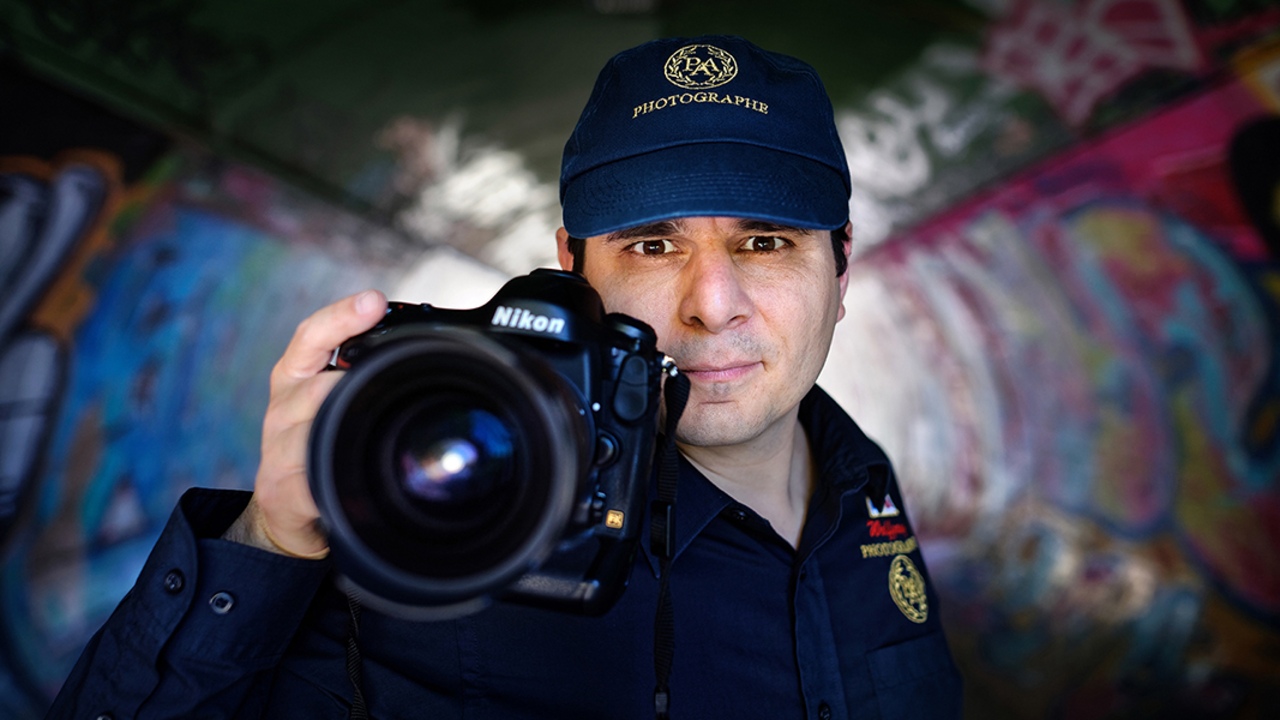
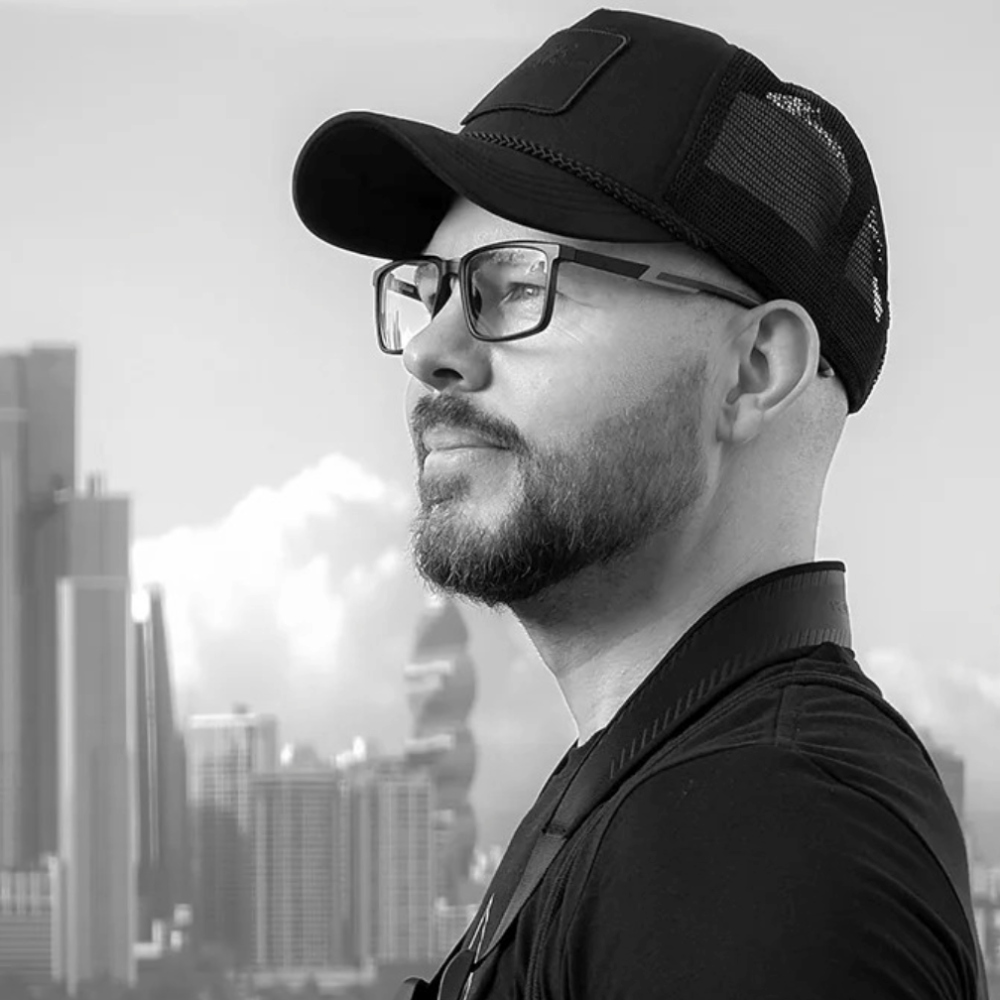
Wolfgang Autexier’s creative journey began with pastel and watercolour painting before evolving into a photographic practice rooted in observation and artistic freedom. Today, he approaches photography as both artist and poet, creating images that balance technical precision with emotional resonance.
I do not come from photography originally, but from painting. For many years, I was a pastel and watercolour artist. My first contact with the camera came very early, through my grandfather, and my very first photograph was shot on film – fully manual, very old-fashioned. It was a formative experience.
The real turning point came with the early years of digital photography. Suddenly, the medium became more flexible and intuitive: images could follow the speed of thought. That allowed me to transpose my painter’s eye into a more instinctive, almost musical practice of the image.
For a long time, I worked almost exclusively in wildlife photography. Today I have left that field, and my work has expanded to architecture, landscapes, fine art nudes and portraiture. I would now describe myself less as a photographer than as an artist and poet using photography as a language.
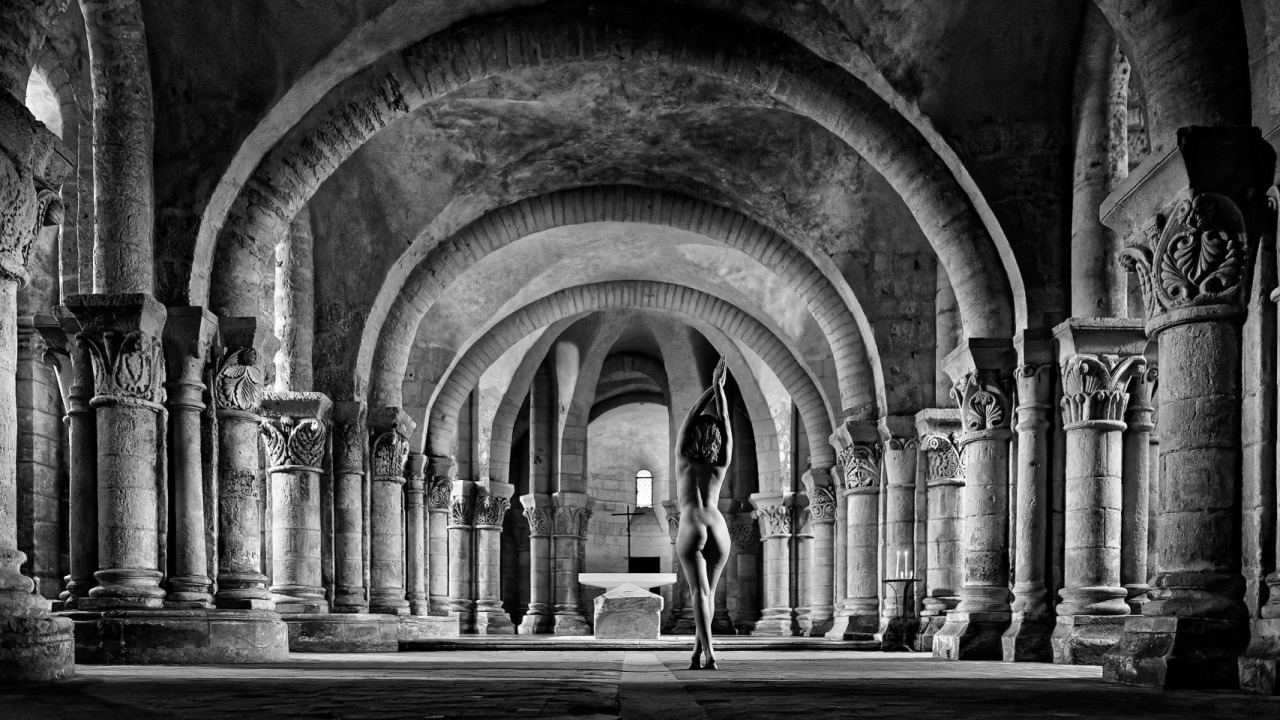
Surprisingly, the starting point was not the nude but the architecture. I first visited this sacred space simply to photograph its geometry and its light. At some point, I stopped shooting, sat down, and allowed myself a moment of inner silence. The idea came in this pause.
The image builds a three-way dialogue between spirituality, architecture and the human body. The spirituality I am interested in is interior – something that happens beyond religions, in the very experience of meditation and introspection. The place is perfect for that: it is a stone vessel of silence.
Winning this award confirms that this dialogue can be understood and felt by others. It also tells me that taking time for stillness – for that “inner breath” – is not a luxury but often the true source of our strongest works.
I usually follow two lines of thought. First, every competition – and every jury – has its own temperament, its own expectations. You have to sense the climate and choose images that speak to it.
Second, I have a small group of works that are very important to me personally, that I want to see defended at the highest level. The photograph we are speaking about here is one of them. It is now my most awarded work in international competitions.
For my first participation in the European Photography Awards (EPA), it was my most strategic choice. Before entering the EPA, it had already received around twenty distinctions; in the 2025 edition, it received four additional awards, which confirms that long-term trust in an image can be a good strategy.
If I look back, the answer lies in my past as a painter. Painting is a slow construction. Photography, by contrast, allows you to work at the speed of intuition. A photograph is an act of the moment – a decision that happens in a fraction of a second. Even a very fast watercolour cannot quite reach this immediacy. That combination of visual culture and instantaneous gesture is what attracted me.
It is difficult to choose one. I have turned black and white into a kind of playground: I love pushing the expressiveness of an image through monochrome post-processing. It is a way of sculpting light.
For many years, I was almost addicted to wildlife photography: it demands patience, resilience and offers moments of deep peace in nature. But environmental change is making wildlife more and more scarce. As wildlife photographers, we are often the first witnesses of a slow disaster. At some point, it became too discouraging for me, and I stopped.
Fine art nude photography brings me back to my painter’s practice. The nude was already one of my favourite subjects on paper and canvas. In the end, I do not want to rank subjects: each field – landscape, architecture, nude, portrait – offers a different challenge and a different joy for an artist.
Instinct and intuition are central to the way I shoot. The camera has to be set up to support that.
Coming from wildlife, I have a strong culture of responsiveness to the unexpected. For years now, my default approach has been Manual mode with auto ISO and neutral density filters when needed. This lets me keep full control over aperture and shutter speed, without compromise.
I often work with wide and very wide apertures to let the light breathe and to carve the space precisely. The image that won at the EPA this year was shot at f/2, because the light inside the church was extremely low. This ability to work wide open, while keeping the image technically clean, is essential to my style.
For this particular photograph, I would hope they feel a sense of meditation and inner quiet. The location is a spiritual space that naturally invites this attitude; the image is meant as both a sharing and an invitation.
At the same time, I think it is important not to forget the culture and history of the arts. In Christian iconography, the nude can symbolise humility before the divine – think of the biblical reference in the Second Book of Samuel, or the many nudes in religious art, from early frescoes to the Sistine Chapel ceiling. In that sense, the nude is not an intrusion into the sacred, but one of its oldest visual languages.
With this photograph, I would like to awaken both spirituality and poetry, and perhaps also a gentle desire for erudition: to revisit the long dialogue between body, light and the sacred in art history.
The first challenge was organisation. The church is a very popular tourist site, so we needed it to be completely closed to the public. We obtained a short off-peak window of about fifteen minutes. That is a very tight constraint in such a monumental place.
The second challenge was the instability of the light. The space is lit mainly by small high windows; even on sunny days, the volume is dim, almost cave-like. On overcast days, it becomes extremely dark. This “grotto” atmosphere adds to the poetry, but it is demanding technically. The photograph had to be taken in natural light, whatever the conditions. On the chosen day, the sky was heavily overcast, so I decided to work at f/2 rather than postponing. There was no second chance.
Water. Water is a recurring source of inspiration for me, even though it is not present in this particular winning image. Rivers, sea, mist, fog – they all speak to my imagination.
I am also very sensitive to large viewpoints and strong perspectives: spaces where the volume of architecture and landscape can really breathe. The winning photograph belongs to that family – the way the nave opens up and the perspective unfolds is a key part of its emotional impact.
Influences are difficult to separate: they come from culture, from people around us, from childhood.
My painter’s background clearly pushes me to be an interpreter rather than a mere witness. I do not try to record reality; I try to translate it, as a painter would.
My grandfather, who first introduced me to photography, had a very classical black-and-white culture. That left a deep trace. Even today, when I work in colour, I think in terms of light and shadow as if I were still in that early monochrome world.
To succeed at a high level in awards, you almost need the mindset of a top-level athlete: courage, perseverance, the ability to make sacrifices and to manage your energy wisely.
Self-questioning is essential. Art is not magic: it is long-term work, revision, and refinement. Competitions can be a very powerful tool if you use them as a mirror – not only to seek recognition, but to understand where your work stands, and where it can grow.
Success in art never depends only on your own abilities. It also depends on the people around you. Try to be well surrounded and well advised. Good advisors are not necessarily the ones who flatter you. You need people who are both competent and sincere. Honest feedback is sometimes uncomfortable, but it is one of the most precious things you can receive.
Today, we are extremely demanding about the finish of photographs. There is a kind of escalation in the search for the “perfect” image. Even when I aim for an organic, natural rendering, I remain influenced by that contemporary standard.
Post-processing is therefore a key part of my work. I also come from painting, where everything is, by nature, “retouched” from the first brushstroke to the last. For me, editing is not a betrayal of reality; it is the natural continuation of the artistic gesture in photography.
Many technological innovations have been beneficial. Photography itself was, at its birth, a radical technological innovation in the arts.
That said, I am deeply concerned by the rise of AI-generated images. The value of an artwork lies in what comes from the inner life of its creator – from our sensitivity, our experiences, our doubts. It is the authenticity of human beings.
AI productions cannot claim that. They will never be human. If we delegate too much of the artistic act to machines, we risk losing something essential to our own humanity. That, for me, is the real danger.
When all options are open, it becomes almost impossible to choose.
But if I had to answer, I would say: wide, untouched landscapes – places with as little construction as possible, wild territories where space is still free. They offer both a visual challenge and a kind of inner silence that I find indispensable.
Explore the interview in Finding Light Through the Lens: Alona Dudaieva Talks About Photography & Creative Freedom here.