Reawaken DONG TSANG
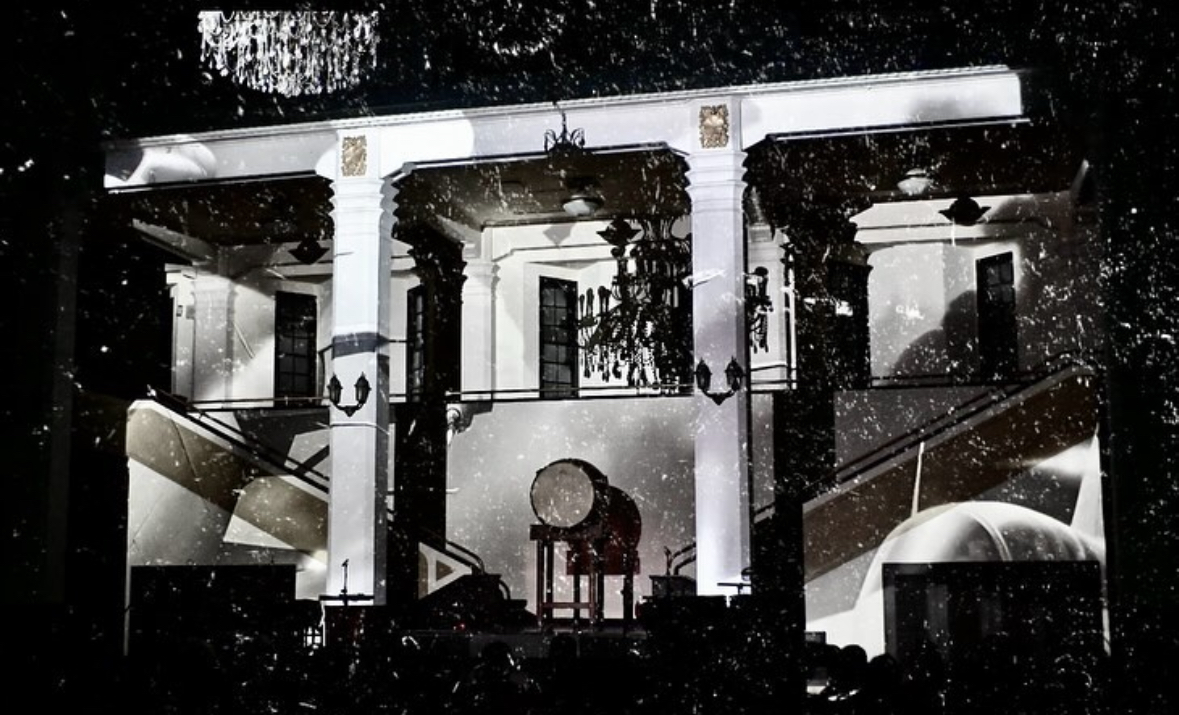
Reawaken DONG TSANG is a self-initiated fusion of technology and world music theatre that reimagines...
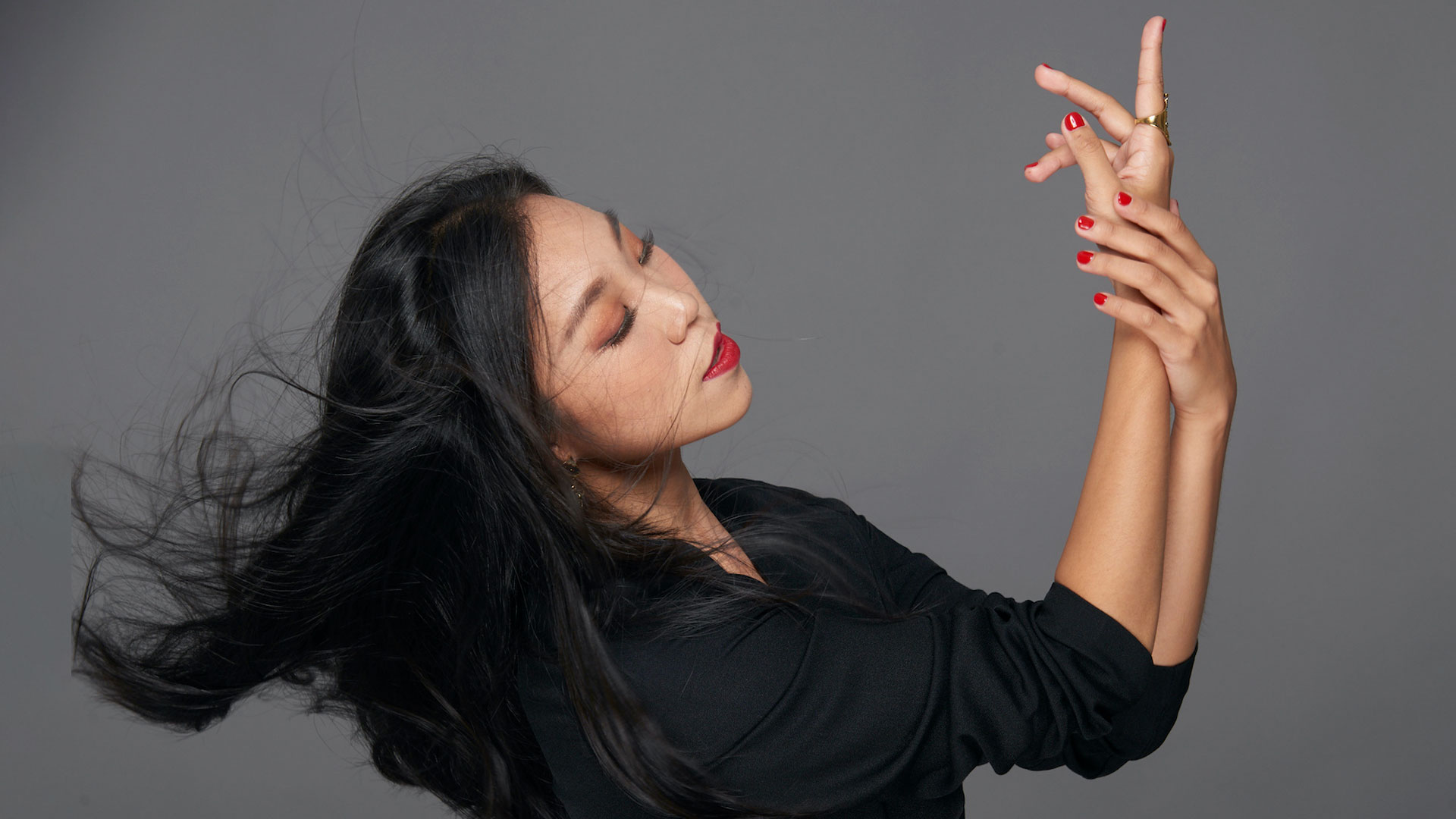
Tsai Tzu-Hsuan is a creator and performer whose work explores cultural memory, rhythm, and embodied experience, transforming performance into a participatory dialogue between body, sound, and consciousness.
I am Stella Tsai (Tsai Tzu-Hsuan), a creator and performer whose practice explores the intersection of cultural memory and rhythm.
For me, art does not exist as a set of separate disciplines, but as a continuously evolving state of being—one in which body, sound, and consciousness generate, transform, and resonate with one another.
Beyond creation and performance, I extend my practice through pedagogy and public engagement, situating art within a broader social context. In this framework, performance shifts from an object of observation into an embodied, participatory experience.
Founded in 1990, Tien-Ku Percussion Group is guided by the philosophy, “Each sound shapes a world; each beat builds a paradise.” Navigating between tradition and innovation, the ensemble has cultivated generations of composers, performers, and educators, and continues to shape the discourse of contemporary percussion arts.
My decision to submit to the MUSE Creative Awards emerged from a fundamental question:
How might Luo Gu (gongs and drums)—a performance language deeply rooted in cultural tradition—be translated into a sensory form capable of crossing boundaries and resonating across cultures?
This question is inseparable from my personal journey. Living with dyslexia and a visual condition has led me to recognize that what is often perceived as limitation can fundamentally reshape perception.
Rather than obstacles, these experiences have become alternative ways of sensing—guiding me toward a more intuitive and embodied relationship with rhythm, sound, and presence.
Receiving this award is not simply an acknowledgment, but a form of response—an affirmation that art exists in the ability to transform individual perception into a shared experience that resonates across languages, cultures, and states of being.
The work “Reawaken DONG TSANG” emerged from an ongoing dialogue between the body and percussion.
Raised within a lineage of traditional arts, Luo Gu Jing was the first rhythmic language I encountered. For me, the sound of the drum echoes the rhythm of a mother’s heartbeat, while bodily movement carries intergenerational memory. Through this experience, I came to understand tradition not as a static form to preserve, but as a living condition—one that can be continuously reawakened and re-experienced.
In this work, Luo Gu Jing functions not only as a system of notation, but also as a shared language. It resonates with rhythmic structures across cultures while pointing toward a way of knowing that emerges through entering the language of others and building connection.
To engage with different cultural languages is not simply to communicate, but to cultivate the ability to move across cultural contexts and connect through shared human experience.
“Reawaken DONG TSANG” is rooted in cultural inheritance, yet it is not confined by fixed forms. It operates as a creative methodology that transforms Luo Gu (gongs and drums) from a culturally specific practice into an aesthetic language that can be perceived across cultures.
By challenging conventional understandings of percussion, the work shifts from representation to perception—inviting audiences not only to see or hear, but to engage through embodied experience.
Grounded in an oral, intuitive, and heart-to-heart mode of transmission, the work is not merely communicated, but lived. Through an ongoing process of translation between tradition and contemporaneity, it preserves its cultural roots while creating resonance across diverse cultural contexts.
One of the central challenges was negotiating the relationship between light, image, and the body—particularly within real-time interactive visuals. The question was how to maintain a “less is more” aesthetic while preserving emotional depth and human warmth.
At the same time, the project was shaped by very real constraints in resources and funding.
These conditions reminded me of a line I once wrote: “Facing the flames of war, we must hold steadfast faith.”
Rather than treating limitation as an obstruction, we embraced it as material. Through shared vision and close collaboration, constraint became generative—shaping both the aesthetic language and conceptual core of the work.
I hope this award may serve as a key—one that allows us to engage more deeply with the world.
In the long term, I hope this recognition enables the work to reach wider audiences and continue functioning as a bridge between cultures, lived experiences, and different ways of perceiving.
One of the responses we most frequently received from audiences was: “We hope this work can reach the international stage”.
We carried this sentence with us, as it was more than an expression of hope—it reflected a shared imagination.
At the moment we received the award, the first thought that came to mind was: We did it!
I remain deeply grateful for every response and every form of support. They have enabled the work to extend beyond a singular performance, and to continue articulating itself within a broader global context.
Success holds a different meaning for everyone.
For me, what matters most is remaining faithful to the way I perceive the world—and trusting it fully.
I often return to a simple reminder: “Treasure what you have, and explore the unknown.” I believe learning to move between appreciation and exploration is what continually sustains both life and creative practice.
The creative industry is constantly evolving, yet I believe its essence remains unchanged.
The body remains one of our most vital resources, while perspective shapes how we come to understand the world. Regardless of technological advancement, what ultimately matters is how we feel—and how we connect with one another.
Looking ahead, I hope to position myself as a creator who translates perception into experience, bridging cultures and connecting people through shared human sensitivity.
Fear often emerges from our imagination of the unknown.
Every small action creates impact in ways that may not be immediately visible. The moment we choose to take a step, we begin to transform our relationship with the world.
Many of us may be living within what could be described as a form of “silent warfare.”
Only through an ongoing process of understanding ourselves and the world around us do we begin to transform perception into creation—and distance into connection.
In this process, the ability to create meaning and foster connection becomes not only our greatest strength, but also a shared purpose.
I would like to dedicate this achievement to my family, my collaborators, and everyone who has experienced the work with us.
I am deeply grateful for my family’s trust and support, and for a belief they have continually reminded me of: “What is done becomes real; what is believed becomes possible.”
To my collaborators and every audience member—thank you for being part of this journey. Together, we opened a door toward love and peace.
Even the smallest step can open an entire world.
“Reawaken DONG TSANG” is not only a work, but also a way I come to understand the world—an evolving artistic practice that continues to grow and transform.
Looking ahead, I hope to connect with audiences around the world through international touring, artistic exchange, and cross-disciplinary collaboration. I also welcome opportunities to collaborate with partners and brands who share a vision for expanding how culture can be experienced.
This is an ongoing journey, one that continues to unfold with every new encounter.