Quiet Bloom — A Tea&Kado Studio in the City’s Tallest Tower
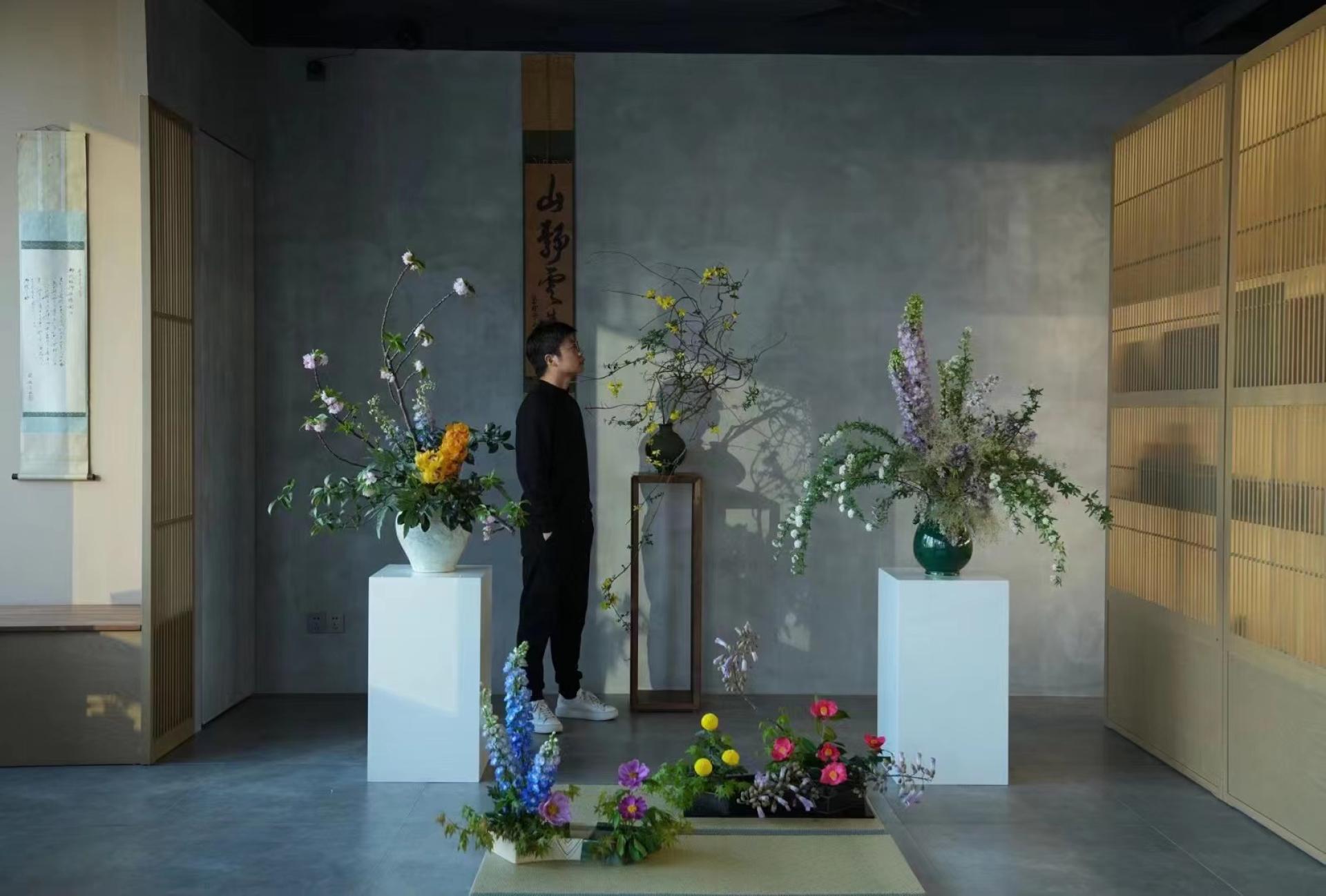
Quiet Bloom is a sanctuary for flower arrangement and tea culture, quietly inserted into the...
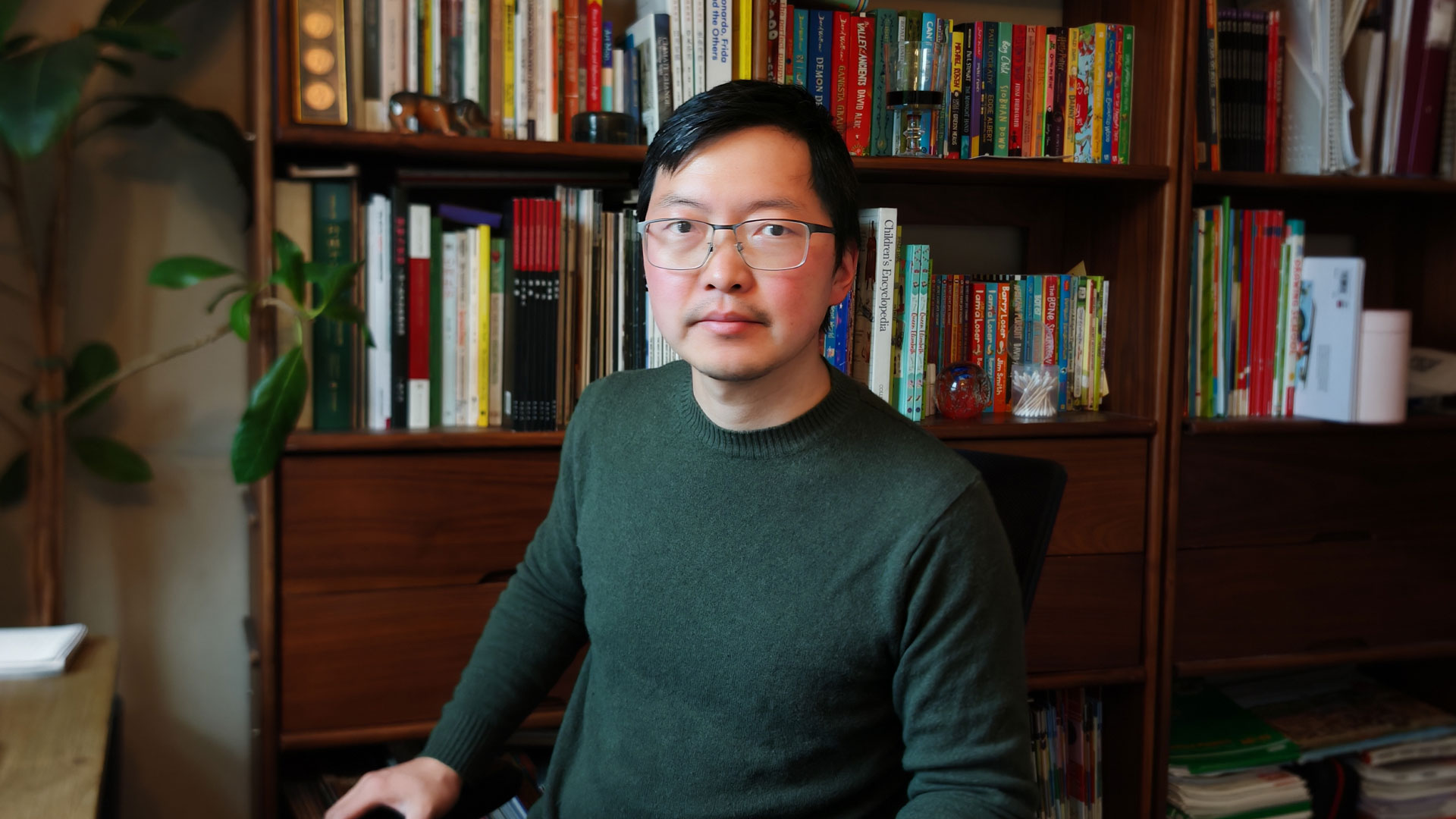
Having moved from China to the UK in pursuit of a broader architectural journey, Wanquan Feng has developed a design philosophy rooted in problem-solving, cultural sensitivity, and spatial clarity, earning recognition for projects that thoughtfully balance urban challenges, human experience, and refined contemporary design.
My journey into design began with a quiet yet vivid childhood memory. When I was young, I often visited my uncle in the city. He was an MEPF engineer, working on the mechanical and electrical systems of buildings. I still remember lying on the bed in his room, watching him for hours as he sketched, calculated, and carefully developed his designs.
At the time, I didn’t fully understand the technical aspects of what he was doing, but I was deeply fascinated. There was something almost magical about the way lines on paper could eventually become real spaces—places where people would live, work, and experience life. That was probably the first moment I realized how meaningful design could be.
As I grew older, that early impression stayed with me. At the same time, I became more aware of the realities of life. I wanted a profession that would not only allow me to create and express ideas, but also provide a better future for my family. To me, design became the perfect balance between passion and responsibility.
Looking back, what began as a quiet childhood observation gradually evolved into a lifelong pursuit, and I feel deeply grateful that it has led me to where I am today.
Winning a Gold Award is, of course, a tremendous honor, and I feel deeply grateful for this recognition.
To me, however, it represents far more than an achievement—it feels like the beginning of a new chapter. In many ways, it reminds me of a significant turning point in my life, when I made the decision to move from China to the UK to live and work. That transition opened an entirely new direction for me, both personally and professionally.
The MUSE Design Awards feels very similar. Rather than an endpoint, it feels like a starting point—an opportunity that encourages me to continue exploring, growing, and stepping into a new phase of my journey. I believe it will lead me toward new possibilities and a different kind of life, one that is even more deeply connected to design, creativity, and the global community.
This recognition has had a meaningful impact on me in several ways.
On a practical level, after I shared the news with my client, they were incredibly excited and even shared it within their own network. As a result, it has brought new opportunities and potential clients my way, for which I am truly grateful.
Beyond that, however, I believe the more meaningful impact has been internal. This award gave me a strong sense of self-recognition—it reminded me that I am capable and that I can confidently stand as a designer.
That confidence is incredibly valuable. It allows me to approach every project with greater clarity, trust, and conviction, whether it involves large-scale architectural work or more intimate interior projects. Across different scales and disciplines, I now feel more prepared to embrace challenges and fully express my design perspective.
In that sense, while the external opportunities are certainly meaningful, the personal growth and confidence this recognition has given me mean even more.
I believe experimentation plays an essential role in the creative process. However, as an architect, I do not see experimentation as something that should happen without purpose or direction.
For me, meaningful experimentation begins with a deep understanding of both the client and the project itself. I value close communication with clients—carefully listening to their concerns, expectations, and the broader impact a project may have, whether socially, culturally, or historically. Only after reaching that level of understanding do I begin exploring and testing design possibilities. In this way, experimentation becomes intentional and focused, rather than arbitrary.
For example, in the Tea&Kado Studio project, continuous dialogue with the client allowed me to clearly define both the functional requirements and the intended business model. Based on that understanding, I organized the circulation and established the spatial layout. The proposal was quickly recognized and approved by the client, and I was very satisfied with how efficiently the design process evolved.
In another project, Xuzhou East Plaza, we worked closely with government departments and stakeholders to better understand their expectations and objectives. By carefully balancing the interests of different parties, we were able to develop a landscape architectural solution that addressed the project’s key challenges. As a result, the design required only minimal adjustments before receiving broad approval.
For me, experimentation is not about endless trial and error without direction—it is about informed exploration guided by clarity, communication, and a strong understanding of the project.
One of the most unusual sources of inspiration came not from a traditional design reference, but from a simple moment of observation.
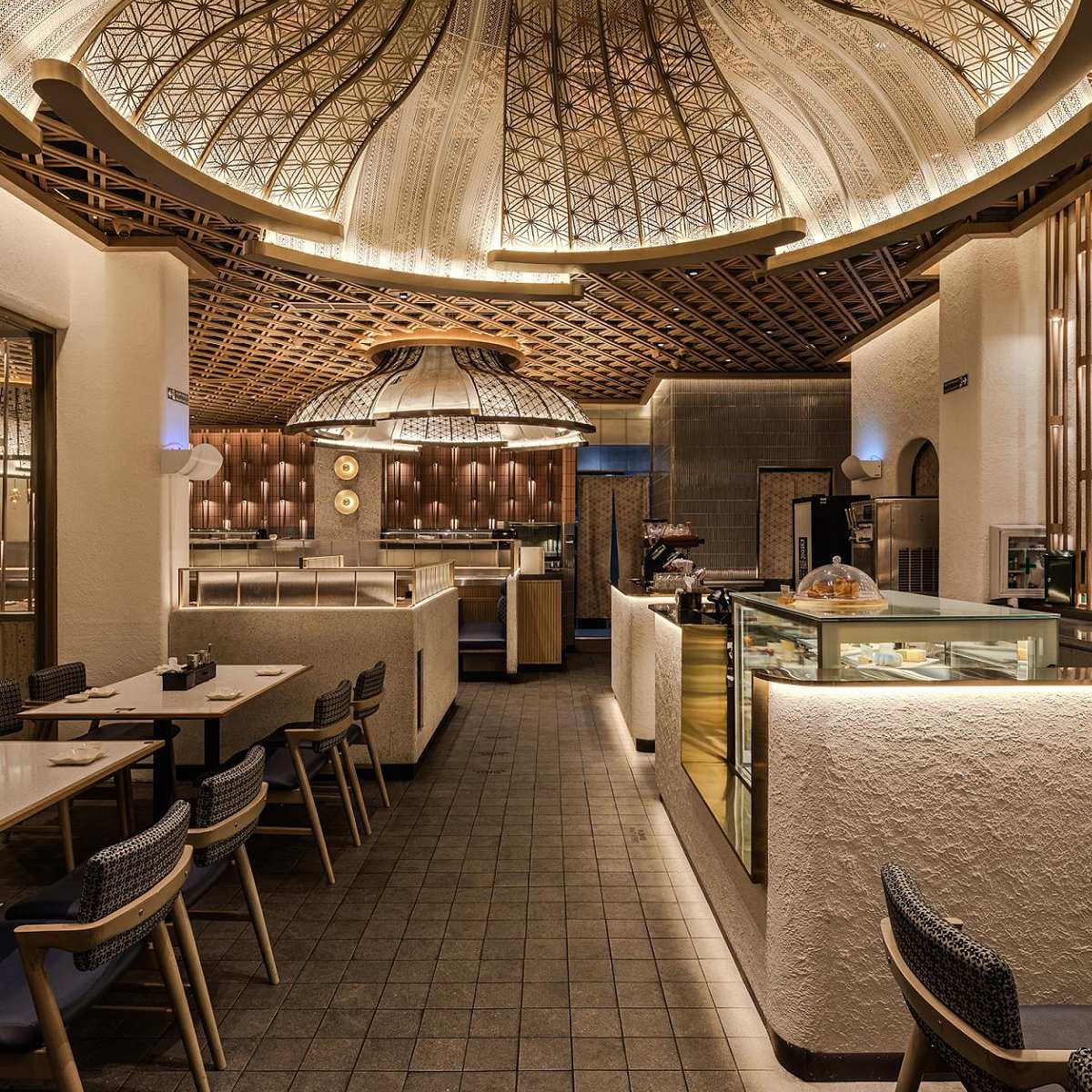
While working on the Tea&Kado Studio project, I spent time sitting in the lobby of the building, located within one of the tallest office towers in the city. I noticed that everyone around me was constantly in motion—walking quickly, intensely focused, and seemingly without pause. The entire environment was driven by speed and efficiency, leaving little room for stillness or reflection.
At that moment, I realized that this condition itself could become the starting point of the design.
Because the project was intended to be a teahouse and a space for Japanese floral art, I saw an opportunity to create a meaningful contrast—to offer something the surrounding environment lacked. Rather than following the fast-paced rhythm of the building, the space would encourage people to slow down. It would become a place where visitors could momentarily step away from the intensity of daily life.
This idea ultimately shaped the entire atmosphere of the project. The space was designed to encourage calmness and introspection, allowing visitors to quietly enjoy a cup of tea or fully immerse themselves in the delicate process of flower arrangement without distraction.
In that sense, the inspiration did not come from adding something new, but from responding to what was missing. That absence ultimately became the foundation of the design.
I think many people tend to view design as something driven primarily by visual impact—something eye-catching, iconic, or stylistically impressive. For me, however, that is not the true purpose of design.
I believe design should fundamentally be about solving problems. It begins with understanding a client’s needs, but it should not stop there. A meaningful project must also respond to broader contexts, whether social conditions, urban challenges, or even historical layers. When a design successfully addresses these deeper issues, it becomes far more valuable and enduring.
In that sense, form is not the starting point, but the result. The appearance, geometry, and overall style should emerge naturally through the process of problem-solving, rather than being imposed from the outset.
For example, in the Xuzhou East Plaza project, we did not simply design a conventional public square. Instead, we examined the broader urban context and identified a critical issue: the area was heavily fragmented by surface traffic, underground railways, and metro systems, making pedestrian movement through the city disconnected and inefficient.
This led us to think beyond the site itself. We proposed using the plaza as the foundation for an elevated circulation system—an aerial network that could eventually connect surrounding buildings and create a more coherent urban experience.
For me, design is not about pursuing a striking image, but about responding thoughtfully to real-world problems. When those problems are genuinely addressed, the form will naturally follow.
I do not see this as a conflict, but rather as a process of alignment.
For me, the key lies in communication and in uncovering the deeper intentions behind a client’s expectations. It is important to look beyond surface-level requests and truly understand what the client needs, what concerns them, and what they ultimately hope to achieve. As designers, our role is not only to respond to those needs, but also to create additional value through our professional perspective.
At the same time, clients often approach a project from a more immediate standpoint, such as development goals or short-term returns, without always considering the broader or long-term potential of a project. This is where we can contribute by offering a wider perspective—helping them view the project more comprehensively in terms of urban impact, user experience, and future possibilities.
In my experience, when you are able to clearly solve a client’s problem while also demonstrating added value, clients become very open to new ideas. The process then becomes collaborative, with both sides moving toward a shared vision rather than opposing positions.
For example, in the Xuzhou East Plaza project, we proposed an elevated circulation system that could connect surrounding buildings and create a more integrated urban environment. By demonstrating how this strategy could enhance not only connectivity, but also long-term commercial, social, and cultural value, the client was able to fully understand and support the proposal.
Ultimately, I believe balance comes from deep understanding, clear communication, and the ability to help clients look beyond immediate needs toward a more meaningful and comprehensive vision.
One of the main challenges in the Tea&Kado Studio project was working within an extremely tight budget while also meeting the client’s very high expectations. At one point, it even seemed difficult to achieve the desired level of quality within such limitations.
Rather than compromising the overall vision of the project, we chose to respond through a more thoughtful and detail-oriented design approach. We invested greater effort into refining proportions, details, and the overall spatial experience, while remaining highly strategic in our material selections.
For example, the original proposal specified a seamless grey microcement floor to create a clean and unified surface. However, this option ultimately exceeded the available budget. Instead, we selected large-format matte grey tiles paired with color-matched grout to minimize the visibility of joints. As a result, the floor still reads as a continuous surface at first glance, achieving a very similar visual effect at a significantly lower cost.
For the walls, rather than relying on expensive textured finishes, we introduced a contrasting red accent within an otherwise calm grey palette. This shift in visual focus allowed us to establish a strong spatial identity without depending on costly materials. Attention was directed toward color, composition, and atmosphere rather than material expense.
Through these strategies, we were able to maintain a high level of spatial quality while remaining within budget. For me, this project reinforced an important belief: good design is not defined by the use of expensive materials, but by the intelligence and thoughtfulness behind the design decisions themselves.
When I encounter a creative block, I’ve learned that the most effective approach is to step away rather than force a solution.
If I find myself stuck during the design process, I will often close my laptop and consciously disconnect from the project for a period of time. Creating that distance allows me to reset my perspective and return with greater clarity.
I often enjoy visiting museums or galleries, or simply spending time observing artworks and historical artifacts. These experiences help me step outside the immediate problem and reconnect with a different mode of thinking—one that is more intuitive and less constrained by the project itself.
Interestingly, inspiration often arrives when I am no longer actively searching for it. By shifting my focus elsewhere, I am able to return to the project with a clearer mind and, at times, an entirely new perspective.
For me, recharging creativity is not about pushing harder, but about allowing space—for reflection, observation, and new ideas to emerge naturally.
I believe a designer’s personal character inevitably becomes reflected in their work.
For me, this became even more apparent after moving to the UK. Experiencing a different cultural environment made me more aware of my own preferences and sensibilities, and how naturally they find their way into my designs.
I am often drawn to spaces that feel calm, restrained, and quiet. There is a certain subtlety and balance—perhaps rooted in an Eastern perspective—that continues to shape the way I approach space and atmosphere. These qualities appear in my work not as something intentionally imposed, but as something that emerges naturally through the design process.
At the same time, my fundamental approach to design remains consistent. I see design primarily as a process of identifying problems and responding to them thoughtfully. That logic forms the foundation of my work.
In many ways, my designs are shaped by both structure and sensibility: structure comes from problem-solving, while sensibility comes from my personal background and cultural perspective. It is the combination of these two elements that ultimately defines my work.
I believe that what truly shapes and improves a designer often happens outside of design itself.
It comes from everyday life—from carefully observing how people live, how spaces are used, and how society functions. Developing a sensitive and attentive way of seeing the world is, in my opinion, one of the most important qualities a designer can cultivate.
At the same time, it is essential to continuously engage with other forms of art, whether painting, music, film, or other creative disciplines. These experiences may not influence your work in immediate or obvious ways, but over time, they gradually shape your perception and enrich your thinking in subtle yet meaningful ways.
I also believe that becoming a designer is a lifelong journey. It requires patience, continuous learning, and a willingness to invest deeply in personal growth. By observing the world with curiosity and consistently expanding your perspective, you slowly develop your own approach to thinking and designing.
In the end, design is not simply a skill, but a way of understanding the world—and that understanding takes time to grow.
If I could choose, I would love to collaborate with I. M. Pei.
I feel a strong sense of connection to him, both personally and professionally. We share similar cultural roots, as we both come from Suzhou, China—a city deeply shaped by Jiangnan culture and its refined spatial sensibility. In many ways, that background has influenced how we each perceive space and design.
There are also interesting parallels in our life journeys. He developed his career in the United States, while I later moved to the UK. What I find especially inspiring is how he was able to establish a distinct design identity within a cultural context different from his own, while still having his work widely recognized and appreciated internationally. I would be deeply interested in understanding how he navigated that process—how he maintained his own perspective while engaging with a global audience.
I also deeply resonate with his design philosophy. His work often began by addressing broader social, historical, and contextual issues, using them as the foundation for the design itself. This way of thinking—starting from problems and allowing design to emerge as a response—closely aligns with my own approach.
Of course, this is purely hypothetical, but if I ever had the opportunity to collaborate with him across time, it would be an incredibly meaningful experience for me.
I wish more people would ask why natural qualities appear so consistently throughout my work.
In many of my projects, there is a strong presence of something that feels inherently natural—whether through materiality, spatial atmosphere, or overall composition. For example, in the Xuzhou East Plaza project, we approached the site through a landscape architectural strategy to address broader urban issues. In the Tea&Kado Studio project, although we did not directly rely on raw natural elements, the space still carries a calm and organic quality, intentionally avoiding anything overly artificial or excessive.
I believe this connects closely to what we discussed earlier regarding how a designer’s personal values and experiences naturally become reflected in their work. For me, I have always been drawn toward ideas rooted in nature, or toward creating spaces that evoke a sense of balance, calmness, and authenticity. It feels intuitive rather than intentional.
This interest has remained with me for a long time. During my graduate studies at the Architectural Association, my thesis explored the concept of using linear parks as a form of public space to reconnect fragmented urban communities—creating continuity, connection, and a more cohesive urban experience.
In many ways, my work reflects both my personal interests and my way of understanding the world. Designing through the lens of nature is not simply a stylistic preference for me; it is the most natural way I know how to respond to a project.