Governors Island: Self-Sustaining Micro Ecological Island
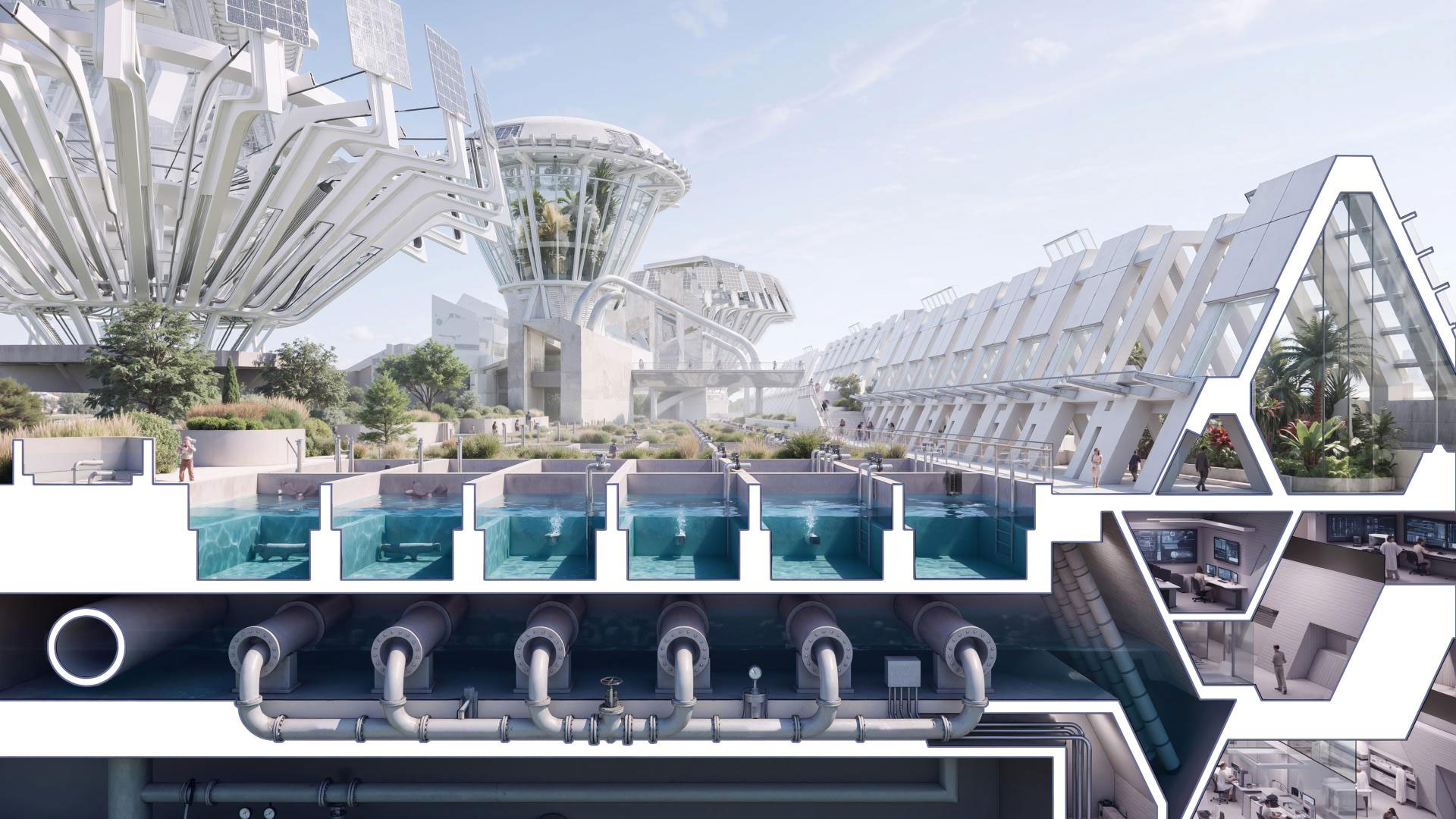
Governors Island Conservatory and Climate Center reimagines the conservatory as a climate-adaptive public destination for...
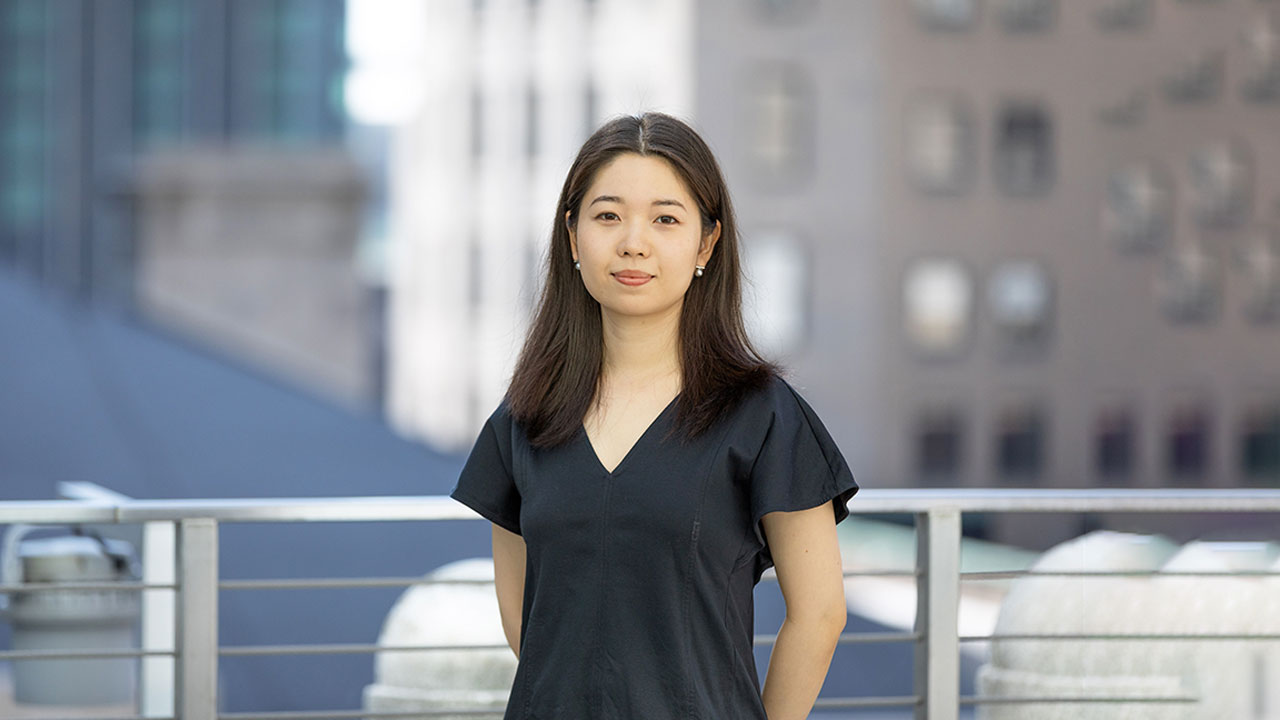
Siyu Gao is an architectural designer whose work explores the intersection of beauty, ecology, and human experience, transforming the relationship between nature, technology, and memory into immersive spatial environments.
My name is Siyu Gao, and I am an architectural designer with a background in Environmental Art and Design, as well as Architecture.
I was drawn to design because I have always been fascinated by the relationship between beauty, nature, and human experience. To me, beauty is not only about form; it is about how different systems intertwine, like vines connecting landscape, memory, technology, and everyday life. Architecture gives me a way to transform these relationships into meaningful spaces.
This recognition is incredibly meaningful to me. It gives me confidence that speculative, ecologically driven projects can resonate with real-world concerns. It also encourages me to continue exploring architecture as a hybrid practice that bridges design, ecology, and technology.
This achievement has helped me better understand and articulate my own design language. It has not only strengthened my portfolio but also given me greater confidence as an early-career designer.
Revisiting and refining the project gave me the opportunity to reflect on my original design concept from a fresh perspective. It also allowed me to incorporate new insights and experiences, making the project more complete and cohesive.
Experimentation is essential to my design process. I rarely begin with a fixed form; instead, I explore the relationships between water, plants, structure, circulation, and people.
In Self-Sustaining Micro Ecological Island, the conservatories were conceived as more than greenhouses. Through experimentation, they evolved into hybrid structures that function simultaneously as botanical spaces, water systems, public landmarks, and ecological machines.
One unusual source of inspiration was the film Annihilation. I was fascinated by its portrayal of genetic fusion—slightly unsettling, yet undeniably beautiful. It encouraged me to think of nature as something fluid, adaptive, and constantly evolving.
This perspective inspired me to see architecture not as a fixed object, but as a hybrid living system.
I wish more people understood that design is rarely a straight path. It is a process of exploring, testing, failing, refining, and discovering. The strongest projects often emerge through the patient integration of many interconnected layers.
I try to understand the deeper intention behind every expectation. A request is rarely only about function; it often reflects a desire for experience, identity, comfort, or long-term value. To me, staying true to an idea does not mean ignoring constraints. It means embracing them as an integral part of the design process.
The main challenge was making the project feel both visionary and believable. It imagines a future ecological island, yet it also needed to respond to real site conditions, water systems, public access, and coastal resilience.
I addressed this by designing the island as a phased system that evolves over time. Rather than a single finished object, it becomes a long-term ecological framework.
Whenever I encounter a creative block, I step beyond the boundaries of architecture and look to films, natural systems, biological patterns, textures, and scientific imagery for inspiration. Knowledge from different disciplines allows me to see my work from a fresh perspective.
I like to imagine myself as a plant growing through the gaps in architecture, or as a bird flying above it. I also create cinematic narratives for my projects, allowing the architecture to embody not only form and function, but also atmosphere, emotion, and imagination.
I value beauty, but not simply as appearance. To me, beauty emerges from meaningful relationships, when ecology, structure, memory, technology, and human experience naturally intertwine.
Stay curious, stay excited, and cultivate your own way of seeing the world. Do not simply chase style. Instead, ask yourself why something moves you, why a place feels powerful, or why a system works. Your unique interests and experiences can become the foundation of your design language.
I would love to collaborate with Syd Mead. I admire the way his work brings together film, architecture, industrial design, and speculative imagination to create entire worlds rather than isolated objects.
That kind of interdisciplinary thinking deeply inspires me. In my own work, I hope architecture can become a living framework where ecology, technology, materials, and human experience naturally intertwine.
I wish people would ask more about the iconic quality of my architecture. Many of my projects are guided by a core design language that can evolve across different scales: XS, M, and XL.
At the XS scale, it may take the form of a planter, a lamp, or another object with its own identity. At the M scale, it becomes an off-grid modular space—the smallest inhabitable unit capable of functioning independently. At the XL scale, it expands into an architectural and cinematic world-building system.
To me, an architectural icon is more than a single image or form. It is a design language that can evolve, adapt, and grow across scales while retaining its identity.