Interwoven Realm
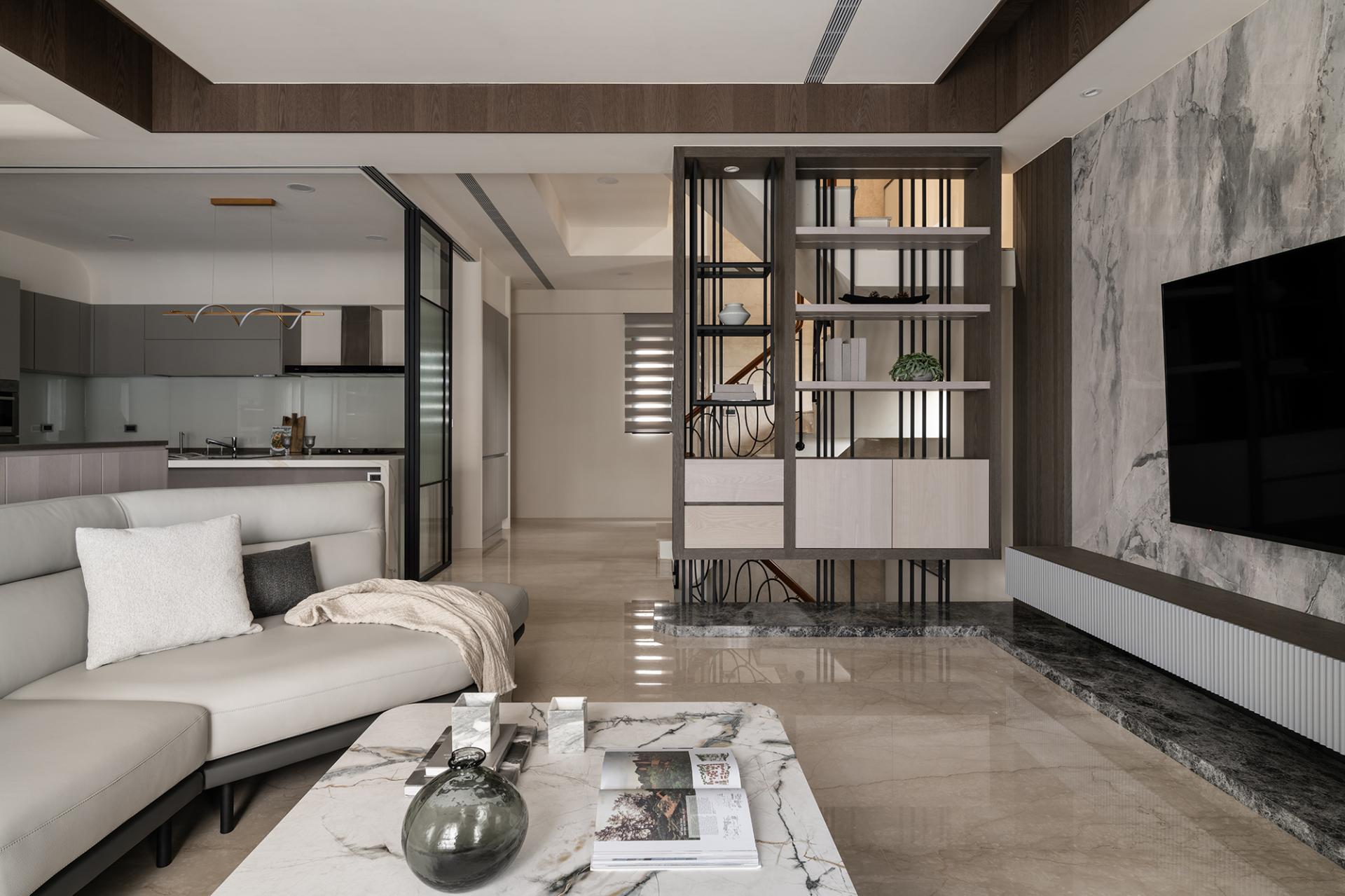
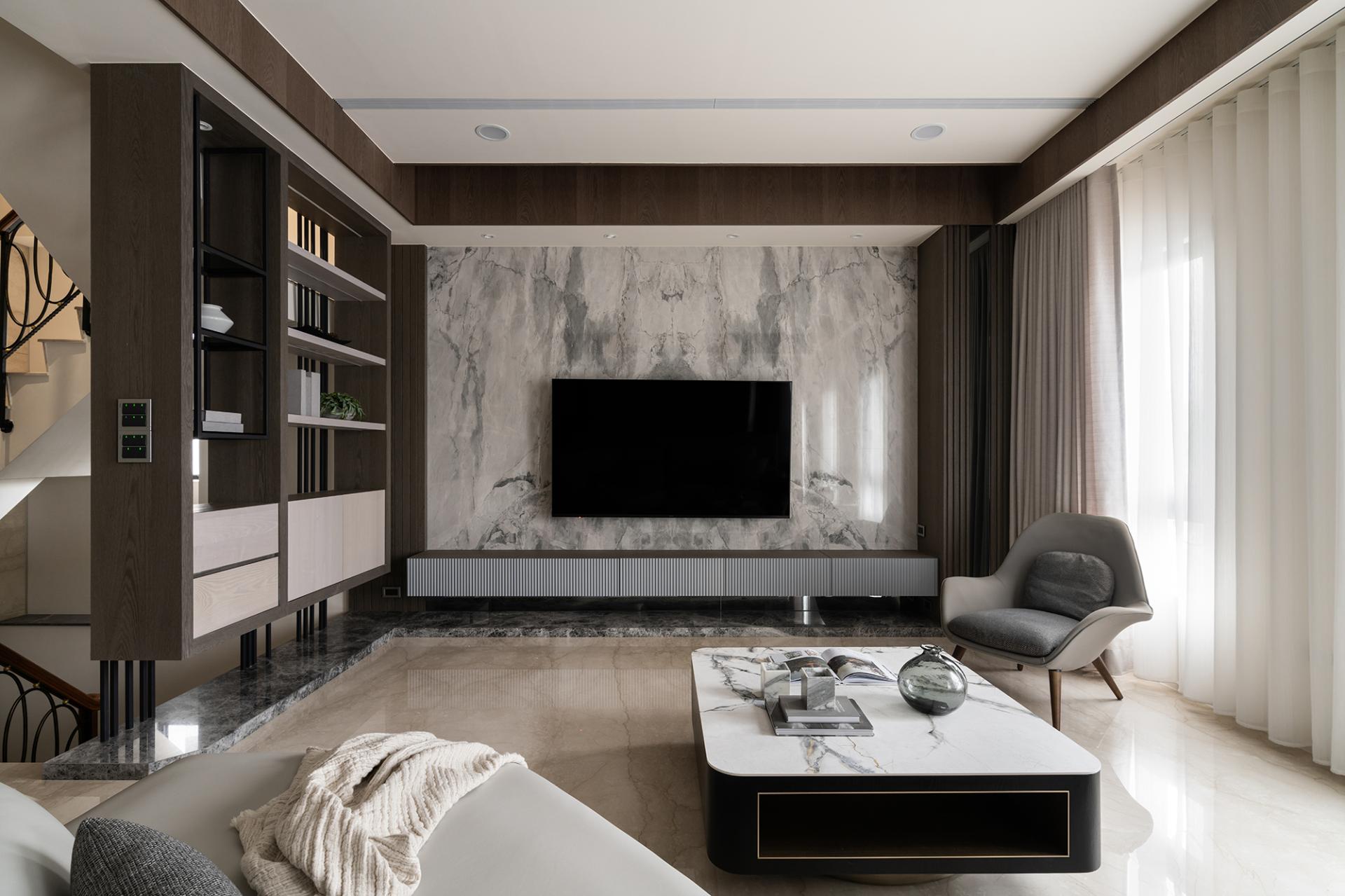
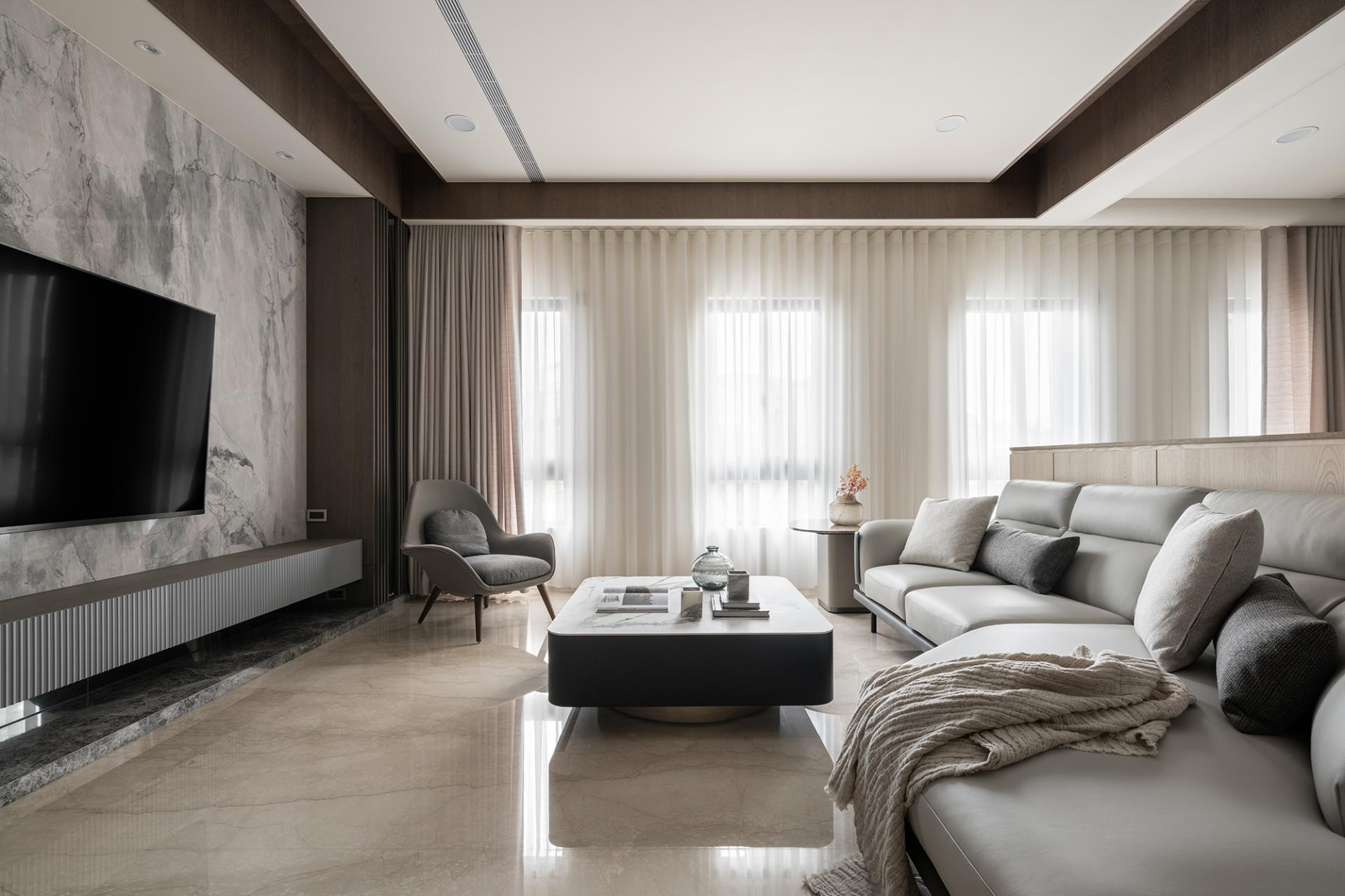
This detached townhouse is a remarkable feat of design, featuring an innovative “adjustable interface” that...
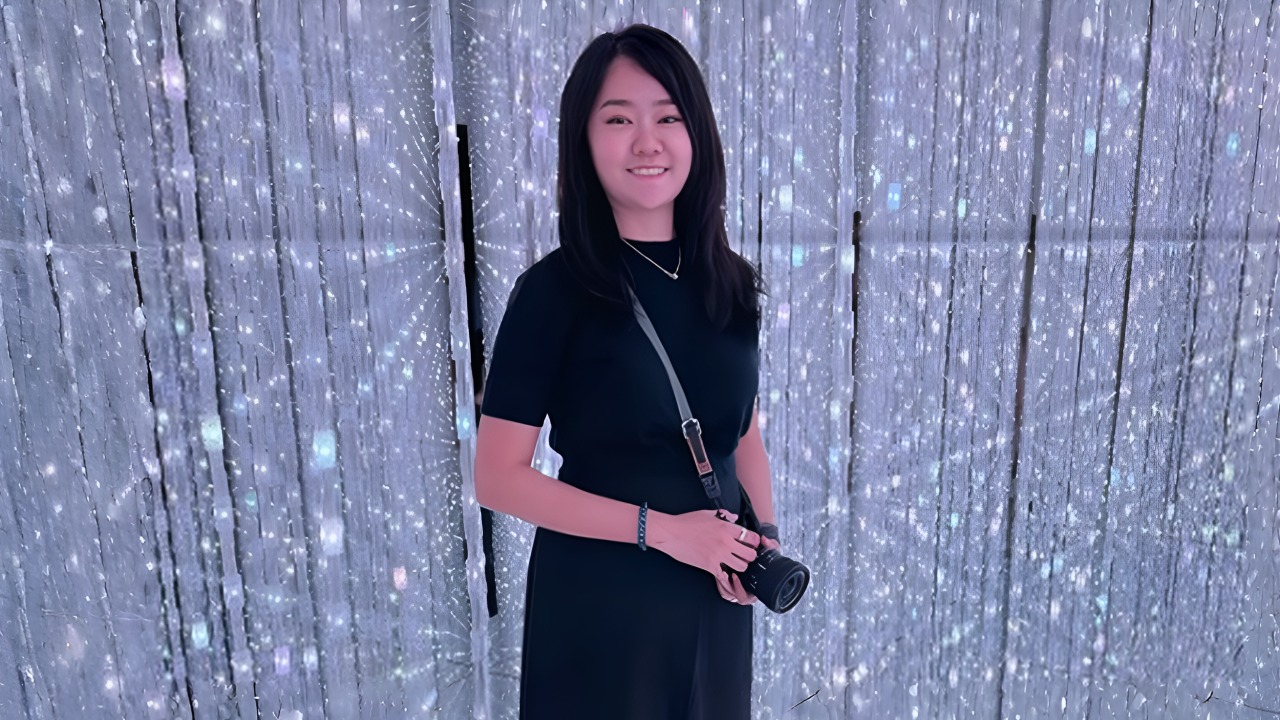
Yi-Ching Huang’s design philosophy is rooted in the relationship between space and human perception. She focuses on refining circulation, scale, and material transitions to create environments that adapt naturally to different uses. Her work prioritizes longevity, clarity, and a measured sense of spatial balance.
My decision to enter the field of design was not a sudden one, but rather the result of a long-term, gradual inclination. I have always been particularly sensitive to how space influences people’s states of being—light, materials, proportions, and even circulation can all shape a person’s emotions and behaviors within a space.
Through these observations, I gradually came to realize that design is not merely about visual aesthetics, but a profession that can engage with daily life and ultimately influence the quality of it.
From the very beginning of my career, I was clear that my goal was not simply to create spaces that look good, but to shape environments that remain meaningful, comfortable, and relevant even five or ten years later. This intention has stayed with me throughout my practice and continues to be the core value behind every project I undertake.
Being recognized on an international platform like the Tokyo Design Awards is, to me, more than just the honor of receiving an award—it is a validation of being understood across different cultures.
Design is inherently subjective, shaped by varying aesthetics, lifestyles, and values across regions. Therefore, when a single project is acknowledged within a cross-cultural evaluation framework, I tend to interpret that recognition as an indication that the core values embedded in the work hold a certain level of universality.
For me, this recognition also reaffirms an important belief: design does not need to rely on overly expressive forms, but rather return to more fundamental aspects—proportion, material selection, the use of light, and the human experience within the space.
When these foundations are well-resolved and mature, a project naturally gains the ability to transcend language and cultural boundaries, and to be appreciated by people from diverse backgrounds.
Being recognized at the Tokyo Design Awards has had a multi-layered impact on me.
From a career perspective, it has further affirmed that my current design direction is the right one. What we have consistently focused on is not short-term visual impact, but the stability and durability of a space throughout its use. The fact that this design approach is understood and recognized by international jurors gives me greater confidence in my decisions and a clearer sense of the core principles we should continue to deepen.
For the team, this recognition has effectively “raised the bar.” Once our work is placed on an international stage for evaluation, expectations around detail, proportion, material selection, and construction quality naturally evolve to a higher level. It is not merely an encouragement, but a reinforcement of our internal culture—we begin to approach every project from a more elevated perspective.
Overall, the impact of this award is not about short-term exposure. Rather, it serves as a driving force that pushes my career, the team, and the company toward a more stable and long-term trajectory.
I don’t pursue innovation for its own sake. Instead, I tend to work within an existing spatial logic, using subtle adjustments to explore different possibilities. The calibration of proportions, the relationships between materials, and the way light shifts over time—these are all part of a more understated yet ongoing form of “experimentation.”
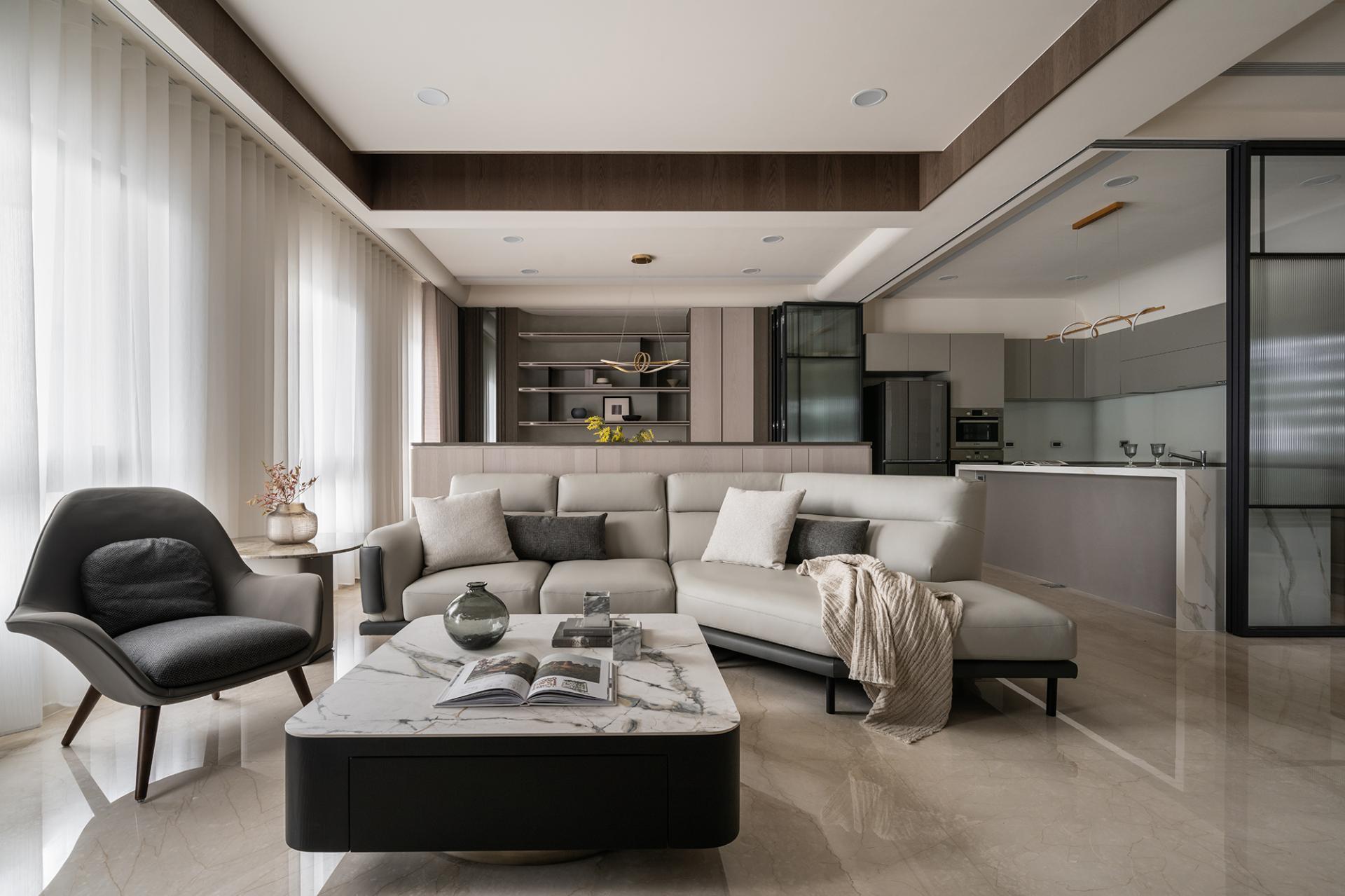
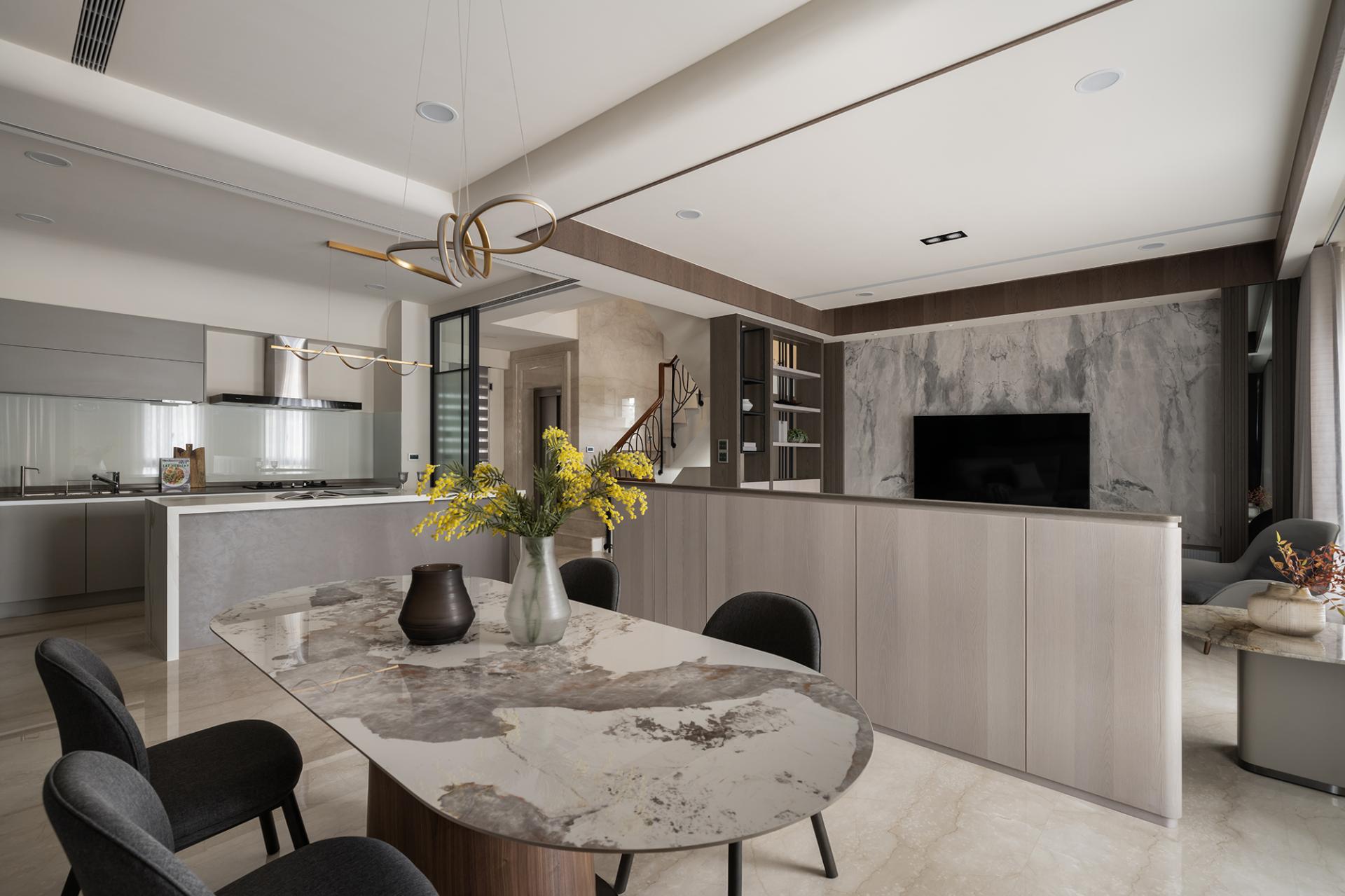
One specific approach in this project was the reconfiguration of circulation and boundaries within the shared living areas. Traditionally, functions such as the living room, dining area, and workspace are clearly separated. In this case, however, we sought to create a condition where these functions remain fluid without becoming disordered—through continuity of materials, careful control of scale, and layered lighting strategies.
This approach inherently carries a certain level of risk. Without precise control, the space can lose its center or even its sense of order. Through repeated refinement of proportions and details, what ultimately emerged was a balance between openness and definition—allowing users, in different scenarios, to naturally find a position that suits them.
For me, this process is what defines “experimentation” in design. It may not be immediately visible, but it gradually reveals itself through long-term use and experience within the space.
For me, inspiration rarely comes from a single design reference or a specific stylistic source. More often, it emerges from everyday experiences that may seem unrelated to design.
In one residential project, during the early concept stage, I did not begin with plans or stylistic direction. Instead, the idea originated from an experience by the sea. The wind that day, the shifting quality of light, and the layered movement of the water gave me a clear sense of a condition—one without rigid boundaries, yet still possessing an inherent order.
In that project, I intentionally softened the presence of physical partitions. Spatial definition was instead achieved through gradients of material, controlled tonal variations, and layers of light. The transition between walls and ceilings was not overly articulated, allowing for a sense of visual continuity. Storage was also largely integrated into the elevations, maintaining an overall clarity and fluidity within the space.
If there is one thing I hope more people can understand, it is this—design is not about choosing a style, but a process of decisions that must be fully developed and carried through.
Many people perceive design as selecting colors, materials, or determining how a space will look. In reality, those are merely the outcomes. What truly matters is the underlying logic established in the early stages: the planning of circulation, the anticipation of usage scenarios, the control of scale, and the way each detail interacts with another.
In my design process, I dedicate a significant amount of time to early-stage integration and clarification—defining design details, materials, colors, construction drawings, and even the overall budget structure as thoroughly as possible before moving into construction. The intention is not only to achieve a complete visual result, but to ensure that every step of execution is grounded in a stable and well-defined framework.
Because the true completion of a space happens on-site, layer by layer, through construction. If the foundation is not properly established at the outset, any effort made later tends to be corrective rather than truly completing the design.
What I hope more people can recognize is this—the value of design does not lie solely in what is ultimately seen, but in every decision that has been carefully considered and confirmed throughout the process. Only then can a space, once inhabited, sustain the condition it was originally meant to achieve over time.
In my approach to design, I do not see “meeting client expectations” and “upholding my own design principles” as opposing forces. Rather, they are gradually aligned through a process of communication and interpretation.
Most client requests, on the surface, appear to be preferences related to style or form. However, they are often rooted in deeper patterns of living and expectations of how a space will be used. For this reason, I focus first on understanding why a particular need exists, rather than responding immediately with acceptance or rejection. Once the underlying intent is clarified, many apparent conflicts can in fact be reinterpreted and integrated.
On this foundation, I establish clear design principles—whether the circulation is logical, proportions are well-balanced, materials are durable, and whether the space can maintain its quality over time. These are the aspects I am less willing to compromise on, as they directly affect the long-term performance of the space.
At the same time, I allow for flexibility in areas of expression—such as color preferences, selected materials, or elements that carry personal meaning. This not only addresses the client’s needs, but also allows the space to more closely reflect the people who inhabit it.
For me, the key to balance is not about concession, but about establishing a clear framework—what can be adjusted, and what must be upheld. When these boundaries are well-defined, design no longer becomes a one-sided imposition or a compromise, but rather a shared outcome.
The most ideal result is when clients, after living in the space, come to realize that the aspects I once “insisted on” are precisely what make the space functional, enduring, and capable of standing the test of time.
In the process of this award-winning project, the greatest challenge was not a single design issue, but rather how to achieve a precise balance between “openness” and a sense of order.
From the outset, we set the intention for the space to feel fluid and continuous, while still maintaining clear functional boundaries and stability. Although this concept may seem straightforward, its execution involves a high level of control across many details. Any imbalance in one aspect can cause the entire space to feel loose or even lose its center.
In the shared areas, for example, we did not rely on explicit partitions to separate the living room, dining area, and workspace. Instead, boundaries were defined through continuity of materials, calibrated proportions, and layered lighting. The greatest difficulty lay in the need to carefully refine every dimension—furniture sizes, circulation widths, elevation proportions, and even the placement and intensity of light all had to be precisely aligned.
During the construction phase, the challenge shifted to ensuring that the design was accurately realized. Many details that appear simple—such as edge conditions, material transitions, or the integration of concealed storage—can significantly affect the overall clarity if executed imprecisely. As a result, we spent considerable time communicating and adjusting with the construction team, and in some cases, refining or reworking details on site.
For me, the way to overcome these challenges is quite straightforward: to return to the original design logic and continuously evaluate whether each decision still aligns with the overall intent. When the principles are clear, choices do not become compromises, but rather steps toward completion.
When I encounter creative blocks, I don’t force myself to come up with an immediate answer. Instead, I intentionally step away from the design itself.
In many cases, the difficulty is not a lack of ideas, but rather an over-concentration on a particular solution, which leads to rigid thinking. By distancing myself from the problem, I allow my perception to return to a more open state.
One of the most common approaches I take is to engage with things unrelated to design—such as spending time outdoors, observing how light changes throughout the day, or noticing how materials exist within a natural environment. Sometimes, it is simply about allowing myself to be still, without processing any information, and letting my thoughts gradually settle.
Another method I value is returning to the user. When a design becomes constrained by formal limitations, I revisit the fundamental scenarios of use: how people move through the space, where they pause, and what truly matters within that environment. Many of the obstacles tend to resolve themselves through this process.
For me, inspiration is not something to be chased, but something that emerges naturally when the conditions are right. Rather than constantly adding stimulation, I tend to reduce distractions—allowing what is essential to surface on its own.
What I bring into my design is not a particular style, but rather my perspective on “time” and “stability.”
In this industry, it is easy to be driven by trends or immediate visual impact. However, what I care about more is whether a space can still hold its integrity five or even ten years from now. This perspective comes from my observations of everyday life—many environments that feel truly comfortable are not the most visually striking, but those that can be used over time without causing fatigue.
This way of thinking directly influences my design decisions. I intentionally reduce overly expressive formal gestures, and instead emphasize the stability of proportions, materials, and details. The goal is to create spaces with enough flexibility to accommodate different stages of life, rather than being quickly defined—or limited—by a particular style.
Another core value for me is restraint. Whether in the use of materials, the arrangement of elements, or the configuration of space, I constantly remind myself that design is not about adding more, but about identifying what is unnecessary and removing it. Through this process of reduction, what truly matters becomes more apparent.
If these values have a source, I would say they come from a long accumulation of lived experience—how I perceive space, understand rhythm, and define quality. These aspects are not always explicitly stated, but they gradually become embedded in every design.
For those who are just entering the field, or are still finding their way as young designers, I believe that developing judgment is far more important than rushing to establish a personal style.
On the surface, design may seem like a series of choices, but at its core, it is about discernment. What should be kept, what should be removed, what may be effective in the short term but unsustainable over time—these decisions are often more critical than whether something simply looks good.
I would also suggest not being overly focused on gaining recognition too quickly. While this industry often revolves around discussions of style and trends, the work that truly endures is rarely the most visually striking. Instead, it is the work that can withstand the test of time—in its proportions, materials, and attention to detail.
Throughout the process, there will inevitably be a gap between reality and ideal conditions. Rather than rushing to compromise, I believe it is more important to execute each aspect as well as possible within the current context. When the foundation is solid, the ability to make better choices gradually returns to you.
Ultimately, consistently producing stable and well-resolved work is far more important than any single moment of recognition. Design is not a short-term competition, but a path that requires long-term accumulation.
If given the opportunity, I would hope to collaborate with Peter Zumthor.
I have always admired his pursuit of spatial atmosphere and sensory experience. His work does not emphasize formal expression, but instead relies on the careful orchestration of materials, light, and detail to create spaces that are quiet yet deeply affecting. The strength of his work is not immediately apparent—it reveals itself gradually, through the act of inhabitation.
This design philosophy has had a profound influence on me. In my own practice, I also consciously reduce overt stylistic expression, choosing instead to focus on the stability of proportions, materials, and spatial relationships—allowing the work to accumulate meaning over time, rather than relying on immediate visual impact.
If such a collaboration were possible, what I would value most would not simply be the outcome of a project, but the opportunity for dialogue—understanding how he makes decisions throughout the design process. For example, when to intervene and when to step back, and how to preserve a sense of openness while still maintaining strength within a space.
If I could choose, I would hope someone would ask me: “Will this space still hold its integrity in five or ten years?”
For me, the true value of a project does not lie in its condition at the moment of completion, but in whether it remains logical, comfortable, and perhaps even improves after being lived in over time.
Many designs can deliver a strong visual impact when they are first completed. However, once daily life begins to unfold within the space, what truly matters is whether the circulation flows smoothly, whether the materials are durable, whether storage is sufficient, and whether the atmosphere continues to feel at ease. These are the factors that ultimately determine whether a space can endure.
For this reason, in my design process, I intentionally reduce overly expressive formal gestures, and instead place emphasis on the stability of proportions, materials, and details. The aim is to create spaces that do not rely on a single moment of impact, but can be inhabited, experienced, and gradually enriched over time.
Read about Exploring Design Systems with Mairu Kikuchi: Connecting Japan & Egypt in a New Creative Language by clicking this interview here.