Harsh Verma: Outstanding AI Engineer
Over the past decade, I have built a career at the intersection of artificial intelligence,...

Harsh Verma's career has been defined by a focus on building AI systems that are as trustworthy as they are capable. Combining expertise in machine learning, distributed systems, and secure AI architecture, he develops enterprise solutions that place ethics, transparency, and long-term reliability at the center of technological progress.
Thank you—I’m truly honored to receive the Noble Technology Awards for “Outstanding AI Engineer.” I work at the intersection of AI and Cybersecurity Engineering as Principal Software Engineer - AI in Santa Clara, California, with over a decade of experience designing and scaling intelligent systems that operate at the intersection of artificial intelligence, security, and enterprise software. My work has focused on building resilient, high-impact AI-driven solutions that not only advance automation and decision-making but also address critical challenges in trust, safety, and system integrity.
Throughout my career, I’ve led and contributed to the development of large-scale AI platforms across domains such as cybersecurity, enterprise risk management, and intelligent infrastructure. My expertise spans machine learning, distributed systems, and secure AI architecture, with a strong emphasis on deploying production-grade solutions that deliver measurable business and societal impact. In parallel.
I actively contribute to the broader technology ecosystem as a mentor, hackathon judge, and advisor, supporting startups and emerging engineers in building the next generation of AI innovation.
I am particularly passionate about advancing responsible AI, ensuring that intelligent systems are not only powerful but also ethical, transparent, and secure by design. This recognition reflects not just my individual journey, but also the collective progress we are making as an industry toward building AI systems that can be trusted at scale.
What motivated this work was a growing realization that as AI systems become more powerful, they also become more vulnerable and in many cases, more critical to protect. Early in my career, I saw firsthand how traditional approaches struggled to keep up with the scale and sophistication of modern threats. At the same time, AI was rapidly advancing, but often without a strong emphasis on security, reliability, or trust.
That gap became the driving force behind my work.
I wanted to build systems that didn’t just leverage AI for performance, but also embedded security and resilience at their core. This meant rethinking how intelligent systems are designed treating security not as an afterthought, but as a foundational principle. Whether it was improving threat detection, strengthening enterprise platforms, or enabling more trustworthy decision-making, my focus has been on creating solutions that operate effectively in real-world, high-risk environments.
This vision closely aligns with both my personal mission and the broader goals of the organizations I’ve been part of. On a personal level, I’ve always been driven by the idea of building technology that people can rely on—especially in moments when it matters most. From a company perspective, the goal has been to deliver scalable, production-ready AI solutions that not only drive innovation but also safeguard systems, data, and users.
In many ways, this achievement represents the convergence of those two paths: advancing AI capabilities while ensuring they remain secure, responsible, and impactful. It’s not just about building smarter systems it’s about building systems that can be trusted at scale.
At a high level, the core idea behind my work was to rethink how AI systems are built for real-world, high-risk environments where performance alone isn’t enough. The focus was on creating intelligent systems that are not only accurate and scalable but also secure, resilient, and trustworthy by design.
One of the key advancements was integrating AI more deeply into the security lifecycle itself. Instead of treating machine learning as a standalone capability, I designed systems where AI continuously learns from evolving data patterns detecting anomalies, adapting to new threats, and improving decision-making in near real-time. This required combining large-scale machine learning models with distributed system architectures that could operate reliably under heavy workloads and dynamic conditions.
Another important aspect was building with a “security-first AI” mindset. This meant addressing challenges like adversarial behavior, model integrity, and data trust from the ground up. I introduced approaches that strengthen how models are trained, validated, and deployed ensuring they remain robust even when exposed to unpredictable or malicious inputs. In practice, this translated into systems that are better at identifying subtle threats, reducing false positives, and maintaining performance in complex environments.
Scalability and production readiness were also central to the solution. It’s one thing to build a powerful model in isolation, but another to deploy it across enterprise-scale infrastructure. I focused on creating architectures that seamlessly integrate with existing platforms, enabling real-time processing, efficient resource utilization, and consistent performance at scale.
What makes this work unique is the combination of these elements bringing together AI, cybersecurity, and distributed engineering into a unified approach. Rather than optimizing for a single dimension, the goal was to create a balanced system that delivers intelligence, reliability, and security simultaneously.
Ultimately, the innovation lies not just in any one component, but in how these ideas come together to solve a larger problem: enabling AI systems that organizations can confidently depend on in mission-critical scenarios.
Throughout my career, my contribution has been centered on bringing clarity, direction, and execution discipline to complex, high-impact projects. Working at the intersection of AI and cybersecurity, I’ve often been in environments where problems are not clearly defined and the stakes are high so leadership begins with shaping the right vision.
My expertise allows me to connect the dots between advanced machine learning, system architecture, and real-world security challenges. This has helped ensure that projects are not just innovative in theory, but practical, scalable, and resilient in production. I’ve consistently focused on designing solutions that can evolve adapting to new data, emerging threats, and changing business needs.
From a leadership perspective, one of my key strengths has been the ability to bridge cross-functional teams. AI projects often require close collaboration between engineers, data scientists, product leaders, and security teams. I’ve worked to align these groups around a shared goal, translating complex technical concepts into clear, actionable direction and ensuring that execution stays on track.
I also place a strong emphasis on building a culture of ownership and high standards. Encouraging teams to think beyond immediate outputs to consider reliability, security, and long-term impact has been critical in delivering systems that perform consistently under real-world conditions. This approach not only improves outcomes but also strengthens the overall engineering mindset within teams.
Finally, I lead by staying hands-on when it matters most guiding architectural decisions, reviewing models and systems, and helping resolve critical challenges. This balance of strategic vision and technical depth has enabled me to drive projects from concept to production successfully.
Ultimately, my role has been to ensure that every project delivers meaningful impact combining innovation with trust, scalability, and real-world effectiveness.
The innovation addresses the challenge of making AI systems more reliable, scalable, and trustworthy in real-world environments. Many existing processes rely on fragmented tools, manual intervention, or static rule-based systems that struggle to keep up with the speed, complexity, and volume of modern data.
The approach and innovation improve this by introducing more adaptive, intelligent systems that can learn from data continuously, identify patterns more accurately, and respond in near real-time. This reduces inefficiencies, minimizes human intervention, and enhances overall decision-making.
In addition, it emphasizes building systems that are secure and resilient from the ground up, rather than treating these aspects as afterthoughts. This leads to more consistent performance, fewer errors, and greater confidence in outcomes.
Overall, the innovation streamlines operations, improves accuracy and scalability, and enables organizations to operate more efficiently while adapting to evolving demands.
What makes this innovation stand out is its focus on combining intelligence, scalability, and reliability into a unified approach. Rather than addressing a single aspect of the problem, it brings together multiple capabilities to create a more holistic and practical solution.
One of the key features is adaptability the system is designed to continuously learn from new data and evolving conditions, allowing it to remain effective over time rather than becoming outdated. Another important aspect is scalability, ensuring that the solution can operate efficiently across large, complex environments without compromising performance.
The innovation also emphasizes robustness and reliability. It is built to perform consistently under real-world conditions, handling uncertainty and variability while maintaining accuracy. This is complemented by a strong focus on security and trust, ensuring that the system’s outputs are dependable and aligned with real-world requirements.
Additionally, the solution is designed with integration and usability in mind, making it easier to incorporate into existing processes and workflows. This reduces friction in adoption and enables organizations to realize value more quickly.
Overall, what differentiates the innovation is not just individual features, but how these elements work together to deliver a solution that is intelligent, resilient, and practical for real-world impact.
While the idea and vision were important, bringing it to life was truly a collaborative effort. One of the biggest contributions was the diverse expertise across the team. Engineers, data scientists, and domain experts worked closely together, each bringing a unique perspective that helped refine the approach and strengthen the overall system. This cross-functional collaboration ensured that the solution was not only technically sound but also practical and aligned with real-world needs.
Having the support to explore new ideas, iterate and challenge conventional approaches made it possible to push beyond incremental improvements and build something more impactful. In addition, strong execution and teamwork were key. From designing architectures to validating models and deploying systems at scale, the quality and shared ownership played a major role.
Ultimately, this achievement reflects a combination of individual vision and collective effort. The support, collaboration, and dedication of the team and organization were instrumental in transforming the idea into a meaningful and impactful innovation.
One of the biggest challenges during development was navigating complexity, both technical and operational. Building intelligent systems in real-world environments means dealing with large-scale data, evolving requirements, and the need for consistent performance under uncertainty. Balancing innovation with reliability was not always straightforward, especially when working with systems that needed to be both highly accurate and resilient.
Another key challenge was integrating different components: machine learning models, infrastructure, and security considerations into a cohesive system. Often, these elements are developed in silos, and aligning them into a unified, production-ready solution requires careful design and continuous iteration.
To overcome these challenges, the idea is to rely heavily on a combination of technical depth and structured problem-solving. Breaking down complex problems into manageable parts allowed me to address issues systematically while keeping the bigger picture in focus. The experience across AI, distributed systems, and security helped in making informed architectural decisions that balanced performance, scalability, and robustness.
Adaptability also played a crucial role. As new challenges emerged, the focus on quickly learning, iterating, and refining the approach rather than being locked into a single solution. Clear communication and collaboration are equally important. Working closely with cross-functional teams helped surface issues early and resolve them efficiently.
Ultimately, these challenges became opportunities to strengthen the solution. By combining technical expertise with a flexible and solution-oriented mindset, lead the development toward a system that performs reliably in real-world conditions.
This helps shift the industry toward building technology that is not only more intelligent but also more reliable, secure, and responsible. As organizations increasingly rely on AI and advanced digital systems, there is a growing need for solutions that people can trust solutions that can scale effectively, adapt to change, and deliver meaningful results in real-world environments.
For the industry, these systems demonstrate that innovation and trust do not have to be separate goals. Too often, organizations focus on speed and capability without giving equal attention to resilience, transparency, and long-term sustainability. My goal is to show that these qualities can and should be built together, creating a stronger foundation for future technologies.
For the audience and end users, I hope the impact is greater confidence in the systems they use every day. Whether through better decision-making, improved efficiency, or stronger security, the ultimate purpose of this work is to make technology more helpful, dependable, and accessible.
More broadly, I hope this scalable secure solutions inspires others to think beyond solving today’s problems and to design solutions that are prepared for the challenges of tomorrow.
Winning this award is a meaningful validation of how to view technological progress not just as advancing capabilities, but as building systems that are responsible, resilient, and impactful in the real world.
The vision for innovation has always been centered on balance. While pushing the boundaries of what AI and modern systems can achieve is important, it is equally critical to ensure that these technologies are trustworthy, secure, and designed with long-term sustainability in mind. This recognition reinforces the idea that true innovation is not just about speed or complexity, but about creating solutions that people and organizations can confidently depend on.
It also reflects my belief that the future of technology lies in thoughtful integration, bringing together intelligence, scalability, and reliability into cohesive systems that solve meaningful problems. Awards like this highlight the importance of not only building cutting-edge solutions but also ensuring they are aligned with real-world needs and challenges.
On a personal level, this recognition motivates me to continue pushing forward exploring new ideas, solving increasingly complex problems, and contributing to a future where technology serves as a force for positive, trustworthy impact.
One of the primary challenges during the development process was balancing innovation with real-world reliability. It’s often easier to build systems that perform well in controlled environments, but ensuring consistent performance at scale under unpredictable conditions required careful design, testing, and iteration.
Another challenge was managing complexity. The solution involved multiple components working together, including data pipelines, intelligent models, and system infrastructure. Aligning these pieces into a cohesive and efficient system required continuous refinement and strong coordination across different areas.
These challenges are solved by breaking them down into smaller, manageable problems while keeping a clear focus on the overall objective. Iterative development played a key role testing early, learning quickly, and improving continuously helped reduce risks and strengthen the system over time.
Collaboration was also critical. Engaging closely with cross-functional teams allowed us to identify potential issues early and incorporate diverse perspectives into the solution. This not only improved the quality of the outcome but also ensured that the system was practical and aligned with real-world needs.
Ultimately, a combination of structured problem-solving, adaptability, and strong collaboration helped transform these challenges into opportunities to build a more robust and impactful solution.
As technology continues to evolve, there is an increasing expectation that solutions must operate effectively in real-world environments, handling scale, complexity, and constant change without compromising performance.
In the future, I believe innovations like this will play a role in shaping industry standards where scalability, resilience, and responsible design are treated as essential components rather than optional enhancements. This will not only improve how organizations operate but also increase trust and confidence in the technologies they rely on.
More broadly, the long-term impact lies in enabling smarter decision-making, greater efficiency, and more secure systems across industries. By helping establish a stronger foundation for how modern solutions are built and deployed, this innovation contributes to a future where technology is both powerful and dependable.
What excites me most right now is the rapid evolution of AI toward more autonomous, adaptive, and context-aware systems. We’re moving beyond static models into a new era where intelligent systems can reason, learn continuously, and operate with a higher degree of independence. This shift is transforming how complex problems are approached and solved.
Another key trend is the growing focus on responsible and secure AI. As these systems become more deeply embedded in critical environments, there is increasing attention on building them to be transparent, resilient, and aligned with human intent. This aligns closely with my work, where I focus on ensuring that innovation is paired with trust and reliability from the ground up.
I’m also excited by advancements in large-scale distributed systems and real-time data processing, which are enabling AI to operate at unprecedented scale and speed. These technologies make it possible to turn insights into action almost instantly, opening up new possibilities across industries.
Finally, the convergence of AI with cybersecurity is an area of significant impact. As threats become more sophisticated, the use of intelligent, adaptive defense mechanisms is becoming essential. This intersection directly influences my work, as I continue to explore ways to build systems that are not only intelligent, but also proactive and resilient.
Overall, these trends reinforce a common direction toward building systems that are smarter, faster, and more trustworthy and they continue to shape how I approach both innovation and real-world problem-solving.
My biggest advice is to focus on solving real problems, not just building impressive technology. It’s easy to get caught up in complexity or novelty, but the most impactful innovations come from a deep understanding of real-world challenges and a clear vision of how to address them.
Second, think beyond the initial idea and design for scale, reliability, and long-term impact from the beginning. Transformative ideas often fail not because they aren’t innovative, but because they can’t sustain real-world demands. Building with adaptability and resilience in mind will make your solution far more meaningful over time.
Collaboration is also critical. The best ideas are rarely built in isolation; bringing together diverse perspectives helps refine thinking, uncover blind spots, and strengthen execution. Strong communication and alignment within a team can make the difference between a good idea and a successful one.
Equally important is the ability to iterate. Don’t wait for perfection; test early, learn quickly, and continuously improve. Challenges and setbacks are part of the process, and how you respond to them often defines the outcome more than the idea itself.
Finally, stay grounded in purpose. Technology has the power to shape how people live and work, so it’s important to build responsibly and with intention. If you stay focused on creating value and impact, the innovation will naturally follow.
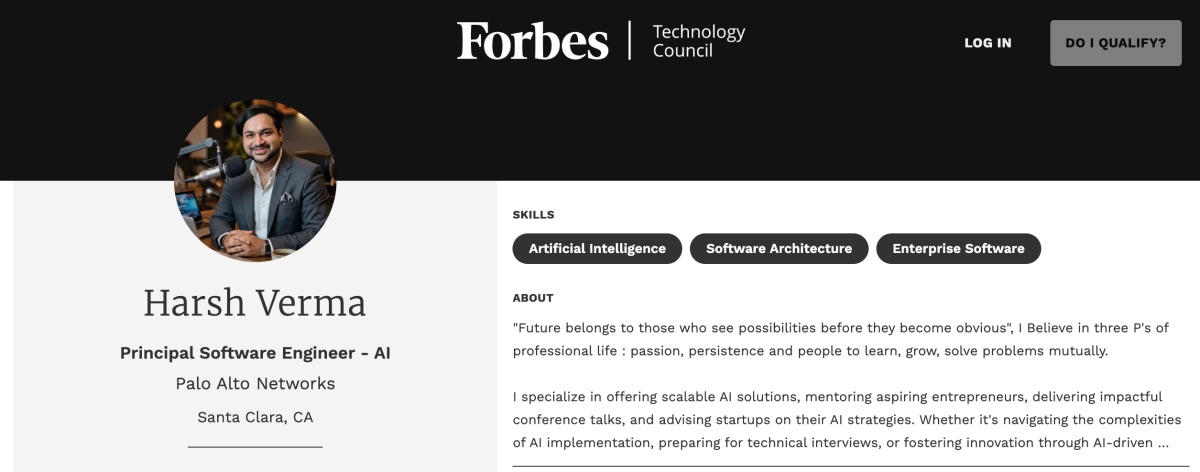
Discover and read about Connecting Workforce Technology with Business Success with Abdul Jabbar Mohammad in this interview here.