OiT - One in Thousands | 2023
OiT is an iPad-based data visualization dashboard designed to assist users in making informed...

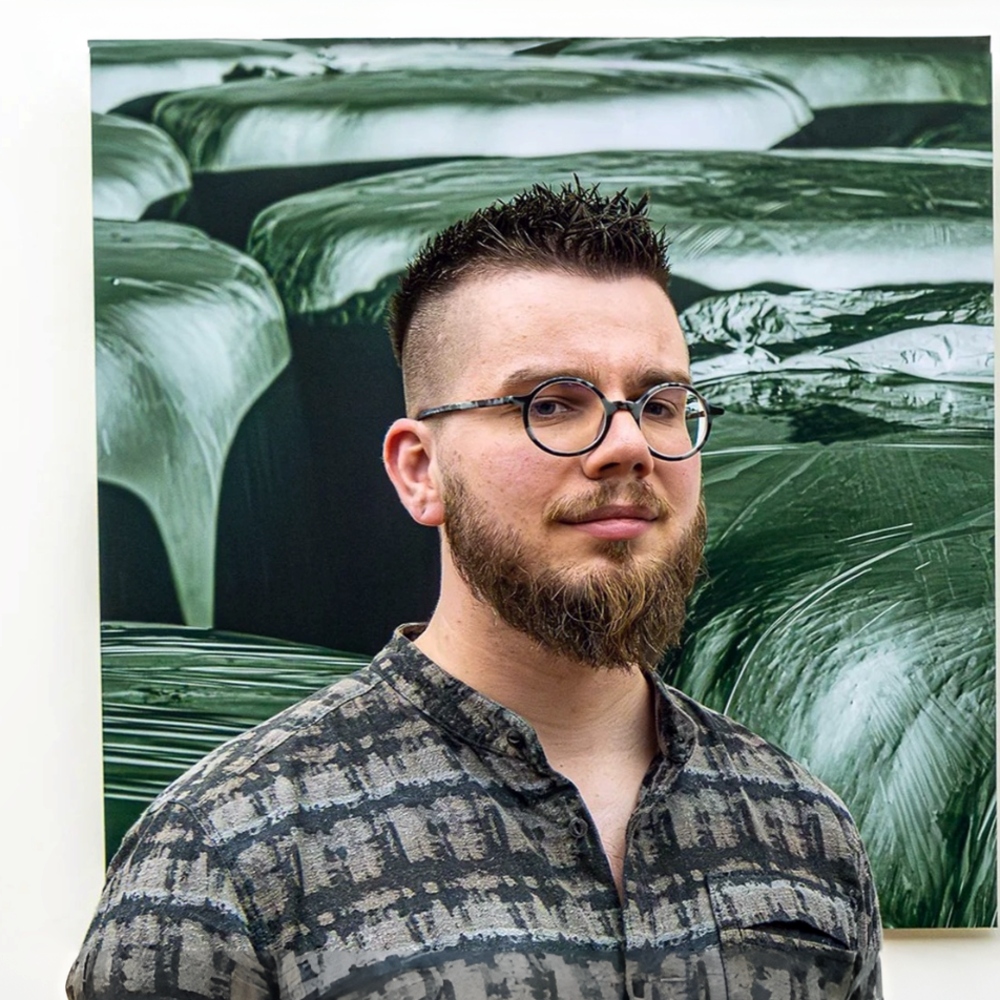
Hello there, I'm Yunsheng Zhou but you might also know me as Inken! My journey as a designer is fueled by a deep-seated passion for creating experiences that resonate with joy and engagement.
My decision to pursue a career in design stems from my fascination with creatively solving problems in a context-specific manner. Design, in my perspective, goes beyond creating visually pleasing elements; it is about devising innovative solutions for real-world challenges.
The continuous process of critical thinking, analysis, and the creation of solutions that are not only effective but also enrich everyday experiences resonates profoundly with me.
My project 'OiT - One in Thousands' is a solo passion project where I dedicate myself to creating designs that not only meet but exceed user expectations.
Beyond my professional commitments, I embrace my creative spirit as an indie game developer. This journey has seen me design and develop over 10 unique games, each standing as a testament to my unwavering commitment to fostering creativity and innovation in the dynamic world of interactive entertainment.
Design, to me, isn't merely a profession; it's a pervasive mindset that colours every aspect of my life. It serves as a lens through which I perceive and engage with the world around me. Whether I'm in the kitchen experimenting with innovative ways to streamline my cooking process or envisioning a revamped layout for my living space that balances functionality and aesthetics, design thinking shapes my approach.
Fundamentally, design embodies problem-solving and enhancement, extending far beyond professional boundaries. It involves leveraging the refined principles from my career and applying them broadly, transforming ordinary moments into meticulously crafted experiences and elevating routine thinking to the scale of a dynamic and expansive platform.
I am particularly attracted to designs that seamlessly blend practicality with creativity, especially in areas typically overlooked in terms of design. The type of design that intrigues me the most is one that transcends the ordinary, transforming mundane aspects into something extraordinary through creative problem-solving.
Defining 'good design' is intricate and multifaceted. In my view, the essence of a good design transcends universal standards or aesthetic criteria; instead, it thrives in its context-specific effectiveness. This form of design is adaptive and empathetic, grounded in a profound understanding of user needs, the design's operational environment, and the targeted problem-solving objectives.
It involves a meticulous process of harmonising form with function to achieve an outcome that feels both intuitive and ground-breaking. The true gauge of good design, therefore, lies in its capacity to deeply resonate with its intended audience, seamlessly solve problems, and meaningfully enhance the user experience.
I became intrigued with the concept after delving into the most trending domain—Gen AI and Machine Learning. These technologies are rapidly evolving and play a pivotal role in enhancing efficiency while alleviating repetitive workloads in our daily routines.
In the realm of architecture and engineering, AI is extensively employed in generative design, a process that explores various permutations of a solution to swiftly generate design alternatives. Nevertheless, a challenge arises as intelligent systems can produce a multitude of solutions, making it challenging for users to distill and potentially impeding workflow efficiency.
After conducting thorough research which involved interviews with experts and users to gain insights into the current workflow of generative design, the typical working scenario involves users establishing specific constraints and design goals. Subsequently, users input metrics and requirements, prompting the intelligence system to generate a considerable number of outputs, often in the thousands.
Users then face the challenge of selecting a specific output from this vast array of possibilities. This process, however, introduces a problem: the intelligence system generates an overwhelming number of outcomes, making it exceedingly difficult for users to navigate and distill suitable solutions. This not only consumes a significant amount of time but also diminishes workflow efficiency.
In response to this challenge, I developed an iPad-based application featuring a data visualisation dashboard. This tool assists users in decision-making by facilitating objective and subjective sorting among the thousands of generated solutions.
The primary aim is to help users clearly define and select designs generated by intelligence systems, streamlining the ranking and selection process for improved efficiency. The target audience for this application includes structural engineers and industrial designers within the architecture and engineering sector. Named "OiT - One in Thousands," the application guides users through the entire scenario, from generating design options to selecting the most suitable choices.
Absolutely, my country's cultural heritage plays a significant role in shaping my design process. The emphasis on problem-solving and innovation in my design philosophy is deeply influenced by the rich cultural background and heritage of my country. Our culture values creativity, adaptability, and practical solutions, all of which are reflected in my approach to design.
Receiving this award is incredibly meaningful to me as a solo designer on this project. It's a recognition of our commitment to designing solutions that are not just innovative but also resonate with users on a deeper level. For me personally, it validates my approach of infusing creativity and practical problem-solving into every aspect of design, whether it's in the digital realm or beyond.
OiT - One in Thousands is an application focusing on better support, result evaluation, and data visualisation for generative design, the target audience is the structural engineering and industrial designers working in the architecture and engineering area. The goal is to help users clearly define the design made by AI, efficiently ranking and picking the design options to support them better. This project presented an interactive interface and a mock-up video showing how it benefits users to make better design decisions.
One of the most challenging aspects of my work is visualising large datasets for AI-generated results, particularly in aiding users to efficiently locate their desired outcome among thousands of options. The difficulty stems not only from the vast amount of data but also from the need to make this data clear and significant for the end user.
Achieving a balance is crucial: the information must be visually captivating yet straightforward, without oversimplifying or detracting from the data's true meaning.
Winning this award marks a significant milestone in my journey as a designer. It not only recognises my efforts in mastering the complex task of visualising large datasets for AI-generated results but also validates the approach I take toward making information both accessible and meaningful to users. Looking ahead, this accolade will undoubtedly fuel my drive to innovate further.
My personal top 3 is: creativity, inclusivity and sustainability!
That's a good question! Reflecting on the diverse categories, I must say that each has done an incredible job, showcasing remarkable talent across various domains. It's evident that we all concentrate on distinct verticals, channeling our creative energies to innovate within specific niches. This diversity in focus is what makes our field so dynamic and impactful. In my area of expertise, particularly in visualising complex data sets and AI-generated results, the goal has always been to make intricate information accessible and engaging for the end user.
Other categories, too, have their unique challenges and objectives, whether it's in user interface design, graphic design, or any other specialised field. Each of us, in our respective domains, strives to push the boundaries of what's considered possible in design.
AI is poised to become a central trend, significantly impacting how we approach design processes and solutions. The integration of AI into design tools and methodologies will not only streamline complex tasks, such as data visualisation and user experience optimisation, but also open new avenues for creativity and innovation.
AI's ability to analyse and interpret vast amounts of data will enable designers to gain deeper insights into user behavior and preferences, leading to more personalised and user-centric designs. This technology will also facilitate the creation of more dynamic and responsive designs that can adapt to changing user needs in real-time.
My primary advice for aspiring designers aiming to create award-winning work is to continuously strive to expand the boundaries of design. It's crucial to think beyond conventional norms and established standards. The design landscape is ever-evolving, and what sets award-winning designs apart is often their ability to challenge and redefine what's possible.
I will recommend trying to use more tools that can help boost efficiency!
Interesting question! A fun fact about me is that I am a game lover, I got 999 Korok Seeds in Zelda Breath of Wild!

Read more about this interview with Min Jea Seo and Darae Kim, the Gold Winner of the 2023 London Design Awards.