Earth Abstracted
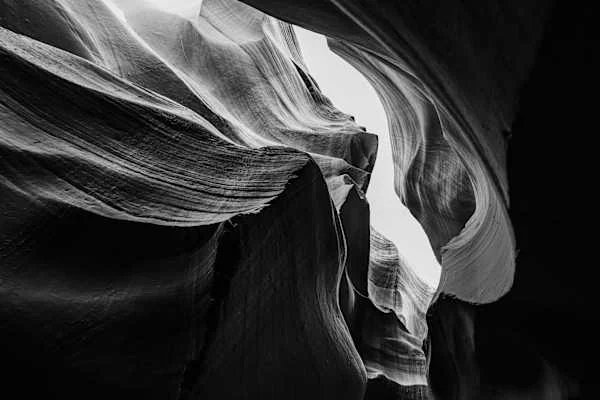
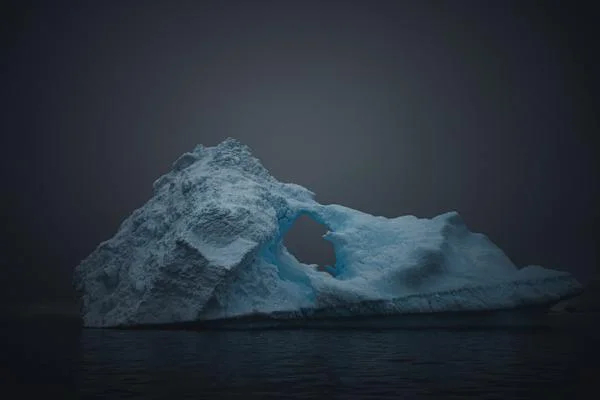
Earth Abstracted explores patterns, textures, and forms found in nature that often go unnoticed at...
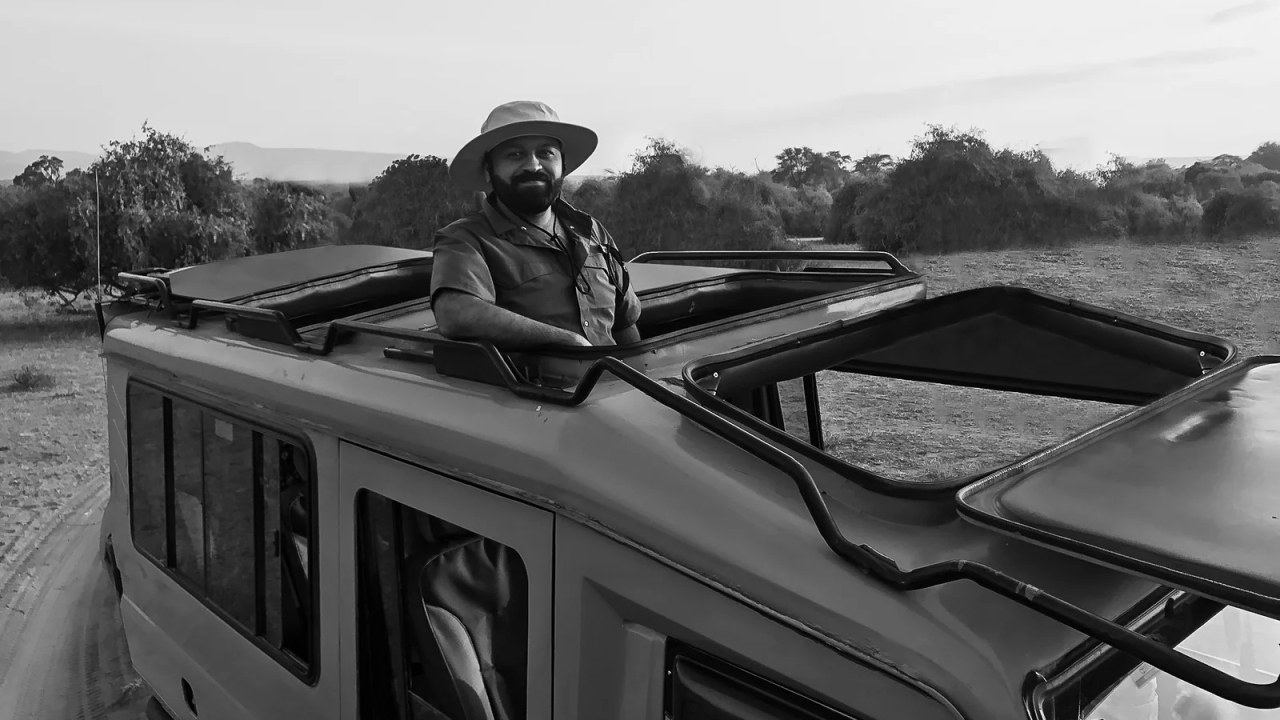
Mital Patel’s photographic journey began with a simple love of documenting family travels before growing into a serious creative pursuit shaped by landscapes, wildlife, and time spent in nature. Today, Patel’s work spans all seven continents, combining artistic vision with a strong commitment to conservation storytelling.
I came to photography seriously in my early thirties, which is not the typical path. I had a camera for years; I was always the one documenting family trips, but it wasn't until 2014 that I committed to it as a creative practice. What shifted me wasn't a single moment but a slow accumulation: time in the American national parks, a licensing deal with Travel Alberta that told me the work had value, and eventually my first trip to Africa in 2017.
That trip changed everything. I discovered wildlife photography, what it felt like to stand in the presence of something rare and irreplaceable, and that photography could carry a purpose beyond aesthetics. My work now spans all seven continents and focuses on the intersection of fine art and conservation storytelling.
Earth Abstracted came from a question: what does the planet look like when you remove the human frame of reference? These images were made from altitude, aerials, extreme angles, minimalist compositions, stripping back the familiar until the Earth becomes texture, pattern, colour.
Abstract, but real. Every element in those photographs exists. The winning Gold feels significant not because I think competition measures good work, but because it affirms that audiences are ready for a different kind of nature photography, one that doesn't need a recognisable animal or landmark to create emotional resonance.
I look for the image that makes me pause when I scroll past it, the one I return to. Technical quality matters, but more importantly, does this image have a point of view? Does it say something that a thousand other photographs don't? For abstract and fine art categories, I also consider whether the work can hold up outside its context, whether someone who has never been to that place or seen that subject can still feel something.
I was twelve, on a family trip to India. I became the unofficial photographer; everyone handed me the camera. I didn't know what I was doing, but I noticed that I was paying attention differently. The camera gave me a reason to look closely at things. That habit never fully left me.
Wildlife and fine art abstraction, which sounds contradictory until you realise they're both about the same thing: finding the extraordinary in what's actually there. Wildlife photography demands patience, presence, and humility.
Abstract photography demands that you see past the obvious. Both ask you to slow down and look harder. I find myself increasingly drawn to work at the intersection of the two, images rooted in the natural world but that feel more like paintings than photographs.
In the field, I work with the Nikon Z9. I run three bodies mounted with different lenses, so I'm never changing glass when something is happening. Wide-angle for landscapes and context, a 70-200mm for mid-range flexibility, and the 400mm f/2.8 for wildlife. The Z9's silent shutter mode is the feature I rely on most; in the field, the absence of sound can mean the difference between an animal staying calm and moving away.
Responsibility. Not guilt, responsibility. I want people to finish looking at an image and feel that the world in that photograph is worth protecting. That the distance between their life and that landscape or that animal is smaller than they thought. Photography can narrow the gap between what people know intellectually and what they feel in their body. That's the only power I'm interested in.
The challenge with abstract aerial work is restraint. From altitude, the world offers you everything: endless compositions, endless light, endless texture. The hardest part isn't finding the shot; it's knowing when you have one and stopping. Earth Abstracted required editing decisions as rigorous as the shooting, deciding which images were genuinely about something, and which were just visually interesting. Those are not the same thing.
Africa, consistently. It's where my work became purposeful, not just aesthetic. But within Africa, it's the places that feel most threatened: Ol Pejeta, the last habitat of Najin and Fatu, the only two northern white rhinos left on earth. There is a weight to being in those places that doesn't leave you. That weight shows up in the photographs, whether I intend it or not.
The wildlife itself, honestly. The best teachers I've had are the animals I've spent time around: elephants in Amboseli, rhinos at Ol Pejeta, leopards in the Mara. They have no interest in being photographed. They operate entirely outside of your agenda. That forces a discipline and a patience that no workshop or mentor can teach in the same way. The field is the education.
Submit the work that scares you a little, the image you're not sure about, the series that feels too personal or too unconventional. The work that wins is rarely the safe submission. Awards, at their best, are a conversation about what the medium can do. Participate in that conversation.
Stop waiting for the perfect conditions. Go out with what you have, in the light you have, to the place you can actually reach. The discipline of regular shooting, of showing up without expectations, is what builds vision. Vision is not something you find. You develop it through repetition.
Essential, but bounded. I shoot RAW and spend real time in Lightroom: light, shadow, colour grading, local adjustments. But my rule is that editing should deepen what the photograph already contains, not invent what it doesn't. If I'm working too hard in post to make an image work, that's usually a signal that the image itself isn't working.
AI will change the industry significantly, and it already has. But I think it clarifies something rather than threatening it: the value of the photograph that carries a human story behind it. When anyone can generate a photorealistic image of a lion at sunrise, the image of the actual lion, taken by someone who waited four hours in the heat for that light, becomes more meaningful, not less. The story and the soul behind the photograph are irreplaceable. That's what I'd stake my practice on.
Sudan. The last male northern white rhinoceros, who died at Ol Pejeta in 2018. I arrived too late to photograph him in life; I photographed Najin and Fatu, his daughter and granddaughter, the last two remaining. But Sudan himself represents something I think about constantly: the weight of being the last of your kind, and the strange dignity of carrying that. I would go back for that photograph.
Discover another European Photography Awards winner by reading the interview about Ana Luiza: From Architectural Space to Photographic Expression.