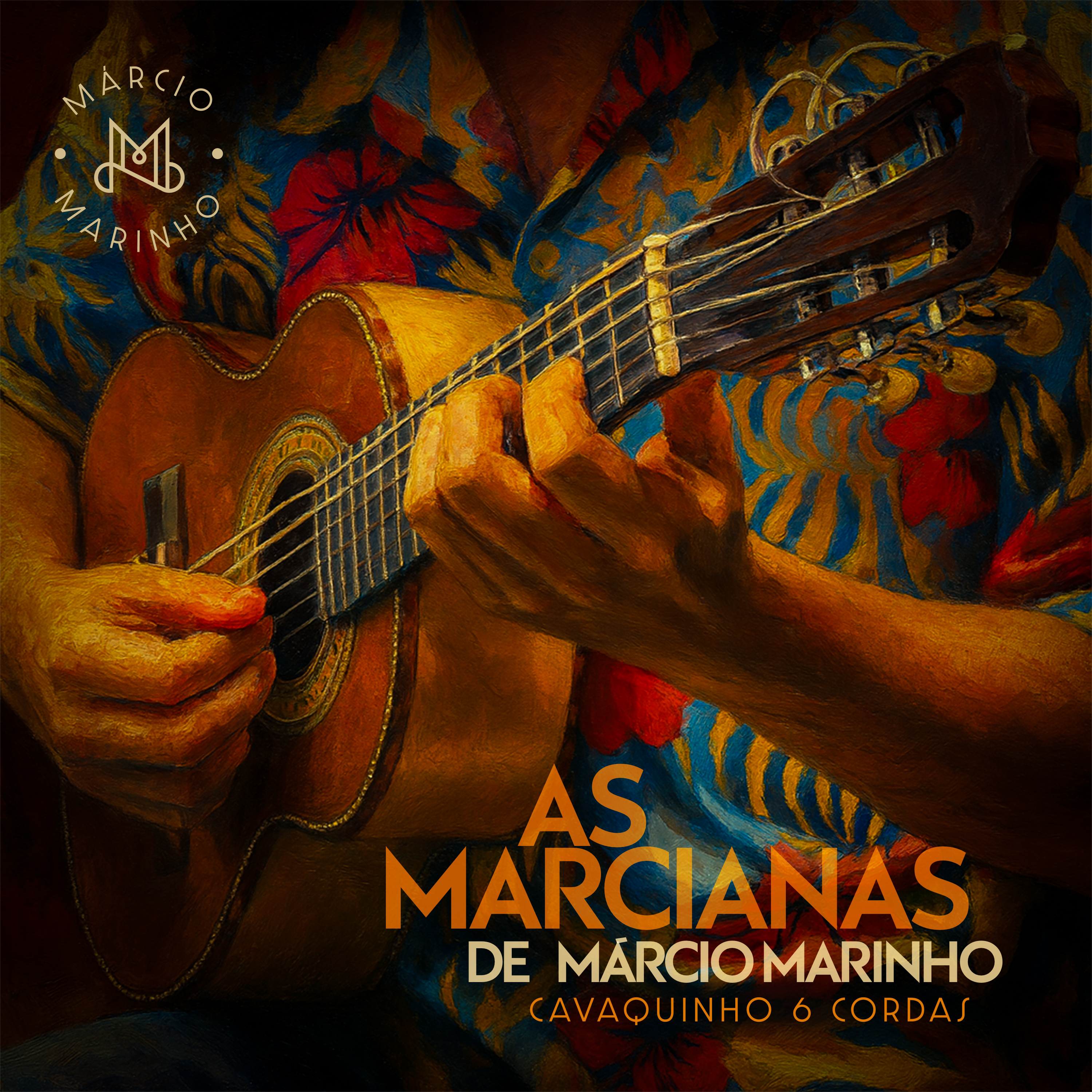
As Marcianas de Márcio Marinho- Cavaquinho 6 Cordas
As Marcianas is the new album by Márcio Marinho and presents 11 original solo compositions...
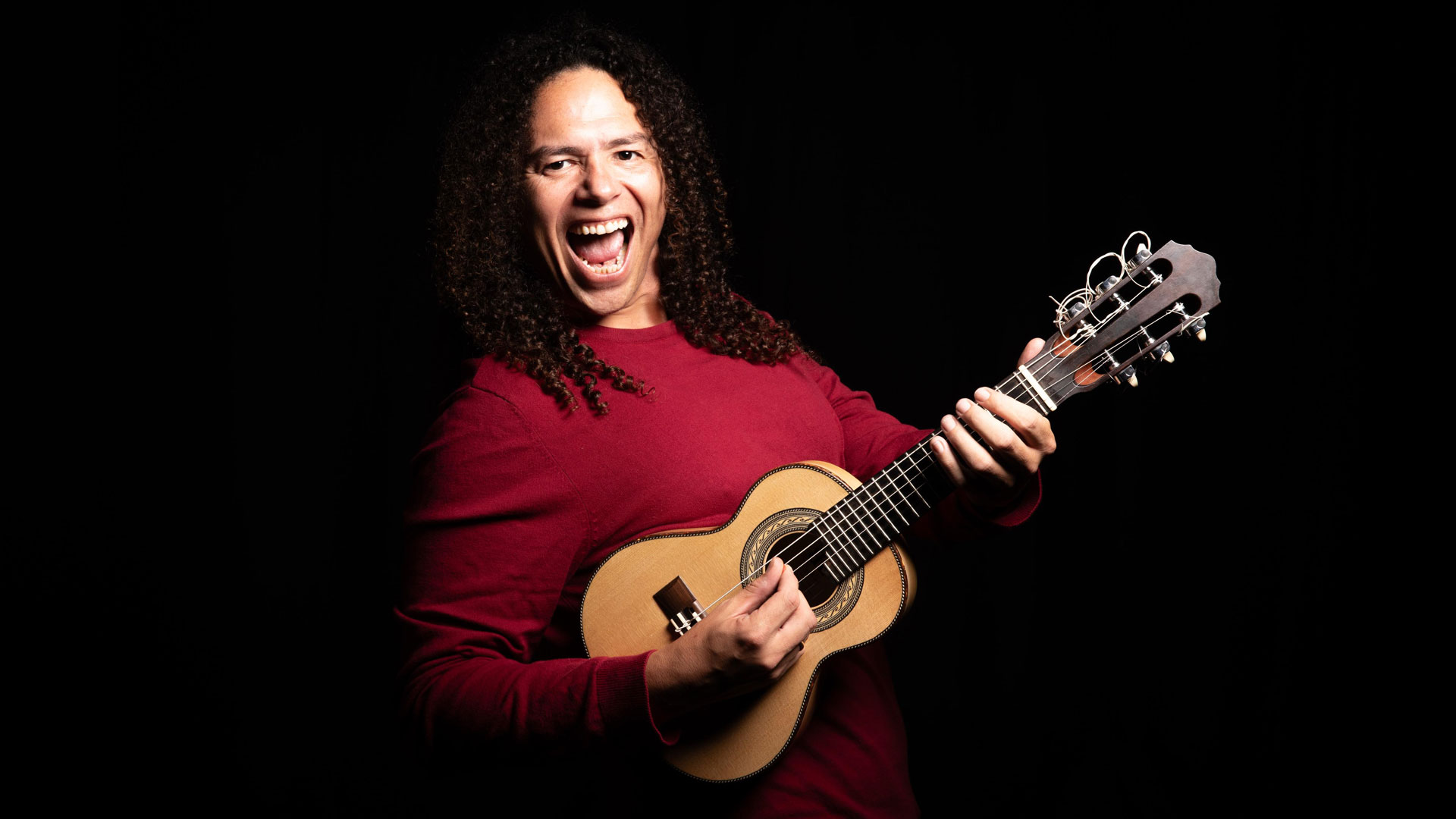
A leading voice in Brazilian instrumental music, Márcio Marinho has spent decades expanding the possibilities of the cavaquinho while sharing choro with audiences around the world.
Music has been part of my life since childhood. I started playing the cavaquinho at the age of 12, and over the years I dedicated myself to exploring the instrument beyond its traditional role in Brazilian music.
My artistic journey has been deeply connected to choro and Brazilian instrumental music, while also seeking dialogue with contemporary musical languages and concert performance traditions. Throughout my career, I have performed in more than 30 countries and collaborated with important Brazilian artists such as Hermeto Pascoal, Guinga, Hamilton de Holanda, Paulinho da Viola, Nelson Faria, and Rosa Passos.
In recent years, I focused my research on the six-string cavaquinho as a solo instrument capable of integrating melody, harmony, and rhythm simultaneously. This artistic investigation became the foundation of my Master’s Degree research at the Federal University of Rio de Janeiro (UFRJ) and resulted in the album “As Marcianas de Márcio Marinho – Cavaquinho de 6 cordas”.
Receiving the Platinum Winner recognition at the LIT Music Awards is a very meaningful moment in my career, especially because it helps bring international visibility to the cavaquinho and to Brazilian instrumental music.
I believe this recognition brings important international visibility to my artistic work and to the six-string cavaquinho itself. It encourages me to continue developing new possibilities for the instrument, both as a performer and as a composer.
This award also motivates me to expand the circulation of Brazilian instrumental music through concerts, festivals, educational projects, and international collaborations. I see it as an opportunity to connect my research, my artistic identity, and Brazilian musical traditions with audiences from different parts of the world.
At the same time, this recognition reinforces my commitment to creating original music that respects tradition while exploring new musical paths and contemporary approaches for the cavaquinho.
I don’t think there was a single exact moment when I realized music was my calling, because music has always been naturally present in my life since childhood through my family and my environment. I started playing the cavaquinho when I was around 12 years old, but even before that, music was already part of my daily life in a very organic way.
At first, I was simply studying, listening, playing, and discovering new possibilities through music without fully realizing how deeply connected I already was to it. Looking back now, I understand that music was never something external to me—it was always part of who I am.
It feels a little like learning how to speak as a child: one day you realize you are already communicating naturally, even though the process happened little by little without you noticing. Music developed in my life in the same way.
As the years passed, this connection became stronger through my experiences with choro, Brazilian instrumental music, samba schools, concerts, recordings, and collaborations with great artists. Eventually, music became not only my profession, but also my way of understanding the world and expressing myself artistically.
Today, after performing in more than 30 countries and developing my research on the six-string cavaquinho through my Master’s Degree at UFRJ, I feel that this journey continues to evolve naturally, always guided by curiosity, study, and passion for Brazilian music.
One of the most unusual and unforgettable sources of inspiration in my musical journey happened during a series of concerts with Hermeto Pascoal. We were performing together for three consecutive nights, and each day one member of the group had the challenge of composing a new piece live on stage with him.
When my turn came, I experienced something I had never done before: creating a composition in real time, on stage, in front of a full audience, alongside one of the greatest musical geniuses in the world.
At first it felt intimidating, because it demanded complete openness to improvisation, listening, and spontaneity. But at the same time, it became one of the most beautiful and transformative musical experiences of my life. That moment taught me a lot about freedom in music, intuition, and trusting the creative process.
I think experiences like that deeply influenced the way I compose today, especially in projects such as “As Marcianas,” where improvisation, imagination, and emotional expression are also very present.
I have different ways of composing. Sometimes a piece begins with a melody, other times with a rhythm, and sometimes with a harmonic progression that inspires me in that particular creative moment. I enjoy allowing the music to emerge naturally, without forcing a fixed method or structure.
I also like composing in different situations and environments—alone, with musical partners, or even connected with nature. I believe inspiration can come from many places, and each environment brings a different emotional energy into the creative process.
Maybe my main “ritual” is simply to always be composing, regardless of how the process happens. Even in everyday moments, I am often thinking about sounds, rhythms, harmonies, or new possibilities for the cavaquinho. Composition became something very natural in my life, almost like a continuous state of listening and discovering music.
I would describe my creative process as a mixture of influences from Brazilian rhythms and musical traditions from different parts of the world. Choro is certainly one of the strongest foundations in my music, but I am also inspired by classical music, jazz, Afro-Brazilian rhythms, and many other musical languages that I have encountered throughout my artistic journey.
I do not usually follow a fixed formula when composing. I never sit down thinking, “Today I will create in a specific way.” I prefer to let the feeling and the musical idea grow naturally and freely in whatever direction they want to go.
Because of that, my process can sometimes feel spontaneous, like a jazz jam session, while at other times it becomes more detailed and carefully structured. Usually, after the composition is born, I begin to think about the arrangement, the textures, and the musical architecture that will best express the emotion of the piece.
I would like people to experience my music with freedom, emotion, and imagination. More than simply listening, I hope they can feel transported into different emotional landscapes through the sound of the cavaquinho.
My music is deeply connected to Brazilian musical traditions, especially choro, but it also seeks dialogue with contemporary sounds and universal emotions. I hope listeners can feel joy, sensitivity, contemplation, spontaneity, and even surprise during the experience.
I also hope my work helps people discover new possibilities for the cavaquinho, showing that the instrument can communicate with great depth, complexity, and beauty as a solo voice.
I honestly never felt that I was taking a risk, because from the moment I began studying the cavaquinho, I always had a very clear vision of what I wanted to express through the instrument. My journey happened very naturally: I first started playing the traditional four-string cavaquinho, later explored the five-string cavaquinho, and eventually dedicated myself deeply to the six-string cavaquinho.
For me, exploring new possibilities for the instrument always felt connected to the history of Brazilian music itself, which has continuously evolved through experimentation, creativity, and the blending of different musical influences.
If there was a risk, perhaps I never really noticed it, because my focus was always on music, research, and artistic expression rather than on following expectations or predetermined paths.
Over time, this artistic direction became stronger and eventually led me to develop my Master’s Degree research at UFRJ and create the album “As Marcianas de Márcio Marinho – Cavaquinho de 6 cordas”. Looking back now, I understand that trusting my own musical intuition was one of the most important decisions in my artistic journey.
Music was always present in my life since childhood through my family and the environment I grew up in. But the piece that truly made me fall in love with choro was “Lamentos” by Pixinguinha.
When I first heard that music, something changed deeply inside me. It was a very emotional experience, and from that moment on I began to have a closer connection with choro and started studying this Brazilian musical genre more seriously.
That encounter with Pixinguinha’s music completely transformed my life. After that experience, music gained a totally different meaning for me and became not only something I loved, but also a lifelong path of artistic expression, study, and personal discovery that continues to this day.
One of the most important turning points in my career happened when I became part of the faculty at the Escola Brasileira de Choro Raphael Rabello in Brasília and also joined the group Choro Livre. Through Choro Livre, I had the opportunity to accompany many important artists who performed at Clube do Choro de Brasília, one of the most respected centers for Brazilian instrumental music.
That experience deeply shaped my artistic development because it allowed me to learn directly from great musicians while strengthening my connection with choro and Brazilian musical traditions.
At the same time, touring internationally with the group allowed me to perform in more than 30 countries, helping to share Brazilian instrumental music and choro with audiences around the world. These experiences expanded not only my musical vision, but also my understanding of culture, communication, and artistic exchange.
However, my journey has been built through many meaningful moments, collaborations, and musical encounters that have continuously shaped both my career and my life.
“As Marcianas” reimagines the six-string cavaquinho as a contemporary solo voice within Brazilian instrumental music.
One of the most challenging parts of creating this work happened when I tried to define everything before the music even existed. At first, I wanted to predetermine the rhythm, melody, and harmony of each composition before allowing any real inspiration to emerge naturally. Instead of helping the creative process, this approach blocked me completely, and I found myself unable to develop the music.
The turning point came when I decided to let the musical influences guide me freely, without trying to control every direction beforehand. Once I allowed the compositions to grow organically, the music finally began to flow naturally.
That experience taught me an important lesson about creativity: sometimes music needs space, freedom, and trust in the artistic process in order to truly exist.
I am currently finishing a new project called “Choro no Eixo com Márcio Marinho.” In addition to becoming a new album, it is also a live cultural project that takes place every Sunday at Eixão do Lazer, in Asa Norte, Brasília, Brazil.
The project brings together choro, samba, and different expressions of Brazilian culture in an open public space, creating a direct connection between musicians, audiences, and the city itself. “Choro no Eixo” was born from the idea of occupying public spaces through music, transforming the city into a place of artistic encounter, cultural exchange, and collective experience.
It has become a very special artistic experience for me because it combines performance, cultural exchange, and community interaction in a spontaneous and human way, making Brazilian instrumental music accessible to people of different ages and backgrounds.
At the same time, I continue exploring new possibilities for the six-string cavaquinho, and I remain interested in creating dialogues between Brazilian instrumental music and different musical influences from around the world.
If I could collaborate with any artist, I think one of the most fascinating experiences would be creating music with Pixinguinha. His music deeply transformed my life and my connection with choro, especially after hearing “Lamentos” for the first time.
I imagine the vibe of the music would be a meeting between tradition and freedom—something deeply rooted in Brazilian musical language, but also open to improvisation, emotional expression, and new harmonic possibilities. I believe it would be a very lyrical, emotional, and spontaneous musical conversation.
At the same time, I think artists like Hermeto Pascoal also represent this spirit of musical freedom and creativity that inspires me a lot in my artistic journey.
I would encourage other musicians to participate in music awards because these experiences can create important opportunities for visibility, artistic exchange, and international connection. Beyond competition itself, awards can help artists present their work to new audiences, professionals, and cultural spaces around the world.
My biggest advice would be to remain authentic and deeply connected to your own artistic identity. Sometimes artists become too concerned about expectations or trends, but I believe the most meaningful work comes from honesty, research, passion, and personal expression.
I also believe it is important to value the entire artistic journey, not only the final recognition. Study, persistence, collaboration, and continuous artistic growth are essential parts of the process. Awards can open doors, but the true foundation of a career is the music itself and the emotional connection it creates with people.