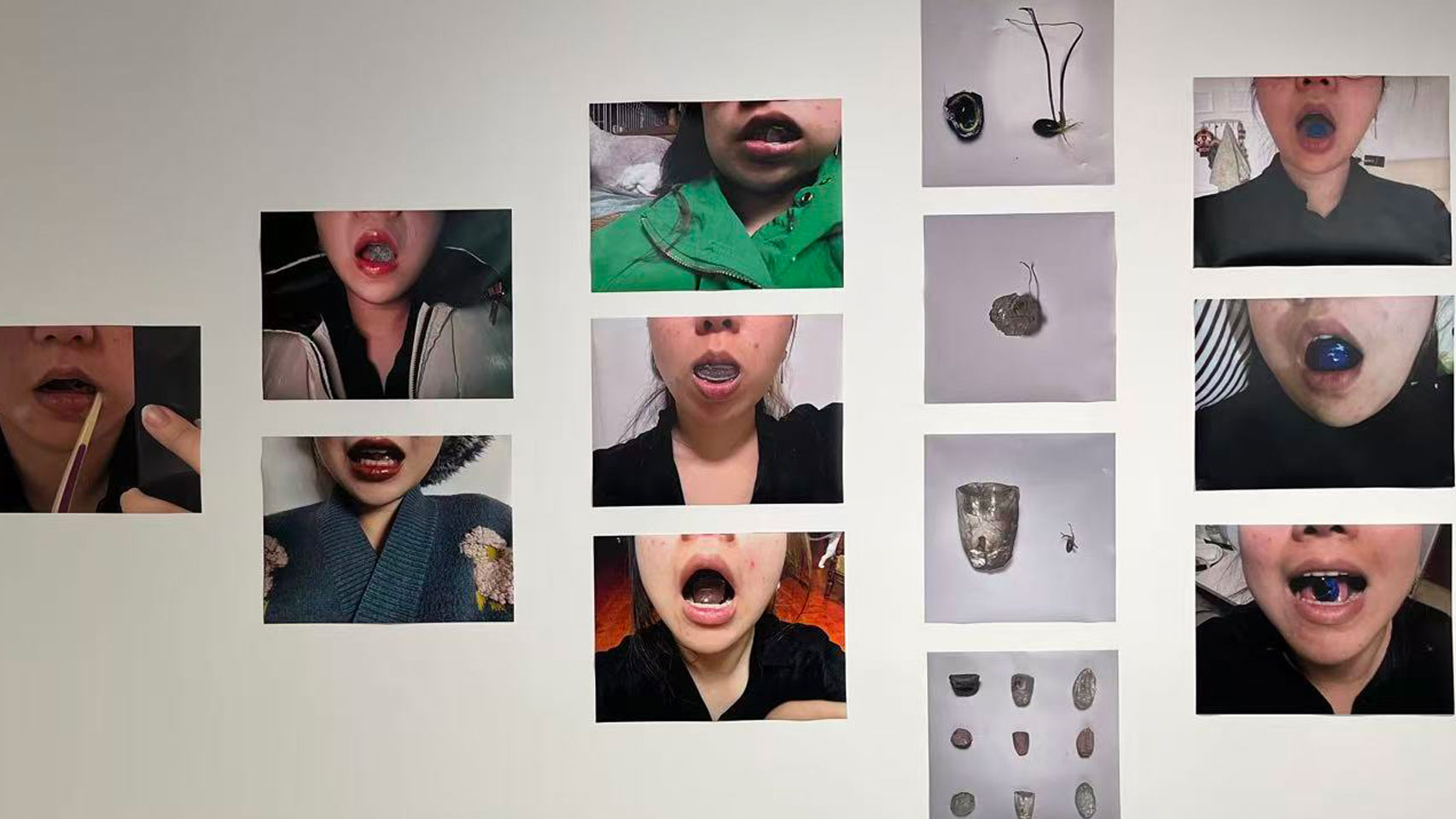
My Mouth as a Plants Pot
My Mouth as a Plant’s Pot is a public art installation by the artist Zoe...
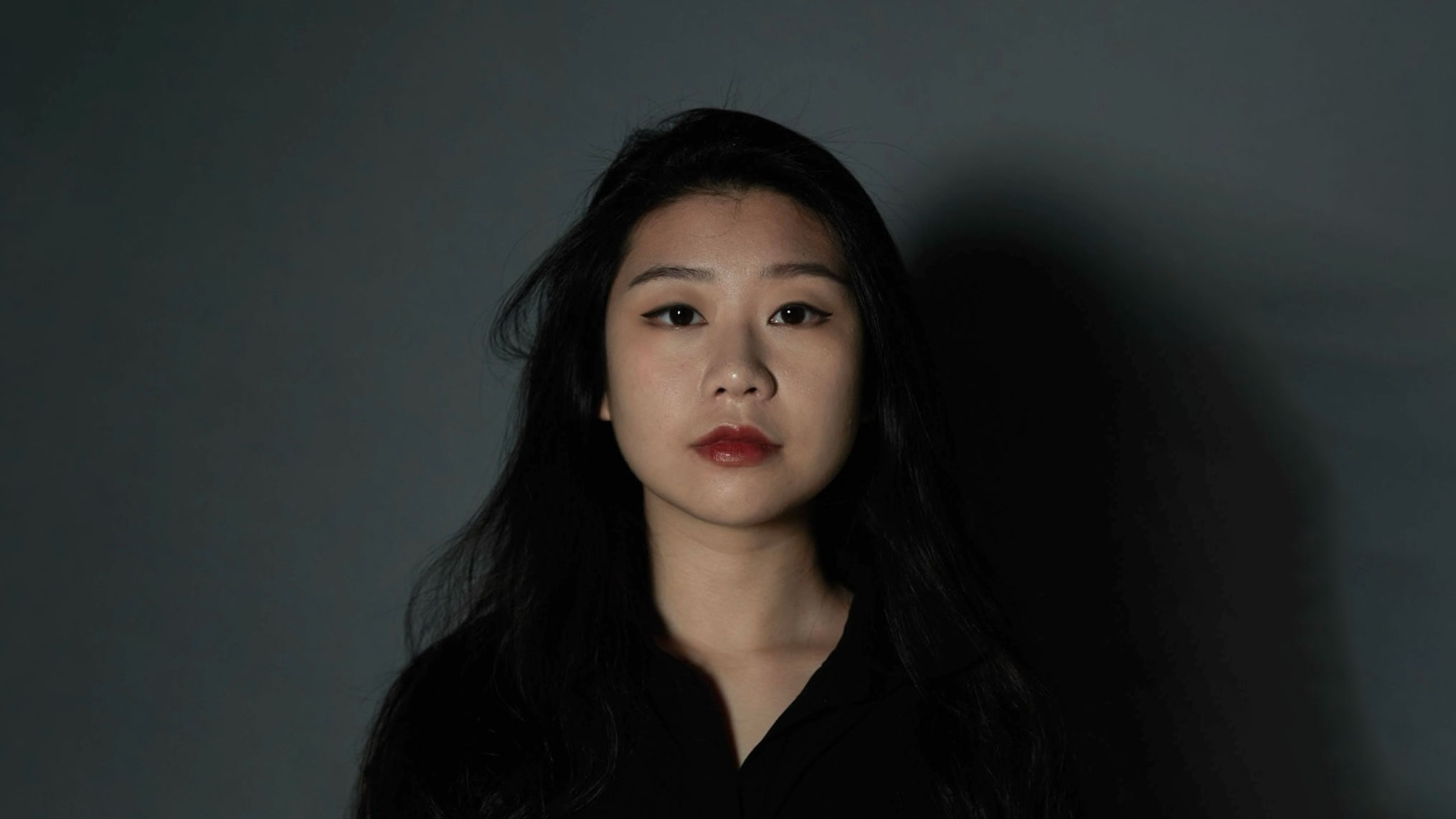
Zoe Ze Zhou is a multimedia artist whose installation and material-based practice transforms unconventional materials—from hair and breath to plants and fungi—into immersive works that explore memory, emotion, and the hidden biological traces embedded within everyday life.
My name is Zoe Ze Zhou, and I am a multimedia artist working across installation, performance, and material-based practices. I received my MFA from the California Institute of the Arts and my BFA from the School of the Art Institute of Chicago.
My practice evolved through a gradual shift from traditional fine art toward working with unconventional materials—especially those drawn directly from the body, such as hair and breath, or from living systems like plants and fungi.
Over time, I became increasingly interested in how materials can carry more than surface meaning: memory, emotion, and biological traces, and how these invisible layers can be translated into spatial and experiential forms.
I submitted the work because the MUSE Creative Awards exists at the intersection of fine art, design, technology, and creative practice, which closely aligns with the direction of my work today.
This recognition is meaningful to me not only as an award, but also as a form of visibility within a broader interdisciplinary context. It allows the work to be experienced beyond a purely art-based audience and positions it within a larger cultural and creative conversation.
The project originated from an environmental concern. Plastic bags in the ocean are often mistaken for jellyfish and consumed by sea turtles. That confusion—between something living and something artificial—became the conceptual starting point of the work.
I constructed the jellyfish using disposable utensils, materials designed for short-term use yet capable of persisting in the environment for far longer. While the form visually echoes the drifting fragility of a jellyfish, the material introduces another layer of meaning—one that points back to human consumption, production, and waste.
Rather than directly representing marine life, the work seeks to expose a moment of misrecognition. It exists somewhere between imitation and warning.
What I find most important in this project is the tension between appearance and origin.
From a distance, the form appears soft, floating, and almost natural. But as viewers move closer, the material reveals itself as something disposable, manufactured, and deeply familiar.
That shift in perception is central to the work. It reflects the way artificial objects enter natural systems and become mistaken for something living.
The main challenge was translating a fluid, organic form into a structure made from rigid, manufactured materials.
Disposable utensils are not designed to behave like living matter, so I had to experiment with different methods of assembly to suggest movement and lightness while still maintaining structural integrity.
Rather than forcing a perfect illusion, I chose to keep the material visibly recognizable. That decision made the work more honest and direct, revealing both the form itself and the contradiction within it.
I see this recognition as a step toward positioning my work within a broader international and interdisciplinary context.
It creates opportunities for the work to be understood not only through the lens of fine art, but also in relation to design, technology, and emerging material practices.
Many viewers are initially drawn to the work because of its resemblance to a jellyfish. At first, it appears calm, delicate, or even beautiful. But once the materials become recognizable, the reaction often changes. There is a moment of realization that reshapes the way the work is understood.
That transition from attraction to awareness is an essential part of the experience.
I think it’s important to focus less on recognition and more on building a consistent body of work.
Having clarity in what you are exploring, and continuing to develop it over time, is ultimately more valuable than trying to create something that immediately stands out.
The boundaries between disciplines are becoming increasingly fluid.
I see a growing space where art, design, technology, and biology intersect, and my work naturally exists within that overlap. Moving forward, I see myself continuing to expand and evolve within that interdisciplinary direction.
Competitions can be valuable as a way of positioning your work within a broader context.
Even when the outcome is uncertain, the process of selecting, framing, and presenting your work can be meaningful and worthwhile in itself.
I think it’s important to remain attentive to materials and processes, especially at a time when so much of our experience is mediated digitally. There is still a great deal to explore within the physical and biological world.
I would dedicate this recognition to the people and experiences that have shaped the emotional foundation of my work, as well as to the collaborators and environments that made the creation of the work possible.
A jellyfish-like form constructed from disposable materials, revealing how artificial objects can be mistaken for life within natural systems.
I am currently expanding this line of work into larger and more immersive installations that exist at the intersection of ecology, material systems, and artificial structures.
Beyond individual objects, I am interested in creating environments where artificial and organic elements coexist in unstable and uncertain ways—spaces that audiences can physically enter and experience.
In the long term, I hope to develop projects that move beyond the gallery and engage directly with real-world ecological contexts, allowing the work to function not only as representation, but also as an active intervention within environmental systems.