Tactical Cardiology
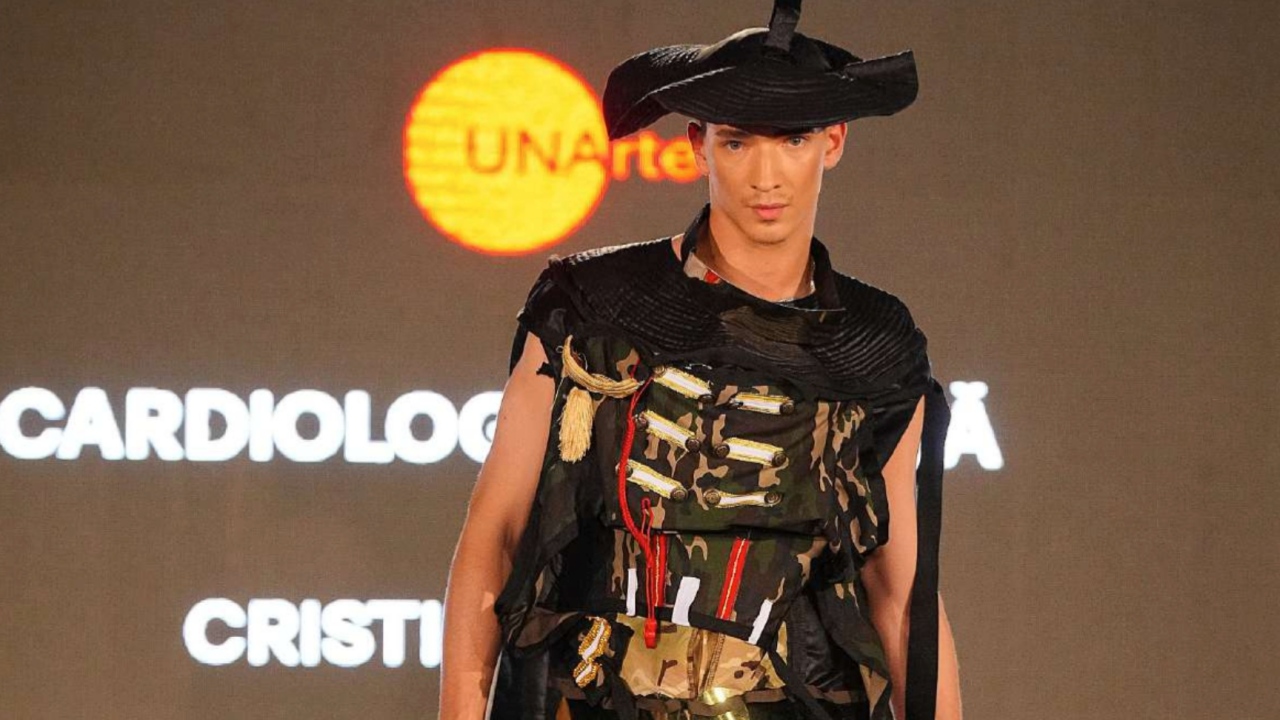
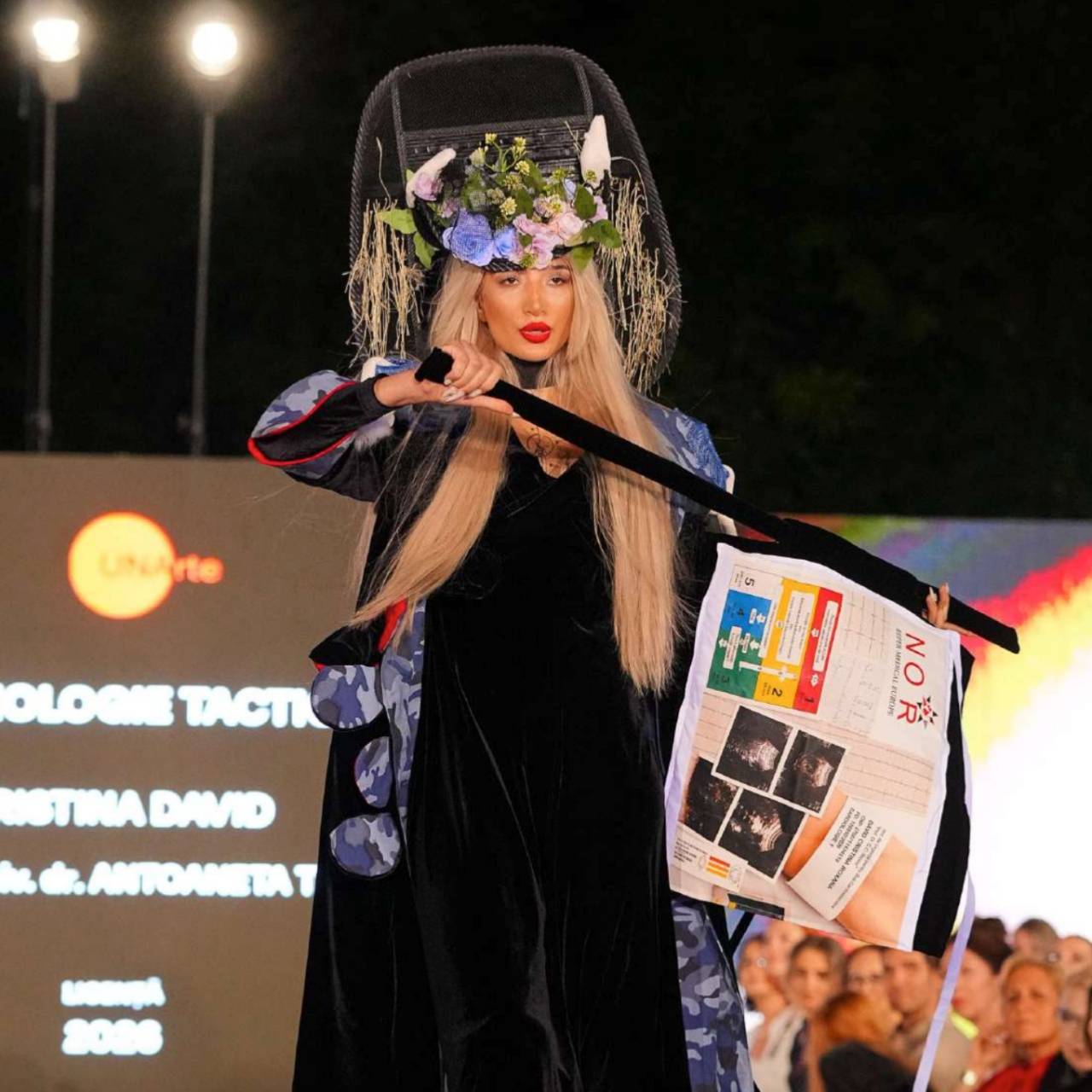
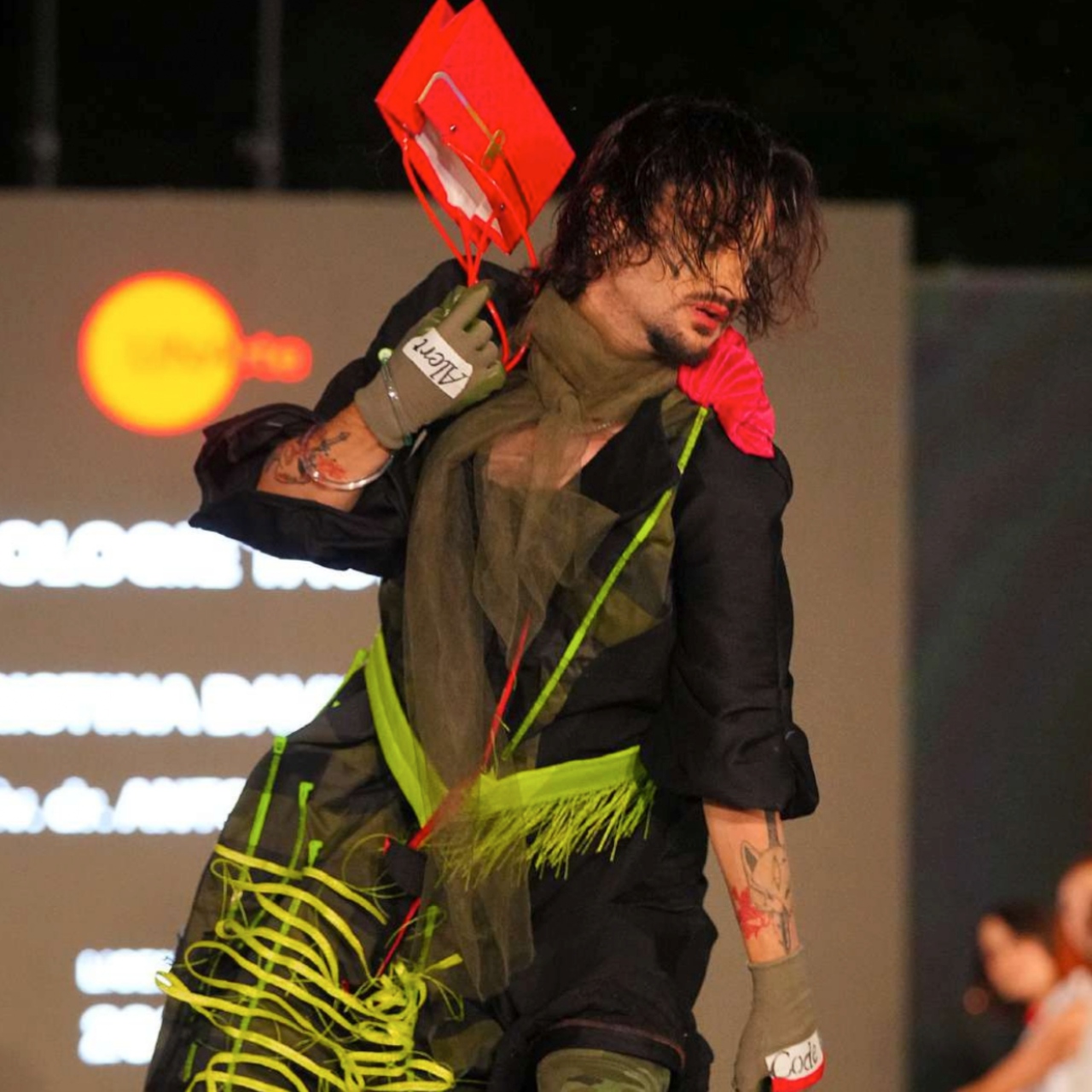
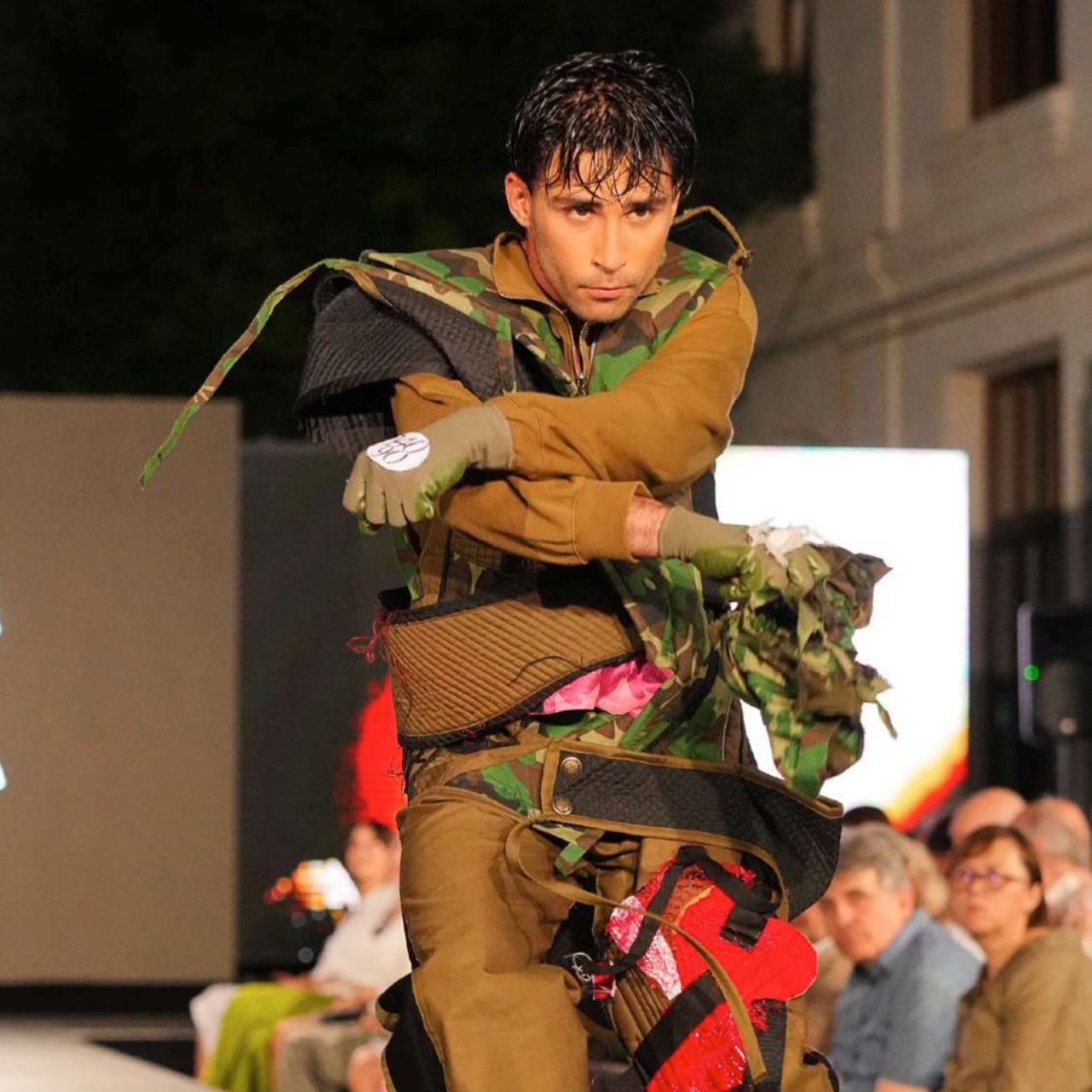
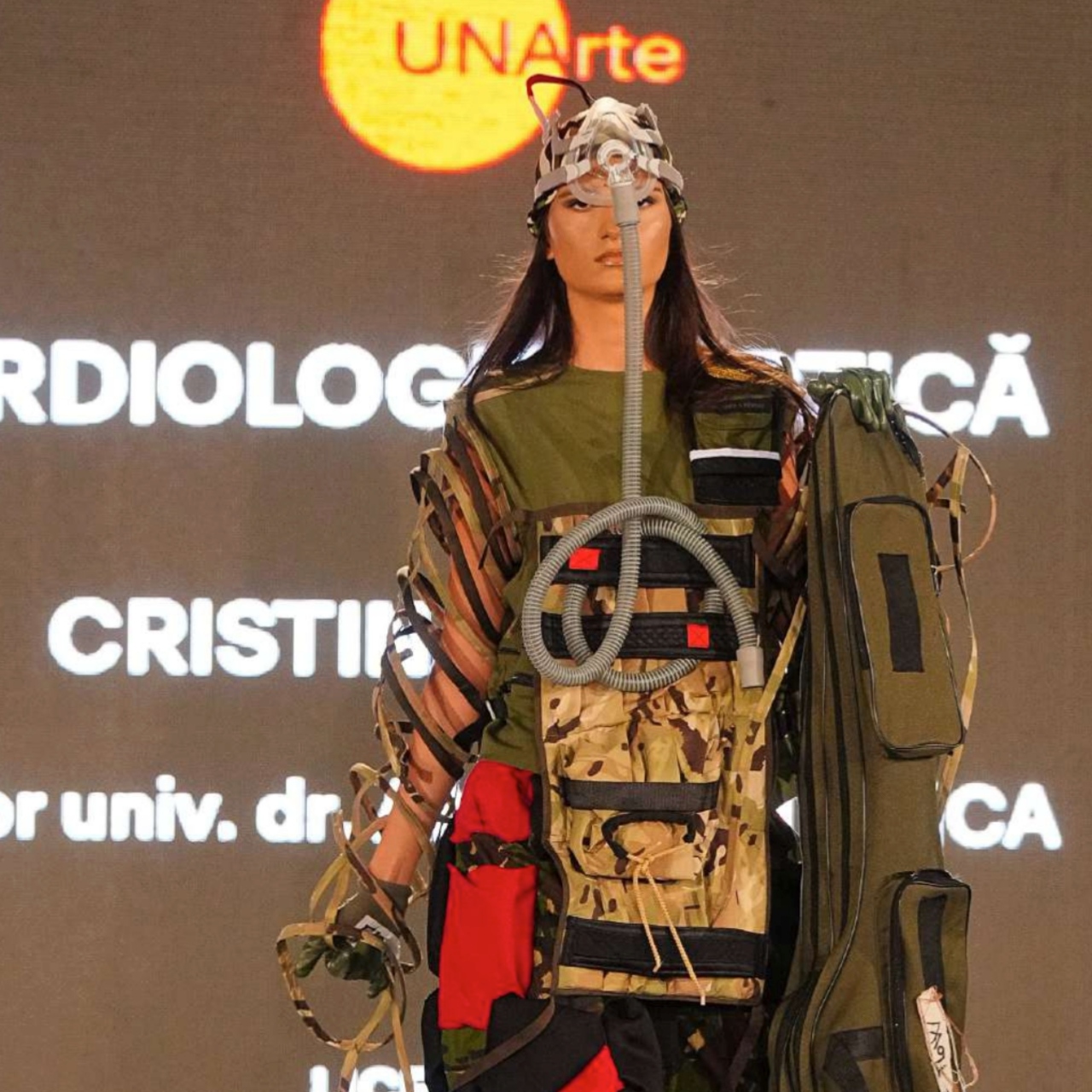
“Tactical Cardiology” is a runway collection born from the intersection of two defining personal experiences:...
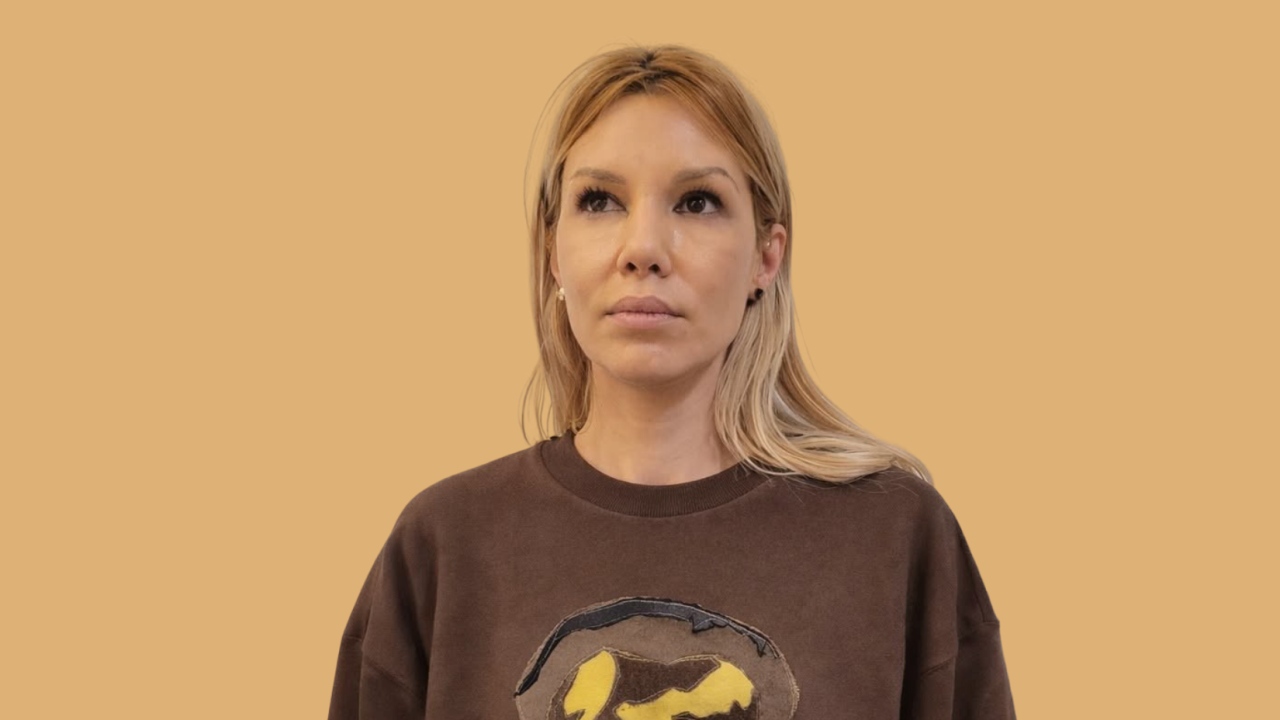
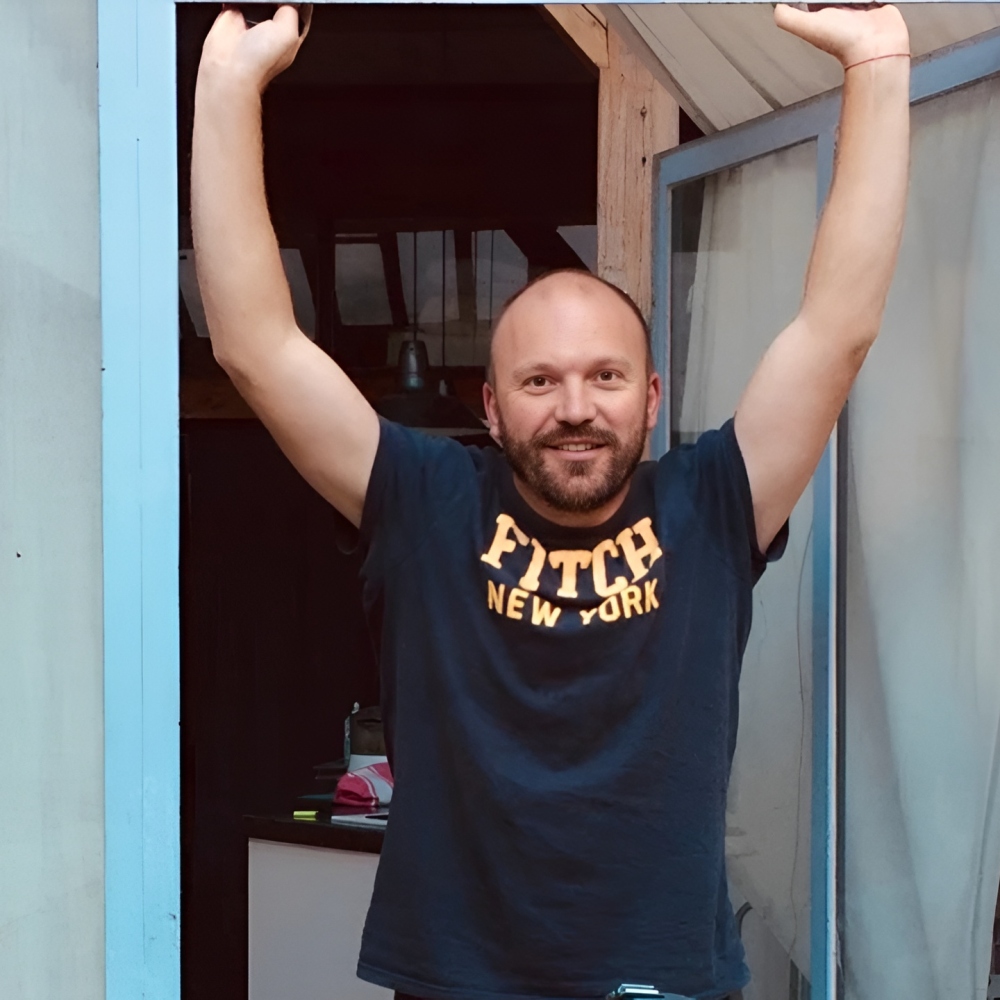
Cristina David is a Romanian fashion designer whose unconventional career journey has given her a distinctive perspective on creativity and design. She treats experimentation as a way of thinking, using unexpected materials, objects, and physical processes to create fashion that challenges assumptions and invites new interpretations.
My path into fashion has not been a conventional one. When I became a fashion student at the age of 47, I had already lived several professional and academic lives. I had spent twelve years in a military environment as an intelligence officer; I was working at the Romanian Parliament; and I had earned a PhD in Political Science. None of this seemed to point towards fashion. And yet, perhaps unexpectedly, that is exactly where I ended up.
I had loved cutting, altering, and transforming clothes since I was a child, but I had never thought of turning it into a profession. In 2023, I took the entrance exam for Fashion Design at the National University of Arts in Bucharest (UNArte). Strangely enough, I took the exam convinced that I would not get in. I knew the admission process was difficult and I think that, more than a professional decision, it was a personal test. My confidence in myself had gradually declined, and I wanted to find out whether I was still capable of surprising myself.
I got in. That changed the question. It was no longer, "Can I do this?" but "What can I do with this?"
A year later, I took the entrance exam for Art History and was admitted there as well. Studying both fields made me more critical of my own work, but it also showed me that design can come from places I had never associated with fashion before: memory, experience, observation, and the ability to transform them into a visual language.
This is where I am now. I did not enter fashion because I was certain that this was where I belonged. I entered precisely because I wasn't.
This award has a slightly different meaning for me than the one I might have imagined when I first began studying fashion. I don't see it so much as confirmation that I "have talent", but rather as confirmation that I have found my own way of saying something through clothes.
"Tactical Cardiology" is a very personal collection. I brought into it two experiences that have marked my life and that, under normal circumstances, have nothing to do with fashion: the twelve years I spent in a military environment and the experience of a heart attack followed by the implantation of a stent. I transformed them into six states of the same body, bringing military and medical elements together.
The fact that an international jury that did not know me and knew nothing about my journey beyond what they could see in the project itself found value in this construction means a great deal to me.
Professionally, the award tells me that this direction is worth pursuing. Personally, in a way, it answers the question I entered university with: "What can I do with this?" I don't think I have the complete answer yet. But now I know that the question is worth pursuing.
It would be premature to say that this award has already changed my career. The results were announced only a few days ago, and I don't want to invent opportunities before they actually exist.
The first opportunity is, in fact, this interview itself, and the possibility that my project may reach people who might otherwise never have encountered it.
But there is another effect that matters more to me. The award gives me the courage to continue in a direction that is not necessarily commercial. I did not enter fashion with the ambition of selling as many clothes as possible. I am more interested in exploring what a garment can become and whether we can change something about the way we relate to it. Perhaps that is also why I continue to study Art History alongside Fashion.
I would like my work, one day, to be able to exist outside the conventional context of fashion as well. If this award opens a door in that direction, that would be the opportunity that matters to me.
For me, experimentation is not a stage of the creative process; it is almost the process itself. I am not a designer who makes a sketch and then tries to reproduce it faithfully in fabric. Often, I don't even draw on paper. I draw with my finger in the air. I see a form, trace it in my imagination, and then I start building it.
When I make clothes, I make, I undo, I make again, I undo again. Sometimes I end up very far from the idea I started with. I don't mind that. On the contrary, I like not knowing exactly where I will end up. The material, the body, a mistake, or an object I introduce can change the direction. For me, experimentation means allowing them to do so.
In "Tactical Cardiology", for example, I worked with objects that do not ordinarily belong to fashion. A rifle case was filled with batting and transformed into a soft, wearable object. I added the message "OPEN THE FLOW" by hand, deliberately written imperfectly on medical adhesive tape.
An object designed to hold a weapon ended up speaking about a body and the need to restore its flow. I like the moment when it is no longer entirely clear what an object is, or what it is supposed to be. I think that is where design begins for me.
Probably a night spent in the hospital during my own heart attack. About six months before my graduation project, I had planned something entirely different. I wanted to work with old Romanian handwoven rugs and bring them into the present through clothing. I imagined that rugs usually displayed horizontally in a museum could become garments and end up on the walls of a gallery.
Then I discovered that I had a blocked artery. A heart attack followed, along with the placement of a stent. On the night of January 8, 2026, in hospital, I looked at the identification wristband the doctors had put around my wrist. It said "Cardiology". I think that was the moment my graduation project changed.
"Cardiology" was the world I found myself in at that moment. "Tactical" came from a world I had lived in for twelve years. "Tactical Cardiology" emerged from the meeting of those two worlds. I did not yet know exactly what the collection would look like. I only knew that what was happening to me had to become part of the work.
I continued to wear that wristband for a long time after leaving the hospital, and I kept it. I still have it. In fact, I have two. At one point, I even wanted the labels on my garments to reproduce that wristband, printed on a piece of silk. I haven't given up on the idea.
So the most unusual source of inspiration for me was not an artist, an image, or an object found in a museum. It was a hospital wristband that said "Cardiology" on a night when my own body was changing my project before I could decide whether I wanted it to or not.
I wish more people understood that design does not necessarily begin with the ability to draw. I say this because it is something I had to understand myself. For a long time, I believed that a real designer had to be able to put on paper exactly what they could see in their mind. I can't always do that.
I can see a garment without being able to draw it. I can see its volume and proportions, imagine how it moves and how it transforms, and then try to build it. Sometimes my hands know how to make in fabric what I don't know how to draw with a pencil.
University taught me to distinguish between knowing how to draw and having something to say through design. Drawing is an extraordinary tool, and I wish I were better at it, but I don't believe it is the only path to an idea. I also believe that design means knowing when to let go of control, looking at what is happening in front of you, and having the courage to say: "This isn't what I intended to make, but perhaps this is what was meant to emerge."
Perhaps that is why I sometimes draw with my finger in the air. There, I don't have to prove to anyone that I know how to draw. I only have to see.
At this point in my journey, the "client" has usually been a brief, an academic assignment, a professor, or an evaluation context. I think university has taught me that listening does not necessarily mean obeying.
I listen to feedback and I am willing to change a great deal. I can take a garment apart and rebuild it, abandon a form I was convinced was right, or accept that someone else can see a problem that I can no longer see. But first, I try to understand why I am being asked to make the change. If a suggestion makes the project more coherent, I use it. If it simply makes the project easier to accept but takes away what I wanted to say, I become much harder to convince.
I think this is where the balance lies for me: I can negotiate the form, but I don't want to negotiate the idea until it disappears. Otherwise, the object may become more correct, but it is no longer mine.
Perhaps things will become more complicated when I work for a real client. For now, I would rather say that than pretend I have already found the perfect formula.
One of the greatest challenges was translating an experience I knew from the inside for people who did not necessarily have the codes needed to read it. I noticed this even in conversations with some of my professors. I had spent twelve years in a military environment, and certain objects, gestures, fastening systems, or signs had an almost instinctive meaning for me. A fashion professor might see straps, buckles, camouflage, military insignia, or a rifle case as aesthetic elements. For me, they came from a system I had lived within for twelve years.
That was when I understood that it was not enough for the project to make sense to me. I had to find a way for my experience to be read by someone who had not shared it. At the same time, I did not want to explain every element to the point where the garment became an illustration accompanied by an instruction manual. I wanted to leave room for the viewer to ask questions and interpret.
I tried to find that balance by building a visual vocabulary in which military and medical elements recur, and by organising the collection into six successive states: "Shell", "Mechanism", "Pressure", "Alert", "Intervention", and "Stabilisation". In this way, the objects no longer had to say everything on their own. They began to acquire meaning through their relationship with one another.
I realised then that it was not enough for me to know what each element meant. I had to give the viewer enough clues to enter the project, without telling them what they were supposed to see. I think I am still trying to find the balance between the two.
I'm not sure I know how to "recharge" my creativity. Perhaps because, in my case, creative block doesn't necessarily appear when I'm under pressure. Quite the opposite: I work very well under stress. Sometimes I work better when I'm not doing well, when I'm angry, sad, or when I feel that I've somehow lost myself.
I don't say this because I believe suffering automatically produces creativity. I don't. It's simply that, for me, making something can become a way out of a state I don't know how to resolve otherwise. Instead of waiting for inspiration to arrive, I start doing something. I cut, move, alter, undo. Very often, the idea appears after my hands have already started working.
I think my real creative block appears when I try too hard to make something "good". When I become preoccupied with the result, with what it is supposed to be, or with how it will be perceived. Then I try to return to the object and play with it without immediately asking it to become something.
Perhaps that is how I recover my creativity: I don't try to persuade it to come back. I start working without it, and most of the time, it catches up with me.
Perhaps the strongest tension I carry with me is the one between discipline and freedom. I spent twelve years in a system where almost everything had a code, a function, a hierarchy, and a precise name. Even I had a number.
I think that experience has stayed with me in the way I construct objects. I am drawn to fastening systems, straps, buckles, pockets, things that have a function and a precise logic. But at the same time, I now find myself doing exactly the opposite: questioning the function, the rule, and even the name of the object. Why does an object have to remain what we have been told it is? Who decides what it is allowed to become?
I would like to reach a kind of freedom in which a garment is no longer a prisoner of its own name. It could be worn one way today and become something else tomorrow. I am interested in the idea that an object's identity can be unstable.
Perhaps this is the personal value that finds its way into my work most often: the freedom to question something even after I have learned its rules very well.
I don't know if I am yet in a position to give advice about success. I am still at the beginning of my own journey in design. But perhaps I can say something about beginnings.
When I took the entrance exam for Fashion, I already had an established career and a PhD. From the outside, there was no obvious reason for me to change anything. And yet there was one very simple reason: I wanted to try something else. I loved clothes, and I loved cutting, altering, and transforming them.
Paradoxically, perhaps if I had been certain that I could do it, I would never have felt the need to test myself, and today I would not be a graduate of UNArte. I took the entrance exam precisely because I was almost convinced that I would not get in. It was a test I was setting for myself. I thought I couldn't do it; I tried, and that is how I ended up here.
So, if I had to give one piece of advice, it would be to do what you love and what you want to do, even if you already have an established professional life and even if you are not convinced that you will succeed in the new one. Being fulfilled in one field does not mean you have to stay there forever.
Three years later, my graduation project received an international award. I don't say this because I believe I have already achieved success. I am still trying to understand what success means to me. But I have learned something about doubt: sometimes it is not the reason you don't begin. Sometimes it is the very reason you do.
Probably Martin Margiela. Not because I would want to work like him, and certainly not because I would want to imitate him. I would want to work with him because I would be curious to discover where we would disagree.
I am fascinated by the way he questioned the idea of the finished garment, the value of materials, construction, authorship, and even what deserves to be called fashion. I find myself asking different questions, but they come from the same need not to accept an object simply as it has been given to us: why should it have only one function? Why should we hide the seam, the fastening system, or the mechanism that holds the object together?
I think that is why I would choose Margiela. I wouldn't want him to tell me what to do. I would like us to put an object on the table and ask each other what else it could become.
Margiela seems like the most natural interlocutor for me. Rei Kawakubo would come very close, but for a different reason. Fortunately, the question only asks me to choose one.
The question I wish people would ask me is: "What do you actually want to do with fashion?"
I don't primarily want to sell fashion. I want to see whether I can change something within it. I know that sounds ambitious for someone who has only just graduated, but if you ask me what question I wish people would ask, this is it.
I would start with the things we consider so obvious that we no longer question them. Why is a skirt called a skirt? Why, once we have named it, have we also decided where it should be worn, how it should be worn, and what it is allowed to become? I would like to create an object that could be a hat today, a skirt tomorrow, then a sweater or a pair of trousers, without any one of these being considered its "correct" form.
I don't want to make clothes. I want to make wearable objects. And one day, I would like those objects to be able to leave the body and exist on the walls of a gallery with the same legitimacy as a painting. They could be worn, but they would not need a body in order to have meaning.
Perhaps that is why I continue to study Art History. I am interested in the point at which a garment ceases to be merely a garment and can exist as an object, without losing the possibility of being worn.
I don't know whether I will succeed in changing fashion. But I do know that I didn't come here simply to make more clothes.
Read Beyond the Surface: Yizhou Jiang on Designing Character into Cars in this interview.