DESIGN COMMUNITY | Who Gets Credit for Great Design?
OCTOBER 12, 2026
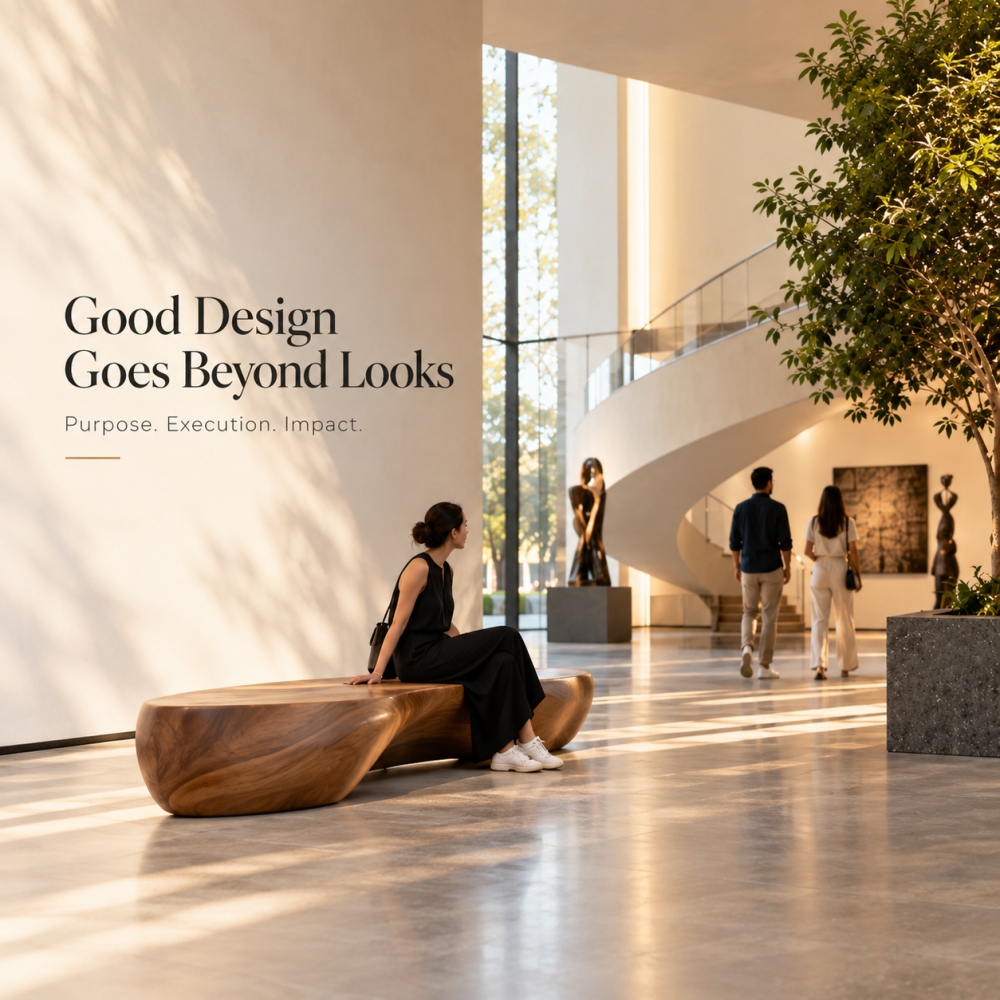
What Makes Good Design? Why Looks Are Only the Beginning
An elegant door that invites you to pull when it needs to be pushed has a design problem you can feel immediately.
The finish may be beautiful. The experience still leaves you frustrated. That small moment reveals a bigger question for anyone creating, commissioning, or evaluating design: what makes a design good once someone actually encounters it?
From NYX Design Awards’ perspective, good design brings a clear intention together with thoughtful execution. Its value can lie in usefulness, expression, originality, or the experience it creates. Appearance helps communicate that value, but the choices behind it deserve attention too.
Consider packaging. Its purpose might include protecting a product, communicating its identity, and helping someone understand how to use it. A distinctive shape becomes more compelling when it supports those intentions. The same applies to a digital interface: an original interaction should help people navigate the experience it offers.
Creativity becomes easier to appreciate when the designer can explain what prompted a choice and why it belongs in the project. A familiar form can carry an unexpected idea; an unusual form can make a familiar task clearer.

A promising concept needs decisions that hold together. Materials, proportions, typography, movement, and interaction all affect how the idea is communicated and encountered. Design excellence emerges through the relationships between these details.
A well-resolved interior can support movement while creating a particular atmosphere. A graphic identity can remain recognizable across different sizes and applications. These examples show why execution deserves scrutiny alongside the initial idea: the detail is part of the design’s meaning.
Introducing something new can open possibilities. Its contribution becomes clearer when we understand what the change enables. A new material, production approach, or interaction might address a constraint, offer an expressive opportunity, or suggest a different way of working.
This leaves room for experimental and conceptual design. A proposal can be valuable for the question it asks or the direction it explores. Its intended benefits should be explained as intentions; completed work can also draw on documented observations and testing.
Design can contribute at different scales. It may make a task easier, express a cultural identity, create a memorable experience, or influence how other practitioners approach a problem. Practical usefulness and emotional or cultural value can all merit discussion.
A convincing account identifies the contribution and explains how the design supports it. Where evidence exists, it strengthens that explanation. Clear descriptions also help readers distinguish demonstrated outcomes from future possibilities.

NYX Design Awards evaluates entries across 12 disciplines through independent blind judging by an international jury. Its published criteria cover creativity, design excellence, innovation, functionality, and industry impact.
For designers presenting their work, these criteria offer a useful starting point: show the project, explain the decisions, and make its contribution understandable. The strongest story gives the audience something to notice beyond the finished image.
Good design gives us something worth looking at, and a reason to look closer.