Coffee Podium
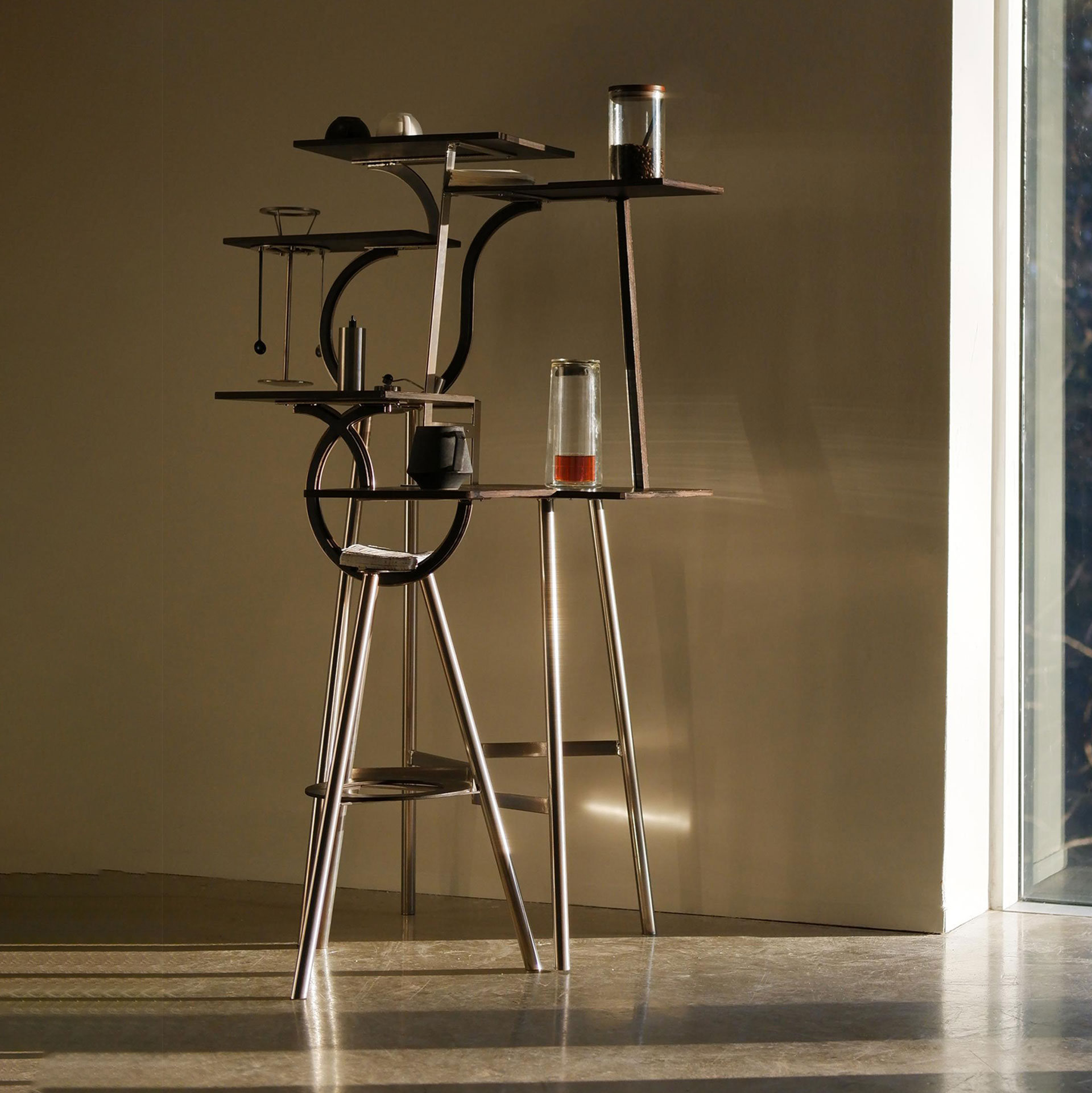
Coffee Podium redefines coffee rituals by blending operational tables, coffee tables, and shelving platforms into...
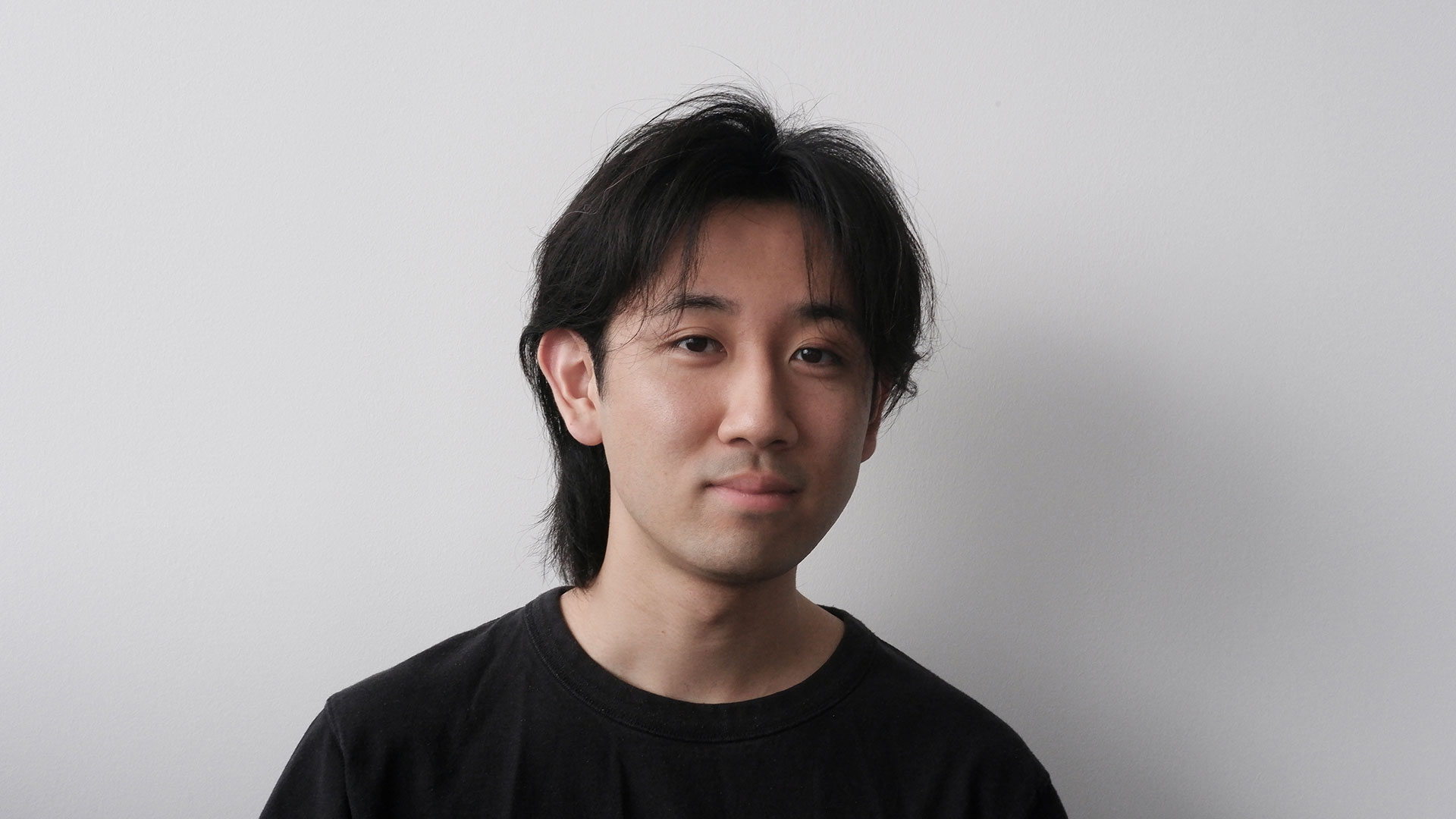
ETSU NOMAKI is an industrial designer whose work across furniture and object design explores how form shapes human interaction, creating precisely crafted pieces that investigate spatial behavior, movement, and the subtle relationship between the body and its surroundings.
I am ETSU NOMAKI, an industrial designer working across furniture and object design. My work explores how objects position the body within space—how height, orientation, and accessibility shape the way people approach and interact with them. I develop projects through a combination of industrial fabrication and controlled material processes, with an emphasis on precision and spatial intent.
I was drawn to design through an interest in how small objects can structure everyday actions. Simple moments, such as placing a cup or serving another person, can be shaped through form in ways that are subtle yet intentional.
Being recognized by the MUSE Design Awards acknowledges not only the object itself, but also the design approach behind it. My work often operates through minimal formal gestures, relying on controlled adjustments and subtle interventions rather than overt expression.
This recognition suggests that quieter design decisions and restrained forms can still resonate meaningfully within a broader international design context.
This recognition has expanded the reach of my work beyond its immediate context, bringing it into dialogue with curators, collaborators, and manufacturers.
It has also reinforced the continuity of my practice, allowing individual pieces to be understood as part of a broader investigation into objects, spatial relationships, and human interaction.
Experimentation is, for me, a way of evaluating how an object performs in use, not simply how it appears. I test ideas through repeated adjustments—height, edge conditions, and surface relationships—to better understand how the body responds through real interaction.
In the Coffee Podium project, this process involved refining the elevation and footprint so that the act of placing or serving feels intentional and precise. Even slight changes in height could alter whether the object feels passive or directive in use.
An unusual yet consistent source of inspiration in my work is the idea of objects as spatial markers rather than purely functional tools. I am interested in how an object can define a position within space—establishing where an interaction occurs before determining exactly what that interaction is.
This shifts the starting point of design away from function alone and toward the ways an object can organize movement, presence, and human interaction.
A common misconception is that design is primarily about solving problems that are already clearly defined. In practice, much of the process involves identifying what should be addressed and what should remain open. This requires carefully considering how much an object should guide behavior and how much ambiguity it should intentionally preserve.
I approach this balance by clarifying the intention behind the object early in the design process. Once that intention is established, external constraints become parameters that help shape the final outcome. Rather than protecting an idea in isolation, I focus on maintaining its integrity as it adapts to different conditions and requirements.
A central challenge was calibrating how much the object should engage the user. The form needed to provide enough guidance to make the interaction feel intentional, without becoming overly prescriptive or visually dominant. If the object does too much, it dictates behavior; if it does too little, the interaction becomes passive and unconsidered.
The solution involved carefully controlling the object’s height, surface boundaries, and spatial presence so that it subtly guides how a user approaches and places an item. The interaction exists within a delicate threshold—where the object frames the action without overwhelming it.
When I encounter a creative block, I intentionally shift my focus away from the project and return to observation. This often involves studying built environments, objects in use, and the ways people move through space. Removing the pressure to immediately produce allows the underlying questions of the project to re-emerge with greater clarity.
My work is guided by precision, restraint, and an attentiveness to how objects exist within space. I am interested in creating forms that do not rely on emphasis or excess, but instead establish their presence through alignment, balance, and control.
Focus on building a consistent way of thinking. Tools, trends, and aesthetics will inevitably change, but a clear understanding of form, structure, and use will allow your work to remain grounded, adaptable, and enduring.
I would choose Aldo Bakker. His work demonstrates a highly refined and controlled use of geometry, where form is resolved with a precision that feels both disciplined and alive. What I find especially compelling is his ability to introduce expression without excess—his objects carry a strong presence while remaining restrained in their construction.
I am particularly interested in how that level of control can be extended across different material systems and contexts, where geometry becomes not only formal, but also deeply experiential.
I would want someone to ask, “How does an object define a moment of use?”
I would say that an object defines a moment through positioning—where it is placed, how it is approached, and how it receives interaction. Rather than directly prescribing behavior, it creates a condition in which certain actions feel natural. In that sense, the object frames the interaction without fully determining it.