Data Center as Public Interior
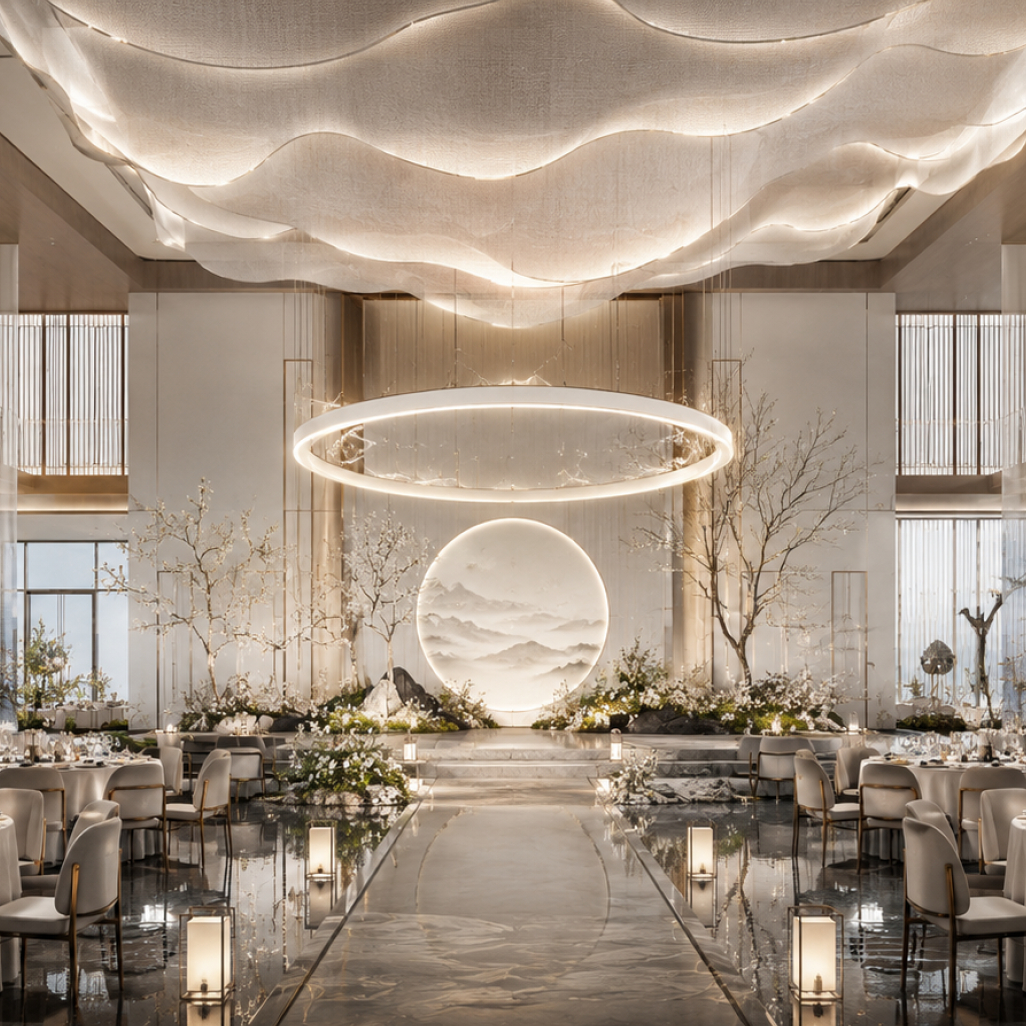
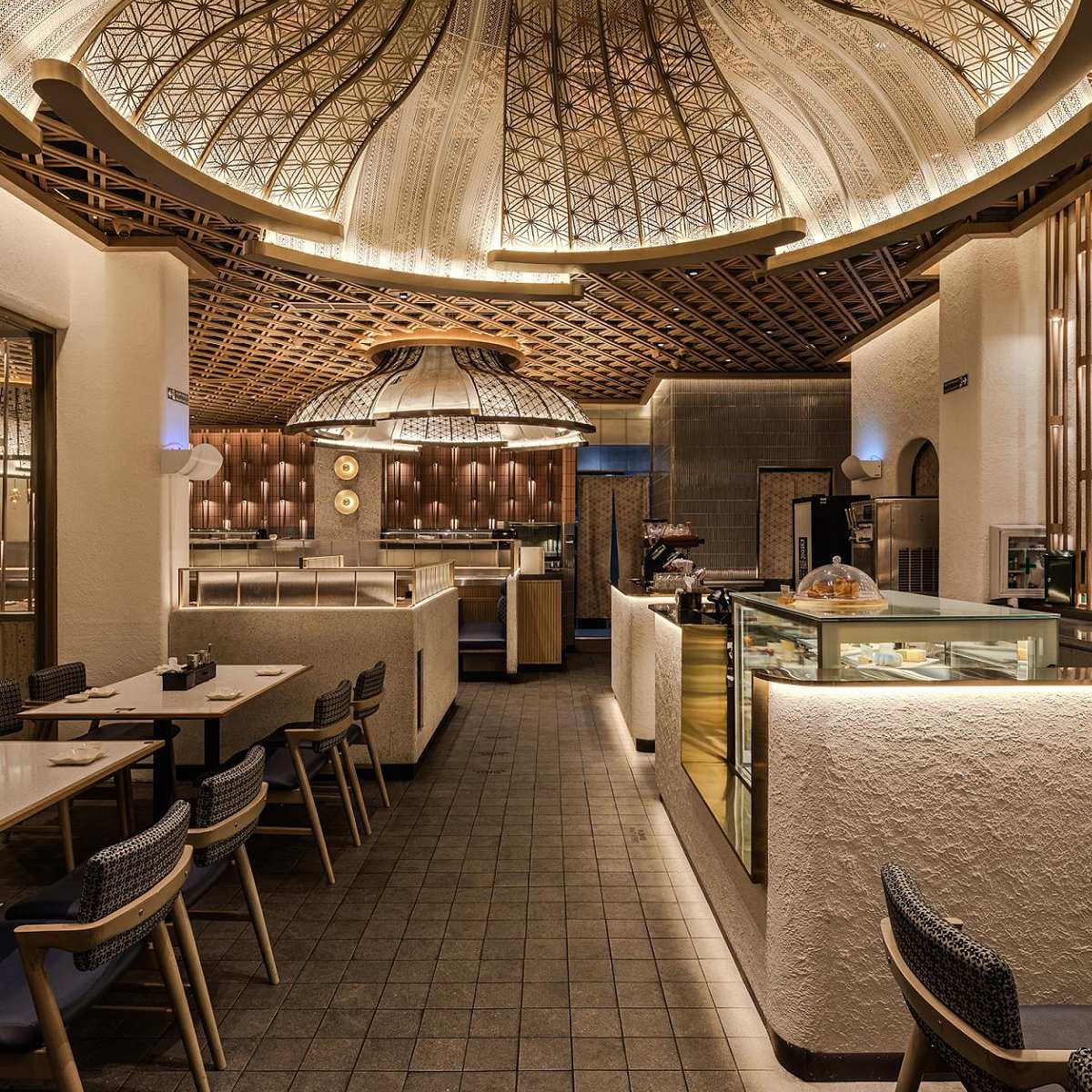
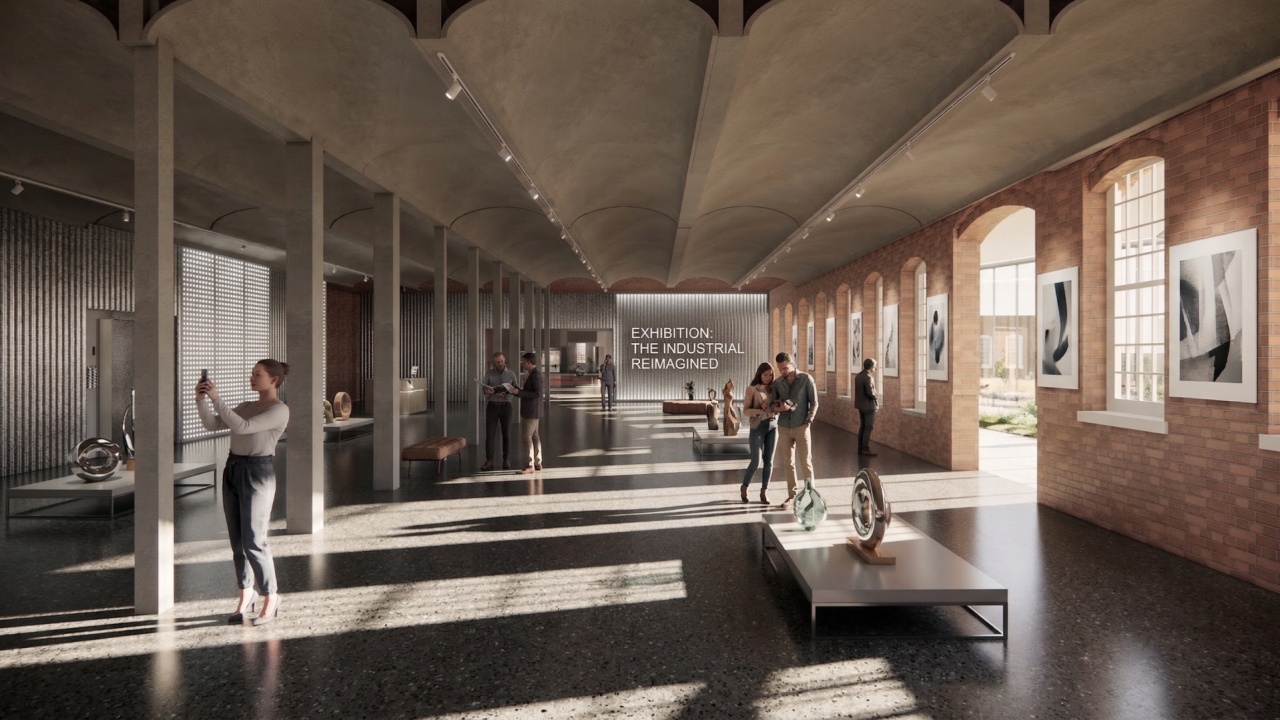
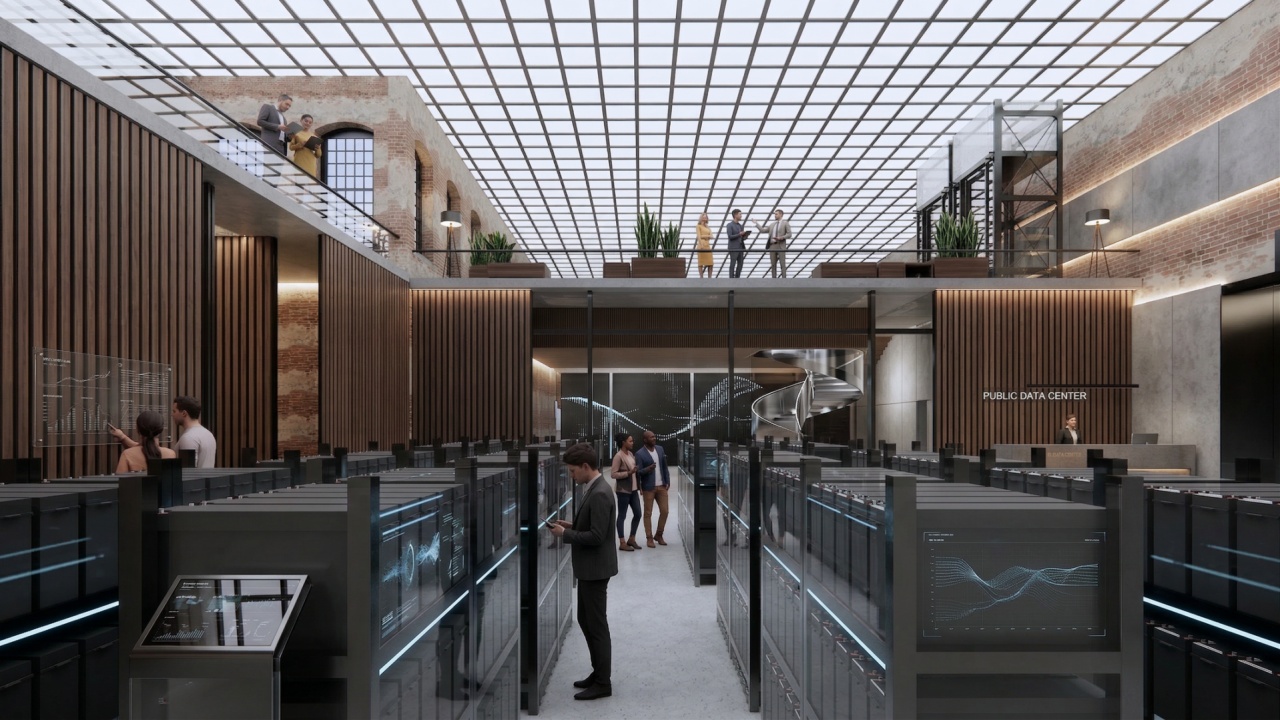
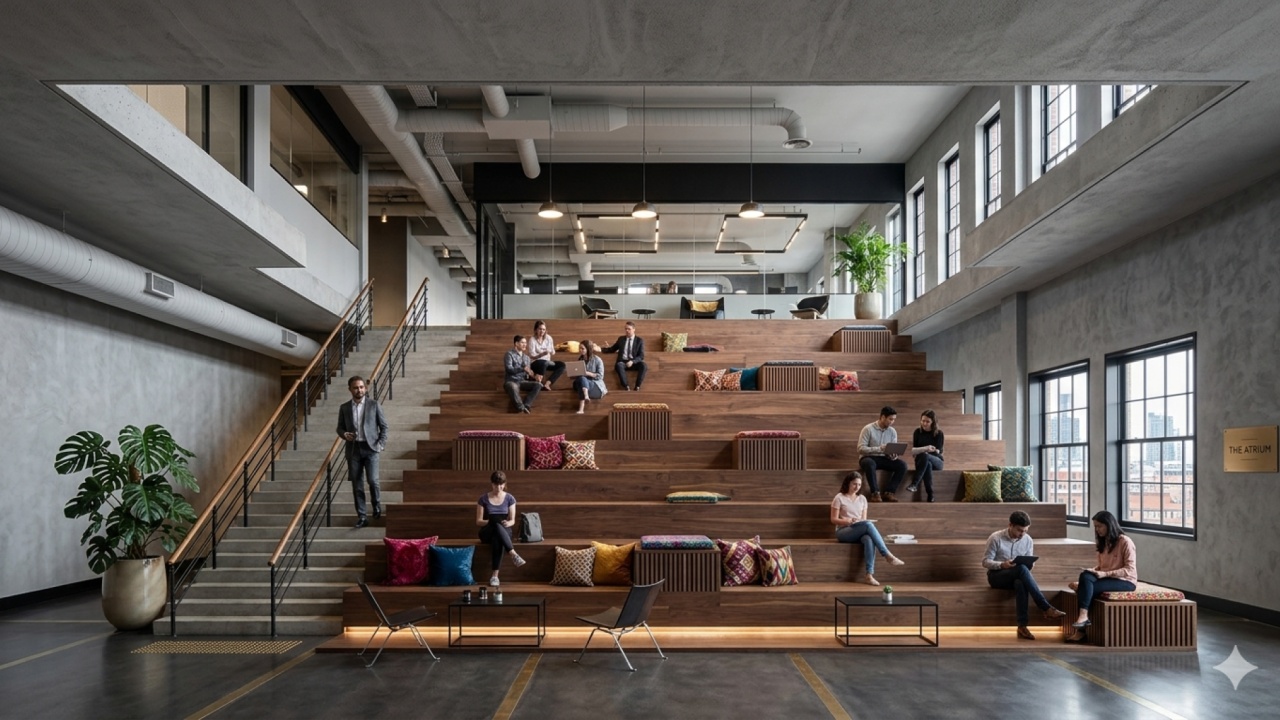
This project reimagines a historic industrial building through adaptive reuse, transforming it into an open...
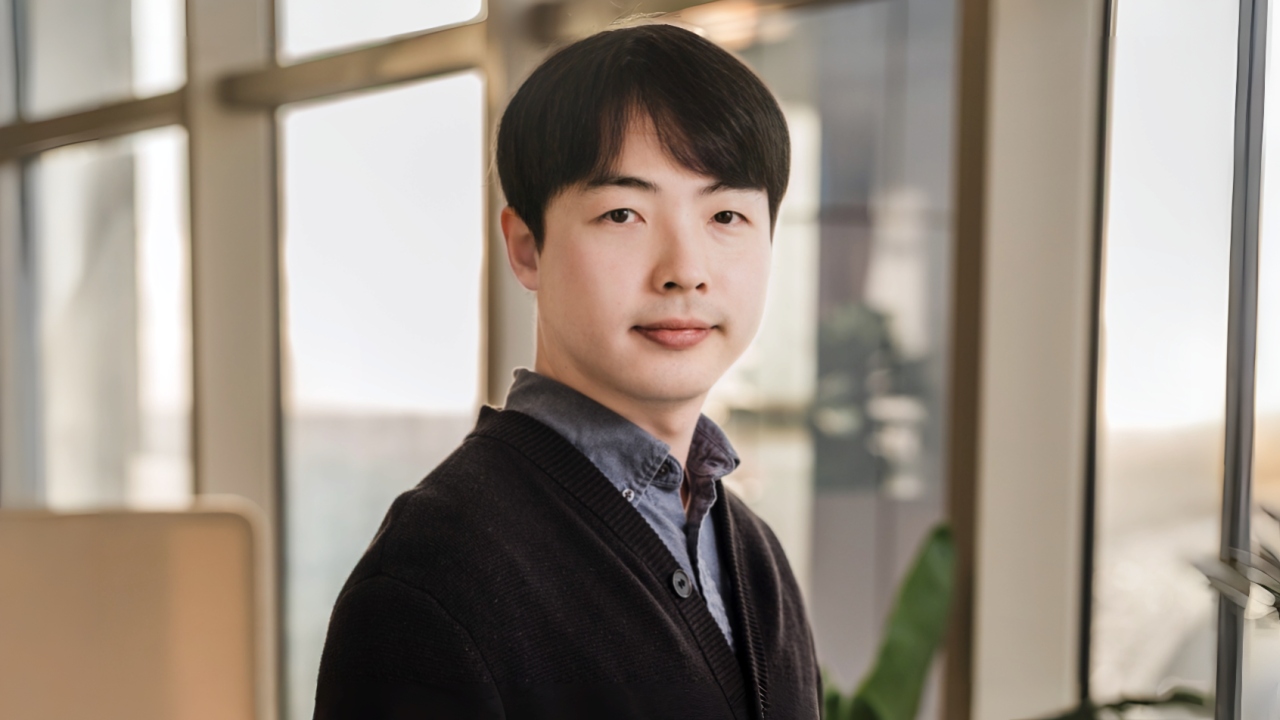
Woojae Kim is a Los Angeles-based interior designer whose cross-cultural background informs his approach to creating meaningful workplace and retail environments. His work reflects a belief that the strongest design solutions emerge through patience, curiosity, and a willingness to embrace iteration.
My name is Woojae Kim, and I’m an interior designer currently based in Los Angeles, working at NBBJ, where I focus on workplace and retail environments across international projects. Originally from South Korea, I later moved to the United States to pursue my graduate studies at Rhode Island School of Design, which played a pivotal role in shaping my design philosophy and approach to spatial thinking.
I was originally drawn to design because I’ve always been interested in how environments influence human behavior and emotion. Even before formally studying architecture and interior design, I found myself observing how people interact within spaces—how circulation, light, and material choices can subtly shape experience.
Over time, that curiosity evolved into a more structured pursuit of design, particularly within workplace and retail environments, where daily human interaction, culture, and functionality intersect. For me, design became a way to create spatial experiences that are both functional and emotionally resonant, rather than purely visual outcomes.
Winning the Tokyo Design Awards was especially meaningful in that journey, as it reflects my ongoing interest in creating work that resonates across different cultural and professional contexts.
This recognition means a great deal to me, both personally and professionally. Working at NBBJ and being involved in a range of international workplace and retail projects has really shaped how I think about design, and in many ways this feels like an affirmation that that process is resonating beyond just my immediate environment.
This achievement has been a meaningful milestone in my career, especially in terms of how my work is being perceived within a broader international context. Working at NBBJ, where I’ve been primarily focused on workplace projects, it has opened up more conversations around design approach, particularly in how we think about experience-driven and human-centered environments.
On a personal level, it has given me more confidence in the direction I’ve been developing over time. It feels like a reinforcement that the ideas and approaches I’ve been exploring are resonating beyond individual projects.
Within the team, it has also helped increase visibility around my work and has led to more engagement in discussions around design direction and cross-context thinking. So far, the impact has been more about opening up new conversations and opportunities rather than a sudden shift, which I see as a very positive step forward.
Experimentation plays a key role in my creative process. I see it less as a final step and more as something that runs throughout the entire design process, from early concept exploration to spatial development.
I usually begin by testing different directions through sketches and diagrams, not aiming for a fixed solution but trying to understand how different decisions can shift the experience of a space. That iterative process often leads to the most meaningful discoveries.
One project that reflects this approach is Data Center as Public Interior. It explores the adaptive reuse of an existing building by integrating a data center with public programs, rethinking what is typically a closed infrastructure as part of a more open and accessible spatial experience.
Through this project, I explored how transparency, circulation, and programmatic layering could interact within a single structure. For me, experimentation is ultimately about challenging fixed boundaries and using that tension to generate new spatial relationships.
One of the most unusual sources of inspiration for me comes from nature—especially its textures, patterns, and systems that often go unnoticed at first glance.
I’m less interested in nature as a literal reference, and more in how its underlying logic operates. Things like repetition, growth, erosion, and layering often inform how I think about space and composition. There’s a kind of quiet complexity in natural systems that feels very relevant to how environments are experienced.
For example, I often find myself studying how surfaces change over time, or how patterns emerge through accumulation rather than design. That way of thinking has influenced how I approach spatial organization, especially in projects where I’m exploring layering, transparency, and transitions between different programmatic elements.
In a way, nature becomes a framework for thinking rather than a style reference—it helps me stay attentive to balance, rhythm, and variation within a space, rather than treating design as something fixed or static.
One thing I wish more people understood about the design process is that it’s rarely a straight path from idea to outcome. From the outside, it can look quite clean and resolved, but in reality it’s full of iteration, uncertainty, and constant adjustment.
A lot of the work happens in between decisions—testing ideas, letting them fail, and then refining them again. That process is not a detour from design; it is the design. Some of the most important directions often come from moments that initially feel unclear or even unsuccessful.
I also think people sometimes underestimate how much time is spent thinking rather than producing. Especially in early stages, a lot of value comes from observation, research, and simply understanding what a space or problem is really asking for before trying to solve it.
For me, design is less about having immediate answers and more about gradually clarifying intent through repetition and reflection. The final result is really just the most resolved moment of a much longer process.
For me, it’s really about finding a balance rather than choosing one over the other.
Client expectations usually come from very practical needs—how the space will be used, budget, or function. I see those as the starting point, not something that limits the design.
At the same time, I try to stay true to my own way of thinking, especially in how I approach space, experience, and how people move through it. Even if the direction changes during the process, I try to keep that core approach consistent.
Most of the time, this balance happens naturally through conversation and iteration with the client. As ideas get tested and adjusted, the design usually becomes stronger and more realistic. So I don’t really see it as a conflict, but more as part of the process of shaping a better outcome.
The biggest challenge in working on Data Center as Public Interior was dealing with the inherent contradiction of the program. A data center is typically closed, controlled, and not meant to be experienced by the public, while my goal was to bring it into a more open and accessible spatial condition.
To work through this, I relied on a few key design ideas throughout the process—fuse, coexistence, synergy, and accessibility. Instead of treating the program as separate layers, I started to think about how they could be fused together within a single spatial system. The idea of coexistence helped me explore how different conditions could exist without weakening each other, while synergy became about how those overlaps could actually generate new spatial experiences.
Accessibility was also important in guiding how people would physically and visually engage with the space, especially in a building that traditionally limits public interaction.
Through this framework, the challenge became less about resolving conflict and more about finding relationships between different systems. Over time, the project became clearer through iteration, especially by focusing on circulation and how experience unfolds step by step.
In the end, what felt like a contradiction at first actually became the main driver of the design.
When I hit a creative block, I usually step away from the work and reset my perspective.
I find it helpful to go back to observing things more loosely—nature, textures, light, or everyday environments—without trying to solve anything. It helps me get out of “problem-solving mode” and think more openly again.
I also revisit the original intent of the project. When things feel stuck, it’s often a sign that I’m too focused on details rather than the bigger idea. Going back to that core direction usually helps everything become clearer.
Sometimes I just sketch freely without pressure. That usually helps reset my thinking and brings new clarity.
I’d say my work is shaped by observation and a sensitivity to everyday experiences of space.
I’m often inspired by subtle details like natural patterns, textures, light, and how people move through environments without thinking about it. Those small moments often guide how I make spatial decisions.
I also value clarity in design. I try to focus on what’s essential rather than overcomplicating things, so the final experience feels intuitive and grounded in real human behavior.
I would say don’t rush to find your “style” or a fixed identity too early. Focus instead on understanding how and why you design the way you do.
A lot of growth comes from staying curious and being open to different ways of thinking, even when they feel uncertain at first. The process of experimenting, failing, and refining is where your real voice as a designer develops.
Also, pay attention to everyday life, not just other design work. The most meaningful ideas often come from observing how people move, behave, and interact with spaces in very ordinary situations.
Over time, consistency in your thinking matters more than having perfect outcomes. If you stay honest about your process and keep pushing it forward, your direction will naturally become clearer.
If I could collaborate with any designers, it would be Kazuyo Sejima and Ryue Nishizawa of SANAA.
What I really admire about SANAA is the way their work feels incredibly light and simple at first glance, but actually carries a very deep sensitivity to space, movement, and perception. Their architecture often blurs boundaries—between inside and outside, structure and experience—which is something I find very interesting.
I think it would be meaningful to explore how that kind of spatial sensitivity could be translated into more interior-driven or programmatically complex environments, especially where multiple systems and experiences need to coexist within a single space.
More than anything, I’m drawn to designers who approach space with restraint and clarity, while still creating a strong experiential impact. SANAA represents that balance in a very refined way.
One question I wish people would ask more often is, “What are you trying to remove from a design, not just add?”
My answer would be that a big part of my process is actually about reduction. I spend a lot of time trying to understand what is not necessary—what can be simplified, clarified, or even taken away so that the core idea of the space becomes more visible.
I think good design is often not about adding complexity, but about revealing clarity. When you remove the noise, what’s left becomes much more intentional and easier to experience.
In that sense, a lot of my work is less about creating form and more about refining relationships between people, space, light, and movement.
Read about the Tokyo Design Awards winner from Revealing Architecture Through Light with Nataly Koptseva here.