The Artistic Void
This project intricately explores the concept of the “interplay between form and void,” transforming the...

Designer Pei-Chiu Hsieh approaches interior space as more than a functional structure, viewing it as a place where emotion, reflection, and daily living meet. In her award-winning project The Art of Void and Reality, she reimagines the home as a gallery-style dwelling that reflects her philosophy of “Life as Art.”
I am Pei-Chiu Hsieh, a designer dedicated to exploring the essence of space. My journey into design was initially sparked by a deep fascination with the interaction between people and their environments. I have always believed that a residence should not merely be a compilation of functions, but a sanctuary for the soul.
In my award-winning project, The Art of Void and Reality, I sought to transform a traditional home into a "gallery-style dwelling." The desire to manifest the philosophy of "Life as Art" within everyday spaces is the unwavering commitment that has guided me throughout my career.
This honour represents an international affirmation of the Eastern aesthetic concept of "the interplay of void and reality." In this project, we boldly minimised solid partitions, challenging ourselves to seamlessly fuse living spaces with art displays. Receiving recognition from the French Design Awards proves that this cross-cultural attempt to elevate a "living environment" into a "spiritual vessel" resonates on a global scale.
This is a tremendous encouragement for my team. We poured immense effort into handling the "precision craftsmanship of mixed materials" and the execution of the "curved design language" in this project. This award vindicates our persistence in detail.
It has not only raised our visibility on the international design stage but has also attracted more high-quality clients interested in "high-end custom homes" and "artistic residences."
Experimentation is key to breaking through design inertia. In The Art of Void and Reality, we experimentally replaced traditional solid walls with "transparent curved surfaces."
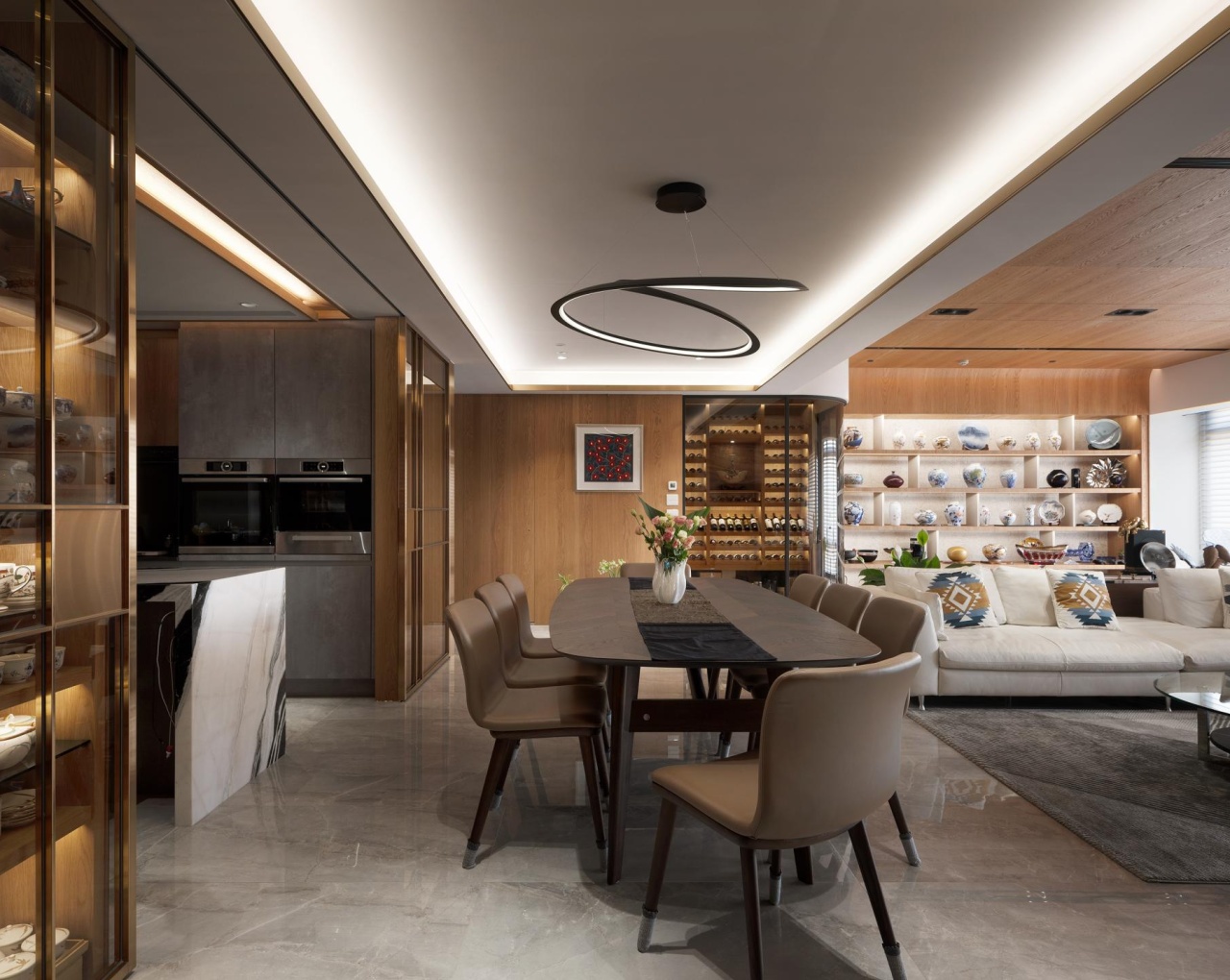
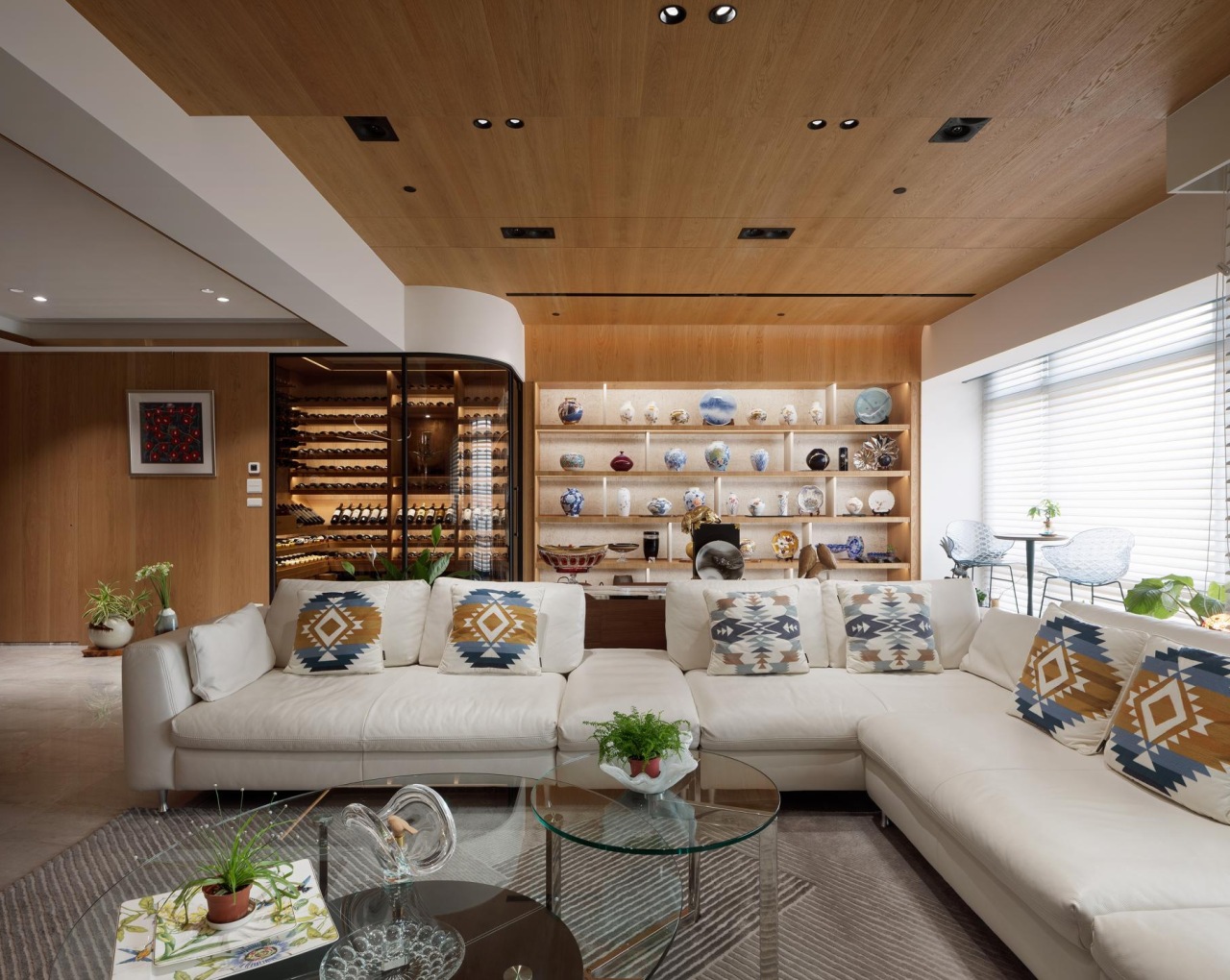
The most representative example is the open display wall and glass wine cellar behind the sofa. We utilised curved glass and metal structures to allow sightlines to penetrate, transforming the wine collection and exhibits into a flowing scenery within the space. This approach not only amplified the sense of flow but also successfully found a new balance between "delineating space" and "maintaining connection."
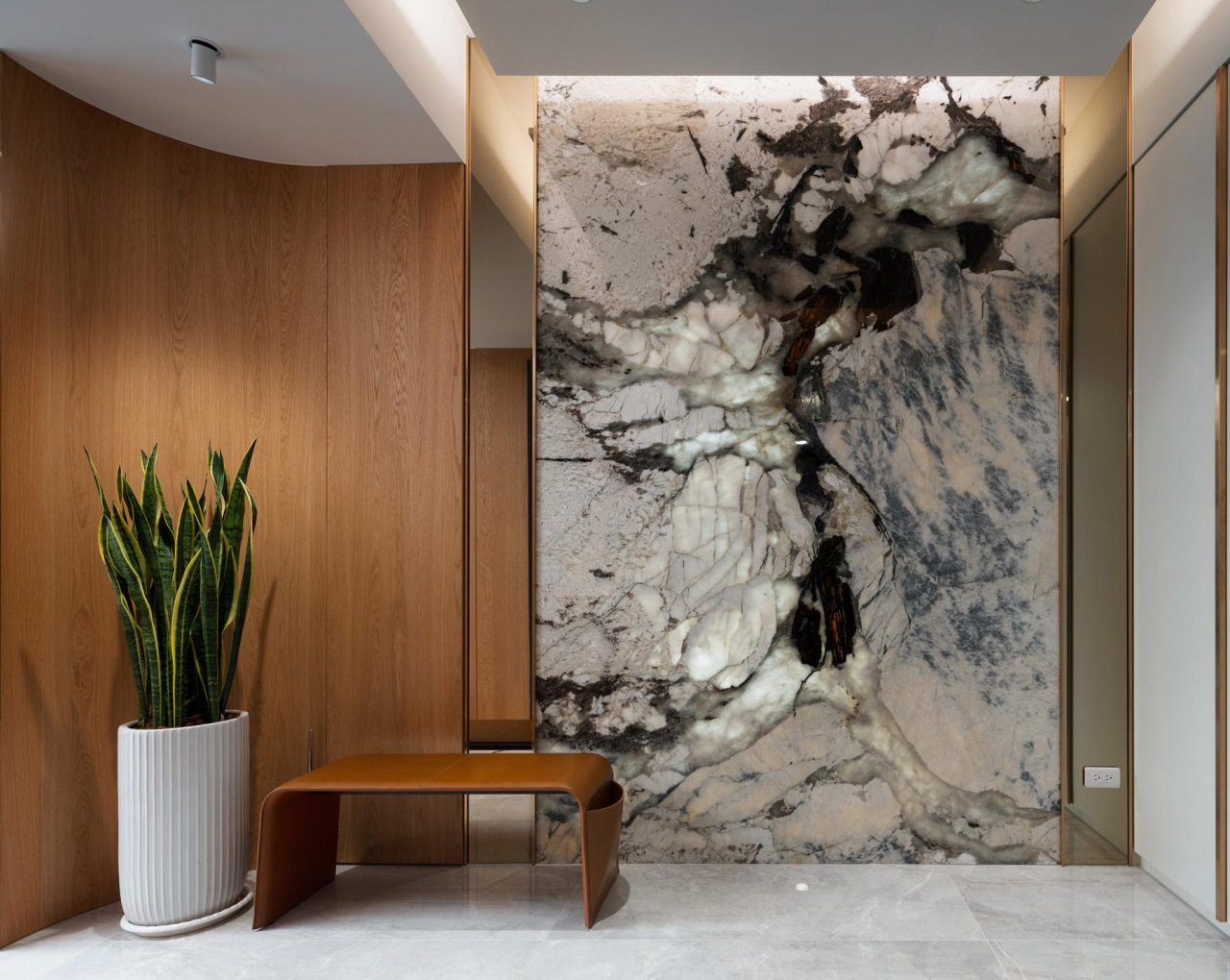
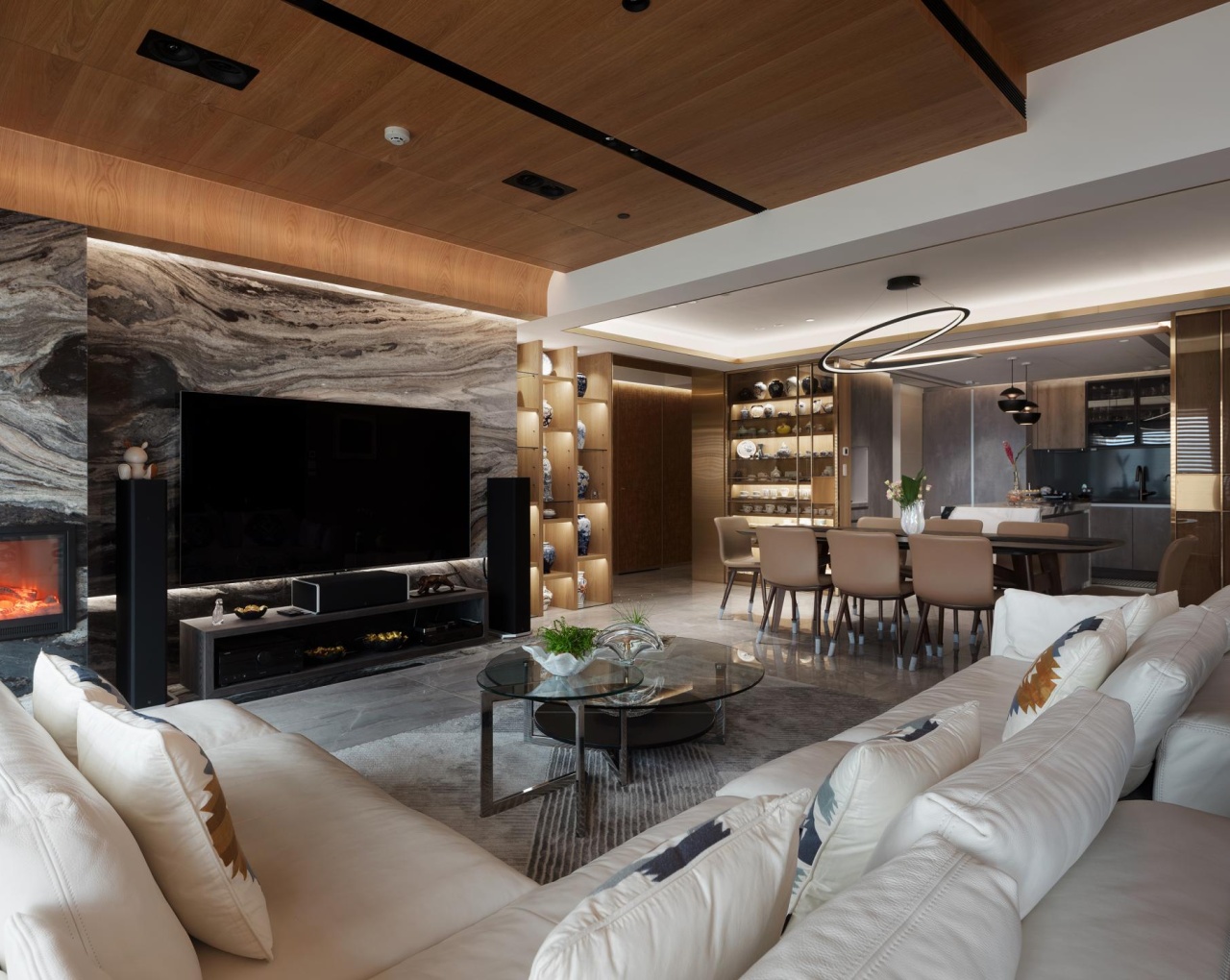
For this project, inspiration came from the "brushwork" and "artistic conception" of Eastern ink wash painting. For instance, regarding the feature stone wall at the entryway, we viewed it not merely as a building material, but as a splashed-ink landscape painting.
Its natural texture spreads out like ink, combined with the guidance of the curved walls, making residents feel as if they are wandering within a scroll painting as they move. This attempt to translate the "rhythm" (Qi) of 2D painting into 3D spatial flow is a very unique source of inspiration for us.
Design is not just a piling up of visuals, but a guidance of "behaviour." Beneath the seemingly minimalist surface of The Art of Void and Reality lies a precise calculation of circulation.
Through the open plan and curved guides, our goal is to unconsciously lead residents into a state of "viewing and pausing," thereby generating a deep connection with the space. I hope people understand that good design influences feelings invisibly, rather than just through visible decoration.
The key lies in transforming the client's living needs into the core highlights of the design, rather than compromising. The owner of this project possesses a rich art collection and taste, which perfectly aligns with my concept of creating a "gallery-style dwelling."
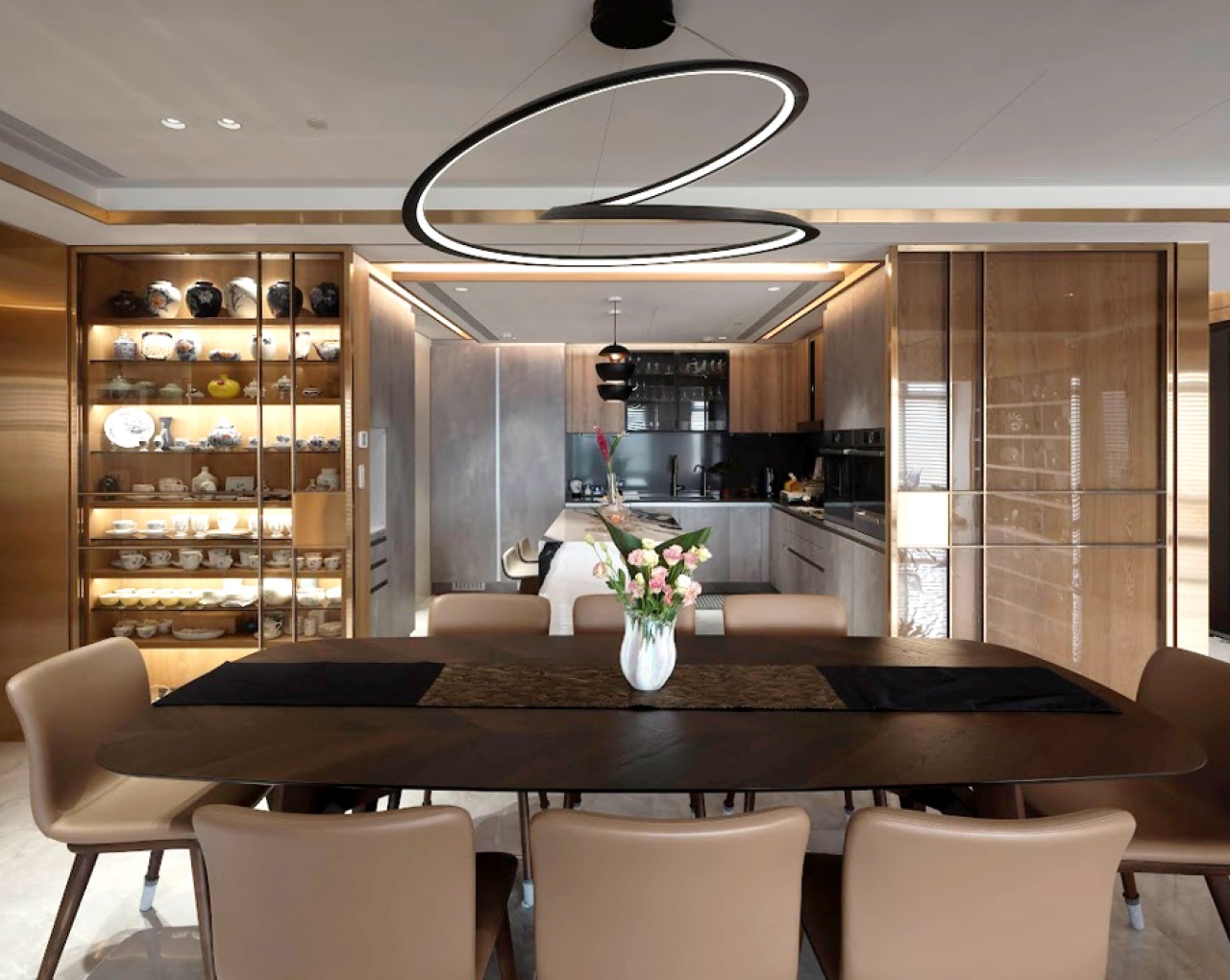
Instead of hiding the owner's belongings for the sake of minimalism, we utilised recessed lighting, display cabinets and mixed materials to transform their daily activities—such as flower arranging and tea tasting—into the most beautiful scenery in the space. When design can carry the resident's cultural depth, balance is achieved naturally.
The biggest challenge lay in the "balance of materials" and the precision of the "curved craftsmanship." We used a variety of distinct materials, including warm wood, cold stone, and metal. To make these contrasting characters coexist harmoniously, we used an electric fireplace as a meeting point for the warm and cool materials.
Furthermore, we employed precise construction methods to ensure the smooth transition of curved surfaces, ensuring they were not only aesthetically pleasing but also functional in guiding movement and providing safety buffering.
I return to the observation of "light and shadow" and "nature." Just as in the design of the private areas in this project, to create a tranquil atmosphere, we used low-interference lighting and geometric undulations in special coatings to capture layers of light and shadow.
When I feel stuck, observing how light flows across different mediums often brings me the most intuitive answers, helping me rediscover the serenity and order that space should possess.
I deeply believe that "Life is Art." I consider a residence not just a container for function, but a vessel for the resident's emotions and memories. Therefore, I insist on using durable materials with warmth and planning the space as a background canvas, allowing the resident's paintings, collections, and life moments to become the protagonists. This pursuit of "permanence" and "humanism" is the core value I infuse into every design.
Focus on details, and always maintain a care for "people." In this project, from the selection of stone textures to the finishing of the curved ceilings, every detail determines the texture of the space. Technique can be honed, but the delicate sensitivity to the user's experience—such as how to use space to make residents feel stable and grounded—is the irreplaceable value of a designer.
If possible, I would hope to converse with modern masters like I.M. Pei or Tadao Ando. Their use of "light" and "geometry" is awe-inspiring. In The Art of Void and Reality, we also attempted to guide light and shadow through geometric undulations and transparent materials. To exchange ideas on how to use the purest geometric language to create rich spatial layers would be a fascinating brainstorm.
Q: "Is this a gallery, or is it a home?"
A: "It is both, and they do not conflict."
This is the concept I most wish to convey. Through design, we proved that while a residence can possess display attributes and artistic height, it can still retain the essential qualities of life: stability, comfort, and usability for long-term living.
Visit this link here to read about the interview with Cheng Hua Li: Designing Across Residential and Public Environments.