

Marketing Awards for Startups | Small Business Awards Guide
SEPTEMBER 16, 2026
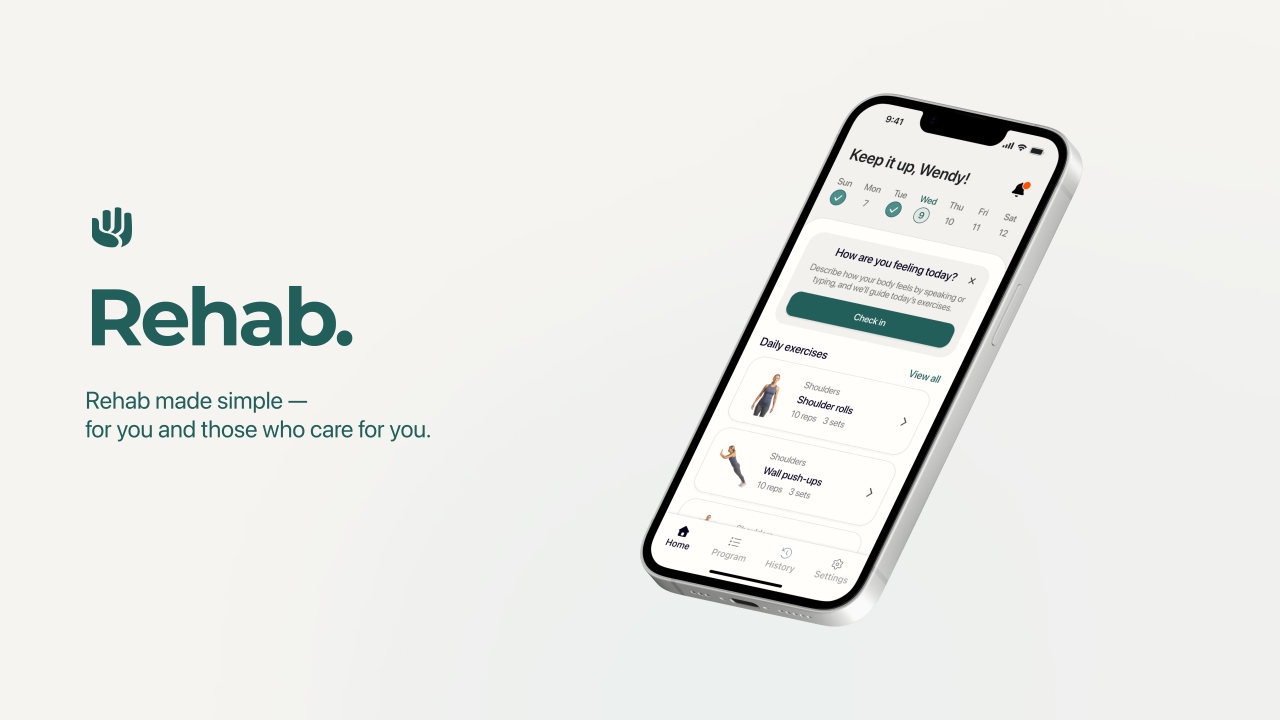
Rehabilitation is often described in clinical terms, yet for many older adults, it is a deeply personal journey shaped by routine, motivation, and support. As global life expectancy rises, the demand for accessible and consistent recovery solutions continues to grow. Many patients struggle to follow prescribed exercises at home, while caregivers frequently lack clear insight into day-to-day progress. The result is a gap between intention and outcome. Can recovery be guided in a way that feels both structured and reassuring?
Rehab, created by Ji Yoon Ahn, responds to this challenge through a user-centred digital experience designed specifically for ageing populations. Recognised with a winning achievement at the 2026 London Design Awards, the project reflects a thoughtful approach to bridging healthcare and everyday living.

At its core, Rehab introduces a guided system that supports physical therapy beyond traditional settings. Research shows that adherence to home-based rehabilitation programs can decline due to limited feedback and reduced motivation. Rehab addresses this by integrating adaptive technology that responds to user performance, helping individuals stay aligned with their recovery goals. Interactive features such as motion-based feedback and simple progress tracking provide clarity, turning abstract routines into measurable steps.
Equally important is the role of connection. Caregivers often experience uncertainty when they are unable to observe recovery firsthand. Rehab offers a solution through accessible updates and visual summaries that present meaningful progress in a clear format. This creates a shared understanding between patient and caregiver, allowing encouragement to be timely and informed. It reflects a familiar experience. When people can see progress, confidence tends to follow.

The design approach emphasises clarity and ease of use. Interfaces are structured to accommodate varying levels of digital familiarity, while the system maintains a calm and supportive tone throughout the experience. Each interaction is intended to reduce friction and build trust, ensuring that users feel guided rather than overwhelmed.
Rehab sets an example of how thoughtful UX design can contribute to better health outcomes. By combining accessibility, feedback, and connection, it reframes rehabilitation as a process that is both manageable and human.


Entry Title: Rehab
Entrant Name: Ji Yoon Ahn
Winning Category: User Experience Design (UX) - Health / Fitness / Wellness
Read about Miniso's recent achievement with their Miniso Friends, a modular design with lasting impact, through this article here.