Threefold Order
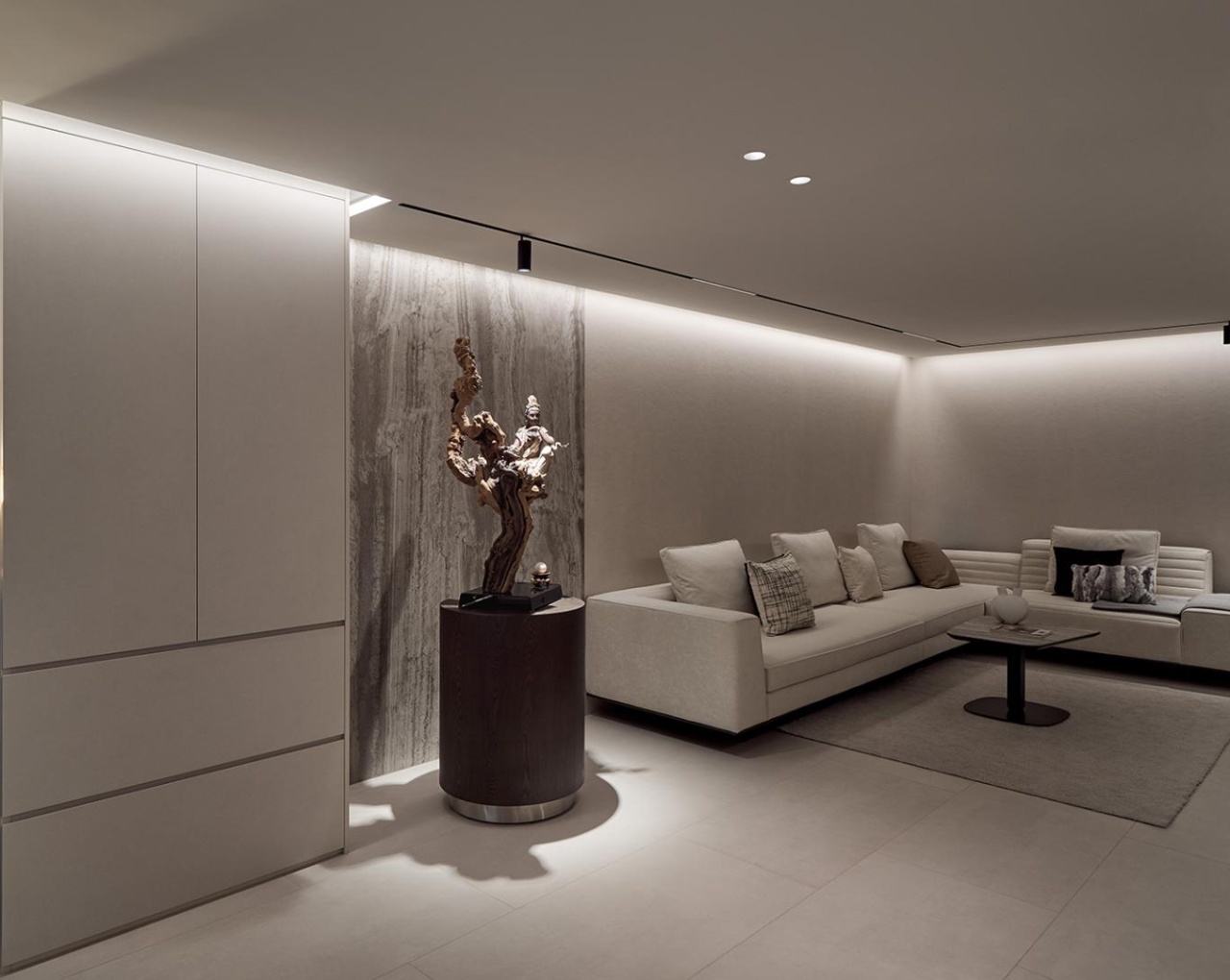
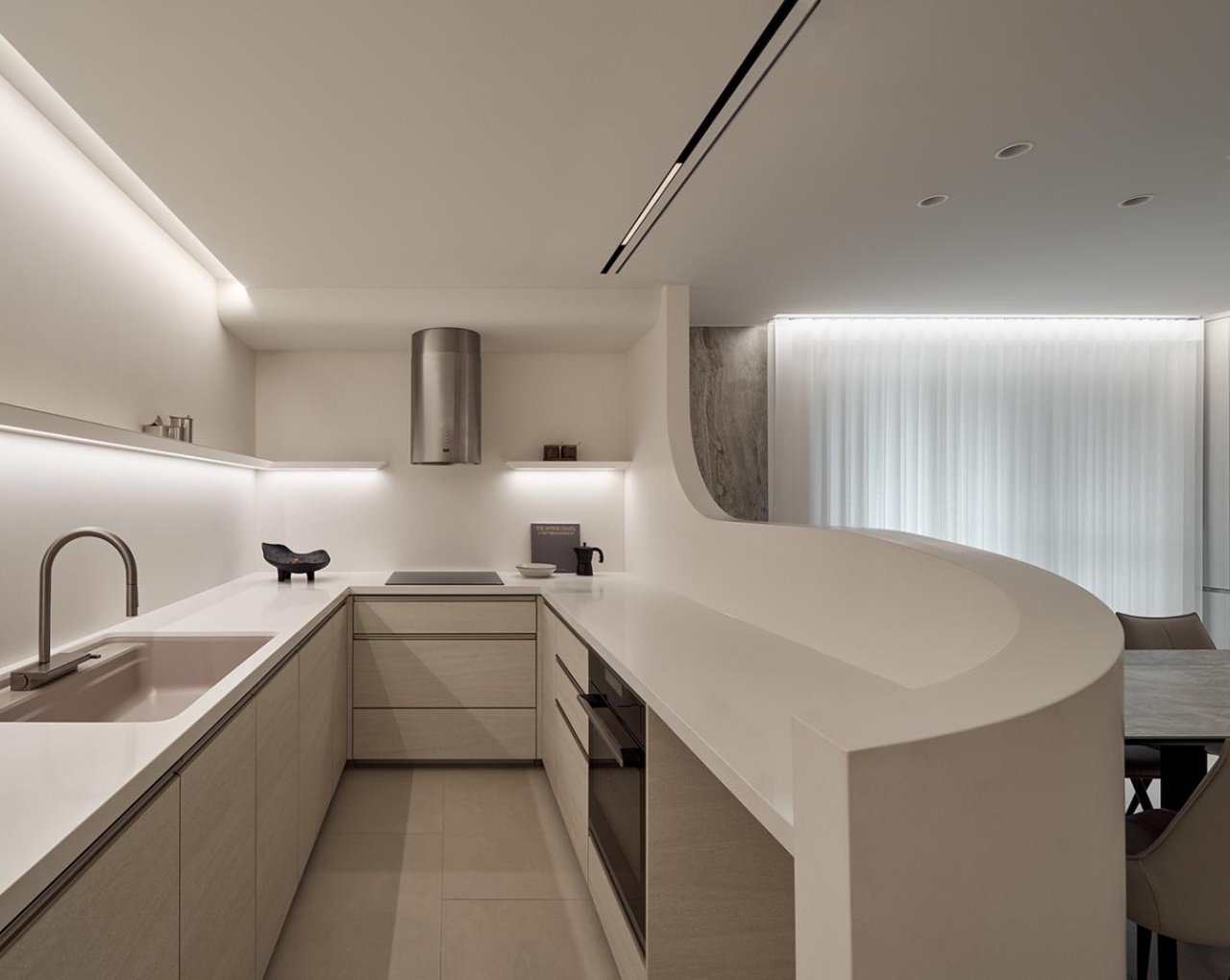
This project thoughtfully employs the Buddhist concept of the Three Buddhas—Past, Present, and Future—as a...

Designer Siao-Ji Chen approaches space with both technical understanding and aesthetic sensitivity, shaped by her upbringing in the construction industry. She believes meaningful design lies not in excess, but in carefully balancing constraints, priorities, and the everyday rhythms of the people who use a space.
Thank you! I grew up in a family rooted in the construction industry; from an early age, I was immersed in job sites and architectural drawings. This background naturally familiarised me with spatial structures and construction logic.
It helped me understand early on that design is not just about visual aesthetics, but about navigating the delicate balance between practical constraints, structural limits, and proportions.
At the same time, I have always been sensitive to spatial aesthetics. Whether it’s the play of light, the texture of materials, or the sense of scale, I tend to observe these details closely. My personality leans toward precision and detail, which is why I place great importance on refinement and a sense of order in my work.
For me, pursuing design was not an impulsive decision. It evolved naturally through my upbringing and professional experience into a long-term commitment and vocation.
For me, this recognition represents a resonance and understanding that transcends borders.
Design is inherently a subjective pursuit, yet when a work is validated through a prestigious international jury, the sense of being seen is profoundly grounding. It signifies that the professional standards and values we have long upheld are recognised objectively.
This warm encouragement affirms that our design thinking can bridge cultures and geographies, truly touching the human heart.
This Silver Award has built a deeper bridge of trust between our clients and us.
It renders abstract concepts tangible, significantly shortening the distance of mutual understanding and elevating our partnerships from simple commissions to profound value co-creation.
Currently, this honour has opened doors to more cross-disciplinary collaborations, creating a future for our team defined by broader possibilities and a more expansive vision.
In my creative process, "experimental spirit" acts more like a rigorous yet guiding mentor. For me, experimenting is not about chasing uncertainty, but rather about achieving design precision.
Driven by a perfectionist approach that borders on the obsessive, I view the constant refinement and simulation behind every project as an essential experimental process. This spirit plays a key role in "risk mitigation"—before a design is physically executed, I go through countless design and engineering adjustments to ensure the final result aligns perfectly with the original vision.
To me, this is more than just experimentation; it is a fundamental professional commitment to every creation.
For me, the most unconventional source of inspiration is often found in human daily habits rather than in art.
Instead of searching for abstract inspiration, I observe the rhythm of life—specifically, the subtle psychological shifts as one moves between waking, working, and relaxing. In this award-winning project, I translated these invisible transitions into a spatial flow of solid and void. To me, inspiration is not a physical object, but the deconstruction and reorganisation of the order of daily life.
Regarding the design process, what I hope people understand most is that design is not a simple purchase of a product, but a journey of deep customisation.
There is no such thing as perfect design, only design that is thoughtful and tailored to you. A great space requires time to refine, allowing professional standards to align with the user’s daily habits.
Furthermore, design is an art of prioritisation. Between budget and ideals, our goal is not to pile up expensive materials, but to use professional judgment to find the core value within constraints. I hope clients realise that the trade-offs and the waiting involved in this process are exactly what give a space its soul.
I believe the best balance is found in mutual respect and open communication.
At the initial stage, I provide professional analysis to help clients understand the pros and cons of each decision. If a client maintains a clear preference after fully considering the professional advice, I choose to respect and integrate those needs. I am deeply aware that while a designer creates the work, it is the inhabitant who truly gives the space its sense of life.
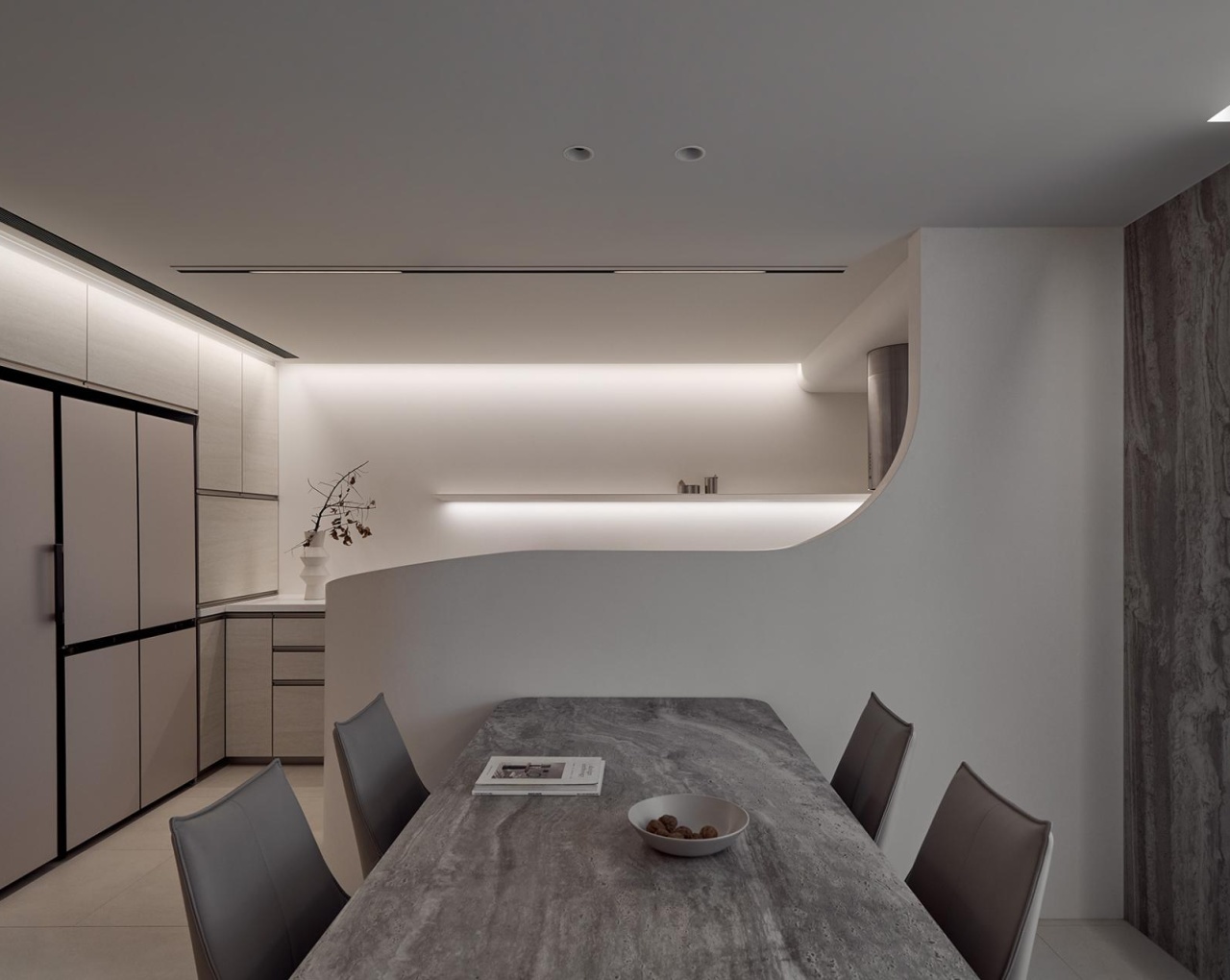
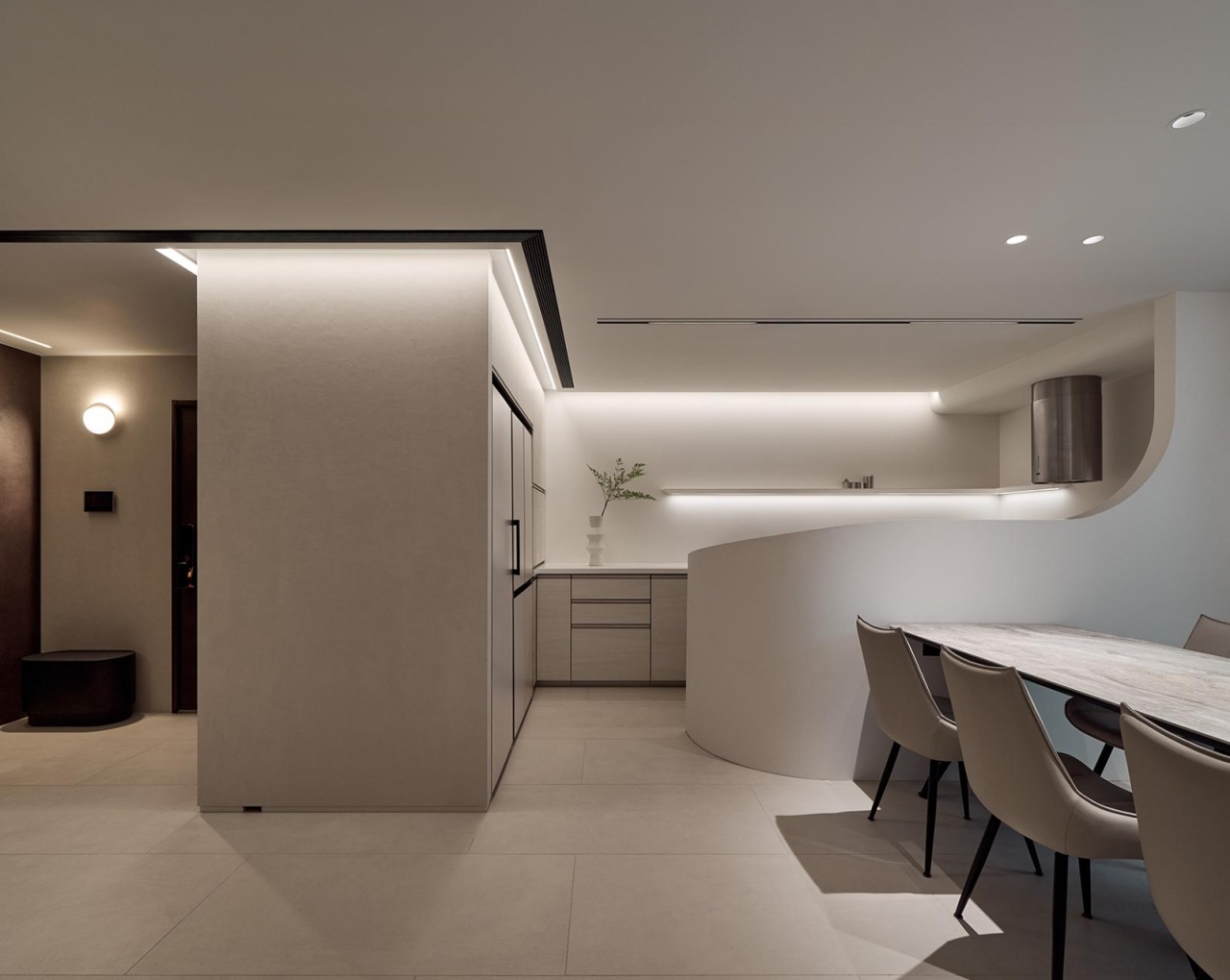
In creating this work, the greatest challenge lay in the delicate transition between living and working environments. We had to find a perfect equilibrium between fluid circulation, spatial privacy, and the minimalist application of materials.
Understanding the client’s hesitation when faced with complex choices, I approached the process with empathy. To overcome these challenges, we dedicated an entire year to iterative refinement and communication. For me, time and a proactive attitude are the only true remedies.
Through constant attention to detail and patient dialogue, we eventually ensured that the ideal design vision was realised with absolute precision.
When I encounter a creative block, my best remedy is to completely detach myself from the state of designing. I immerse myself in different fragments of life, such as watching a movie or simply spending time outdoors, allowing my thoughts to break free from professional constraints.
I believe that relaxation and letting go are key to breaking through a stalemate. For me, inspiration is rarely found in the relentless pursuit of perfection; instead, it often emerges quietly in those spontaneous, even imperfect, moments of daily life.
Embracing imperfection becomes a new source of inspiration, allowing me to return to my work with a broader perspective and a purer sense of creativity.
I integrate the philosophies of decluttering and "less is more" into my designs. For me, design should be free of unnecessary formalities and instead strive for absolute precision.
I firmly believe that a well-executed floor plan can solve 80% of life's spatial challenges; it is the skeleton and soul of a space.
In my value system, aesthetics and materials must be built upon sound functional logic, rather than the other way around. Through this essence-oriented approach, I aim to strip away unnecessary burdens for my clients, allowing life to return to its purest and most comfortable state within a precise layout.
For young designers, vision, belief, passion, patience, perseverance, persistence, and attention to detail are indispensable.
The path is not always glamorous; it is a battle with details and a race against time. You must have strong beliefs to protect your vision and use passion and patience to navigate challenges.
Ultimately, rely on perseverance and commitment to quality to anchor your expertise in every detail. Then, your work will naturally speak for itself.
Regarding potential collaborators, I don’t have a specific name in mind; instead, I’d like to leave this answer open to every future possibility.
To me, the most fascinating part of design is not the aura of a master but the sparks created when different souls collide. Whether it is a pioneer of design from another era or an ordinary person with a passion for life, anyone with a vision for space and a warmth for living is someone I aspire to work with.
I want to leave room for the readers to imagine that the best collaboration doesn’t necessarily exist in a textbook—it might just happen in our next conversation.
I wish people would ask: "In this seemingly minimalist space, what is the most deeply hidden and significant design detail to you?"
My answer would be: The "invisible order."
To me, the most successful design should be as natural as air—unnoticeable, yet precisely resolving every inconvenience in daily life. What I truly pour my heart into is the logic hidden behind walls, circulation, and functionality.
My greatest fulfilment comes from using meticulous floor planning to eliminate the clutter of life, allowing residents to rediscover the rhythm of living within an effortless sense of comfort.
Read about A Conversation with Pei-Chiu Hsieh as She Explores the Meaning of Space in Everyday Life here.