“Walking Light in Bhaktapur”
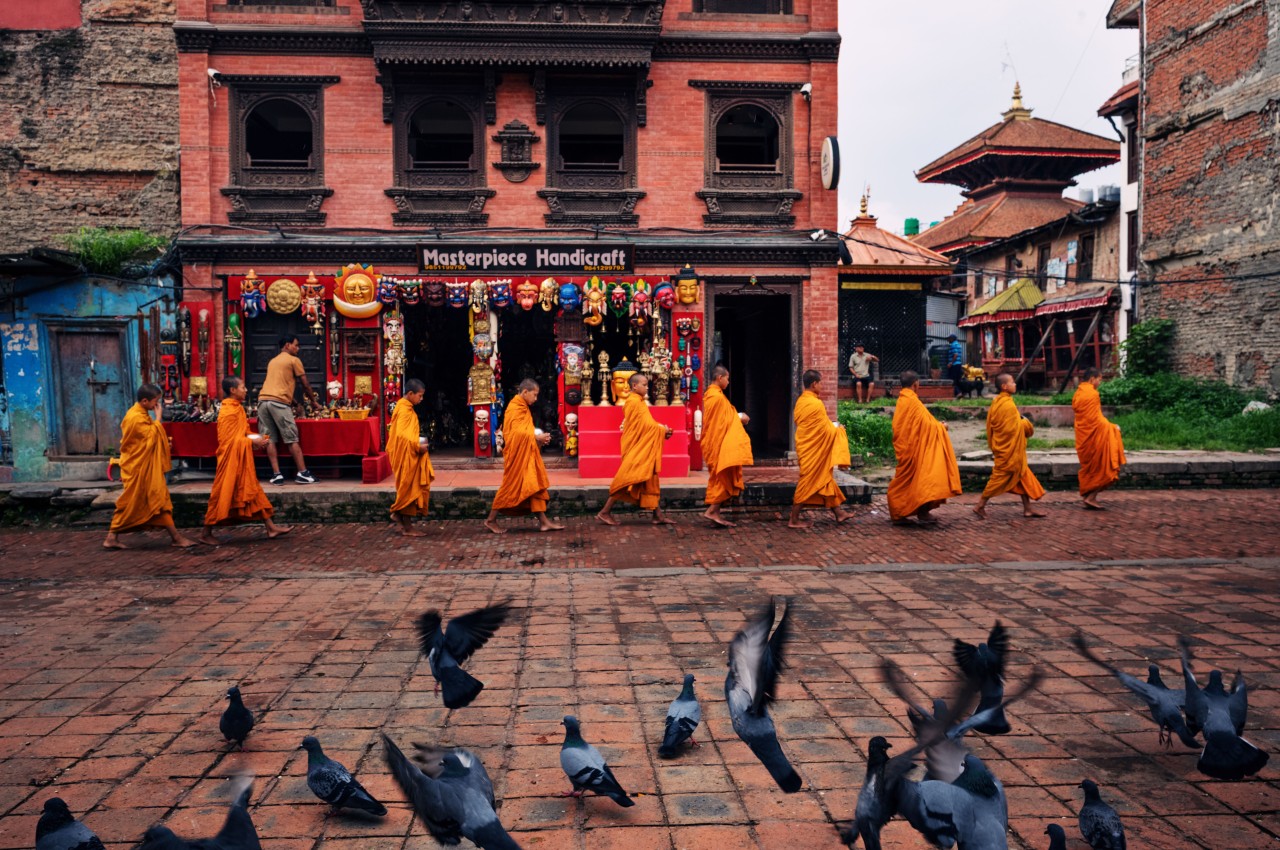
This series was photographed in July 2025 at Bhaktapur Durbar Square in Kathmandu, Nepal.
On a...
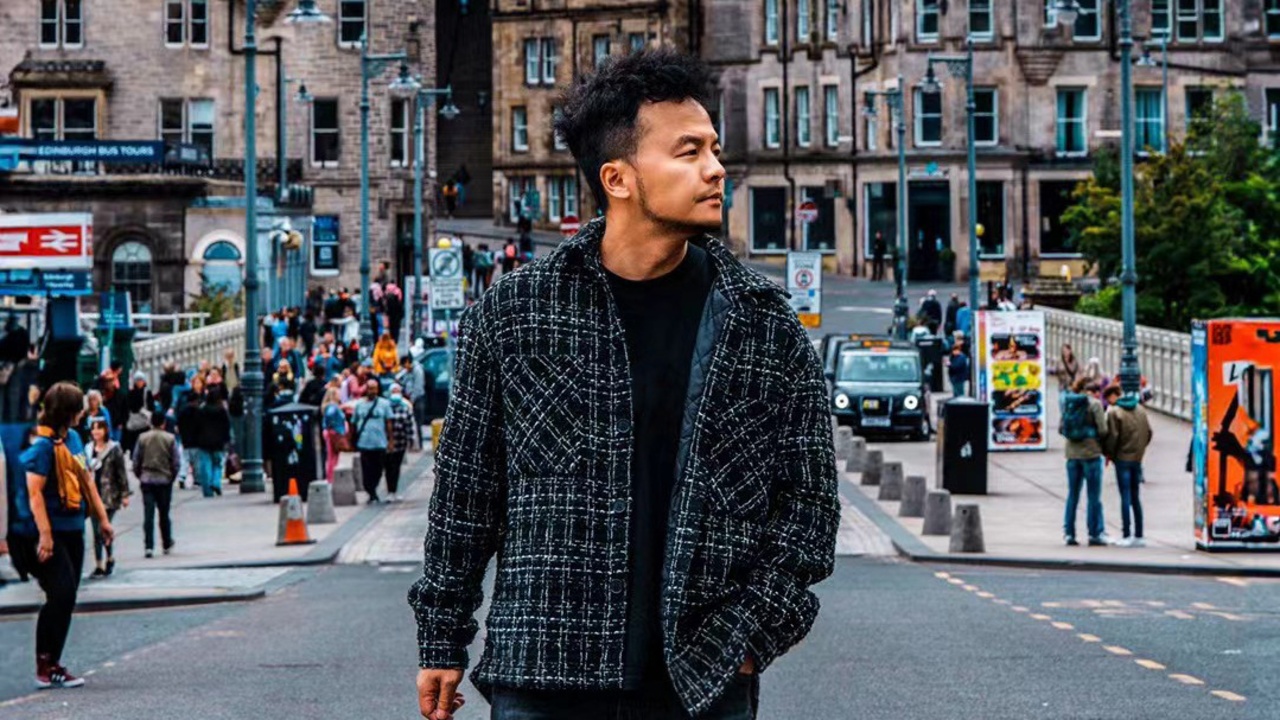
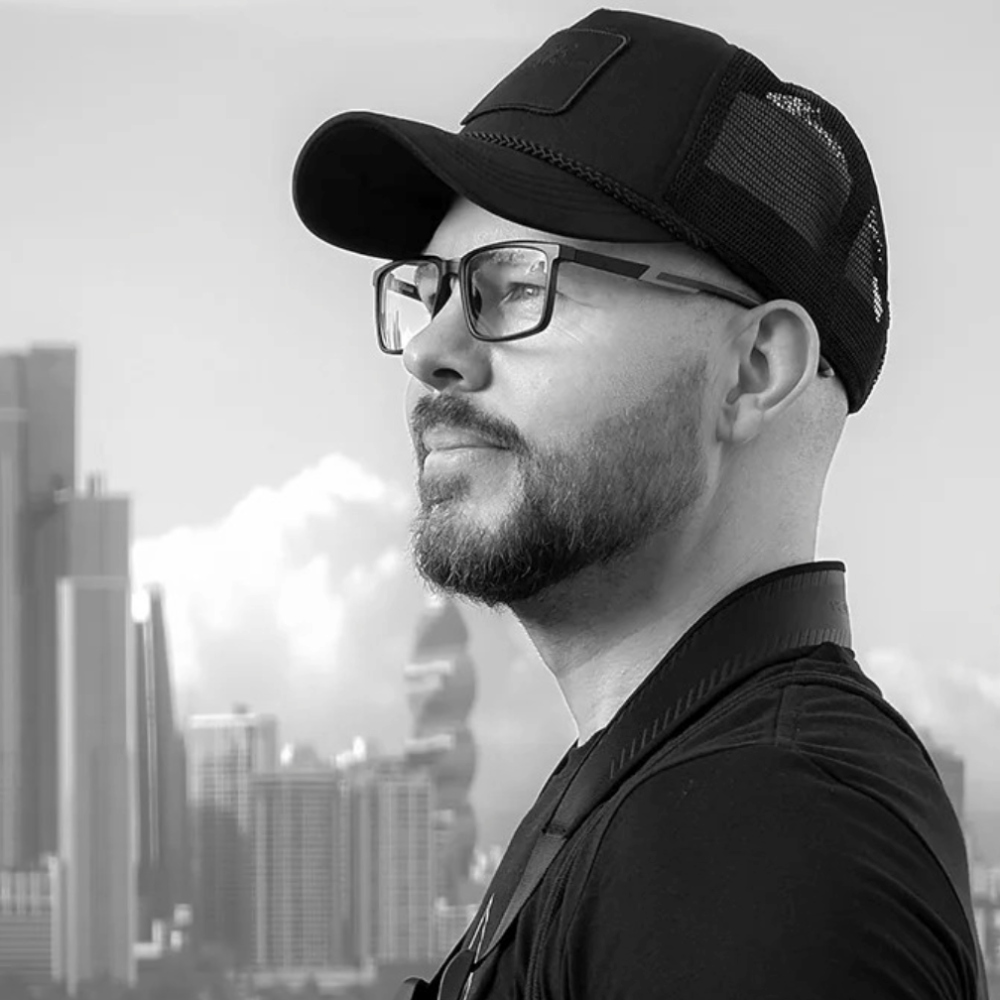
With more than ten years in commercial and fashion photography, Can Huang has gradually returned to a more personal practice rooted in observation and restraint. His recent work explores human presence and atmosphere, using photography as a way to reflect on time, place, and memory.
My name is Can Huang, and I am a commercial photographer from China. I’ve been working in fashion and commercial photography for more than ten years, shooting for different brands and clients. I’m grateful for this experience, but in recent years I’ve slowly realized that I’m increasingly drawn back to a much simpler starting point: to look for the most genuine side of people and cities, and to chase again the light that first made me fall in love with photography.
This year, I began to turn my camera little by little toward humanistic documentary photography and cinematic travel shorts, purely as a personal passion and not as work. The series I submitted for this award, “Walking Light in Bhaktapur”, is a personal project and feels like the part of my practice that is closest to my heart. I hope photography is not only my profession, but also a way to understand the world—and, at the same time, to understand myself.
The award-winning work is a series called “Walking Light in Bhaktapur”, photographed in July 2025 at Bhaktapur Durbar Square in Kathmandu, Nepal. I was traveling there for the first time, simply wanting to walk slowly with my camera and feel the people and landscape of this city, without putting too many expectations on myself.
One morning, I left early for Bhaktapur Durbar Square. After wandering around, I found a café with a wide view to rest. Suddenly, I saw a line of young monks in orange robes appear in my field of vision. It was an unexpected surprise, and I decided to find out more about their story.
On a grey, rainy morning, a group of young monks in orange robes walked barefoot out of their monastery to begin their daily alms round. I chose to follow them quietly. They walked along stone-paved streets, passing through courtyards, alleys and the square, receiving offerings from local residents.
Sometimes I walked alongside them; sometimes I stepped back to a street corner, watching this “orange line” appear and disappear between men drinking tea, women arranging their vegetable stalls, parked motorbikes and sleeping stray dogs. In the end, they gathered and sat around their teacher on the stone steps of an old temple. That final moment deeply moved me—everything felt so real and so unexpected.
For me, this series is about childhood, ritual, and the first light of an old city at dawn. It is a personal project, so having it recognized as a series feels both encouraging and humbling. It reminds me that the small voice telling me to “slow down, walk with them, and see what happens” was worth listening to. At the same time, I know this is only a starting point on my path—I still need to keep shooting, keep working hard, and keep moving forward.
When I’m selecting a series, I don’t start by asking “Which one is more likely to win?” I start by asking, “Which images are closest to what I truly felt at the time?” Then I look at whether the photos are “talking” to each other, and whether they can form a complete story.
If, after multiple rounds of editing, the series still feels clear and emotionally strong to me, and I can immediately recall how I felt when I pressed the shutter, then I consider it ready. Sometimes I also show an initial edit to a few trusted friends to see which images they pause on, or which frames they remember afterwards.
For this project, I initially selected more than sixty images, and in the end, I narrowed it down to eight. They basically cover several stages of that morning: before departure, walking through the city, the moments of receiving offerings, and finally sitting quietly on the steps. That last moment was the most shocking and unexpected for me.
Because I studied drawing when I was young, I developed a special emotional connection to art. As for photography, to be honest, I simply wanted to record certain moments. I first came into contact with photography at university and realized that images could express many things.
Later, by coincidence, photography became my job. But looking back, the original reason was actually very small and personal: I didn’t want those tiny fragments of time to disappear completely.
After working in commercial photography for more than ten years, I’ve realized that what I truly enjoy most is humanistic documentary work, street photography and travel films. For me, they are ways of feeling the world. I’ve been to quite a few countries and experienced different cultures, but it’s only from this year that I decided to really use the camera to feel and describe the world as I see it.
Images are not only a record; they also represent the photographer’s way of seeing. As someone who isn’t very talkative, this has become another way for me to express myself.
For my commercial work, I usually shoot with a Sony A1 and G Master lenses. But for this humanistic project, I used a Leica M11-P with a 28mm lens. Even though it’s a fully manual camera and can’t compete with today’s mainstream AI autofocus and high-speed burst modes, it forces me to slow down and really feel the world in front of me.
I own quite a few cameras—like the Hasselblad X2D, Fujifilm and Ricoh bodies—but for documentary and humanistic work, I always come back to Leica with 28mm and 35mm lenses. I love Leica’s unique color and the density of its images, and 28mm and 35mm lenses allow me to show both the people and the environment around them. I hope my frames feel complete and full of stories.
None of the photos in this series is cropped; I kept the original compositions. Some details may have small imperfections, but I chose to leave them because that’s the most honest and pure version of what happened.
I hope that when people look at my work, they feel that time has slowed down just a little. The world is full of different stories every day, and the fast pace of life makes us overlook many small details in our own lives. I hope these quiet images can bring viewers a moment of calm and maybe a bit of reflection.
For me, the most challenging part wasn’t actually the shooting itself, but the editing and selection afterwards. In the first round I chose more than sixty images for this series. To narrow them down to eight photographs that could still represent the complete story was not easy.
At the same time, limiting the series to just eight images also gave the whole story more room to breathe—to extend beyond the frame and leave space for the viewer’s own imagination.
I like to look for small flashes of difference in ordinary scenes—for example, where modern life and tradition, or religion and everyday routine, collide in the same space. The subject of this series is like that: the alms ritual of the young monks and the daily life of the townspeople happen on the very same ground.
Children in these environments move me a lot, because they carry, without fully realizing it, both the innocence of childhood and the weight of tradition. Bhaktapur in Nepal is such a place, and many other cities and small towns are as well. In my future projects, I hope to keep walking and photographing in similar spaces.
My biggest influences come from great photographers and great filmmakers. I’ve learned a lot and gained inspiration from many classic humanistic and cinematic masters. But in the last few years, the people and things I encounter on the street have influenced me even more—their rhythms, habits, and small movements have become my real teachers.
These moments are unpolished and unposed; they are the purest and most genuine scenes. They’ve taught me to slow down and really observe the world. Every time I walk alongside someone for a while, or watch a city waking up from different angles in the early morning, it changes the way I see and photograph the world more deeply than any single famous name.
In my view, photography awards shouldn’t be the ultimate goal, but they can be a very useful mirror. Submitting a series forces you to edit and select your work more honestly, to answer the question “What is this body of images really saying?”, and to see how people who don’t know you at all read your photographs. It’s also a process of redefining and understanding your own work.
My advice is to submit images that truly matter to you, rather than what seems fashionable at the moment; to keep your selection tight; and to support the images with clear, simple text. For series, pay special attention to rhythm and sequence—the opening and closing images are particularly important.
Don’t spend all your energy guessing what judges might want to see. Instead, try to present the part of the world that you yourself genuinely see and care about.
Carry a camera as often as you can—and if that’s not convenient, start with your phone. Photograph the things that genuinely move you, even if they seem small or ordinary. At the beginning, try not to worry too much about gear. Focus more on learning how to see light, how to wait patiently, and how to respect the people and things you photograph. Learn to hold a sense of awe toward everything that is happening in the world.
In my workflow, editing and post-processing simply bring a single image or a series closer to the reality I felt at the time, rather than away from it. In “Walking Light in Bhaktapur”, I adjusted color, contrast and brightness to match my memory of that morning—the softness of the sky, the warmth of the robes, and the texture of the stone steps and walls.
In my documentary work, I don’t add or remove any elements in the frame. I keep the original composition and the reality of the moment when I pressed the shutter. I hope the work itself can stay simple and pure.
Technology and AI will definitely change many aspects of photography. We can discuss ideas with it, research topics, and build concepts—it can really become a helpful assistant in many parts of the process.
But for me, the core of photography is still the moment when things actually happen, the relationship between people, and the relationship between people and their environment. Standing in a specific place, breathing the same air as the person you photograph, and slowly earning their trust—these are aspects that no technology can replace.
When new tools and technologies appear, we should embrace them and use their strengths, but the soul of the work still has to be rooted in real stories.
I feel that photography is like a life journey—each stage of experience and growth comes with different feelings, and learning to enjoy the present is very important. If I could choose any subject or person, I would like to photograph interesting people and groups: different kinds of artists, leaders in technology companies, even a president, as well as places I haven’t been to yet.
I want to witness stories that are happening with my own eyes. For me, the feelings and the process are always more important than the result. Just like this award—of course, I’m happy to receive it, but what stays with me even more is the beauty and joy of the creative process itself.
Read about Juxtaposition and Reflection: Exploring Nature and Human Spaces with Raghuvamsh Chavali by clicking this link here.