Summit Between Worlds
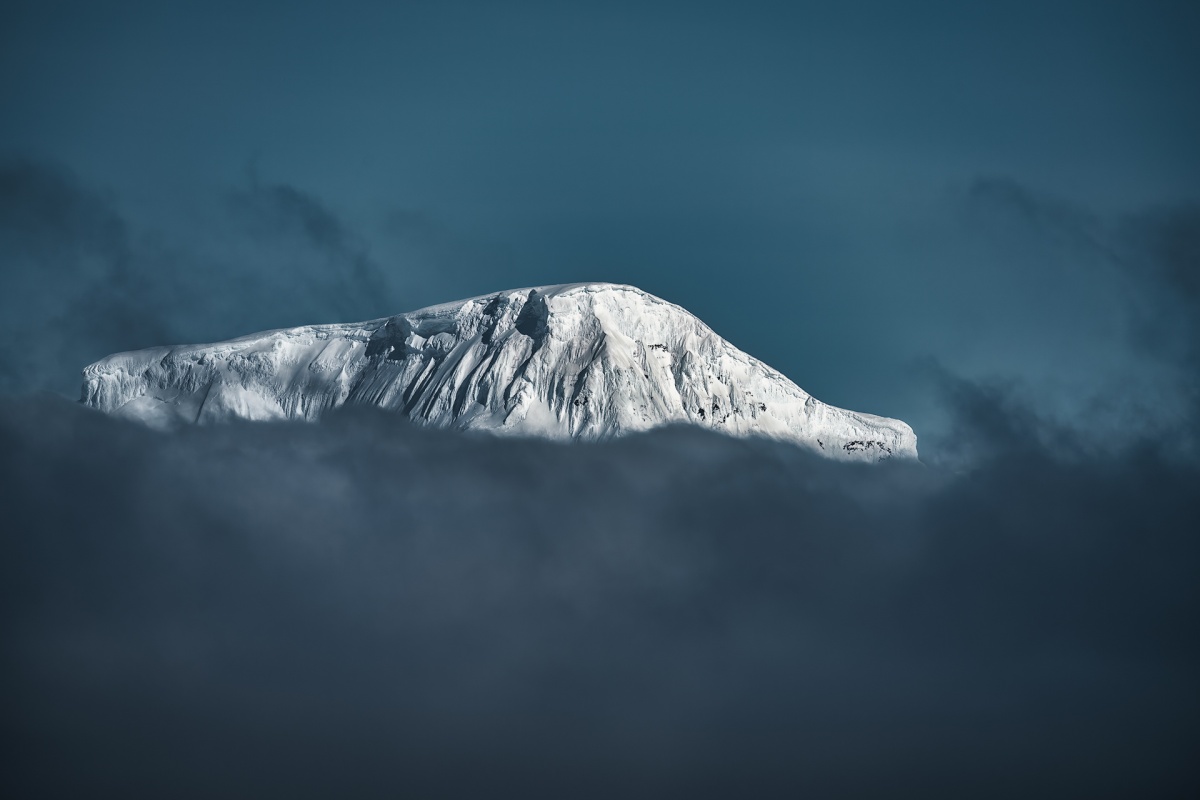
This photograph captures a remote Antarctic summit rising through a dense layer of drifting clouds,...
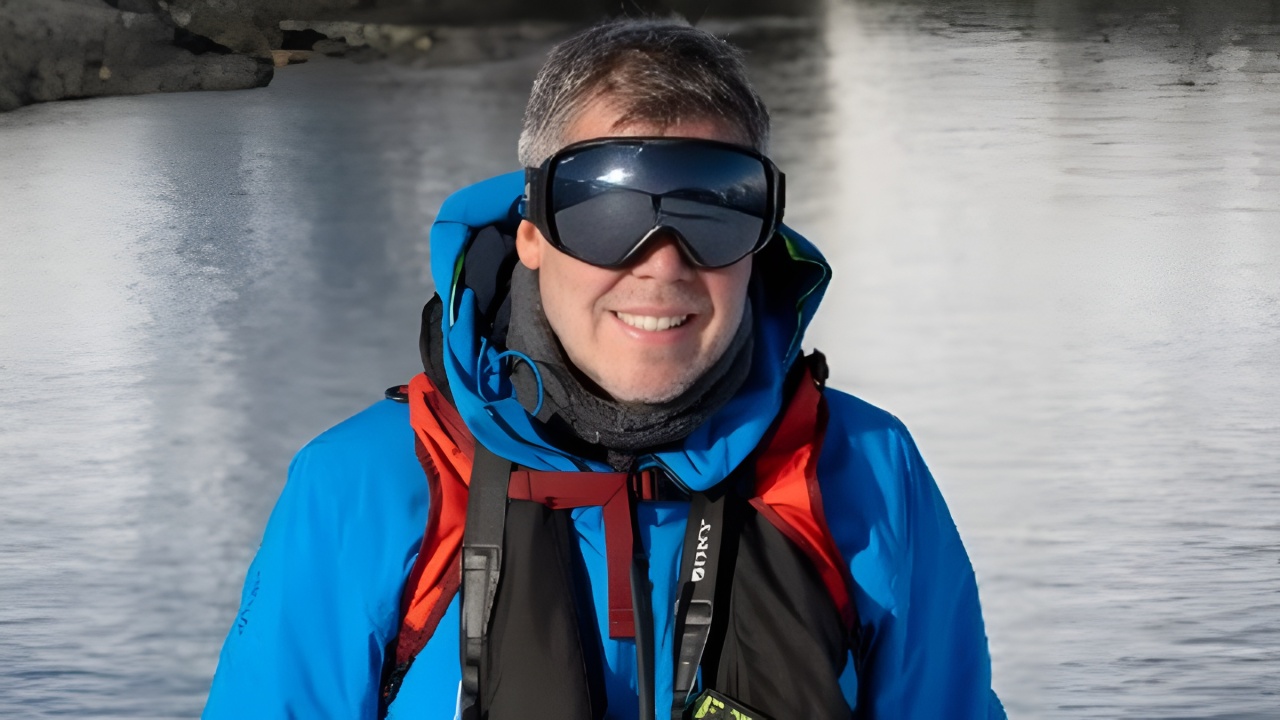
Carlos Guevara is a Chile-based landscape photographer whose practice grew gradually alongside a career in technology, shaped by long-term observation rather than early ambition. Working repeatedly in places such as Antarctica and southern Patagonia, his photography treats landscape as active matter, emphasizing patience, attention, and visual restraint over spectacle.
I am a nature and landscape photographer based in Chile. For many years, photography existed alongside my professional career in technology and infrastructure. I did not come to photography as an early calling or a carefully planned path, but rather as a way of learning to look more closely at the places I was moving through.
In the beginning, as with most photographers, I was drawn to the visual and technical aspects; over time, I realized that what truly interested me was not creating “beautiful” images, but listening to what a landscape reveals when you stay with it long enough.
My journey has been slow and deliberate. I have learned to work with patience, to return to the same places repeatedly, and to accept that many times there is no image at all—and that this, too, is part of the process. Over the years, my photography has become more restrained, focusing on form, texture, and internal tensions within the landscape, particularly in extreme environments such as Antarctica and southern Patagonia.
Today, I see photography less as a form of documentation and more as a way of visual thinking: a means of engaging with time, matter, and the limits of the natural world.
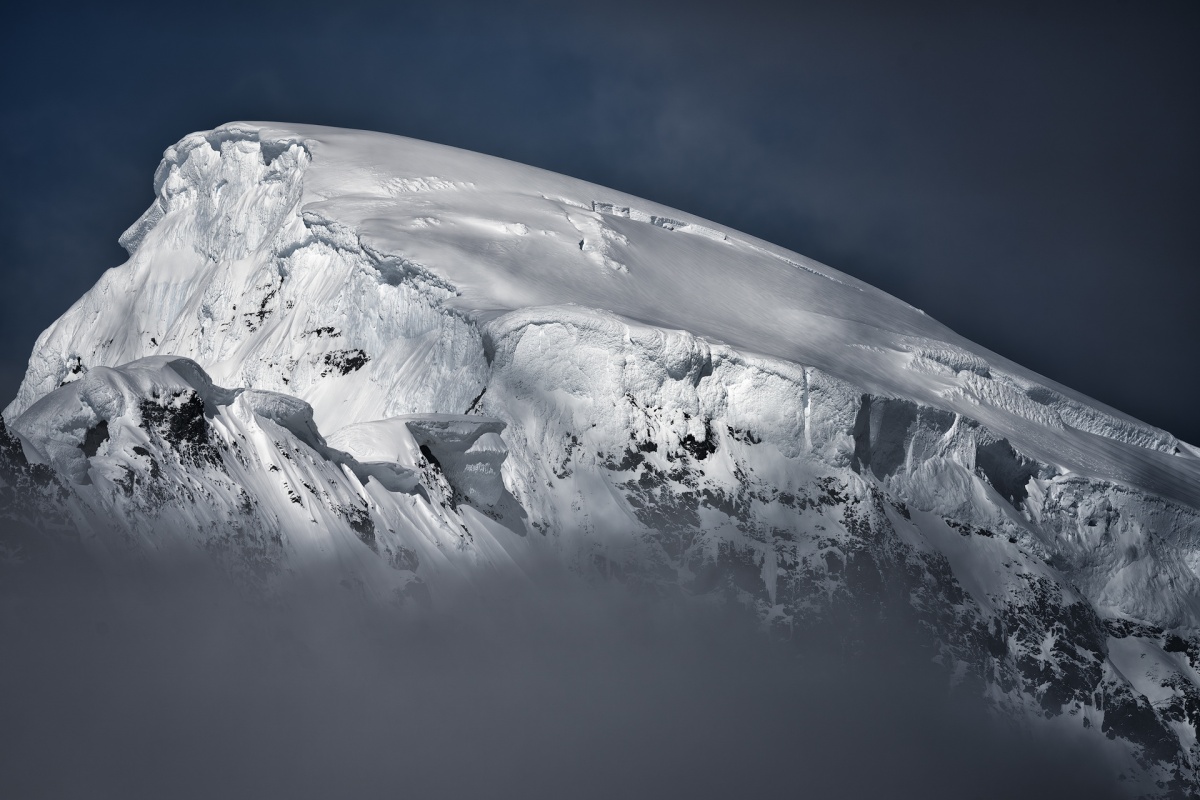
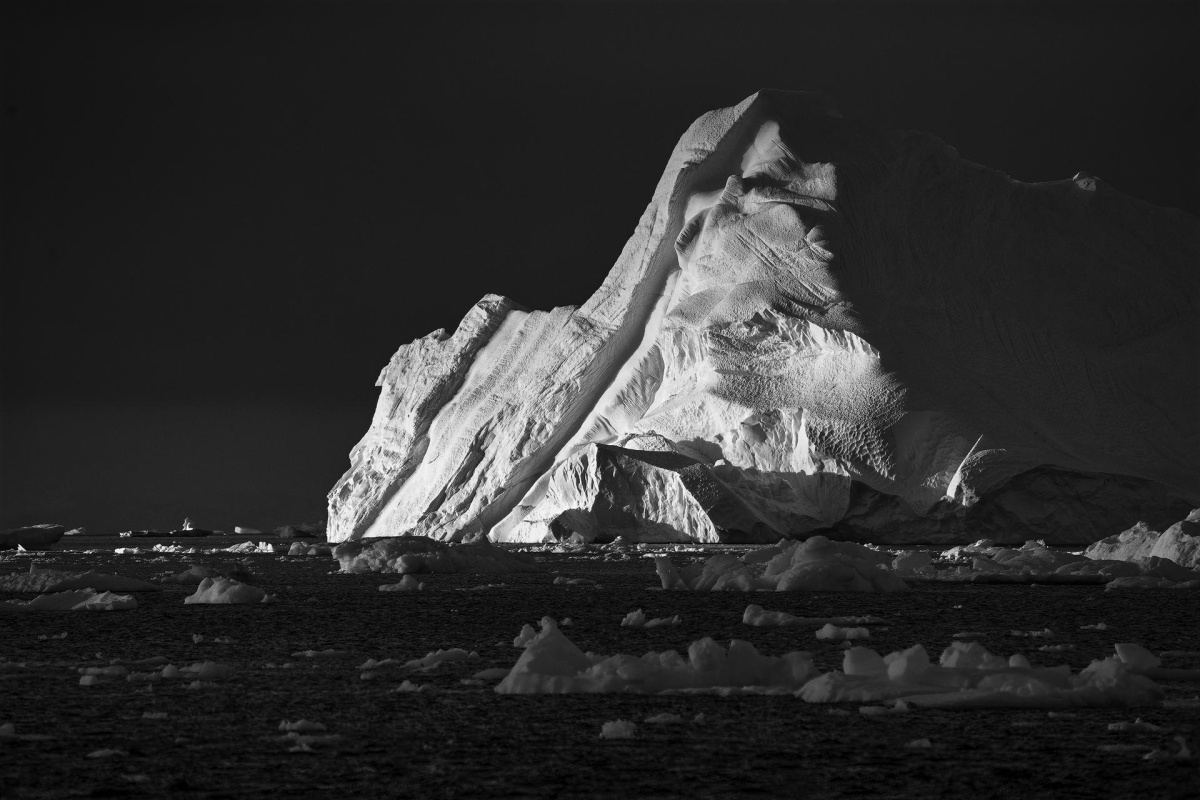
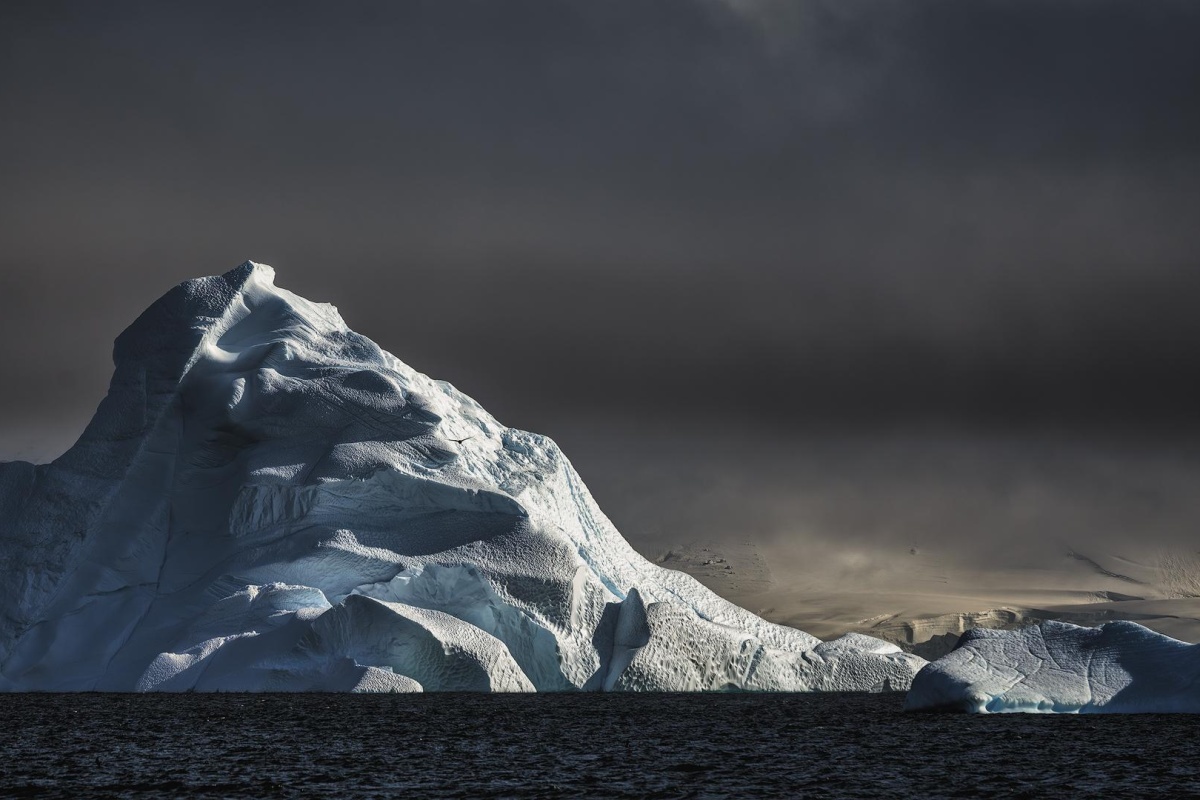
The awarded images—3 Gold Winner and 7 Silver Winner—are part of a single body of work created during a 26-day sailing journey from Puerto Williams to the Vernadsky Research Base in Antarctica. It was a slow, exposed, and physically demanding voyage, where the sailboat was not merely a means of transport, but a way of inhabiting the territory and adapting to its rhythms. The photographs emerged in very precise moments, when light, weather, and form aligned in unexpected ways.
Rather than treating the Antarctic landscape as a backdrop, the project focused on observing fragments: drifting ice, unstable structures, and the tension between light and darkness.
Each image belongs to that extended experience, shaped by uncertainty and sustained attention to the environment. Receiving this recognition does not change the way I work, but it reaffirms that a patient and coherent approach—grounded in direct experience of place—can resonate beyond the context in which the work was created.
I don’t choose a photograph based on what I think might perform best in a competition. The decision comes after the process, not before. I work on long-term projects, and when it’s time to select an image, I look for photographs that can stand on their own, without relying on context or explanation.
What matters to me is that the image holds a clear internal tension and does not depend on immediate impact or obviousness. If a photograph continues to carry weight over time—if it sustains a slower, more deliberate viewing—then it becomes a possible choice. In that sense, submitting a photo to a competition is simply a natural extension of the work, not an end in itself.
I began mountaineering at a very early age, around 10 or 12 years old, and it was during those first journeys into the mountains that the camera appeared. At the beginning, my intention was simple: to record the beauty of the places I was discovering and to share it with others. Photography was, at that time, a form of testimony.
Over time, that initial motivation changed. The camera stopped being only a means of showing what I saw and became a way of thinking through the landscape—deciding what to look at and what to leave out. Today, photography is a language for me: a way of staying within the territory and allowing it to speak for itself.
Landscape and nature photography is where I feel most at ease, not because of an aesthetic preference, but because of the kind of relationship it demands. Working in these environments requires time, waiting, and a willingness to relinquish full control over what unfolds. It is less about producing images and more about being present when something happens.
I am drawn to landscape when it stops being a backdrop and becomes active matter—ice, rock, wind, light, conditions that do not adapt to you. This kind of photography forces a reduction of gesture, an emphasis on listening rather than intervening. That is why I keep returning to it: it places me in a space of attention and limit that remains fertile for my work.
My early years were shaped by Nikon, a formative stage where I learned to look and to understand photography from its fundamentals. Over time, I moved to Sony, mainly for practical reasons and because it currently fits well with the way I work in the field. That said, I have never built my vision around a specific brand or camera.
I try not to let technology become the center of the process. I do value the quality of increasingly sophisticated cameras and higher-resolution lenses—they make the work easier and expand technical possibilities. But the starting point, for me, is always what I want to say. Language comes before equipment. When photography relies only on technology and not on a clear intention, the image feels empty, no matter how technically perfect it may be.
I would like viewers to feel a pause. Not an intense emotion or an immediate reaction, but a moment of stillness and attention. That the image does not exhaust itself at first glance, and that it invites a slower way of looking.
If that happens—if the photograph manages to open that small space where time loosens and the gaze remains—then I feel the image has fulfilled its purpose.
That is where something emerges that runs through all my work and that I now call Loquium: a form of listening in which matter speaks before language. Not to explain, but to allow the territory to speak in its own way, at its own pace.
The greatest challenge was not a single moment, but maintaining attention throughout the entire journey. Photographing from a sailboat in Antarctica involves cold, fatigue, constant instability, and very little margin for error. Light changes quickly, weather closes in without warning, and many situations cannot be repeated.
More than “capturing” an image, the challenge was being available when something happened: having the camera ready, having thought through the framing in advance, and at the same time accepting that many scenes simply pass without leaving a trace. In that context, the difficulty is not in forcing the photograph, but in knowing how to wait and recognize when a moment deserves to be held.
More than a specific place, I am inspired by territories where human presence is minimal and the landscape sets its own rules. Spaces where there is little to do other than observe, wait, and adapt. Antarctica, southern Patagonia, and high mountain environments share that condition: they do not offer themselves easily, nor do they explain themselves.
I am drawn to these places because they force a reduction of gesture and a deeper form of listening. There, the landscape does not function as a backdrop, but as an active presence that shapes the body, time, and gaze. It is in that relationship—more than in the location itself—where I find the impulse for my work.
My greatest influence has not been a specific person, but the territory itself and the time I have spent within it. Mountains, ice, wind, the repetition of journeys, and direct experience in demanding environments have been my true teachers. There I learned that looking is not immediate, and that often the image appears long after, not in the moment itself.
I have also been influenced more by ways of thinking than by photographic styles: the idea of remaining, of listening before intervening, of accepting that not everything translates into an image. Along that path, I have always been drawn to the gaze and work of Ian Plant, not as an aesthetic reference, but for the way he approaches landscape through intention and visual structure. All of this has shaped a way of photographing in which language matters more than signature, and where the landscape is not used, but encountered with respect and attention.
Participating in photography awards can be valuable if they are understood as a space for dialogue rather than an end goal. It is not about validating your work, but about putting it into circulation—forcing yourself to edit, to decide which images truly stand on their own and which do not. In that sense, competitions can help you look at your own work with greater distance and rigor.
My advice would be not to photograph with awards in mind. What tends to stand out is work with a clear identity, built over time, rather than a single image trying to impress. Spending time editing, understanding what you want to say, and staying coherent with that vision matters far more than any trend or formula. When photography has language and conviction, recognition—if it comes—is a consequence, not the objective.
Don’t rush the process. At the beginning, it’s natural to want quick results, but photography needs time to take shape. Looking carefully, making mistakes, returning to the same places, and accepting that for long periods nothing visible happens are all part of learning.
More than mastering technique, what matters is learning how to see and understanding what you want to say. Language is built with patience. The camera helps, but it does not replace that search.
Editing and post-processing are fundamental to my creative workflow, not as a means to alter a scene, but as an extension of photographic language. It is in the editing stage that an image finds its final tone, where relationships between light, form, and matter are refined so that what was present in the place can be read with clarity.
For me, editing is not about distorting reality, but about interpreting it responsibly. The work lies in reinforcing the original intention without betraying the lived experience. Editing helps distill the image, remove unnecessary noise, and maintain visual coherence. When post-processing respects that boundary, it becomes an expressive tool as important as the act of photographing itself.
Technology—including artificial intelligence—will continue to shape photography, particularly in terms of speed, accessibility, and the automation of processes. That is inevitable, and when understood properly, it can be useful. The risk lies in confusing tools with meaning. Technology can facilitate decisions, but it cannot decide what is worth saying.
In my work, technology is always secondary to language. I am interested in what an image thinks, not only in how it is produced. AI may influence workflows, editing, or image management, but it cannot replace direct experience, time spent in the territory, or a way of seeing built over years. As long as technology serves a clear intention, it can be an ally. When it becomes an end in itself, photography loses depth and becomes interchangeable.
I wouldn’t choose a specific person or subject. I would photograph what still resists being named. An extreme territory, prior to us, where matter has not yet been domesticated by language or by the human gaze.
I am drawn to that place—real or almost imagined—where the world does not need to be explained: ice, rock, wind, surface, and time pressing against one another. I would photograph that threshold, not to possess it, but to remain in front of it long enough. As if an image could hold, for a brief moment, the deep breath of the planet.
Explore From Uncertainty to Confidence: Ayumi Kawakami’s Photographic Journey here, securing her an award-winning title in the New York Photography Awards.