Mundari Culture | New York Photography Awards
This images are a part of a photographic reportage about the small ethnic group of...
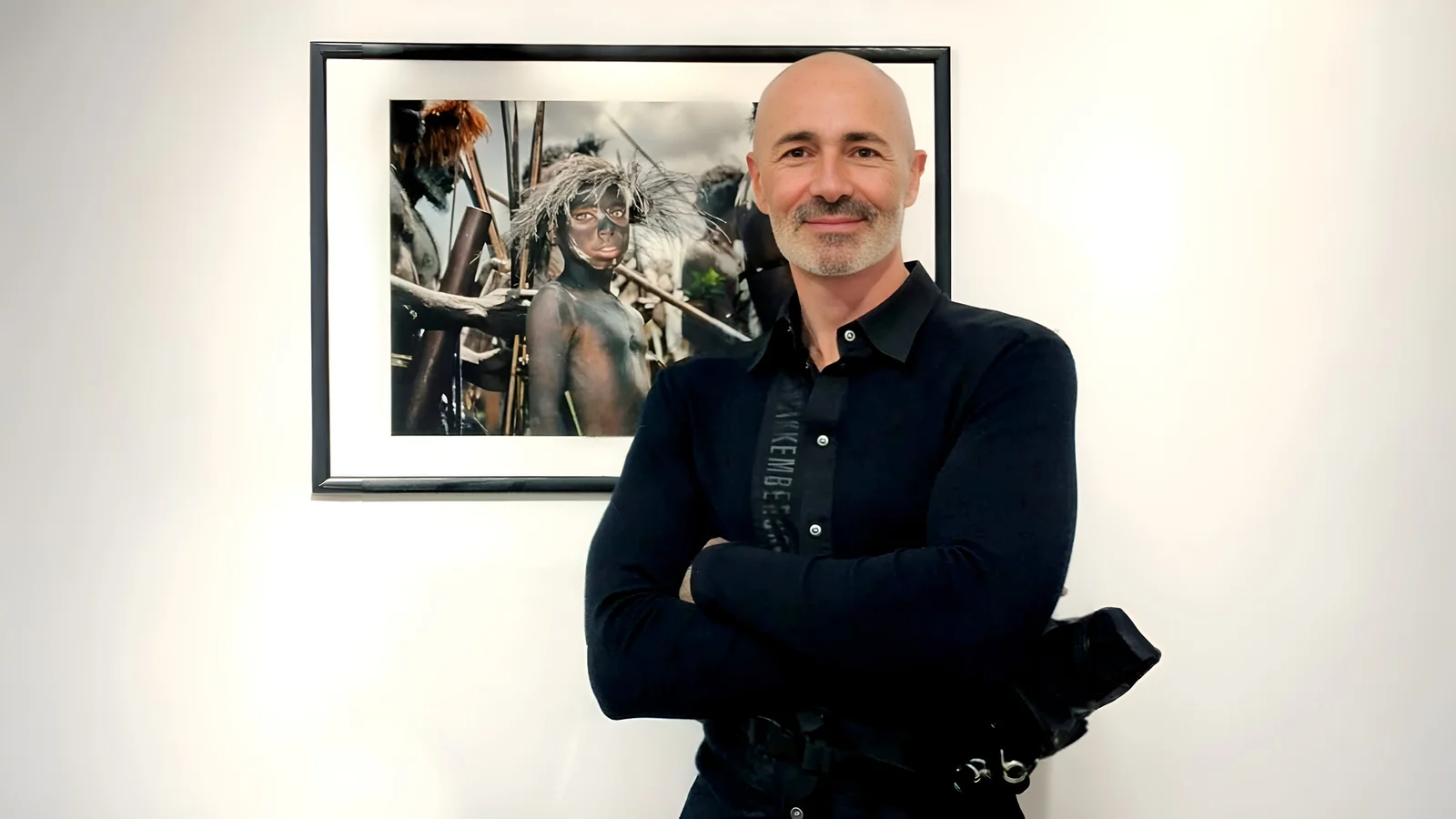
Roberto Pazzi is an award-winning travel photographer dedicated to capturing the essence of remote cultures through his lens. Originally trained as an engineer, he left a successful career in ICT to pursue his passion, leading photographic expeditions and showcasing his work in galleries worldwide, with his images earning global recognition in prestigious publications and competitions.
Born in 1973 in Italy and educated as an engineer, I found my true passions in travelling and photographing remote cultures. Since I was very young, I discovered myself as a backpacker. Still, I felt the need to document and capture my experiences and emotions pretty recently.
At that date, I had been working for 15 years in the Information and Communication Technologies space. I had a highly professional, high-paying job with numerous benefits and a well-identified and recognized social role. But still something was missing, certainly the most important thing: I wasn't happy!
My first experience as an amateur travel photographer was in Indonesia in 2013. I was working on a reportage around the Dani ethnic group living rather isolated on the highlands of West Papua and discovered only around 1938. Those images brought me good visibility, mostly in the UK press, signaling the beginning of my career. I finally figured out what I "wanted to do" instead of carrying on with a life built on what I "had to do".
A couple of years later, I left my job and relocated myself from Italy to Spain, where I opened my own gallery. During the same years I also started to collaborate with other galleries in Singapore and Brazil. That was the first moment I understood that my dream could come true.
In 2018, I launched my own activity of organization and leadership for photographic expeditions to remote cultures. It has been an impressive experience, making even clearer to me what should have been my way.
Unfortunately, in 2020, the pandemic hit hard even for my business, and I had to suspend any ongoing travel activities. On the other hand, I earned plenty of spare time. I decided to invest in the improvement of my photography skills and enter photo competitions. The awards I collected helped me to consolidate my image as a professional photographer and gave me further visibility as well.
Finally, in 2021, I teamed up with Nomad Photo Expeditions to organize and lead photographic expeditions, an activity that is still ongoing today with great success. Today, my work has been recognized in several prestigious international competitions, and it has reached the pages of renowned publications all over the world.
I am a self-taught photographer who has never stopped studying and experimenting.
My first experience as an amateur travel photographer was in Indonesia in 2013. I was working on a report about the Dani ethnic group living rather isolated on the highlands of West Papua and discovered only around 1938.
My gear is very simple. I carry with me only two Sony Alpha7 III (one as backup) and the lens Sony FE 20-70mm f/4 G.
Nothing in particular. My greatest achievement is for sure to succeed in making my passion for photography my life. Thanks to my activity with the organization and leading photographic expeditions to remote cultures, I could make that dream I had held in the draw for years come true.
The compliment that moves me the most is when people say they recognized my style at first glance and read about the emotions that my work generates in them.
My main inspiration is basically my own curiosity for the several cultures of the world, in particular for those very different to ours and at risk of rapidly disappearing. To meet people from different cultures and to tell their stories and traditions through my photography is what I like to do most.
Thank you! It was a great honor and a huge emotion to be awarded by a prestigious organization. Another great step forward in my career and a big push to proceed to explore this beautiful world with the same passion as in the first days.
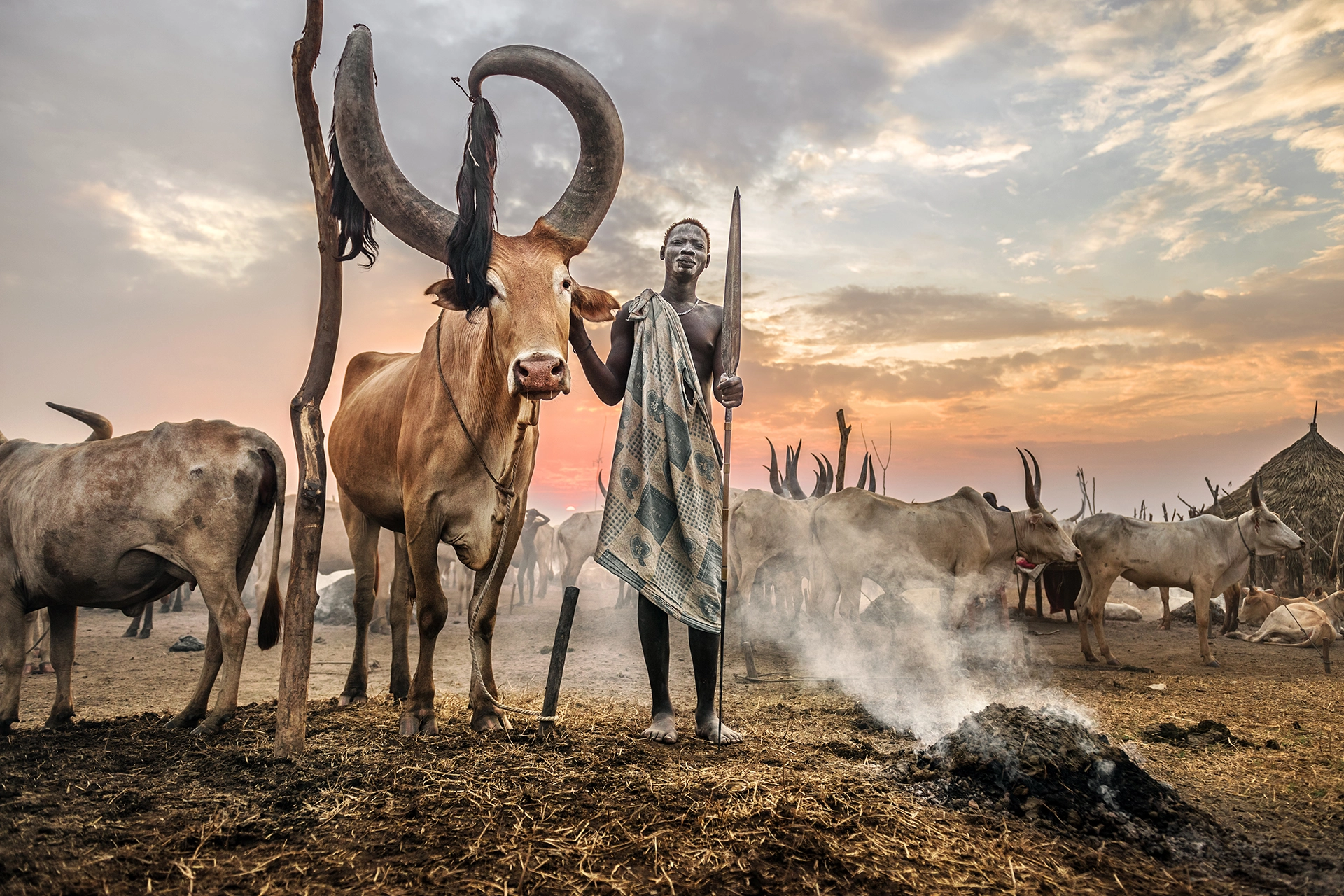
"Mundari Cultures" is a reportage about the small ethnic group of the Mundari. The Mundari are cattle herders of South Sudan, the world's youngest country, who dedicate their lives to the care of their Ankole Watusi cattle, characterized by their large horns. They live in symbiosis with their cattle, and nothing is more important for them than their bovines. In a cattle camp, everyone plays their role.
Kids are doing most of the daily work collecting the fresh cow dung and putting it into piles, which are then set on fire to repel the (extremely) numerous and voracious mosquitoes of the area. The men lead the cows into the fields during the day. The cattle disperse from the banks of the White Nile river into the long grasses of the alluvial floodplain, and they return at dusk instinctively before the sunset, when the dust lifted by the herd and the smoke of the fires intermingle to create an evocative atmosphere.
Men are used to squatting under streams of cow urine, which they see as a natural antiseptic to fight infection to largely keep themselves clean. The act also tinges their hair orange. Mundari use the ash created by the fires to rub on themselves and their cattle, creating a protection against mosquitoes. Mundari massage their bovines twice a day. The children with few guardians are sleeping with the cows. The ash from dung fires, as fine as talcum powder, is often used as bedding.
The awards helped me gain a full awareness of my professional growth. I started to consider my participation in the awards only in 2020 when the pandemic hit my business hard, and I had to suspend any ongoing travel activities.
I earned plenty of spare time, and I decided to invest it into my photography skills and the photo competitions. The awards I collected helped me to consolidate my image as a professional photographer and gave me further visibility as well.
When I started to explore the world of photography, my main inspirations were the most famous travel and reportage photographers such as Sebastião Salgado, Steve McCurry and Jimmy Nelson.
As a self-taught photographer, unfortunately, I didn't receive any advice or mentorship.
I would suggest not wasting money looking at the newest technology, but to practice a lot instead. Every photographer should define their own style, a real “signature” uniquely identifying their works.
To be able to do it, you need to study (avoid classes; the internet is a great resource providing everything needed), practice a lot and "train the eye" by looking at the portfolios of other photographers as inspiration sources.
The creation of a long-term project helps to achieve your goals. By breaking it down into smaller, feasible activities (e.g. a technique, the website, editing, social networks, etc), it is possible to trace the route leading to the final goal.
Last but not least, I would suggest to try remaining focused on the photography everyone really like instead of following the one that is bringing money in the short term.
I guess my key to success is represented by my passion for humankind and its huge treasure of cultures and traditions. Every single destination becomes a great experience of life, teaching me something new and special every time. Unique gifts, like precious stones, I'm collecting to enrich the mosaic of my life.
Curiosity is the key. I like to say that photography keeps me looking at the world like a child, and it helps to remind me that the simplest things are also the most important ones.
A warm thank you to the organization and the jury for selecting my work for this prestigious award.
Read about the interview with Ragunathan Shekaven on Capturing Life’s Most Cherished Moments here.