Granulocytopoiesis: Where Immune Cells Begin
Immunity protects us every second of the day, yet the process behind it remains invisible...

Kirill Bakulin is the CMO at VOKA, where he brings more than 12 years of experience in marketing and digital communication to the evolving world of medical visualization. His work sits at the intersection of technology, storytelling, and healthcare, helping turn complex scientific concepts into visual experiences that inform, engage, and stay with the audience.
Thank you! I’m Kirill Bakulin, CMO at VOKA. We’re a medical visualization company focused on making complex healthcare topics easier to understand through 3D. My background is in marketing and digital communication, with over 12 years of experience in the field. I’ve always been interested in how people find information, what makes them pay attention, and what helps a message stick.
At VOKA, I apply that thinking to a very specific field: medical and scientific communication. We work with concepts that are often difficult to explain in words alone, and 3D gives us a way to make them clear and engaging.
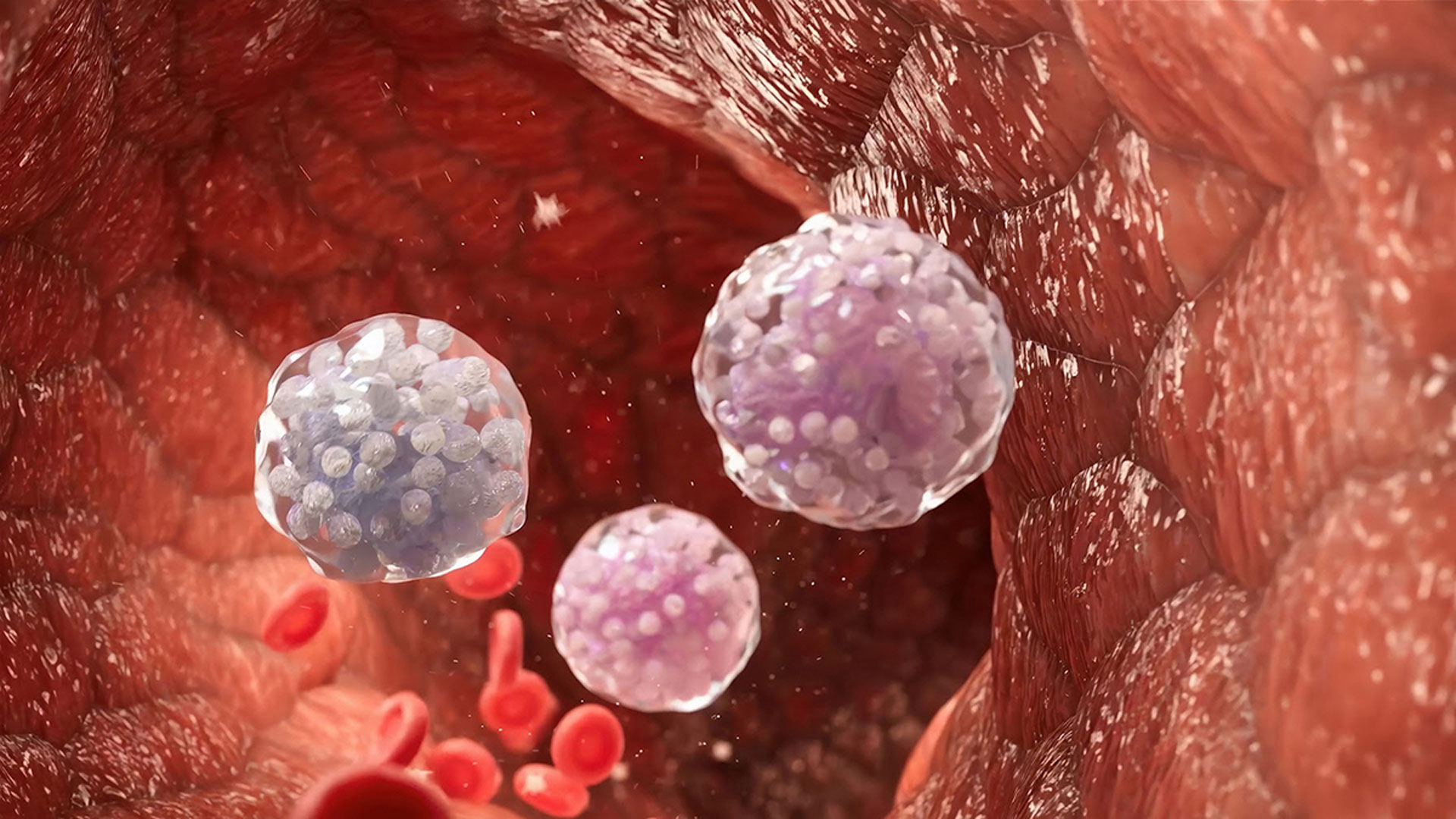
We submitted the project Granulocytopoiesis: Where Immune Cells Begin because it represents what we do best at VOKA: taking a process that is scientifically complex and almost impossible to observe and turning it into a story that is interesting to watch.
At this point, winning Platinum means a lot to us because the project was recognized for both its medical accuracy and creative approach.
To me, this project represents where medical communication is heading. At VOKA, we’re fascinated by anatomy and physiology. The more we learn about the human body, the more its processes feel almost like magic, except most of that magic happens where nobody can see it.
We want to lift that curtain a little. With 3D, we made granulocytopoiesis visible in a way that is both cinematic and clinically accurate. And importantly, we wanted to open that world to people beyond the medical field — anyone curious about how the human body works should be able to follow the story without a medical background.
I think one of the things we’re most proud of is the unique visual style our animators have developed over the years. We’ve found our own way of making medical content feel cinematic and immersive.
The other distinction is the medical accuracy behind every piece of content we create. At VOKA, we have a team of more than 20 medical experts involved throughout the production. They make sure that every cell, structure, and process is medically verified.
Making something look beautiful is one thing, but you can’t really “wow” a doctor with the wrong anatomy, right?
The hardest part was making a microscopic process feel clear. There are several stages of cell maturation, and to someone without a medical background, they can look pretty similar.
So we decided to give each stage its own scene instead of squeezing everything into one continuous sequence. We also added simple labels to help viewers keep track of the cells along the way.
For the team, I hope it reinforces the confidence that our medical content can compete and win on a global creative stage. It’s a great reminder that scientific accuracy and creative thinking can work together and stand out.
For VOKA, recognition like this helps strengthen our position as a medical visualization company. We also hope awards like MUSE open more conversations with organizations that need to communicate difficult scientific subjects in a more visual and engaging way.
Before submitting the video, we showed it to a focus group of people without a medical background. We wanted to see if the animation worked for someone who didn’t already understand granulocytopoiesis. The feedback was really encouraging.
People highlighted how easy the process was to follow and how visually engaging the animation was. That initial feedback was later echoed by the broader audience and our clients once the project was released and gained recognition.
I’d start with the pain point, not the award. What is the audience struggling to understand? Why is it difficult? And what can you offer to solve that problem better than a more traditional approach?
For us, that often means taking something highly complex and finding a way to make it visual. Once you have that clear purpose, the creative decisions become much easier.
Right, we see the growing overlap between technology and creativity now. AI, real-time rendering, spatial computing, and other technologies are changing a lot. AI, in particular, has become one of the biggest topics in the creative industry.
There’s a lot of discussion about whether it will eventually replace creative professionals, but that’s not how we see it at VOKA. We see AI as a tool that helps us work faster, explore more ideas, and handle repetitive tasks, while the most important decisions still come from people.
Looking ahead, I think the strongest teams will be the ones that know how to combine new technology with the human thinking behind it.
I’d say: just start. Your first submission doesn’t have to be perfect. It just has to be good enough to make you want to share it. In fact, it’s your chance to be seen by people outside your usual circle.
You might be surprised by how they react, and even if you don’t win, the process itself is useful. You can look at your work from a different perspective and think about what really makes it stand out.
Stay curious and try to gather more feedback about your work. Our industry is pretty specific, so it’s easy to get stuck in your own bubble. I also think it’s important to support other creatives.
There’s always something you can learn from each other. At the end of the day, we’re all trying to make something that people remember.
Absolutely, this recognition belongs to the entire VOKA team behind the project. Granulocytopoiesis required close collaboration between medical experts, 3D artists, animators, designers, and everyone involved in research, production, and review. The final result is really the sum of all those perspectives.
It’s a journey from tiny cells to a big story — without needing a microscope.
We continue to develop VOKA as a broader medical visualization ecosystem. The team works on medical animations across different areas of healthcare, pharma, and MedTech, creates more AR/VR experiences, and expands our VOKA 3D Anatomy & Pathology app and its library of interactive content.
There is still a lot of space between what medicine knows and what people can visualize, and that is a space we want to keep working in.