Milk Hub 2.0: From Dairy to Community
Once a symbol of regional prosperity, the Borden Condensed Milk Factory was damaged by fire...
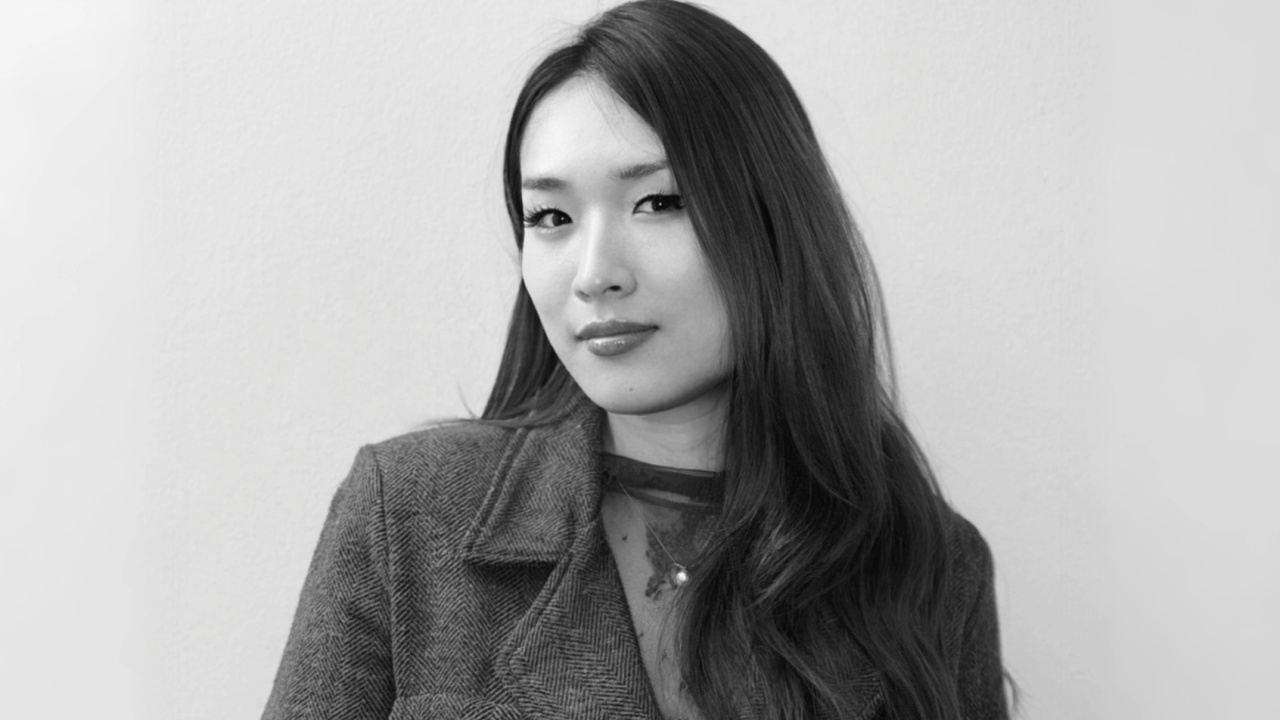
Ruonan Du’s design philosophy is shaped by Beijing’s coexistence of historical courtyards and modern urban density, where architecture carries memory across generations. Through a research-driven approach refined at Columbia GSAPP, she examines how spatial design can support well-being while allowing people the freedom to define how spaces are used.
I was born and raised in Beijing—an ancient city where layers of space sit side by side, from imperial courtyards and hutongs to glass towers. Watching those different forms host different lives shaped how I understand architecture: as time changes and the users of a place change, the built environment becomes a vessel that carries memory and quietly tells history.
That’s what first pulled me toward design, and it’s also why I keep returning to the human scale—how space affects daily behaviour, dignity, and mental well-being. With a background in both architecture and sociology, I’ve been drawn to the interface between the physical body, emotional health, and the environments we move through.
I later pursued my M.Arch at Columbia GSAPP, where I was trained to analyse issues rigorously and build clear narratives through research, drawing, modelling, and spatial prototyping. That experience clarified the kind of designer I want to be: someone who turns research into spatial systems that can create tangible impact in the real world.
Being recognised by the French Design Awards is a meaningful affirmation of Milk Hub 2.0: From Dairy to Community. The project was developed in response to a real industrial condition, while also looking forward, asking what spatial frameworks can support an upcoming transition in the dairy economy.
For me, this award matters because it values design contribution as a form of cultural and artistic work, not only as problem-solving. It confirms something I care deeply about: architecture’s form and atmosphere are not separate from strategy—they are part of how strategy becomes visible, persuasive, and usable in everyday life.
It has strengthened my visibility within the design community and, importantly, affirmed the direction of my work in the eyes of my mentors. That recognition has led to more focused conversations—people reach out wanting to understand the research behind the project, and it opens doors for collaborations where design is valued as both strategy and cultural practice.
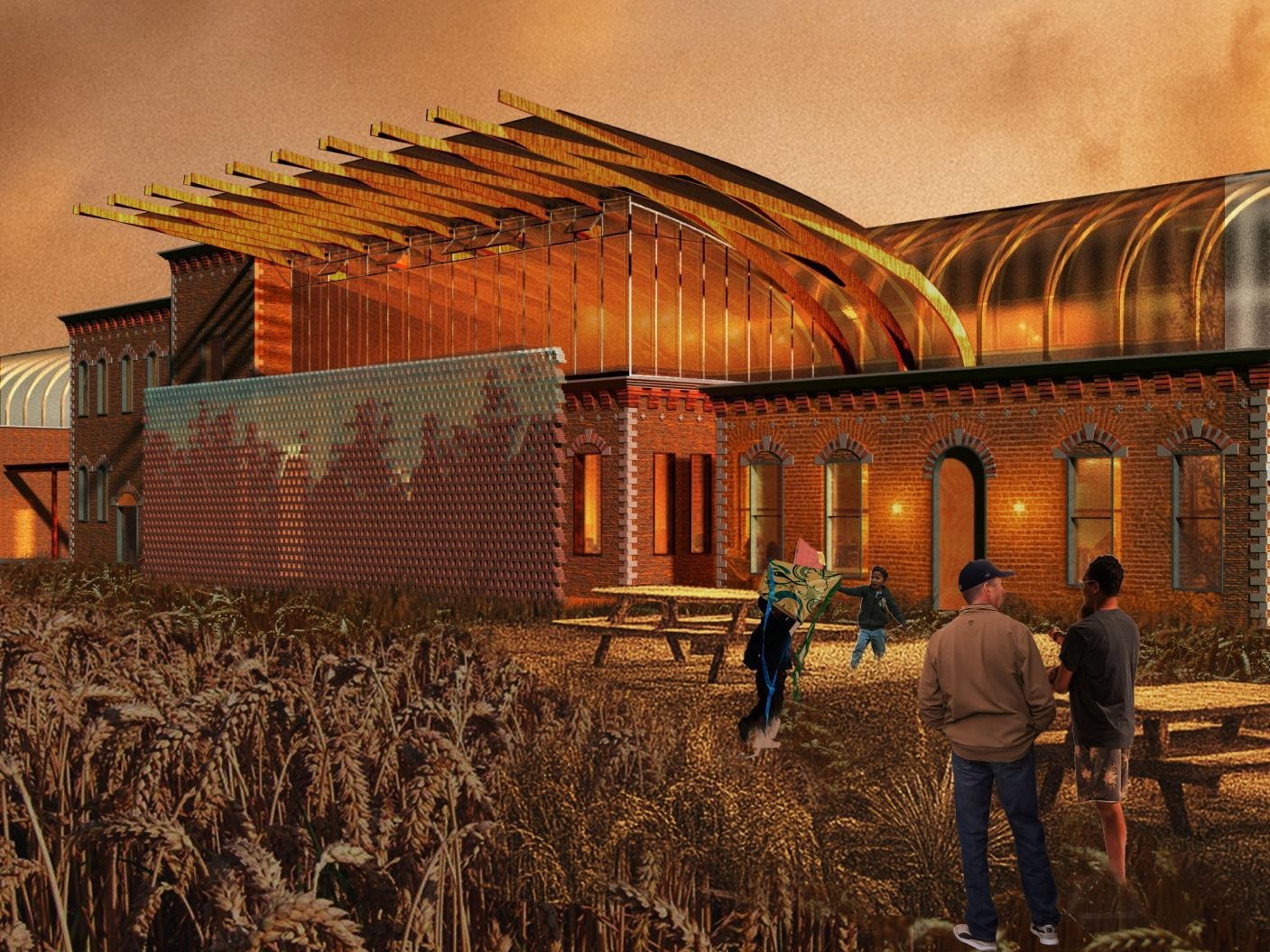
Experimentation is central to how I find form—it’s the bridge between an idea and a spatial reality. For example, when we were finalising the wing-shaped, semi-translucent roof system, we didn’t rely on drawings alone.
We built physical models and used acrylic panels to quickly mock up the roof geometry on top of the existing massing, documenting each iteration through photos and direct observation.
By testing how light moved through the surfaces and how views connected beneath the roof, the design decisions became tangible. It made the process more physical and convincing for the team, and it also helped us sharpen the scenarios we wanted people to experience in the space.
One of the most unusual—and most powerful—sources of inspiration came from a sound. During a site visit to the abandoned Borden milk factory on a freezing winter day, we stood inside the empty structure and heard water dripping somewhere on the other side of the room. The space felt unexpectedly peaceful, and that quiet moment pushed me to re-enter the site’s history: a place once tied to a flourishing dairy industry and a strong local identity.
From there, the project shifted from “reuse of an industrial shell” to questions about who lived through that transition, how the community’s demographics changed as the industry declined, and what this building could still mean for them now.
I wish more people understood that design doesn’t “reshape life” on its own. Architecture can refine daily routines and offer inspiration, but it doesn’t directly control how people feel or think. What design can do is set the conditions—clarity, comfort, dignity, invitation—and then leave room for agency.
At the end of the day, it’s people who decide how a space is used, and a good design respects that initiative rather than trying to script it.
In architecture, I don’t experience client expectations and design ideals as two opposing forces. A building is shaped by many stakeholders—clients, users, consultants, regulations, budgets—so the work is never a single person’s imagination.
For me, understanding the client and the people who will use the space is part of authorship, not a compromise. That understanding helps translate the project’s function and spirit into form, and it’s often where the strongest ideas become clearer and more precise.
One of the most realistic challenges was validating the local industry research. Because the project is grounded in a transition from dairy milk to plant-based milk, we needed to confirm that our assumptions matched on-the-ground realities, yet we couldn’t directly access workers or farm owners.
I addressed this by building an expert interview channel and reaching out to people embedded in rural labour and agricultural systems—Mary Jo Dudley and Marie R. Ulrich from the Cornell Farmworker Program, and Dr. Scott Ferguson, Director of the Institute for Rural Vitality at SUNY Cobleskill.
Through interviews, we were able to verify the transition dynamics and refine the programs we proposed, ensuring the design responded to real needs rather than a speculative narrative.
I recharge by returning to art—most directly through museums. Being surrounded by works that are distilled into material, light, and composition resets my attention and reminds me how powerful clarity can be. I also try to practice making, not only observing: singing and dancing help me reconnect with rhythm and the body, which often unlocks new spatial ideas when my mind feels stuck.
A value I carry into every project comes from my experience working with a volunteer organisation in college, where I helped raise funding for renovating schools in under-resourced areas. At first, I couldn’t understand why business owners would invest in children they didn’t know.
But as I spoke with the students and witnessed how a safer, brighter environment changed their daily life—how they studied, gathered, and carried themselves—I began to understand the emotional reach of design.
Since then, I’ve believed that good design has to be grounded in the designer’s mind and heart first, because that sincerity is what ultimately resonates with both users and clients.
Give yourself time to think before you rush into making. Look for the clearest path—not the fastest one—by understanding what you’re trying to change and why it matters, then let the form follow with intention. And be kind to yourself when inspiration runs low. Creative work moves in cycles; you need space to recharge, breathe, and return with sharper eyes.
I would love to collaborate with Meng Qingyang, a dancer in China whose work I find deeply moving. Architects shape form in space, while she shapes the body—and her “architecture” unfolds through time, breath, and motion. Dance operates with a simpler medium than buildings, yet it can carry an extraordinary emotional precision.
I’m inspired by how she choreographs flow, tension, and release, and I imagine a collaboration where choreography and architecture inform one another: movement generating space, and space amplifying movement.
I wish people would ask: “Why do reality-based decisions matter so much in your work, especially when there are so many imaginative projects?”
My answer is that the strongest design isn’t only a claim—it’s a sequence of choices made inside complex conditions.
Constraints aren’t obstacles to creativity; they are where responsibility and authorship show up. The more deeply we understand real contexts—local economies, habits, histories, and limits—the more respect we can give to a site and the people connected to it, and the more credible the design becomes.
Read about The Elevator That Becomes a Wine Cabinet: Pei Wen Lu’s Design Experimentation by clicking the link here.