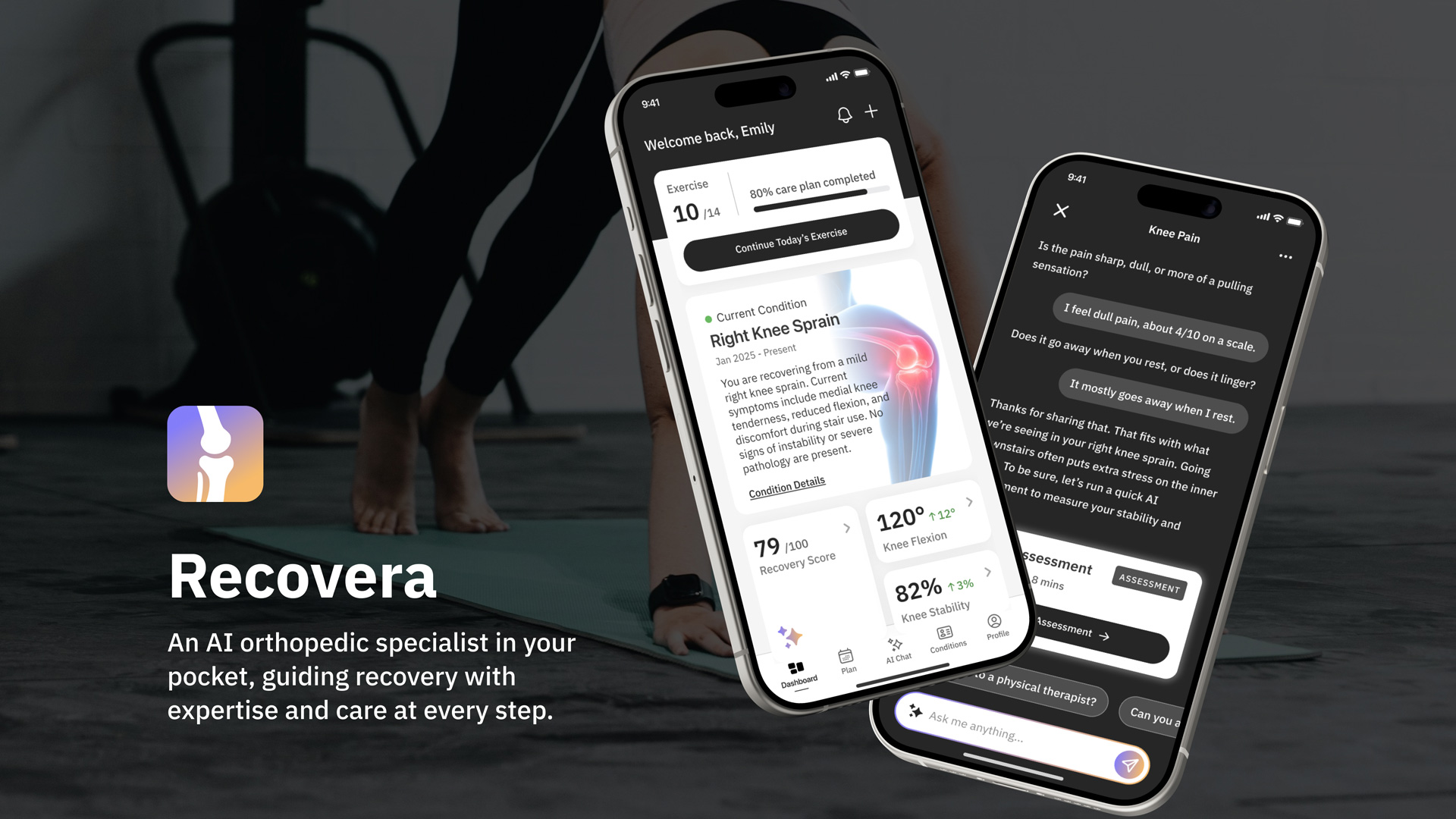
Recovera: AI-Powered Orthopedic Recovery
Recovera is an AI-powered orthopedic recovery platform that unites diagnostic testing, personalized care, and continuous...

I’m Jingyuan Fang, a Product Designer at US Mobile based in New York City. My design journey began with studying Industrial Design for my bachelor’s degree, followed by working as a UX/UI designer in the game industry. I later pursued a master’s degree in Design at Carnegie Mellon University.
At US Mobile, I specialize in creating innovative, user-centered designs for emerging technologies. I believe in thoughtful aesthetics and empathetic design; my goal is for users to feel both delighted and empowered when my work becomes part of their lives.
I submitted my work to share my thoughts on how AI and design can transform the healthtech industry. Many people recover at home without clear guidance, and I believe emerging technology paired with thoughtful design can help address this gap.
Winning gold in the MUSE Creative Awards validates that vision and motivates me to continue exploring how design can make healthcare more accessible and empowering.
Recovera was born from a personal experience. During a running training session, I injured my lower back and found myself feeling lost and panicked. I did not know what to do next or how to recover properly. Like many people, I turned to “Dr. Google,” which only added confusion through conflicting information.
This revealed a critical gap: the period between injury and professional care, when people most need clear guidance. Recovera represents how AI can help democratize healthcare and make recovery more accessible.
What makes Recovera stand out is its focus on a very real human moment: when pain happens and you feel unsure, anxious, and alone. The experience turns that uncertainty into a clear, step-by-step path, and because it is available 24/7, users do not have to wait for help and can take action immediately.
A significant challenge was defining the scope of AI in Recovera. Should it behave like a knowledgeable physical therapist, a ChatGPT-style companion, or appear only during specific recovery steps?
I resolved this by anchoring AI to the most vulnerable moments patients face: when pain first appears, when they are unsure they are doing exercises correctly, and when unexpected pain spikes cause anxiety. That focus helped shape AI into a targeted support layer that provides timely guidance without overcomplicating the experience.
In the long run, I hope this recognition helps position my work at the intersection of health and emerging technology and gives me more confidence to pursue larger, higher-impact projects.
Professionally, it also motivates me to keep pushing forward by continuously learning, experimenting, and staying current with the latest design trends and tools so I can build experiences that feel truly modern and meaningful.
I’ve received so much love and support from people around me. Many have shared their own recovery stories, and those conversations quickly turned into “I wish I had this when…” moments. Hearing how deeply this problem resonates with others has been incredibly rewarding.
Focus on a real human problem, ideally one you have experienced yourself, because that is often the most powerful. Be true to your feelings and the story behind it, and let that “why” guide every design decision.
I see the changes in the creative industry, especially the rise of AI and new tools. I am not afraid of these shifts. I believe designers need to stay curious and be comfortable exploring uncertainty.
One of the beauties of design is transforming chaos and ambiguity into experiences that are clear, aesthetic, and useful—products that genuinely influence people’s lives.
I had the same feeling early in my career, and the first thing to know is that you do not need to be perfect. Do not be afraid to try—start by solving one real problem you care about, document your thinking, and submit it as a way to learn and grow.
Awards are less about having the “best” work and more about showing a clear story and strong intent, and each entry helps you build confidence over time. Most importantly, let your design speak for you—once you share your work, the right people will notice.
Aha moments cannot happen without people. Share your ideas, invite others to challenge them, and do not create in isolation. And keep in mind, when you share your work, there is no such thing as bad feedback.
I would like to dedicate this achievement to my friends who are truly passionate about fitness and wellness; they inspired the way I think about recovery in real life. A special thanks also goes to my mentor, whose guidance and encouragement helped push the work further.
Recovera is an AI-powered, personalized companion for orthopedic recovery that brings continuous musculoskeletal support into everyday life.
Next, I am excited to continue exploring how emerging technology can make healthcare feel more accessible and human, especially in women’s health, where many needs are still underserved or misunderstood.