Third Coast Pillows - Magazine Ad
This ad targets social commentary around Minnesota and ICE activity in the state in January.The...

Stephen Sefton is the Founder, Owner, and Artist behind Third Coast Pillows, transforming personal experiences into artwork and decorative pillows. Following lifesaving transplant surgery, he built the brand as an independent creative platform spanning product development, advertising, and brand direction.
I'm Stephen Sefton, the Founder, Owner, and Artist behind Third Coast Pillows. I started the company following a lifesaving transplant surgery. During that uncertain period of my life, I spent a lot of time reflecting on the experiences that had shaped me. I began turning those memories, observations, and ideas into works of art and eventually found a way to put that artwork onto decorative pillows.
Because Third Coast Pillows is my company, I've also taken on many of the roles that would normally be divided among an agency or larger creative team, including product development, marketing, advertising, and brand direction. That gives me an unusual amount of freedom to determine not only what my brand looks like but also what it stands for.
I submitted the work because I wanted a larger audience for my ideas and, frankly, some validation for my voice as a creative. The advertisement I submitted is openly critical of the current administration's immigration policies and the way those policies are being carried out.
Winning means that the message reached beyond my own audience and was recognized within the professional creative community. Personally, it gives me confidence that I don't have to dilute my ideas simply because they may be controversial. Professionally, it gives Third Coast Pillows recognition as a brand willing to use advertising not only to sell a product but also to express a point of view.
The work was inspired by my anger and frustration over the immigration policies being implemented by the current administration, the way those policies are being enforced, and what I believe is a lack of accountability surrounding them.
For me, the advertisement represents a form of fearless advertising. I'm fortunate that I'm advertising for my own brand because I don't have a corporate board, C-suite executives, or a large legal department deciding what I am or am not allowed to say. That gives me the freedom to make an advertisement that other advertisers might consider too politically risky.
I also wanted to demonstrate that advertising can do more than simply convince someone to buy something. It can make people stop, look, think, and question what they are seeing.
I think the biggest thing that sets my work apart is that my voice isn't filtered through C-suite executives, a marketing committee, or a legal department. Because I am creating advertising for my own brand, I can publish a much rawer version of my thoughts and beliefs.
The advertisement itself was built around the five W's of journalism: Who, What, Where, When, and Why. I wanted each of those questions to be answered through visual details rather than through obvious copy.
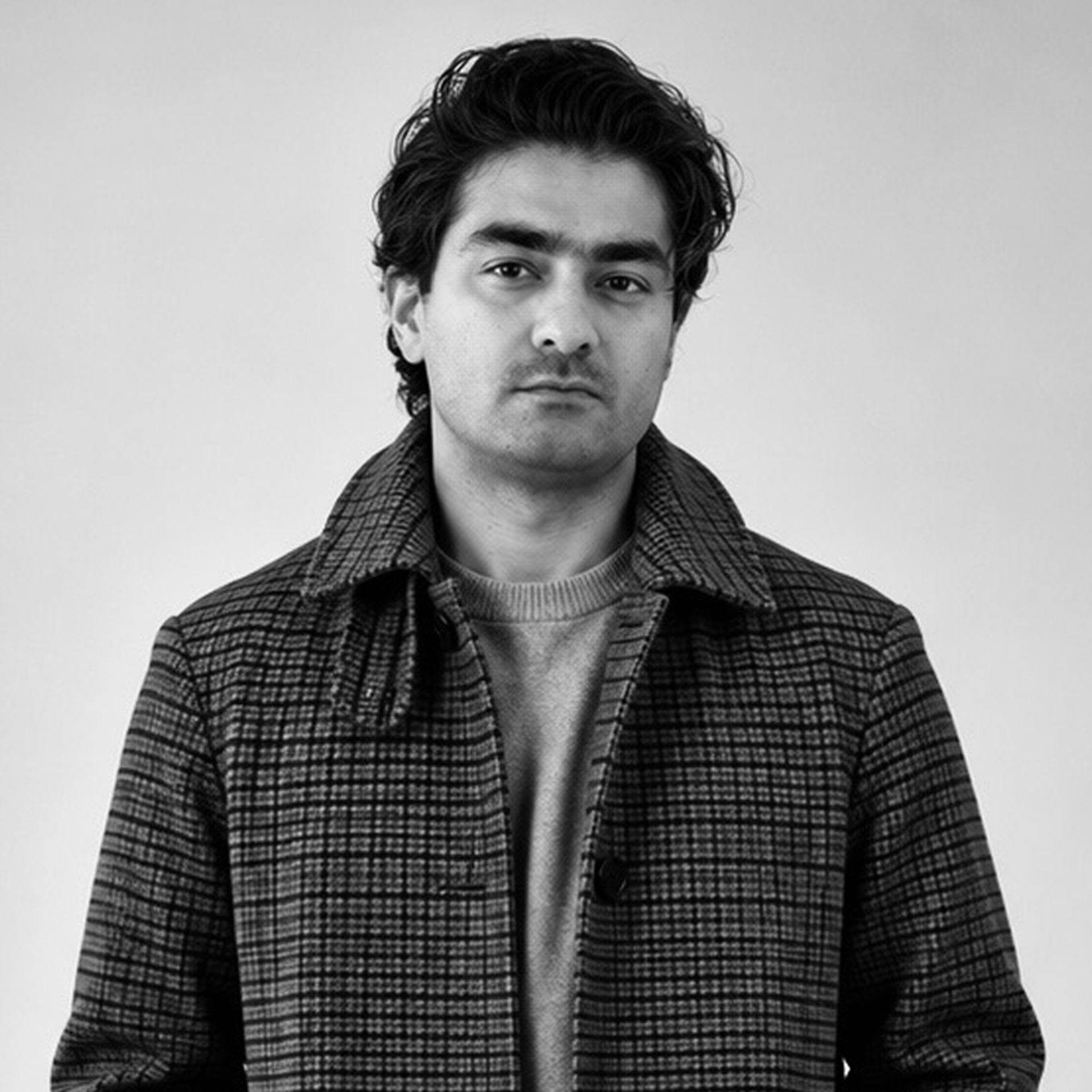
The Who is represented by the subject of the advertisement: an immigrant holding the pillow with a somber expression.
The What is represented by the watch on the subject's wrist. The watchband is made of large bluish crystals, a visual reference to ICE.
The Where is represented by the artwork on the pillow, which features the Purple Lady's Slipper, the state flower of Minnesota.
The When is represented by the time displayed on the watch: 1:07 and 24 seconds. The 1:07 references January 7, the date of the incident involving Renee Good in Minneapolis. The 24 references January 24, the date of the incident involving Alex Pretti in Minneapolis.
That leaves one question unanswered: Why?
And that's intentional. Instead of telling the viewer why these events happened or what they should think about them, I wanted the unanswered question to become the message: Why are we doing this?
One of the first obstacles was the physical format of the advertisement. The original ad space I was given was horizontal, but I felt that a vertical composition would better represent the themes I was trying to communicate: being surrounded, suppressed, pushed down, and controlled.
I called and emailed the magazine and asked whether they could change the orientation of my ad. Fortunately, they agreed, and I think that decision significantly improved the piece, both visually and metaphorically.
There was also a challenge of restraint. I wanted the advertisement to communicate anger without becoming macabre or sensationalistic. Instead of relying on graphic imagery or an obvious political message, I chose metaphors and subtle visual cues.
When you first look at the advertisement, the anger behind it isn't necessarily obvious. The visual metaphors are deliberately restrained, which allows the piece to exist within the context of a luxury print magazine while still carrying a much louder and more confrontational message underneath the surface.
I hope this achievement allows my voice and my ideas to reach a much larger audience. I also hope it strengthens recognition of Third Coast Pillows as a company with principles—not simply a company that sells decorative pillows.
I've made a conscious decision that Third Coast Pillows should be willing to stand up for the rights of other people, even when doing so may cost us sales. I understand that political expression can alienate potential customers, but I believe there is value in building a brand around principles rather than trying to appeal to everyone.
Winning Silver for Print Advertising for a Single Ad gives me credibility as a creative professional and reinforces the idea that a small independent brand can compete creatively with companies that have vastly larger advertising budgets.
The reaction I've received from people I've worked with has been very positive, particularly from people who appreciate that I'm willing to use my brand and my advertising to take a position.
One thing that has made the project particularly meaningful to me is that several of the people involved in creating and placing the advertisement are immigrants themselves, including Seda Stack, the photographer who created the image, and the salesperson who handled my account at Modern Luxury Media's Interiors Magazine 2026 Volume 2, where the advertisement appeared.
That made the message feel especially personal. I believe immigrants have the right not only to come to the United States but to build lives here and thrive. Knowing that people directly involved in bringing this advertisement to life connected with that message has been particularly meaningful to me.
If you want to receive recognition in this industry, you have to be willing to be different. Being safe or producing something that looks like everything else makes it difficult to stand out.
That doesn't mean being different simply for the sake of being different. It means finding something that is genuinely yours and having the courage to put it out into the world. An award-worthy idea should have a point of view. It should make someone stop and think, even if they don't necessarily agree with it.
I think the industry needs change. Advertising is heavily influenced by wealth and media ownership, and advertising can be so expensive that smaller brands often feel pressured to play it safe. Even when a small brand has the freedom to be bold, there is always the fear that taking a strong position could alienate customers.
At the same time, many large brands with enormous advertising budgets have little incentive to rock the boat. Their priority is often to appeal to the largest possible audience.
I'm interested in doing the opposite. I want to use the freedom of being a small, independent brand to take positions, challenge assumptions, and express what I believe—even when those ideas may be considered bold or controversial at the time.
I think hesitation is often a product of fear of the unknown, and that can be a difficult hurdle to overcome. I've learned to invite fear in rather than avoid it. Sometimes the easiest way to overcome a fear is simply to take that first step and try.
"What if?" can paralyze momentum and growth. If you're worried about being embarrassed, rejected, or not being good enough, those doubts can compound until you never take the first step at all.
I come from the mindset that it is better to try and fail than to never try and spend the rest of your life wondering what might have happened. You don't have to be certain that you're going to succeed before you begin. Sometimes you simply have to begin.
For fellow creatives, marketers, and advertisers, I would encourage you to always present the option that is unpopular, unconventional, or controversial.
Even if that idea doesn't get selected, presenting it puts a different lens on the issue and creates an opportunity for discussion. Change rarely happens overnight, but ideas become less radical when people hear them repeatedly and begin talking about them.
If you keep putting an idea into the conversation, eventually people have to engage with it. That conversation can become the beginning of change.
I'd like to thank my wife, who is unapologetically honest about her thoughts and opinions. I've learned to speak up more for myself and for other people because she has been such a strong example in my life.
I'd also like to thank my photographer, Seda Stack, who captured the image that became the foundation of this advertisement. She created an image that worked incredibly well with the concept I had in mind.
Finally, I'd like to thank John Carlos Frey from the podcast The Raid, who interviewed me about the advertisement. Having someone outside of my immediate circle take an interest in the work and the ideas behind it was a meaningful experience.
In one sentence, I would describe my ad as simply: "Question authority."
The advertisement is critical of ICE and the complicated events involving Renee Good and Alex Pretti in Minnesota earlier this year. Those events raise difficult questions about the use of government power and the accountability of the people exercising it.
I believe we should always question authority. In this case, I wanted the advertisement to encourage the viewer to look beyond the official narratives, examine what happened, and ask whether the use of force was justified.
I have some very big and bold plans for the future. My goal is to appear on Shark Tank and secure the capital I need to expand Third Coast Pillows from a regional pillow company into a national brand.
I already have the plans in place. What I need now is the capital and the opportunity to put those plans into action. Winning this award is another step toward establishing Third Coast Pillows as a serious creative brand—not just a company that makes pillows, but a company with a distinct point of view and something meaningful to say.