ALTISSIMA
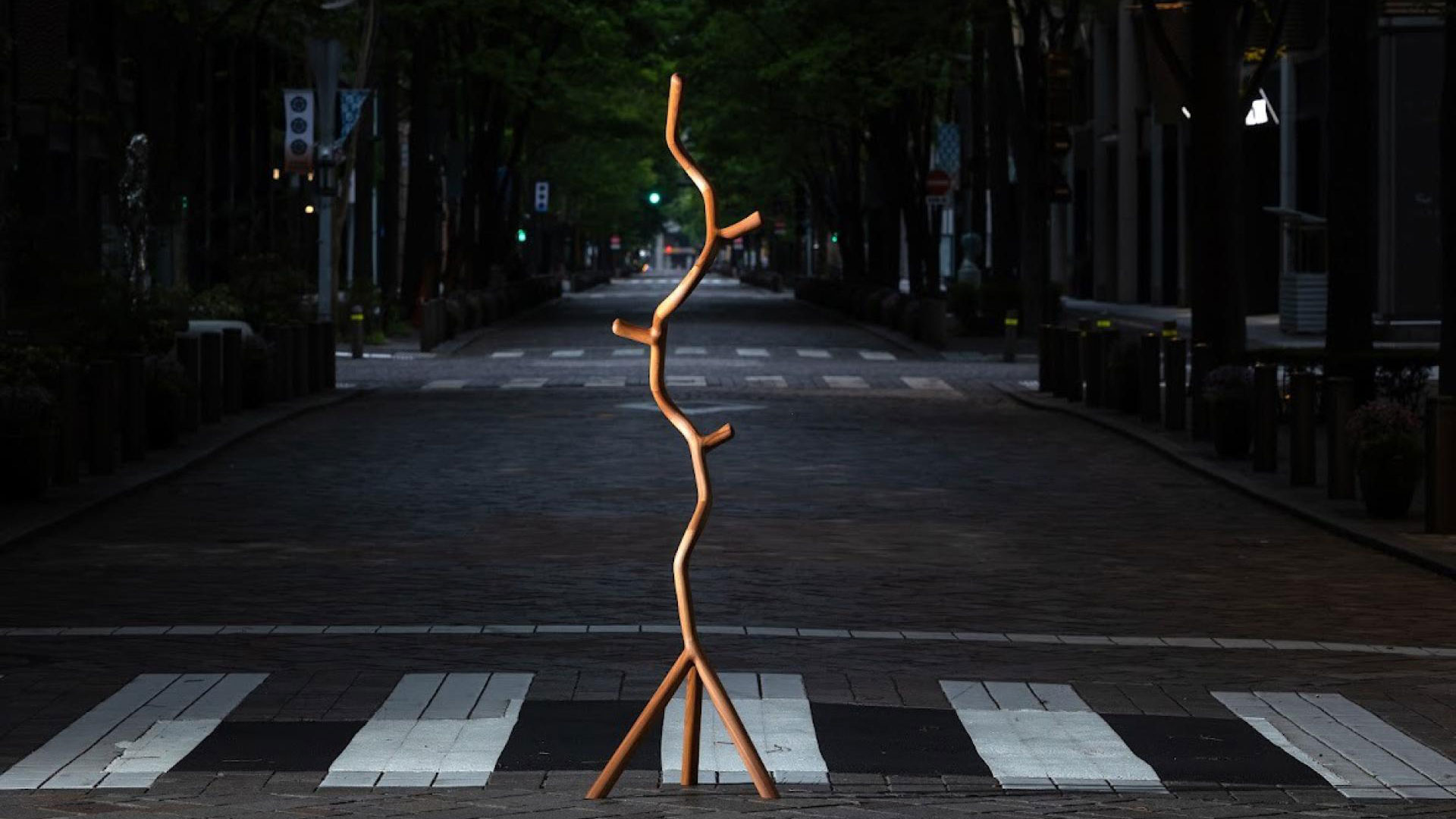
ALTESIMA is a functional sculpture existing at the boundary between furniture, object, and architectural structure....
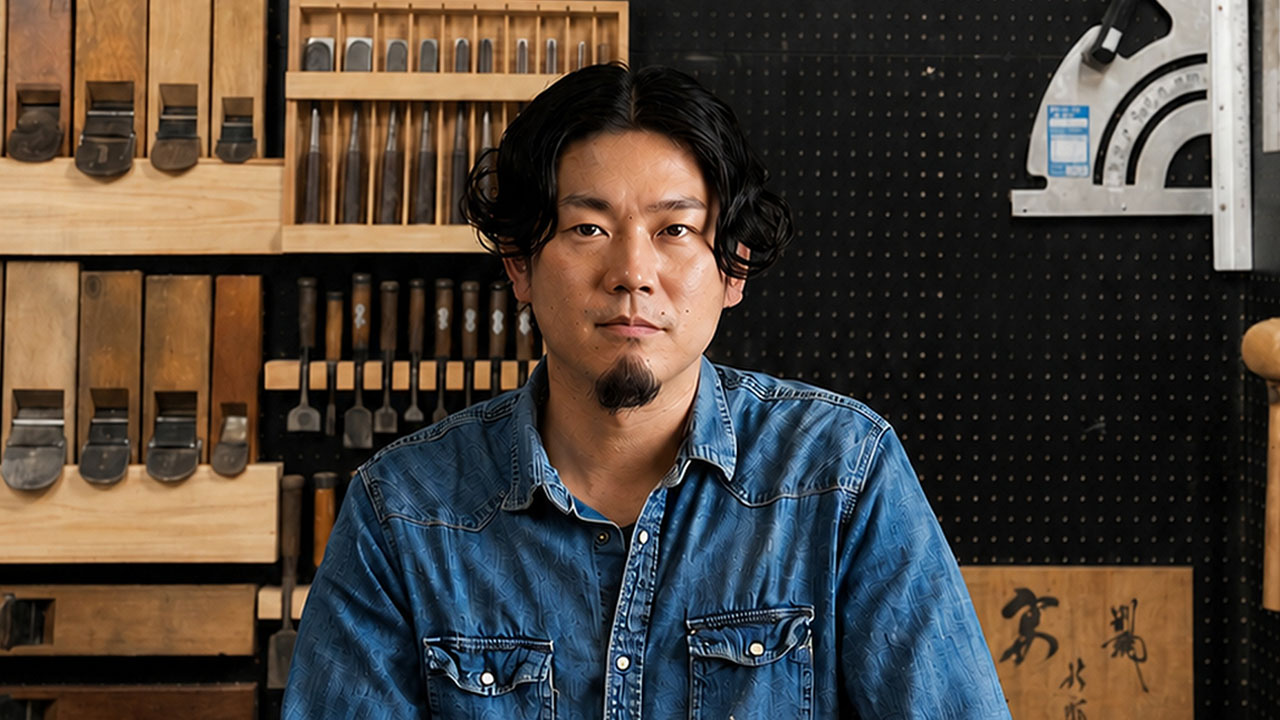
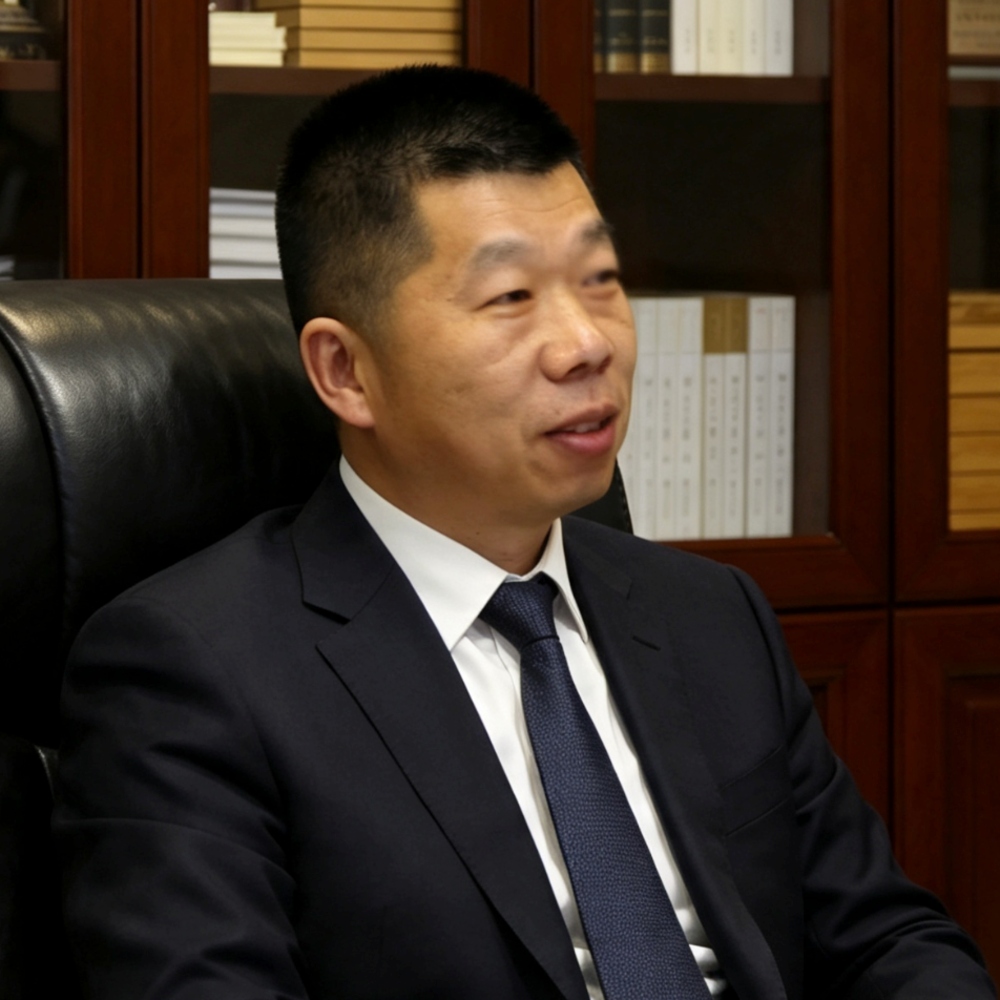
Takahito Iijima is a Japanese carpenter, furniture maker, and artist whose practice is rooted in more than a decade of traditional temple and shrine carpentry. Working primarily with wood, he bridges craftsmanship and contemporary design to create distinctive functional and sculptural forms.
My name is Takahito Iijima, and I am a Japanese carpenter, furniture maker, and artist working primarily with wood. Before entering the world of design, I spent many years working as a carpenter, including more than a decade of experience in traditional Japanese temple and shrine carpentry.
Through that experience, I learned to understand wood not simply as a material, but as something with its own character, limitations, strength, and history. Interestingly, I never began my career thinking, “I want to become a designer.” I began as a craftsman—someone who makes things with his hands.
Over time, however, I became increasingly interested in creating forms that did not yet exist. I started asking myself whether craftsmanship could go beyond solving technical problems and become a form of personal expression. That question eventually led me to establish FUZOROI and to explore the territory between furniture, sculpture, craft, and art. Today, I describe much of my work as “Functional Sculpture”—objects that have a function, but can also exist as sculptural forms in space.
Winning Gold at the MUSE Design Awards is especially meaningful to me because it confirms that an idea born from Japanese craftsmanship can transcend language and culture.
ALTISSIMA was created from a very personal combination of experiences: traditional carpentry techniques, my understanding of wood, and my fascination with organic forms found in nature.
To have that work recognized internationally gives me confidence that craftsmanship rooted in Japan can evolve into a contemporary expression with global relevance.
For me, this award is not a destination. It is evidence that the direction I have chosen has the potential to travel much further.
The greatest impact has been a change in how I see my own work.
For many years, I identified primarily as a carpenter and craftsman. International recognition has encouraged me to see that the knowledge accumulated through craftsmanship can also become a unique artistic and design language.
It has also strengthened my ambition to introduce my work internationally and to connect with galleries, collectors, architects, designers, and people from different creative disciplines.
I am still at an early stage of that journey, but the award has given me a stronger foundation from which to move forward.
Experimentation is fundamental to my process. I often begin not by drawing a complete form, but by asking a structural question: “Is it possible to make wood behave in a way it normally does not?”
ALTISSIMA is a good example.
Rather than bending wood using conventional bending techniques, I started with straight sections of timber. By cutting and joining them at carefully controlled angles, I constructed a continuous structure that could later be carved into an organic, plant-like form. The process combines calculation and intuition.
For me, experimentation is not simply about trying something unusual. It is a way of discovering forms that could not have been imagined without physically working with the material.
One of my strongest sources of inspiration is not a specific object, but the contradiction between nature and human intention.
Nature rarely creates perfect straight lines, while human construction often begins with them. ALTISSIMA emerged from this contrast.
I wanted to see whether straight, precisely processed pieces of timber—something strongly associated with human construction—could eventually become a form that feels as if it had grown naturally.
I am fascinated by the moment when something constructed begins to feel alive.
I wish more people understood that design is not only about having ideas. An idea may appear in a moment, but turning that idea into reality can require hundreds of decisions, failures, adjustments, and technical solutions.
Especially when working with physical materials, the final form is often a record of an ongoing conversation between the maker and the material.
Good design is not simply imagined. It is negotiated with reality.
My professional background as a carpenter taught me to respect constraints.
A client’s needs, budget, structure, material, and environment are not necessarily obstacles to creativity. They can become conditions that generate better ideas. At the same time, in my personal work I try to protect the core concept very carefully.
I am flexible about how an idea reaches reality, but I try not to compromise the reason why the work should exist in the first place.
The greatest challenge of ALTISSIMA was making an organic form from straight timber while maintaining structural integrity. The form appears spontaneous, but its construction requires considerable precision.
Angles, joints, balance, strength, and the final carved surface all influence one another. A small error early in the process can become a much larger problem later.
My background in traditional Japanese carpentry became extremely important here. Years of working directly with wood taught me how to anticipate how the material might respond before making a cut.
Rather than forcing the material into a predetermined form, I continuously adjusted the design while listening to what the wood allowed me to do.
I usually stop trying to “design.” Instead, I work with my hands, look at architecture, art, natural forms, or simply observe everyday objects.
Because my thinking is strongly connected to making, physical action often brings ideas back more effectively than sitting in front of a blank sheet of paper.
Sometimes creativity returns when I stop searching for it.
One of the most important values behind my work is the belief that irregularity can be a form of value.
This idea is also behind the name FUZOROI, a Japanese word that can mean “uneven,” “mismatched,” or “not uniform.”
Industrial production often seeks consistency and perfection. I am interested in the opposite: individuality, traces of the hand, differences in materials, and forms that cannot be perfectly repeated.
My years as a carpenter taught me precision. My work as an artist has taught me that precision does not necessarily mean uniformity. I want to use both ideas at the same time.
Do not rush to find your “style.” Instead, accumulate experiences that genuinely belong to you.
Techniques, failures, jobs, materials, places, and even experiences that seem unrelated to design can eventually become part of your creative language.
Your strongest originality may already exist inside your own history. The important thing is to keep making until you learn how to recognize it.
I would be interested in collaborating with Isamu Noguchi. His work moved naturally between sculpture, furniture, landscape, architecture, and public space without being confined to a single category.
That approach strongly resonates with my own interest in the boundary between function and sculpture. I would be fascinated to explore what could emerge from a dialogue between his spatial and sculptural thinking and my knowledge of wood and Japanese carpentry.
The question I would like people to ask is: “Is this furniture, craft, design, or art?”
My answer would be: “I hope you cannot decide.” I am most interested in the territory where those categories begin to lose their boundaries.
If someone looks at ALTISSIMA and first sees a sculpture, then discovers that it can function as furniture—or sees furniture and gradually begins to perceive it as sculpture—that ambiguity is exactly where I want my work to exist.
Perhaps the future of craft is not about choosing between function and art, but about allowing both to exist in the same object.