Yiayia
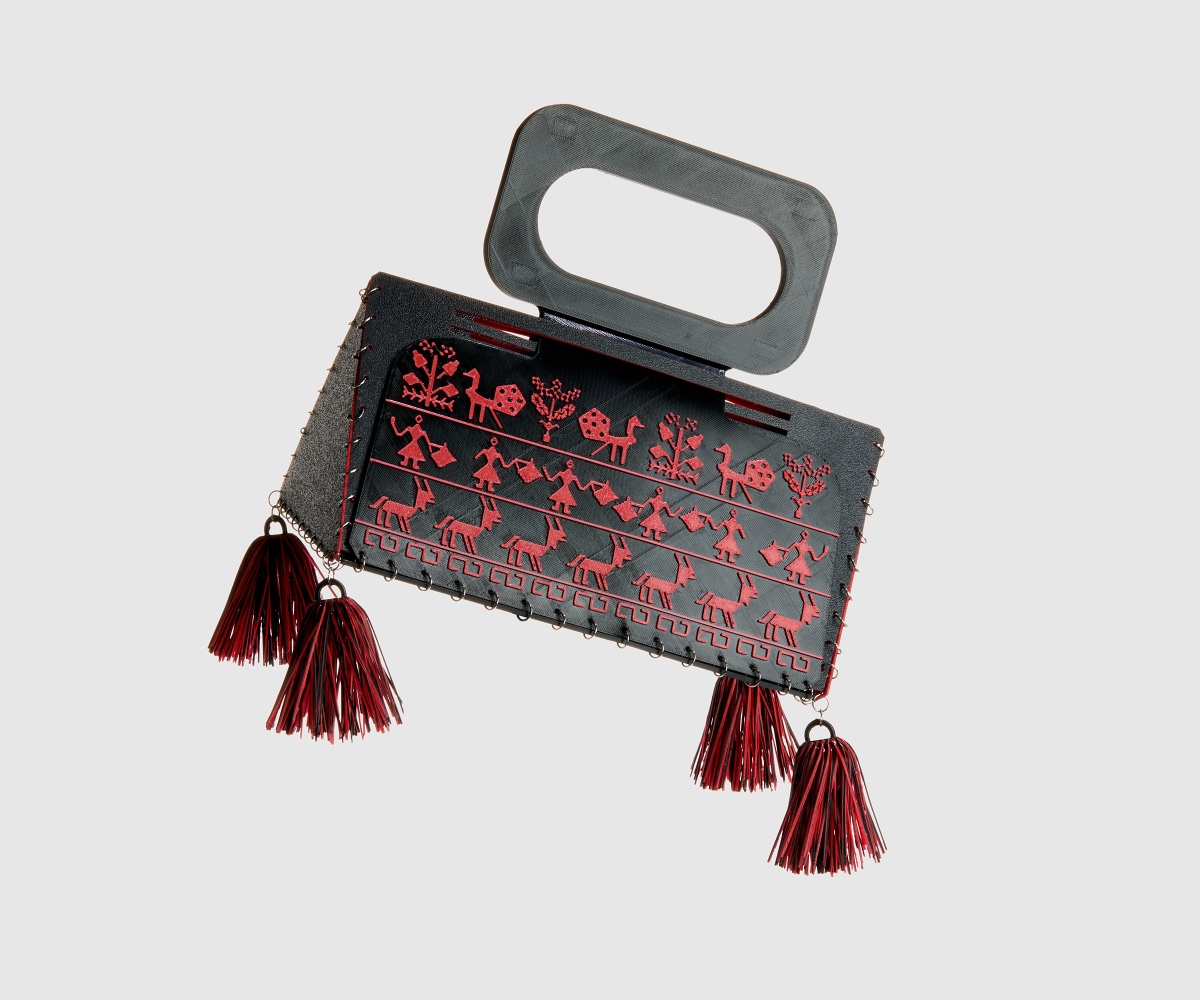
Yiayia is a transformable handbag designed to adapt to different carrying styles and visual expressions,...
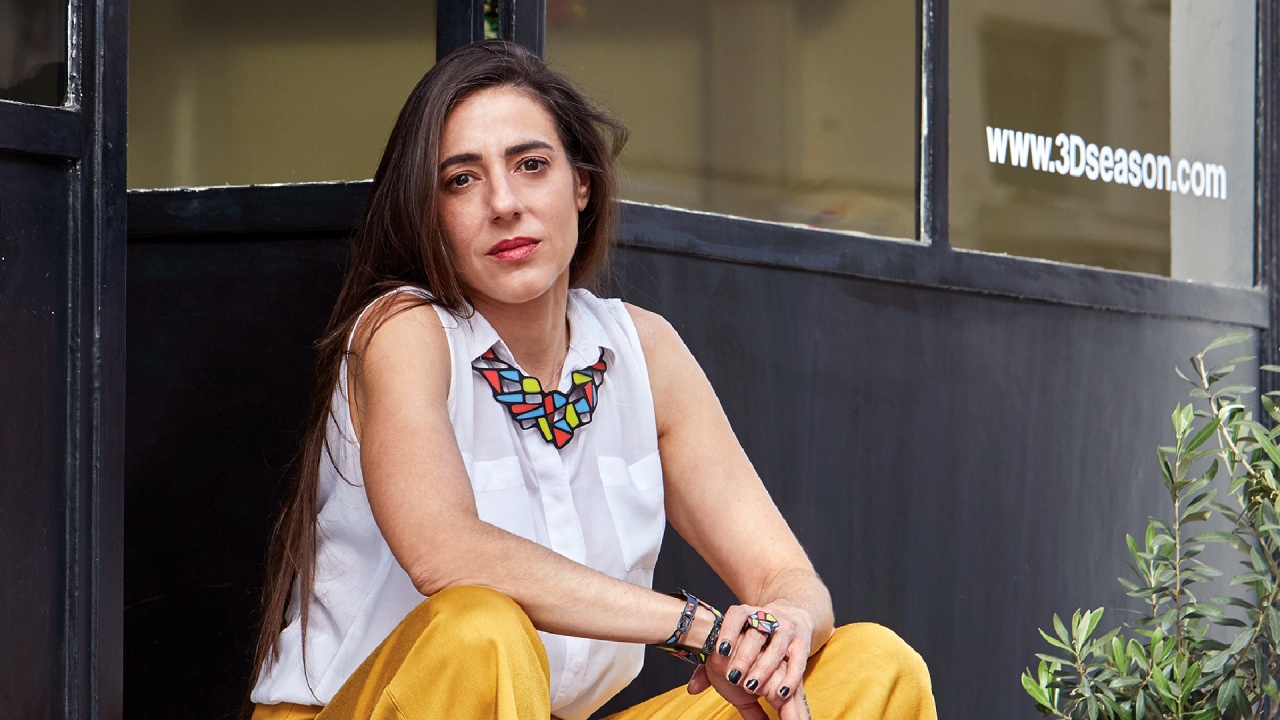
Sophia Lampropoulou is a Greece-based product and wearable designer and founder of 3D Season, whose work bridges cultural narrative and digital fabrication. Through 3D printing and material experimentation, she translates memory, geometry, and tradition into contemporary objects that balance precision, adaptability, and emotional depth.
My name is Sophia Lampropoulou, and I am a product designer based in Greece, as well as the founder of 3D Season. My work focuses on product and wearable design, often combining digital fabrication, particularly 3D printing, with cultural narratives and material experimentation.
My interest in design developed through a curiosity about how objects carry meaning beyond function. Growing up, I was surrounded by handmade artefacts, textiles and everyday objects that told personal and cultural stories. This early exposure shaped the way I see design not only as a problem-solving discipline, but also as a medium for storytelling and emotional connection.
Design became a way for me to translate memories, traditions and observations into contemporary forms. Over time, digital tools allowed me to expand this approach, enabling precision, flexibility and new modes of expression. Today, my practice explores how heritage, technology and functionality can coexist, creating objects that feel both familiar and forward-looking.
Being recognised by the London Design Awards is a meaningful affirmation of my design approach and the values behind my work. It highlights the importance of projects that balance concept, craftsmanship and functionality, while remaining rooted in cultural and personal narratives.
For me, this recognition confirms that experimental processes such as digital fabrication and modular design can coexist with emotional storytelling and everyday usability. It also reinforces my belief that design can serve as a bridge between heritage and contemporary life, transforming memories and symbols into relevant, wearable objects.
Beyond personal validation, the award offers international visibility and encourages further exploration. It creates opportunities to connect with a wider design community, collaborate across disciplines and continue developing projects that question how technology, culture and materiality can shape meaningful products.
This achievement has strengthened the direction of my practice and the vision behind 3D Season. It has offered external validation at a moment when my work is transitioning from primarily experimental and exhibition-focused projects into a more structured phase that is ready for production.
The recognition has reinforced confidence in the projects themselves, encouraging their development beyond prototypes and limited presentations. It has also supported the preparation of new platforms for sharing and distributing the work, allowing these designs to reach a broader audience while maintaining their conceptual integrity.
On a professional level, the award has opened conversations with collaborators and audiences outside Greece, creating momentum for future partnerships and new modes of presentation. It has also clarified how design research, digital fabrication and cultural storytelling can function together within a sustainable and independent studio practice.
Overall, the London Design Awards recognition arrives at a pivotal moment, supporting both creative growth and the next steps of bringing selected projects into real-world circulation.
Experimentation is central to my creative process and often serves as the starting point rather than a final stage. I use experimentation as a way to understand materials, behaviors and possibilities before defining form or function. Through testing, failure and iteration, ideas gradually evolve into systems that can support both concept and use.
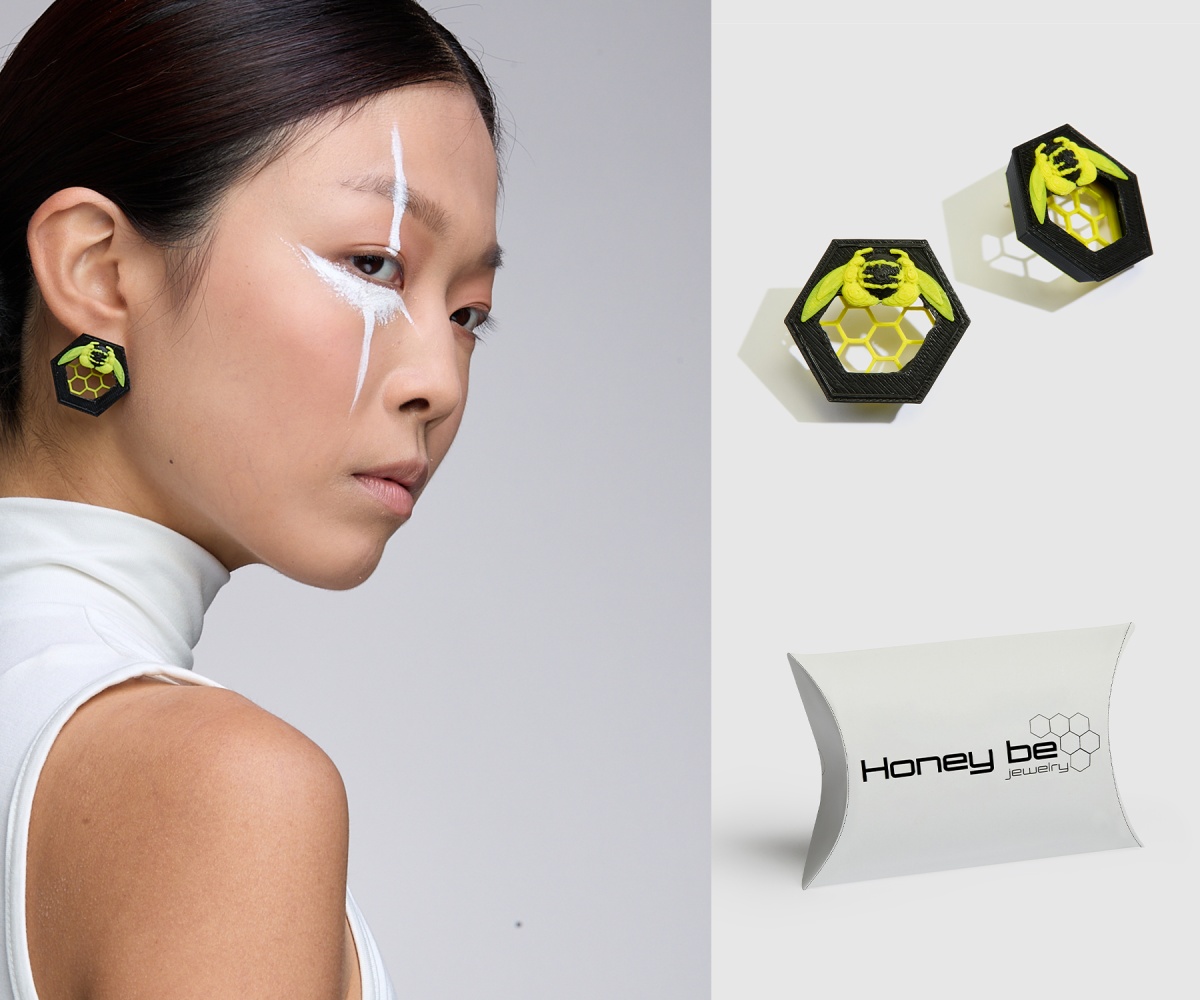
A clear example of this approach can be seen in the development of the Honey Be collection. The project began with research into honeycomb geometry and its symbolic and structural qualities. Early experiments focused on material behaviour, particularly the balance between rigidity and flexibility when combining PLA and TPU through 3D printing. Multiple prototypes were produced to test how modular elements could fold, connect and adapt to the body without compromising comfort.
These experiments directly informed the final design, shaping not only the aesthetic language but also the interaction and portability of the pieces. Rather than treating experimentation as a separate phase, it became an ongoing dialogue between concept, material and wearability, allowing the project to remain open, adaptable and responsive throughout its development.
One of the most unusual sources of inspiration I have drawn from is a personal family artefact rather than a traditional design reference. For one project, I was inspired by an old Cretan embroidery created by my grandmother. What initially appeared as a decorative textile gradually revealed itself as a system of rhythm, repetition and structure.
By studying the embroidery closely, I began to see it not only as a pattern but as a form of logic that could be translated into contemporary design. This observation led me to explore how such an intimate, handcrafted object could be digitised and transformed through 3D printing into a flexible and functional product.
The process shifted my perspective on inspiration. Instead of looking outward for trends or visual references, I learned to look inward, focusing on memory, material traces and everyday objects that carry emotional value. This approach continues to shape my work, allowing personal narratives to become meaningful starting points for experimentation and design.
One thing I wish more people understood about the design process is that it is rarely linear or immediate. Good design is not about a single moment of inspiration, but about time, observation and refinement. It often involves questioning initial ideas, revisiting decisions and allowing space for uncertainty.
Behind every finished object, there are numerous iterations, experiments and adjustments that remain invisible. These moments are not failures but essential steps that shape clarity and intention. Design evolves through patience and attention rather than speed.
Understanding this process can foster greater appreciation for design as a discipline that balances creativity, research and responsibility. It also highlights the value of thoughtful decision-making, reminding us that meaningful outcomes are built gradually through care and persistence.
I approach this balance through dialogue and transparency. Understanding a client's needs, constraints, and goals is an essential part of the design process, and I see these parameters not as limitations but as a framework within which ideas can evolve.
At the same time, staying true to my ideas means being clear about the values and principles that guide my work. I communicate these early in the process, ensuring that expectations are aligned from the beginning. When challenges arise, I focus on translating core concepts into solutions that serve both the client's objectives and the integrity of the design.
Rather than choosing between compromise and authorship, I see collaboration as an opportunity to refine ideas. Through open communication and iterative development, it becomes possible to create outcomes that are both purposeful and authentic.
One of the main challenges was translating a strong conceptual narrative into a functional and wearable design without losing clarity or usability. Working with digital fabrication and flexible materials required extensive testing in order to balance structural integrity, comfort and visual expression.
In projects such as Yiayia and Honey Be, achieving this balance involved producing multiple prototypes and closely observing how materials behaved in real use. Adjustments were often subtle and included changes in geometry, connection points or material combinations, but they were essential for ensuring durability and ease of interaction.
Another challenge was maintaining the emotional essence of the projects while refining them for production readiness. This required careful editing and clear decisions about what to simplify and what to preserve. By allowing time for iteration and remaining open to experimentation, the final designs evolved into solutions that align both conceptually and functionally.
When I encounter a creative block, I try to step away from problem-solving and return to observation. Creating distance from the project allows ideas to settle and reorganise naturally. I often turn to tactile activities, such as working with materials by hand or revisiting physical prototypes, as this helps reconnect thinking with making.
Spending time outside the studio also plays an important role. Walking, observing natural patterns and noticing everyday details often provide unexpected clarity. These moments of quiet attention help reset my perspective and allow new connections to emerge without pressure.
Rather than forcing productivity, I see creative blocks as signals to slow down. By allowing space for rest, reflection and sensory input, creativity tends to return organically, often with renewed focus and intention.
My designs are deeply informed by personal experiences, cultural memory and a respect for craftsmanship. Growing up around handmade objects and traditional materials taught me to value patience, attention to detail and the emotional weight that objects can carry. These early influences continue to shape how I approach form, material and meaning.
I am particularly interested in how design can preserve and reinterpret memories rather than erase them. Whether through references to heritage, nature or everyday rituals, I aim to embed a sense of continuity between past and present. This often translates into modularity, adaptability and material honesty within my work.
At the core of my practice is the belief that design should feel human. Beyond aesthetics and function, I strive to create objects that invite interaction, reflection and connection, allowing personal stories to coexist with contemporary design languages.
My advice to aspiring designers is to remain patient and curious, and to avoid measuring success only through speed or external validation. Developing a meaningful practice takes time, and it is important to allow ideas to mature through experimentation, mistakes and reflection.
I would also encourage designers to build a strong relationship with materials and processes, rather than focusing solely on outcomes. Understanding how things are made often leads to more thoughtful and resilient design decisions.
Finally, staying true to personal values is essential. Trends change quickly, but authenticity and consistency create long-term direction. Success often comes from clarity of purpose rather than imitation, and from trusting your own voice while remaining open to learning and collaboration.
If I could collaborate with any designer, it would be Zaha Hadid. Her work continues to inspire me with its fearless approach to form, experimentation and the use of technology as a design language rather than a constraint.
What I deeply admire about Zaha Hadid is her ability to translate abstract ideas into tangible structures, pushing the boundaries between architecture, design and fabrication. Her work embraced complexity, fluidity and innovation while opening new possibilities for how digital tools could shape physical objects.
This mindset strongly resonates with my own practice, particularly in the way I explore digital fabrication and modular systems within product and wearable design. A collaboration with Zaha Hadid would represent an exchange of ideas centred on experimentation, material exploration and the freedom to challenge conventional typologies through design.
A question I wish people would ask more often is how I want people to feel when they interact with my designs.
My answer would be that I want my work to create a sense of familiarity and curiosity at the same time. I aim for objects that feel approachable, intuitive and emotionally resonant, while still inviting reflection and exploration. Beyond function or aesthetics, I care about how a design lives with someone, how it adapts, and how it is touched, worn or used over time.
For me, successful design is not only about solving problems, but about creating quiet moments of connection. If an object can feel personal, meaningful and open to interpretation, then it has fulfilled its purpose.
Read Transforming Needs into Meaningful Spaces: Designing with Wen-Hsueh Wu by clicking here, another insightful story into design excellence.