The Indulgent Center - Reimagining San Francisco
As an essential medium of human society, architecture conveys social life and its transformations through...
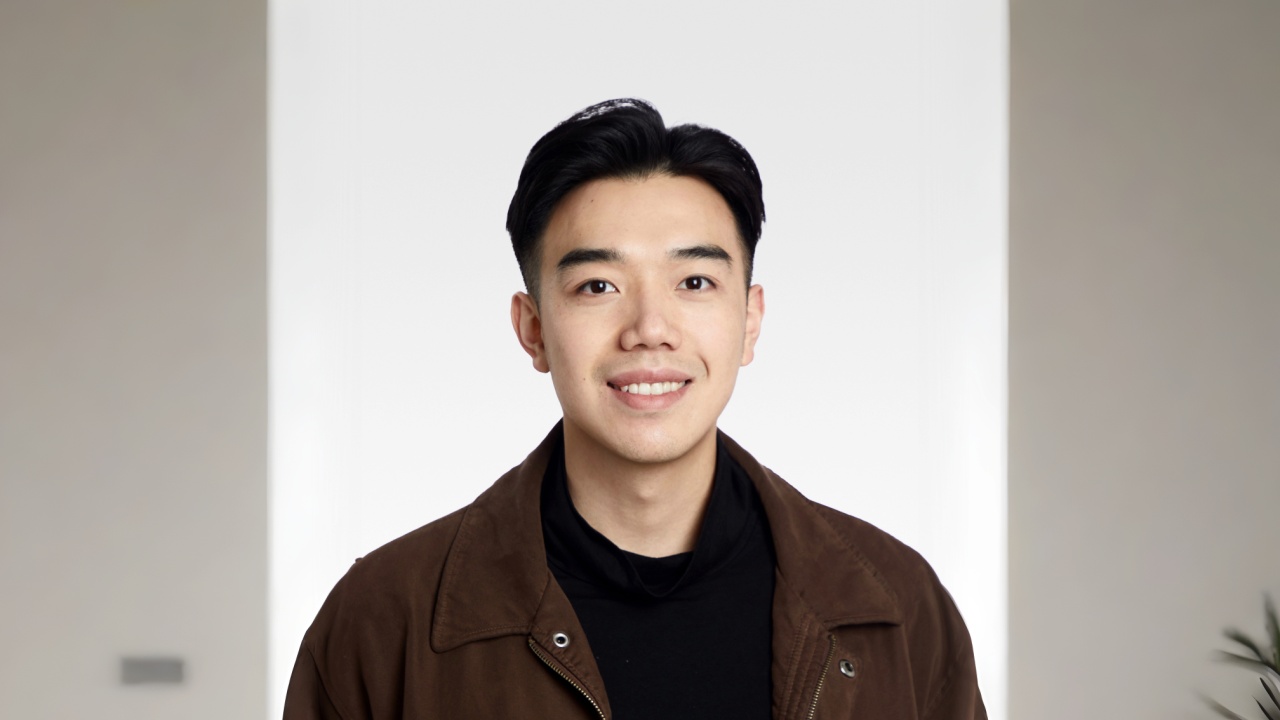
For Qiyuan Liang, architecture extends beyond the design of buildings to reveal how societies understand themselves at a particular moment in time. His work examines the cultural, political, and economic narratives embedded within the urban landscape.
New York felt like the right audience for this project precisely because it's a city that has always been shaped by the forces the project interrogates — capital, globalization, media, relentless transformation. Submitting here wasn't just about recognition; it was about placing the work in dialogue with a city that lives the tensions the project makes visible. The NY awards attract practitioners who understand architecture at an urban and cultural scale, and that's exactly the conversation this project demands.
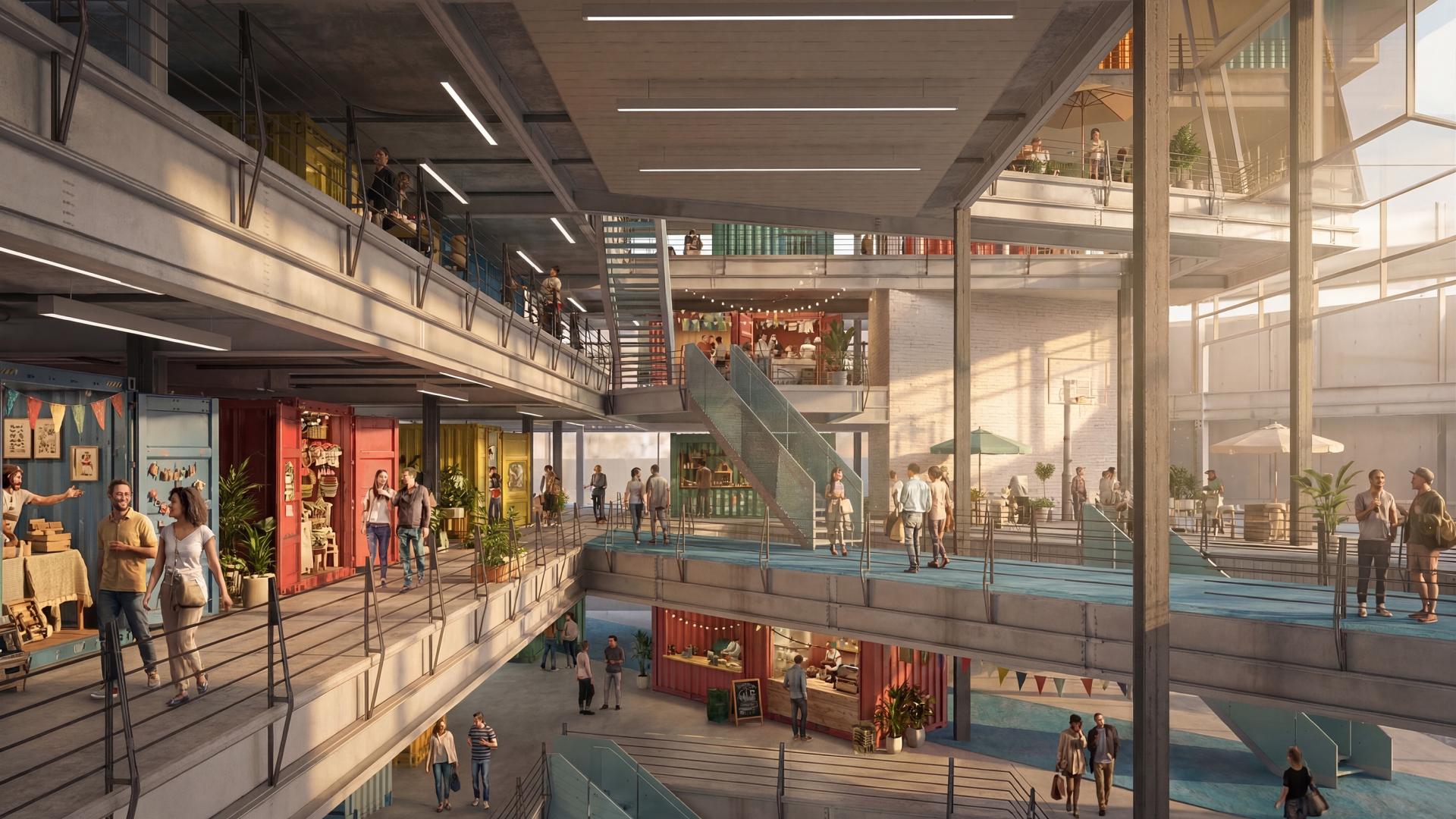
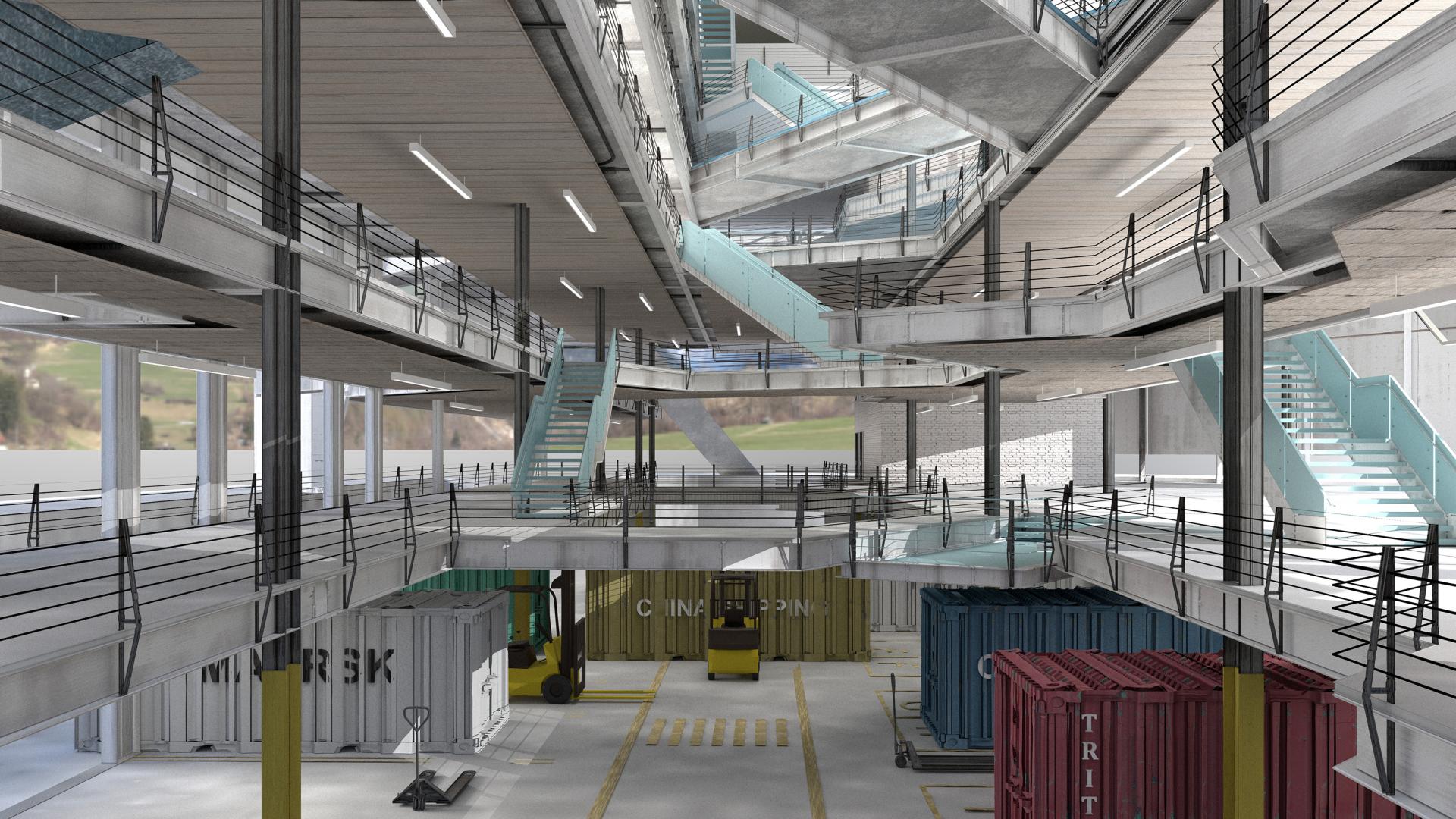
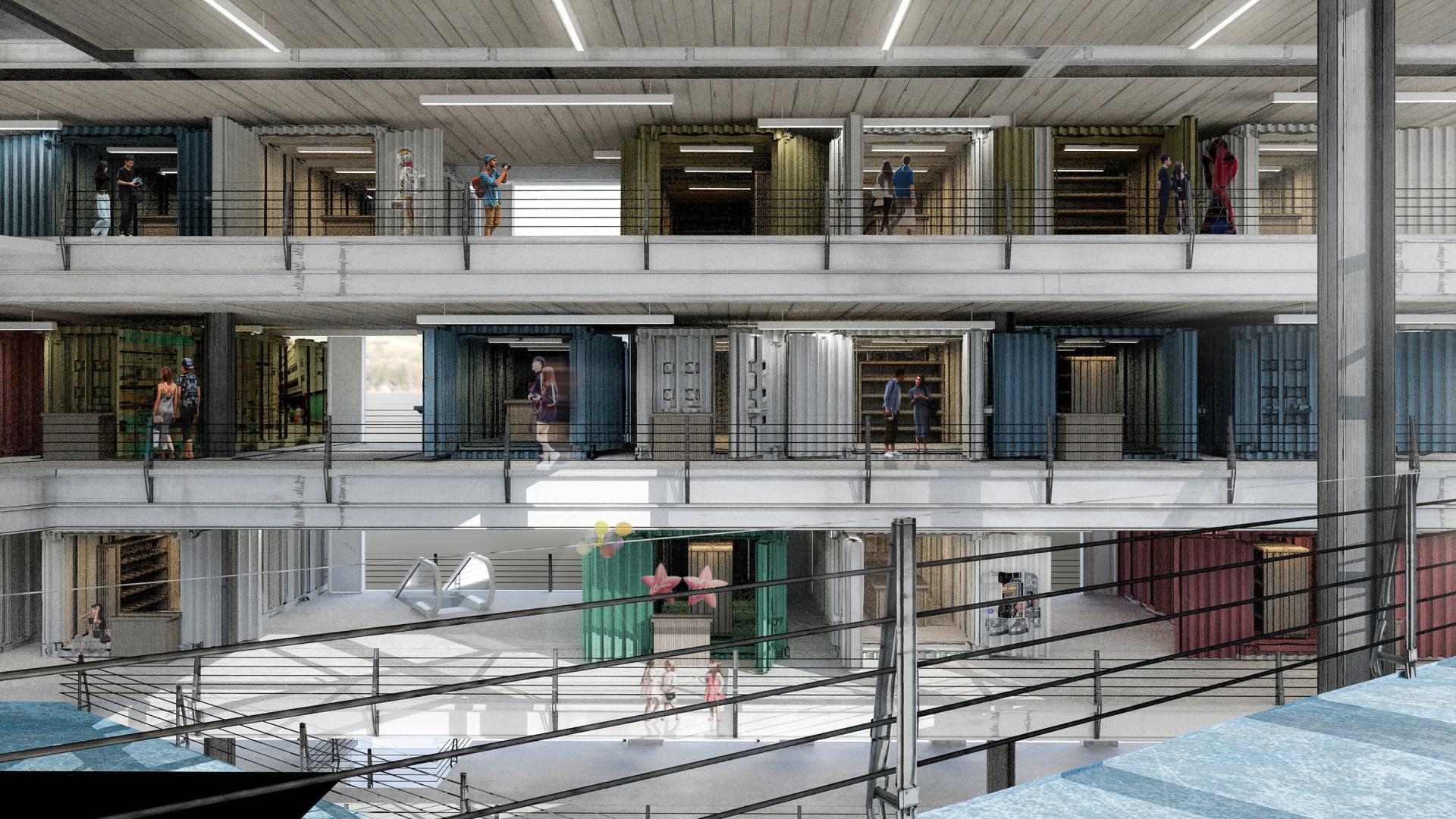
The Indulgent Center - Reimagining San Francisco project begins from a provocation: what if architecture could make the invisible forces shaping contemporary life — capital flows, globalization, media transformation — physically legible? We used market conventions as the generative framework, theatrically rendering the continuous churn of the market as a spatial experience. The result is a consciously theatrical spatial entanglement where users don't just occupy a building — they feel the sensation of being immersed in movement.
That movement encompasses everything from global trade to the rhythms of daily life: sports, relaxation, reading, and protest. Architecture here becomes a visual medium of transformation.
Growing up between cultures gave me an early sensitivity to how built environments encode social values — how a street, a market, a public square can either open up or shut down human possibility. I studied Architecture at Cal Poly San Luis Obispo with a minor in Sustainable Environments, where the emphasis on rigorous technical thinking alongside design gave me the tools to pursue those bigger questions seriously.
What's always driven me is the belief that architecture is never just buildings — it's a record of how societies understand themselves at a given moment in time.
At HGA, the mission is to bring genuine design intelligence to complex, high-stakes projects — to refuse the idea that technical rigor and spatial ambition are in competition. What draws me to the practice is the commitment to working across scales and disciplines simultaneously.
This project exemplifies that: it operates as urban speculation, social commentary, and functional architecture all at once. The goal is always to work that holds up at every level of scrutiny — conceptually, technically, and experientially.
The central challenge was one of translation: the conceptual premise — making invisible forces spatially tangible — had to be grounded in an architectural language that could actually be built and inhabited. There's a real risk in theatrically ambitious projects of producing spectacle without substance.
Every time the design drifted toward pure gesture, we pulled it back by asking: Does this produce a genuine spatial experience, or just an image? That discipline shaped the final result significantly. The theatricality is earned through spatial logic, not applied on top of it.
It starts with research into forces operating well outside the building itself — in this case, the mechanics of markets, the sociology of globalization, the geography of capital movement. That research becomes the conceptual infrastructure before a single spatial decision is made.
From there, visualization is relentless and iterative: models, diagrams, and immersive renderings that test whether the idea translates into felt experience. The technical development — structure, systems, envelope — isn't a downstream phase. It runs in parallel, because the best ideas are the ones that survive contact with reality. Completion is when the architecture begins living independently of its authors.
Speculative, entangled and alive.
The most surprising feedback came from people who engaged with the project without knowing its conceptual premise — and still described feeling a sense of underlying movement and tension in the space. That told me the architecture was doing its work independent of explanation.
When the idea lives in the building itself rather than in the caption beside it, you know something real has been achieved. Architecture that requires a wall text to communicate its intention has already partially failed.
It's meaningful because this project takes genuine risks. It operates in speculative territory — using market conventions to generate form, forging connections between the physical and the invisible, proposing urban scenarios that don't exist yet. Recognition from a jury at this level signals that those risks were legible and defensible, not merely provocative.
It opens permission. When you can point to recognized work that occupies speculative, culturally engaged territory, future clients and collaborators are more willing to go there with you. I want to keep working at the boundary between architecture and the broader forces — economic, social, technological — that actually shape cities. This recognition makes that trajectory more viable and gives the next project a stronger foundation to push from.
This project is, in many ways, an early articulation of something I want to develop much further: architecture that functions as a genuine instrument of urban intelligence. The next iteration in my mind is a project that responds in real time to the flows it represents — a building whose spatial configuration can adapt to the rhythms of the city around it.
Not in a gimmicky, kinetic-facade sense, but structurally and programmatically. A building that genuinely changes as the city changes. The technical challenges are immense, which is exactly what makes it worth pursuing.
Architecture is slowly accepting that it cannot operate within conventional boundaries anymore. The forces shaping cities — capital, media, climate, migration — don't recognize building footprints. This project is a direct response to that condition: it treats globalization and cultural flow as design material rather than as background noise.
Over the next decade, I think the most important architectural work will be done by practitioners who are as fluent in economics, data, and social systems as they are in structure and space. That's the direction I'm moving, and this project is an early proof of that method.
Sustainability in this project operates at a social and cultural register as much as an environmental one. A city that has spaces for genuine cultural exchange, incidental encounter, leisure, and protest is a more resilient city — one that can absorb change without fracturing.
The project's insistence on connecting to existing architectural structures and the surrounding context, rather than asserting itself as a standalone object, is itself a sustainable gesture. Buildings that belong to their place and serve diverse, evolving communities have far longer useful lives than buildings designed for a single moment or a single function.
An extension of exactly what this project begins to explore: a district-scale intervention in a major global city that makes the entire invisible infrastructure of contemporary life — trade routes, data flows, migration patterns, financial systems — spatially and experientially present to ordinary people. Not as a museum exhibit, but as the living tissue of the city itself.
Streets, markets, public spaces, housing — all organized around the idea that the forces shaping your life should be something you can see, feel, and move through. Architecture as radical transparency. That's the project I'm working toward.
Check out this interview on how Preserving Meaning Beyond Preservation: Reimagining Heritage with Siyu Gao, winner of the 2026 NY Architectural & Interior Design Awards.