Swaroop Borukar - Product Manager
I am a data-driven Product Manager at Workday, bringing over a decade of experience in...
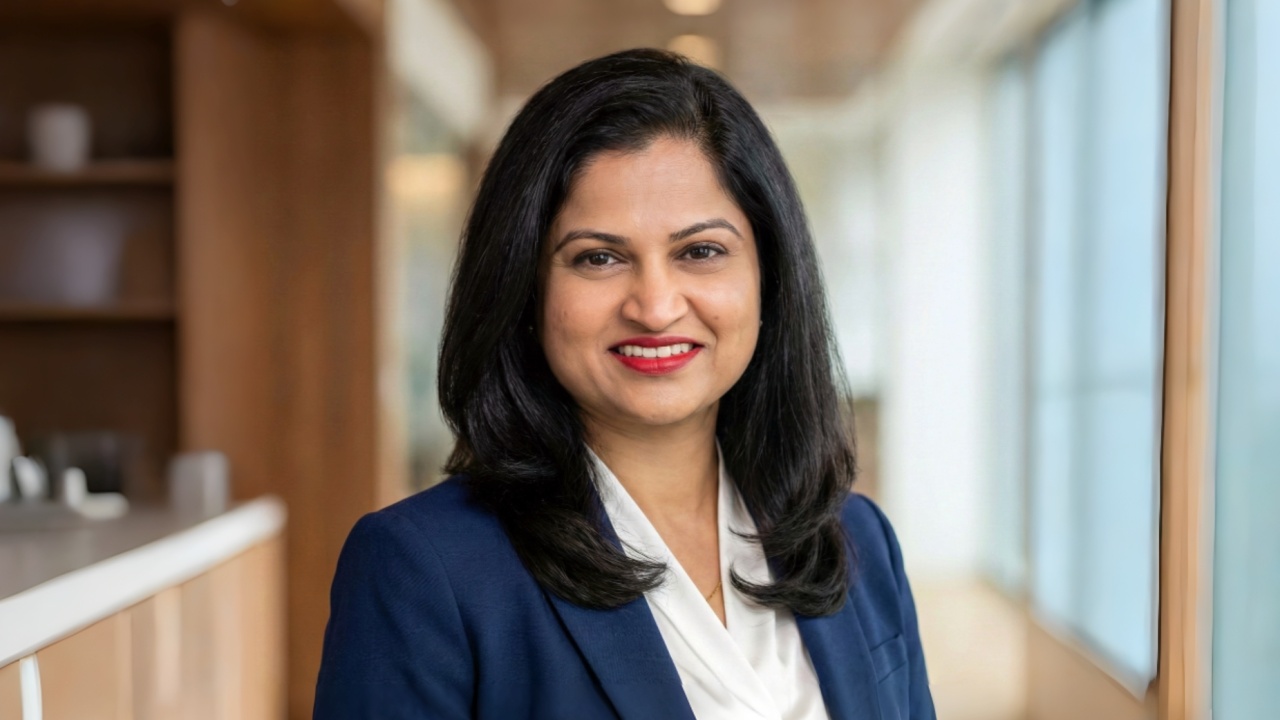
Swaroop Borukar is a Product Manager at Workday, where she leads initiatives in enterprise AI and platform transformation. With a background in telecom and software, she focuses on building scalable, responsible AI systems for global organizations.
Thank you! It is an honor to be recognized by the TITAN Business Awards.
I am a Product Manager at Workday with over a decade of telecom and software experience, focusing on enterprise platforms at the intersection of software and AI infrastructure.
Workday, a leading enterprise cloud platform serving over 11,500 global customers, is pivoting from a "System of Record" to a "System of Action" using Agentic AI and Sana.
I am proud to lead the product teams providing the backbone for responsible AI innovation that empowers large organizations to thrive.
Winning this award was deeply rewarding, providing profound validation for my work building platforms for Workday customers.
Professionally, it highlights the impact of outcome-based planning over rigid roadmaps and reinforces the value of AI that orchestrates complex enterprise solutions.
Personally, this milestone motivates me to continue pushing product management boundaries during this transformative AI era, and I am honored by this global recognition from my peers.
The TITAN Business Awards entry was inspired by demonstrating how enterprise AI can transition from automation to agentic orchestration. Leading Sana's integration at Workday showed how multi-agent workflows solve complex problems for global organizations.
I was confident because the submission emphasized tangible business outcomes. By prioritizing a dynamic, AI-driven framework over rigid roadmaps, the strategy proved scalable and impactful for the future of enterprise software.
Integrating Sana into Workday was a pivotal moment. Leading two product teams through this complex enterprise AI integration shifted my leadership approach. Mastering multi-agent orchestration solidified my view that AI must be a seamless part of the enterprise ecosystem, not just an addition.
This high-stakes success shaped my current agile, impact-driven strategies. Being recognized by the TITAN Business Awards reflects that journey of turning AI potential into tangible user value.
Our main challenge was industry reliance on rigid, feature-based roadmaps, which risk obsolescence in the fast-moving AI landscape.
We overcame this by shifting to outcome-based planning, which included:
1. Strategic Pivot: Focusing on solving enterprise problems rather than just delivering features.
2. Agile Frameworks: Using multi-agent orchestration to integrate new tech like Sana without disruption.
3. Leadership Alignment: Redefining success through adaptability and real-world impact.
This fluid approach allowed us to exceed goals and establish a new standard for resilient enterprise AI.
As a TITAN Business Award winner, I will use this milestone to accelerate AI-era product leadership through three key initiatives:
1. Advocating for Agentic Innovation: Championing agentic workflows and multi-agent orchestration to help organizations adopt autonomous systems.
2. Mentorship and Community: Partnering with organizations like AnitaB.org to inspire underrepresented future leaders in emerging tech.
3. Global Industry Standards: Leveraging my role as a judge to define excellence and ethical standards in AI product management.
Together, these efforts aim to elevate industry standards and focus progress on delivering measurable value.
Entering competitions like the TITAN Business Awards offers a unique vantage point in the industry. While the recognition is an honor, I believe the greatest benefit is the rigorous self-reflection it demands.
It validates your vision against global benchmarks, sharpens your ability to articulate value to stakeholders, and connects you with a community of innovators who are equally committed to pushing the boundaries of what’s possible.
I'd like to acknowledge my two product teams at Workday for their exceptional technical expertise and dedication. I would also like to thank my leadership for their unwavering support in achieving this milestone. Our success in integrating Sana and launching agentic AI capabilities was a collective effort, driven by the ability to navigate complex integration challenges and transform our vision for enterprise AI into a reality.
As a 2026 TITAN Business Awards winner, I observe the industry evolving from simple automation toward agentic AI orchestration. We are transitioning from using AI as a tool to embracing it as a collaborator, where multi-agent workflows autonomously manage complex, non-linear tasks.
To adapt, I am prioritizing two strategic pillars:
1. Outcome-Based Planning: Utilizing dynamic frameworks that prioritize high-level business outcomes over rigid roadmaps, enabling rapid pivots as technology evolves.
2. Agentic Framework Integration: Architecting systems that orchestrate specialized AI agents to solve enterprise-scale problems rather than merely processing data.
By focusing on architectural flexibility and measurable impact, we ensure our platform remains the enterprise backbone, independent of changes in underlying models.
My top advice is to prioritize outcomes over features. While roadmaps provide structure, true value comes from solving core problems and remaining adaptable.
In fast-moving fields like AI, build for measurable impact rather than technology itself. Stay curious, engage in mentorship, and focus on the "why". Success requires the agility to pivot when a better way to deliver value emerges.
Emphasize measurable impact over features by bridging technical innovation with business outcomes. Align achievements with industry trends; for AI, focus on solving pain points rather than just explaining the model. Draft submissions as executive summaries that immediately highlight your unique value proposition.
Winning a TITAN Business Awards is an incredible honor that validates our commitment to pushing the boundaries of what AI can achieve in the enterprise space. Moving forward, my focus is centered on some key pillars:
I am currently spearheading the evolution of multi-agent orchestration. The goal is to move beyond simple automation toward sophisticated, self-correcting AI systems that can handle complex, end-to-end business processes with minimal intervention.
I am also expanding my work with the broader tech community through mentorship programs like AnitaB.org and serving as a judge for global industry awards. I believe that fostering the next generation of product leaders is just as vital as the technology we build.
The next chapter is about moving from "AI as a tool" to "AI as a strategic partner," and I’m excited to lead that charge.
The future of enterprise technology relies on prioritizing outcomes over output, focusing on solving high-value problems instead of mere automation. Ultimately, successful AI empowers humans to perform strategic, creative work, serving as a bridge to greater organizational impact.

Read Inside Radixweb’s Engineering Discipline with COO Dharmesh Acharya, a winner of the TITAN Business Awards here.