VIK Cars Museum — Scenography for Automotive Heritage
The VIK Cars Museum is a contemporary exhibition space conceived as scenography rather than a...
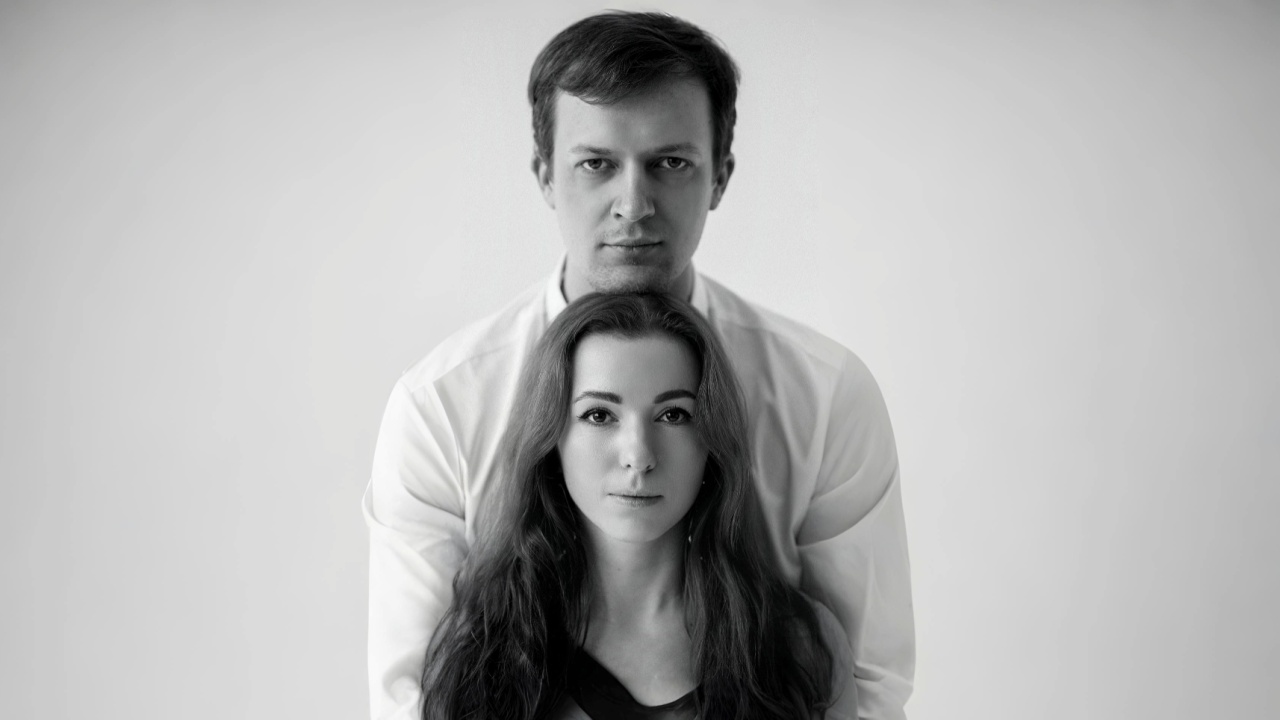
Architect Danilo Koshulynskyy and lead designer Karina Mayer lead Koshulynskyy & Mayer Interior Design Studio. Their work centres on private residential architecture where spatial logic, structure, and longevity guide every decision. With projects such as the VIK Cars Museum, they extend this philosophy into cultural spaces, treating architecture as a framework that shapes narrative and meaning.
We are architect Danilo Koshulynskyy and lead designer Karina Mayer of Koshulynskyy & Mayer Interior Design Studio, an architecture and interior design studio based in Lviv, Ukraine. Our practice focuses primarily on private residential architecture and interiors, where spatial logic, structure, and long-term value are central to every decision.
Our work has always been driven by a strong interest in how spaces function beyond decoration — how they support life, movement, collections, and rituals. The VIK Cars Museum project emerged naturally from this approach. What initially began as a discussion about designing a private garage evolved into a much larger architectural challenge: creating a museum-scale environment capable of presenting automotive history as a coherent spatial narrative.
For us, design is not about style but about understanding context, scale, and purpose. The museum allowed us to expand this philosophy into a public, cultural format, where architecture becomes a stage for objects with strong identity and historical presence.
Recognition by the French Design Awards is meaningful to us because it validates an approach rooted in architectural thinking rather than visual effect. The VIK Cars Museum is not a typical interior project — it is a complex spatial system that balances engineering constraints, tight timelines, business logic, and curatorial storytelling.
Receiving this award confirms that projects emerging from Eastern Europe, and from Ukraine in particular, are part of the global architectural conversation. It highlights that rigorous spatial planning, technical problem-solving, and respect for craftsmanship are values that resonate internationally.
For our studio, this recognition is less about prestige and more about alignment — a signal that our way of working is understood and appreciated at an international level.
The award has strengthened our confidence in working with non-standard formats and large-scale cultural projects alongside private residential architecture. Internally, it reinforced our belief that complex projects — executed under strict time constraints and technical limitations — can be delivered without compromising conceptual clarity.
Professionally, the recognition has opened conversations beyond traditional interior design commissions, including exhibition design, public spaces, and projects that require a strong narrative component. It has also increased international visibility for the studio, positioning us as a practice capable of operating at the intersection of architecture, design, and scenography.
Most importantly, it has encouraged us to continue exploring projects where space is not merely a backdrop, but an active participant in telling a story.
Experimentation in our process is always purpose-driven. We do not experiment for visual novelty, but to resolve spatial, technical, or narrative challenges when standard solutions are insufficient.
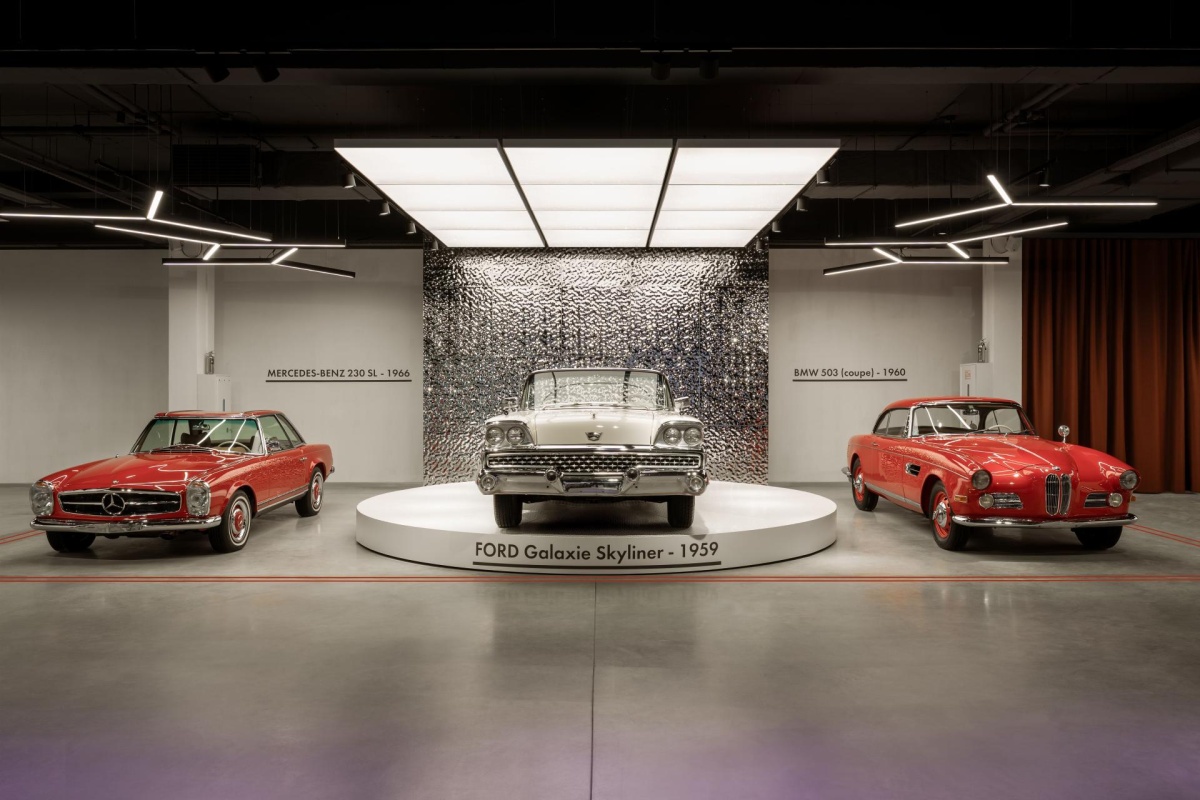
In the VIK Cars Museum, one of the key examples was the lighting concept. The collection includes vehicles from different eras, each with distinct proportions, surfaces, and reflective qualities. Instead of applying a uniform exhibition lighting scheme, we developed a system of individualised, directional lighting scenarios for each car, treating every exhibit as a standalone object on stage.
Another experimental element was the design of custom ceiling light structures produced specifically for the museum. Their form references the three-point star of Mercedes-Benz, abstracted and enlarged, without the enclosing circle. This allowed lighting to function simultaneously as navigation, identity, and spatial rhythm, guiding visitors through the exhibition while reinforcing the automotive context.
For the VIK Cars Museum, inspiration came not from traditional museum references, but from automotive design itself — particularly from the craftsmanship of early and mid-20th-century car designers.
Details such as stitched leather interiors, chrome accents, tire marks, and mechanical precision informed many architectural decisions. For example, the reception desk features a textured façade reminiscyent of tyre tracks, while the lounge furniture references the tactile quality and stitching of vintage car interiors.
In this project, the cars were not just exhibits; they became the primary design language, shaping materials, textures, and spatial gestures throughout the museum.
We wish more people understood that design is not the visible result, but the process behind it.
What often appears as a calm, minimal, or effortless space is the outcome of numerous technical decisions, coordination between disciplines, and careful sequencing — especially in complex projects with tight timelines. In the case of the VIK Cars Museum, the process included structural adaptations, the construction of a custom car lift, parallel workflows, and constant coordination between architecture, engineering, and exhibition logic.
Good design is rarely about adding elements. It is about making precise decisions, removing excess, and ensuring that every detail has a reason to exist.
We see this balance not as a compromise, but as a structured dialogue. Our role is to translate a client’s expectations into a spatial system that remains coherent, functional, and conceptually clear.
In the case of the VIK Cars Museum, the client had a strong emotional connection to the collection, while our responsibility was to ensure that the space functioned as a public museum with a clear narrative, visitor flow, and long-term operability. By focusing discussions on use, logic, and experience rather than style, we were able to align expectations with architectural intent.
Staying true to our ideas means protecting the core concept, while remaining flexible in how it is expressed. When the framework is clear, both sides work toward the same result.
The project presented several significant challenges from the outset. One of the most critical was the absence of a freight elevator, which made it impossible to transport vehicles to the second floor where the museum is located. The solution required designing and constructing a custom car lift as part of the architectural scope.
Another major challenge was time. The museum was scheduled to open within two months, which required the team to work in parallel across design, engineering, and construction phases — a process that is typically sequential.
We addressed these challenges through precise planning, constant on-site coordination, and clear prioritisation. Every design decision had to serve both the concept and the deadline, with no room for unnecessary complexity.
When we encounter a creative block, we return to observation and analysis rather than searching for inspiration. Stepping back from references and focusing on the physical reality of a project — proportions, materials, light, and movement — often provides clarity.
In our practice, visiting construction sites, studying how materials behave at full scale, or revisiting historical design objects can be more productive than looking at new trends. For projects like the VIK Cars Museum, spending time with the collection itself — understanding its craftsmanship and evolution — became a source of renewed perspective.
Creativity, for us, is restored through precision, context, and distance, not acceleration.
At the core of our work is respect for context, craftsmanship, and time. We believe that spaces should be durable not only physically, but conceptually — capable of remaining relevant as lifestyles, collections, or functions evolve.
Working in Ukraine over recent years has reinforced the importance of clarity, efficiency, and responsibility in design. Every project must justify its existence, its materials, and its complexity. We approach design with restraint, focusing on proportion, light, and structure rather than decorative excess.
In projects like the VIK Cars Museum, this translates into spaces that give priority to what truly matters — the objects, their stories, and the experience of moving through the space — while allowing the architecture to remain calm and precise.
Focus on understanding before expressing.
Strong design is built on knowledge — of construction, materials, ergonomics, and context. Trends change quickly, but the ability to think structurally and make informed decisions remains valuable over time.
We would also advise young designers to develop patience. Good projects require time, discipline, and consistency. Success in design is rarely instant; it is the result of repeated, precise work rather than single bold gestures.
We are inspired by designers and architects who combine technical rigour with restraint. Figures such as Dieter Rams and Tadao Ando come to mind — not for their stylistic signatures, but for their ability to create environments where every element has a clear purpose.
Their work demonstrates that strong identity does not come from excess, but from discipline, reduction, and respect for material and space. These are principles we continuously strive to apply in our own practice.
We wish more people would ask: “How will this space function and remain relevant in ten or twenty years?”
Our answer is that longevity is never accidental. It is the result of careful spatial planning, restrained material choices, and respect for how people, collections, and technologies evolve over time. When a project is built on clear logic rather than trends, it gains the ability to adapt without losing its identity.
This approach allows our work to age quietly and with dignity — which, for us, is the most valuable measure of success.
Click here to read about Designing for Long-Term Impact: Xin Wei’s Vision for Responsible Design, a winner of the French Design Awards.