PILLSAFE
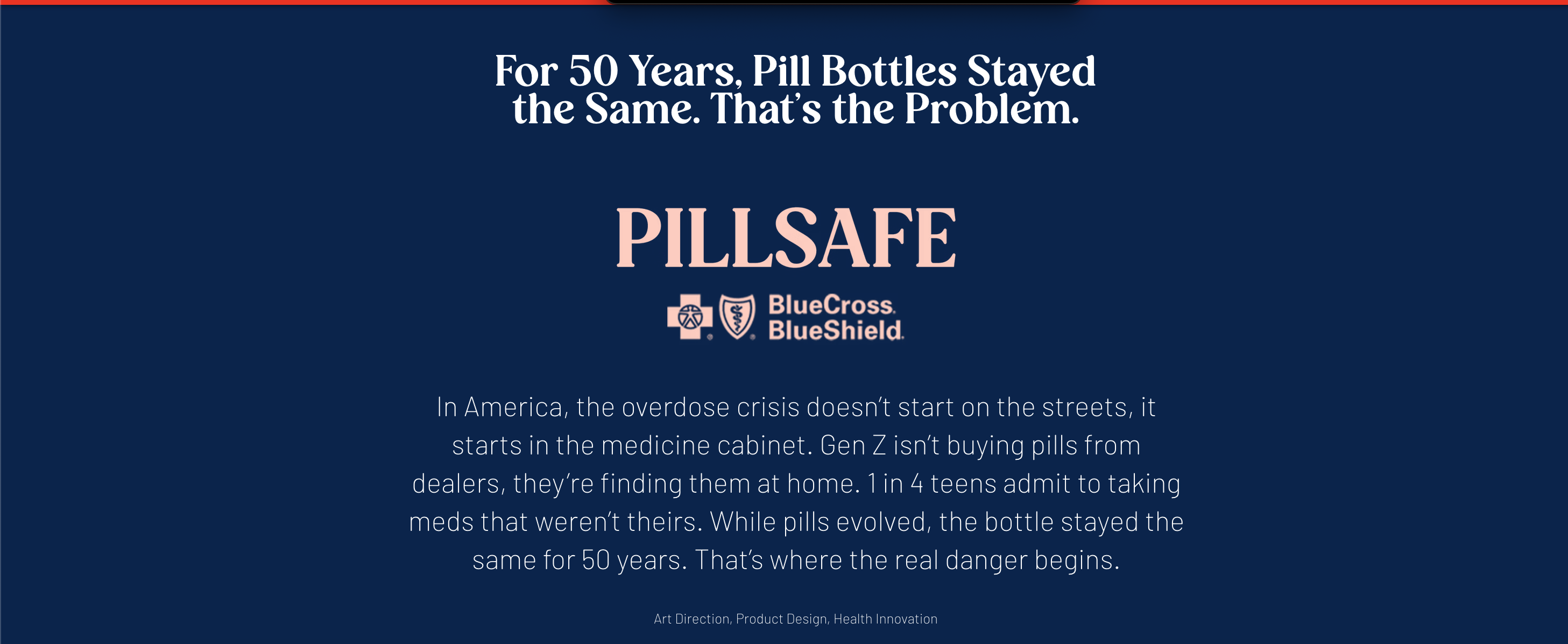
In America, the overdose crisis doesn’t begin in the streets. It begins at home inside...

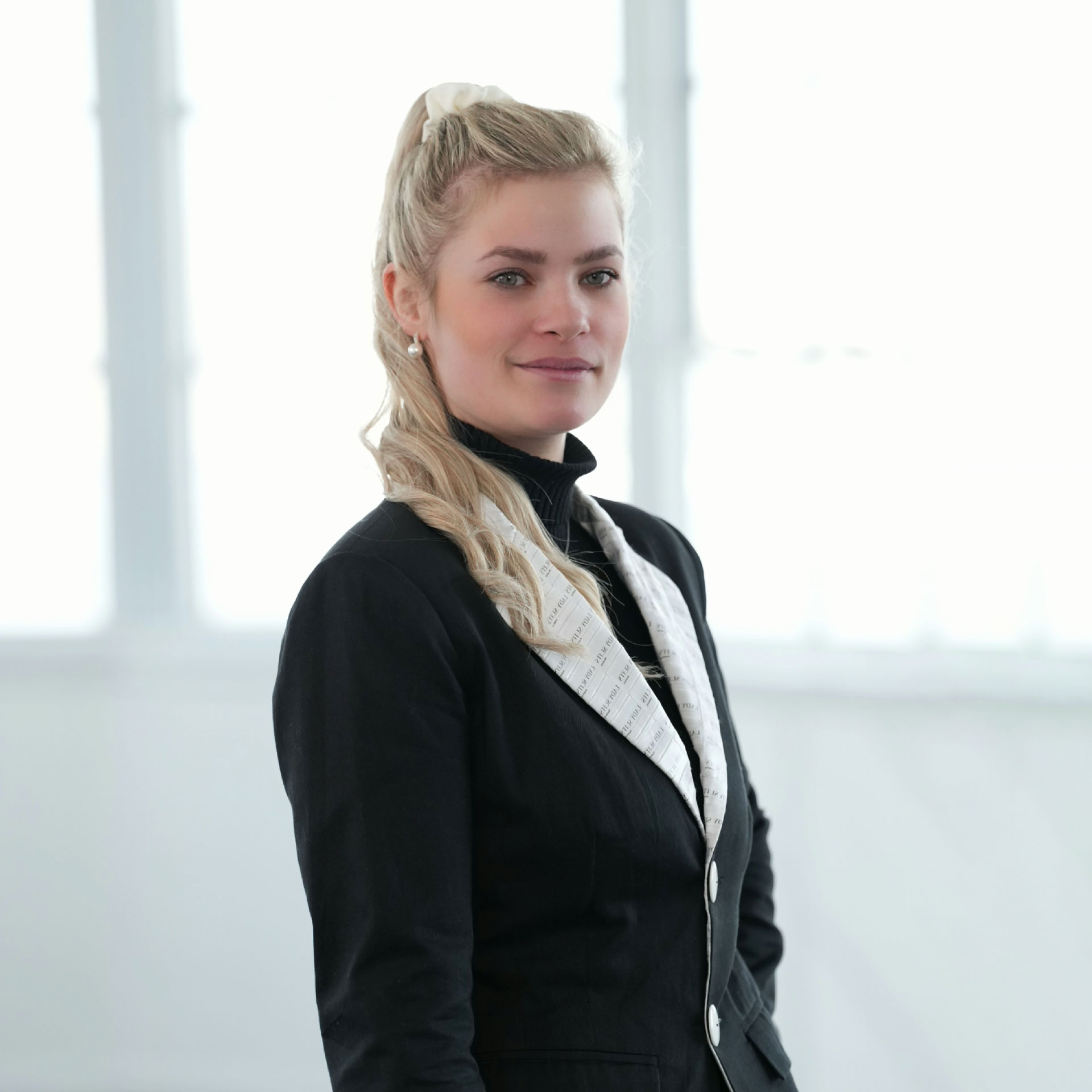
Dani Salom is currently studying at Miami Ad School, beginning a journey in the creative industry driven by curiosity about how ideas shape the way people see and interact with the world. With a growing passion for advertising, Dani focuses on turning simple human insights into ideas that spark conversation and create real impact.
Thank you so much! My name is Dani Salom, and I’m currently studying at Miami Ad School as I begin my journey in the creative industry. I’ve always been curious about how ideas can shape the way people see and interact with the world, which is what drew me to advertising and creative thinking in the first place.
As I start my career, I’m excited to continue exploring how creativity can turn simple observations about human behavior into ideas that spark conversation and create real impact.
I decided to submit PillSafe because the idea started from a problem that felt both urgent and deeply human. The reality is that many prescription drug overdoses don’t start with abuse, but with simple mistakes or access at home. When we realized design could help address that, it felt important to share the idea in spaces that celebrate creativity with purpose.
Winning means a lot to me, especially as someone who is just beginning my career in the creative industry. It’s incredibly encouraging to see an idea like this recognized, and it motivates me even more to keep exploring how creativity and design can be used to tackle real-world problems.
PillSafe was born from a simple but uncomfortable insight: when we think about drug overdoses, we often imagine drugs on the street. But in reality, many begin at home. In the U.S., 1 in 4 teenagers admits to taking prescription pills that weren’t prescribed to them, often found in family medicine cabinets.
That realization made us rethink something incredibly ordinary: the prescription pill bottle. PillSafe reimagines it by integrating a biometric system that only allows the authorized patient to open it, preventing accidental access and reducing the risk of overdose.
To me, the idea represents a direction the industry is increasingly moving toward, where creativity goes beyond communication and starts rethinking everyday objects and systems to solve real human problems.
I think one of the things that helped the project stand out was its simplicity. The insight behind it is something many people recognize but rarely question: the idea that the medicine cabinet at home can become a point of risk.
Instead of approaching the issue only through communication, the project explores how design can intervene earlier in the problem. I believe ideas like this resonate because they show how something as ordinary as a pill bottle can become a small but meaningful point of prevention through design.
One of the biggest challenges during the process was navigating changes within the team. The idea for PillSafe originally started between my creative partner and me, but at the beginning, we were developing the project as part of a larger group. As the process moved forward, it became clear that we had a very specific vision and level of commitment to pushing the idea further, so we eventually decided to continue working on it as a creative duo.
That transition pushed us to take even more ownership of the project and constantly question whether the solution felt believable and truly addressed the problem we identified. In the end, that focus helped us refine the idea and keep it grounded in a real human insight rather than just a creative exercise.
Winning an award like this is incredibly meaningful, especially at the beginning of my career. It’s very encouraging to see an idea recognized on an international stage, and it reinforces my belief that creativity can be a powerful tool for addressing real-world challenges.
I hope this recognition opens doors to continued learning, collaboration with talented people, and the opportunity to keep developing ideas that extend beyond traditional advertising. It’s also been really inspiring to see how projects like PillSafe can spark conversations about important issues, which reminds me why I chose to pursue this industry in the first place.
One of the most meaningful reactions has been how the idea immediately sparks conversation. Many people are surprised to learn that a large number of overdoses actually begin at home with prescription medications, not on the street. That moment of realization has been really powerful to witness.
Within the creative community, the feedback has also been very encouraging. Many people have responded to the simplicity of the idea and how it reframes an everyday object as a point of prevention. Seeing the project resonate with others in that way has been incredibly rewarding.
One thing that made a big difference for us was starting with a strong insight and being committed to finding a meaningful solution to a sensitive problem. When an idea is rooted in a real human truth, it gives you a much stronger foundation to build from.
I also think people sometimes overcomplicate ideas when trying to create award-winning work. In our case, we focused on protecting the simplicity of the concept. We believed in the idea from the beginning and kept refining it—changing what needed to change to make it stronger, but never trying to make it bigger just for the sake of it.
If I could give one piece of advice, it would be to stay curious. Curiosity pushes you to look at problems from different angles and discover unexpected solutions. The best ideas aren’t always the biggest ones; they’re often the ones that come from observing the world closely.
Finally, surround yourself with people who challenge you and inspire you to grow. This industry isn’t just about winning awards; it’s about constantly learning, raising the bar for yourself, and remembering why you fell in love with creativity in the first place.
The creative industry is changing faster than ever, especially with the rise of new technologies and tools. But if there’s one thing I believe will never change, it’s the importance of human insight. Technology can expand what we’re able to do, but ideas still begin with understanding people.
For me, that’s where I hope to position myself in the future: at the intersection of curiosity, culture, and problem-solving. I’m interested in ideas that go beyond traditional advertising—ideas that rethink everyday systems, objects, or behaviors in ways that can create real impact.
Entering awards can feel intimidating, especially when you’re just starting out. But I think competitions can actually be a great way to challenge yourself and see how your ideas resonate beyond your immediate environment.
For me, the real value wasn’t just the possibility of winning, but the process of pushing the idea as far as we could. It forces you to question your thinking, refine your craft, and truly commit to the work you’re creating.
If I could give one piece of advice, it would be this: if you truly believe in an idea, don’t let it go too quickly. Keep working on it, refining it, and making it stronger. Confidence doesn’t come from experience alone—it comes from believing in the work and being willing to put it out into the world.
Creativity grows when we share ideas, challenge each other, and stay open to learning from different perspectives. Some of the best ideas come from conversations, collaboration, and the people who push us to think differently.
If there’s one thing I’ve learned, it’s the importance of surrounding yourself with people who inspire you and challenge you to grow. Being part of a creative community means constantly learning from others, celebrating their work, and pushing each other to raise the bar.
I would dedicate this achievement to the people who have believed in me along the way. My friends and family have always supported my ideas, trusted my talent, and celebrated every milestone with me. Having that kind of encouragement makes a huge difference, especially at the beginning of your career.
I’m also grateful for the people I’ve met in the industry who have inspired me, challenged me, and pushed me to keep growing.
And I definitely share this achievement with my creative partner, who believed in the idea as much as I did and pursued it with the same level of passion and determination.
PillSafe transforms a familiar object into a moment of protection. It shows how thoughtful design can quietly prevent a problem before it begins.
I don’t know exactly what the future holds, and that’s part of what makes it exciting. For now, my focus is simple: staying curious, continuing to learn from the people around me, and creating work I’m proud of.
And, of course, taking a moment to celebrate this achievement.