
Design & Inspiration
Can AI Be Empathetic? Yuanqing Yao Explains O’LIF’s Human Touch
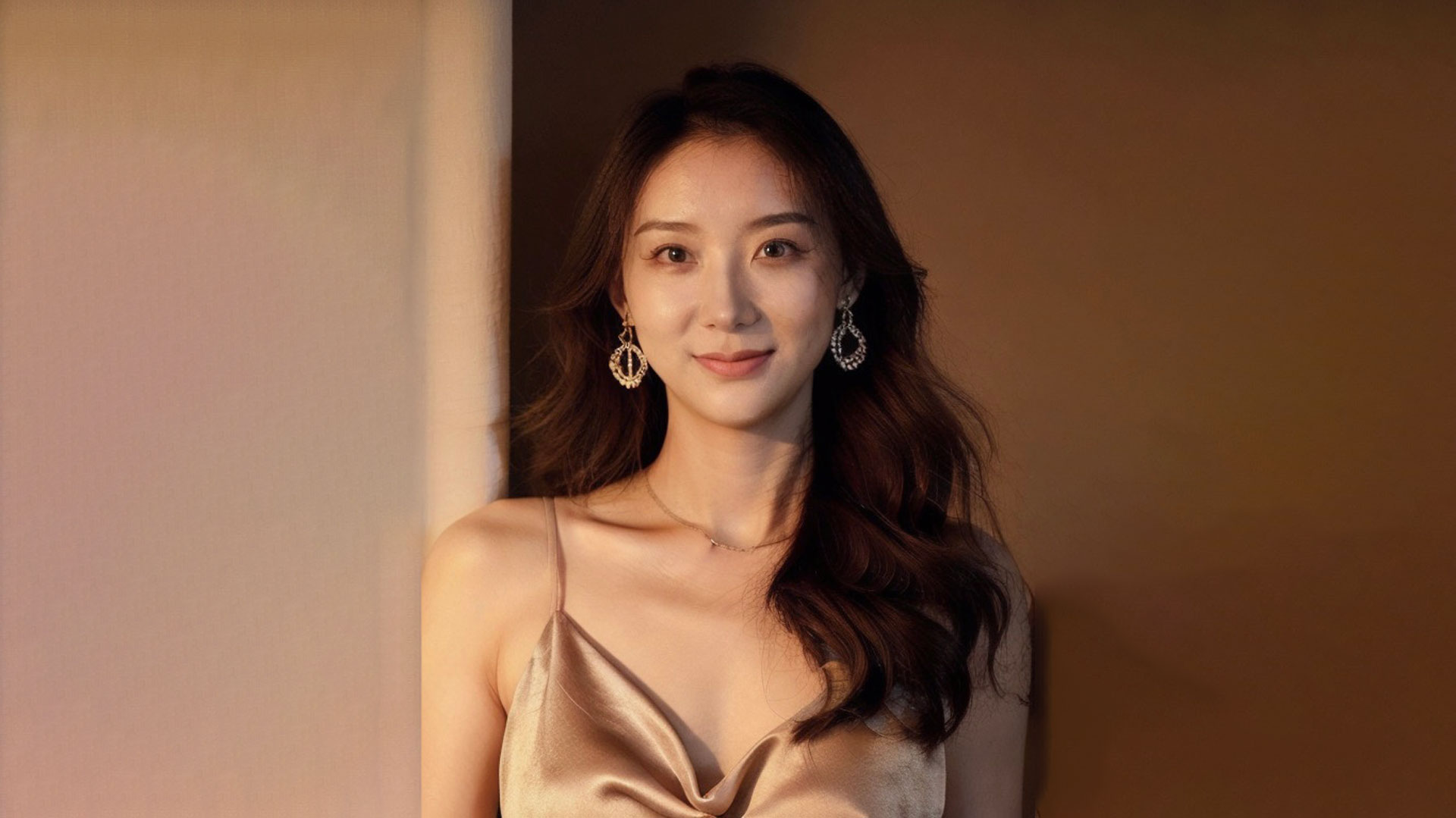
Yuanqing Yao
Yuanqing Yao is a multidisciplinary designer blending human-centered design, AI, and behavioral insight to create emotionally intelligent, socially meaningful experiences.
Hi, I’m Yuanqing — a multidisciplinary designer and strategist working at the intersection of human-centered design, AI-driven interaction, and behavioral change. My background spans industrial design, UX, and strategic innovation. I’ve always been fascinated by how emotion, environment, and technology shape human behavior.
My path into the industry has been unconventional. I started in art and design studios, but over time I realized that design could influence far more than physical objects — it could shape systems, habits, and decision-making. That realization pushed me to explore emerging technologies, behavior design, and later strategy.
Today, I continue to blend these disciplines to create work that is emotionally intelligent, technically grounded, and socially meaningful.
I submitted this project because it captures the kind of design I care most about — design that addresses real human problems and uses technology to support healthier emotional states. O’LIF isn’t just a concept; it’s a proposal for how AI can deepen empathy rather than amplify aggression.
Winning this award feels incredibly validating. Personally, it affirms my belief that creativity can be a force for public good. Professionally, it strengthens my mission to bring human-centered design into fields where AI and behavior intersect, and to keep advocating for emotionally intelligent technology.
The project emerged from a difficult reality: road rage has caused over 12,000 injuries in recent years. When my team and I began our research, we noticed that many incidents stem from emotional escalation and miscommunication between drivers. Controlling other cars isn’t realistic, but changing the emotional climate inside the driver’s seat is.
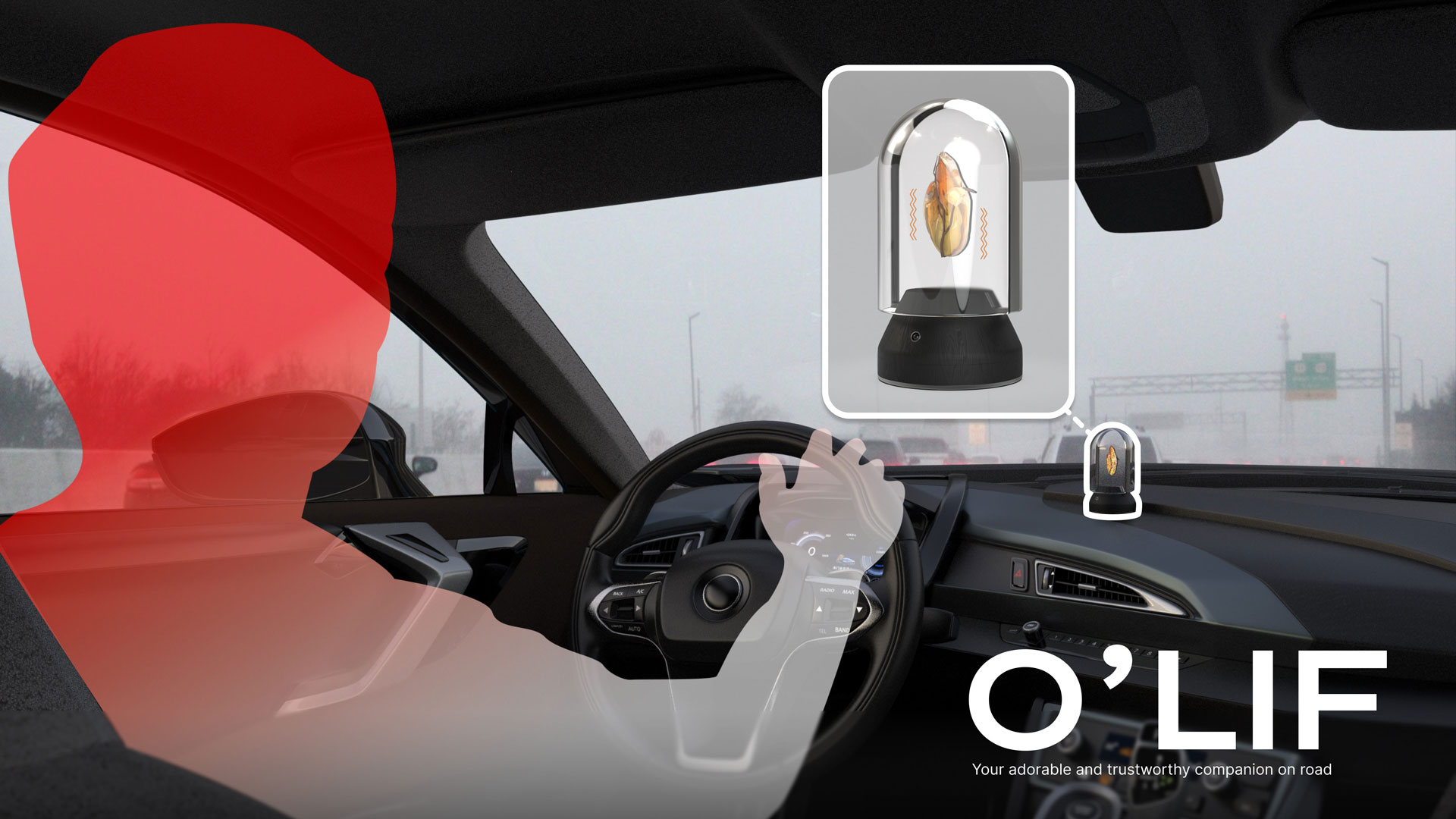
That insight inspired O’LIF, an AI-powered HUD companion that detects facial expressions and responds with empathetic animations. The goal was to intervene sentimentally — using emotion to disrupt emotion, and using companionship to diffuse anger.
In today’s industry, O’LIF represents a broader shift: technology is moving beyond efficiency and entering the realm of emotional well-being. Our work signals that the future of AI isn’t just functional — it can be human, relational, and psychologically aware.
What made O’LIF different is its emotional approach. Most safety solutions focus on warning systems or physical control. Instead, we asked: What if empathy could be a safety mechanism?
Several elements played a key role:
-The project is rooted in behavioral research and a real emotional pain point.
-The AI expresses itself through movement, color, and gesture — not just data.
-The design draws inspiration from plant life, encouraging drivers to “cultivate” a relationship over time.
- Most importantly, the product doesn’t punish bad behavior; it gently makes drivers aware of their emotional impact.
This combination of empathy, storytelling, and AI-driven interaction helped the project stand out.
The biggest challenge was designing emotional feedback that wouldn’t distract drivers. Because driving safety is involved, everything — from animation speed to screen size — had to be meticulously planned and repeatedly tested.
We conducted several rounds of user testing to refine the balance between expressive character behavior and safe visual presence. Through iteration, we found a motion language that is calming, noticeable, but never overwhelming.
This challenge taught me the importance of interdisciplinary thinking — blending technology, psychology, design, and safety considerations all at once.
I hope this achievement helps spotlight the importance of emotionally intelligent design — especially in emerging technologies. For my own career, it affirms the direction I’m moving toward: integrating design with strategy, behavioral science, and AI innovation.
Since the recognition, I’ve already had more conversations with people who are passionate about similar themes — how AI can support well-being, how design can shape behavior, and how technology can become more empathetic. These conversations are energizing and open the door to collaborations I’m excited about.
The feedback has been incredibly encouraging. Many people said they were surprised to see road rage addressed from an emotional perspective rather than a mechanical one. Others noted how refreshing it is to see AI used not for automation, but for empathy.
A comment that stayed with me came from a transportation safety expert who said the project “captures the future of in-car interaction — where emotional intelligence becomes a new form of safety.” That meant a lot to me.
My biggest advice is:
- Start with a real human problem.
Technology alone isn’t meaningful — meaning comes from solving pain points that matter.
- Let emotion guide the design.
Award-winning work resonates because it is authentic, human, and grounded in empathy.
- Tell the story clearly.
Show your research, your intention, and the emotional arc of the work. The narrative often makes the impact visible.
And most importantly, stay curious. Creativity expands when you explore outside your discipline.
I see the industry moving toward a deeper integration of AI, behavioral science, and user psychology. Creativity is no longer just visual — it’s systemic, emotional, and increasingly algorithmic.
My goal is to position myself at this intersection: shaping AI-powered experiences that enhance human well-being and encouraging responsible innovation across the industry. I want to help define what emotionally intelligent technology can look like.
I would tell them: submit anyway. The act of sharing your work — even if it feels imperfect — is already an important step in artistic growth.
Competitions are not just about validation; they force you to articulate your ideas, clarify your intentions, and see your work in a larger context. Every submission strengthens your creative voice and builds confidence.
Stay close to humanity. In a world where technology is accelerating faster than ever, our responsibility as creatives is to make sure emotion, empathy, and meaning stay at the center.
Our work has the power to shape how people feel, behave, and connect — and that’s a responsibility worth honoring.
I dedicate this recognition to my teammates, mentors, and everyone who contributed to the project — from user testing to prototyping to emotional storytelling. Their perspectives shaped every detail of O’LIF.
I’m also grateful to the individuals who shared their personal experiences with road rage during our research. Their honesty grounded the design’s purpose.
“O’LIF is an emotionally intelligent AI companion that uses empathy to make driving safer.”
This single sentence captures the heart of the project — emotional connection as a pathway to safer behavior.
I’m continuing to explore how AI, design, and human psychology can shape healthier behaviors — both inside and outside the car. I’m particularly excited about projects that bring emotional intelligence into the core of technology-driven experiences.
My next chapter is focused on building systems and products that feel deeply human — and on proving that empathy can be one of the most powerful drivers of innovation.
Winning Entry
Explore the journey of PeilinLi, the Gold Winner of the 2025 MUSE Creative Awards. She blends illustration, animation, and design to create rhythm-driven, story-focused visuals for motion and branding.
ADVERTISEMENT

Latest Posts

2027 French Design Awards Opens Global Entries for Design Excellence
SEPTEMBER 15, 2026
2027 French Fashion Awards Opens Global Call for Entries
SEPTEMBER 15, 2026

French Fashion Awards Announces 2026 Season 2 Winners and Opens 202...
SEPTEMBER 11, 2026
2026 French Design Awards Reveals Season 2 Winners and Designs of t...
SEPTEMBER 10, 2026
What Judges Look for in Marketing Awards | Winning Tips
SEPTEMBER 9, 2026

BetterSleep Advancing Sleep Wellness Through Innovation
SEPTEMBER 4, 2026

NORA ノラ - Beat of a Romance / Cha Cha Cha: A Dreamlike Music Video
SEPTEMBER 4, 2026
Pure Perfection GmbH Creates an Immersive Launch for Audi One
SEPTEMBER 3, 2026

A Symbolic Vision: ICON by RINTARO. UKON Named 2025 Global Photogra...
SEPTEMBER 2, 2026

Pixel Flow! Builds a New Rhythm for Mobile Puzzle Games
AUGUST 31, 2026

IAA GLOBAL AWARDS
MUSE Awards
Vega Awards
NYX Awards
TITAN Awards
- TITAN Business Awards
- TITAN American Business Awards
- TITAN Property Awards
- TITAN Women in Business and Leadership Awards
- TITAN Health Awards
- TITAN Innovation Awards
- TITAN Brand Awards