Rewear: Context-Aware AI Styling with What You Own
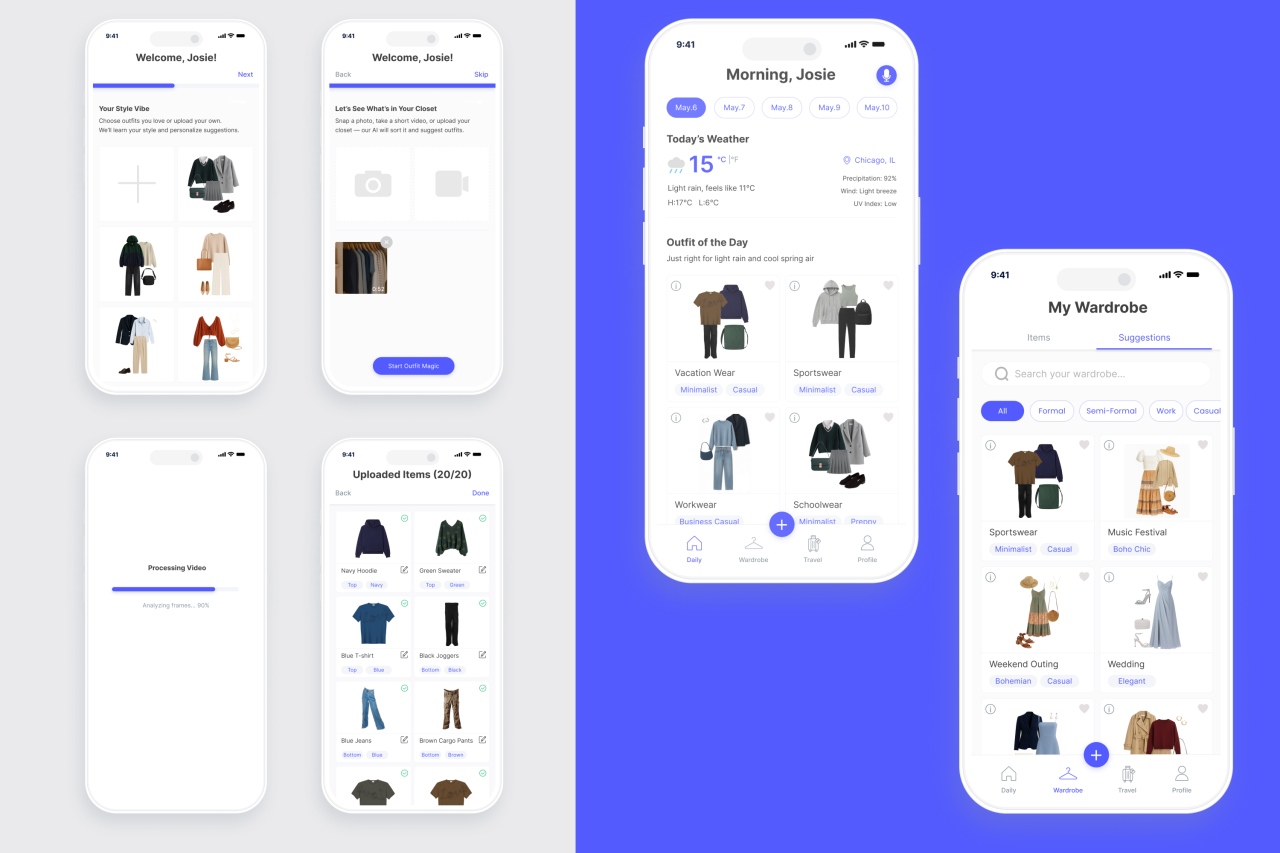
This AI-powered outfit assistant suggests daily and travel-ready looks based on the user’s real wardrobe,...
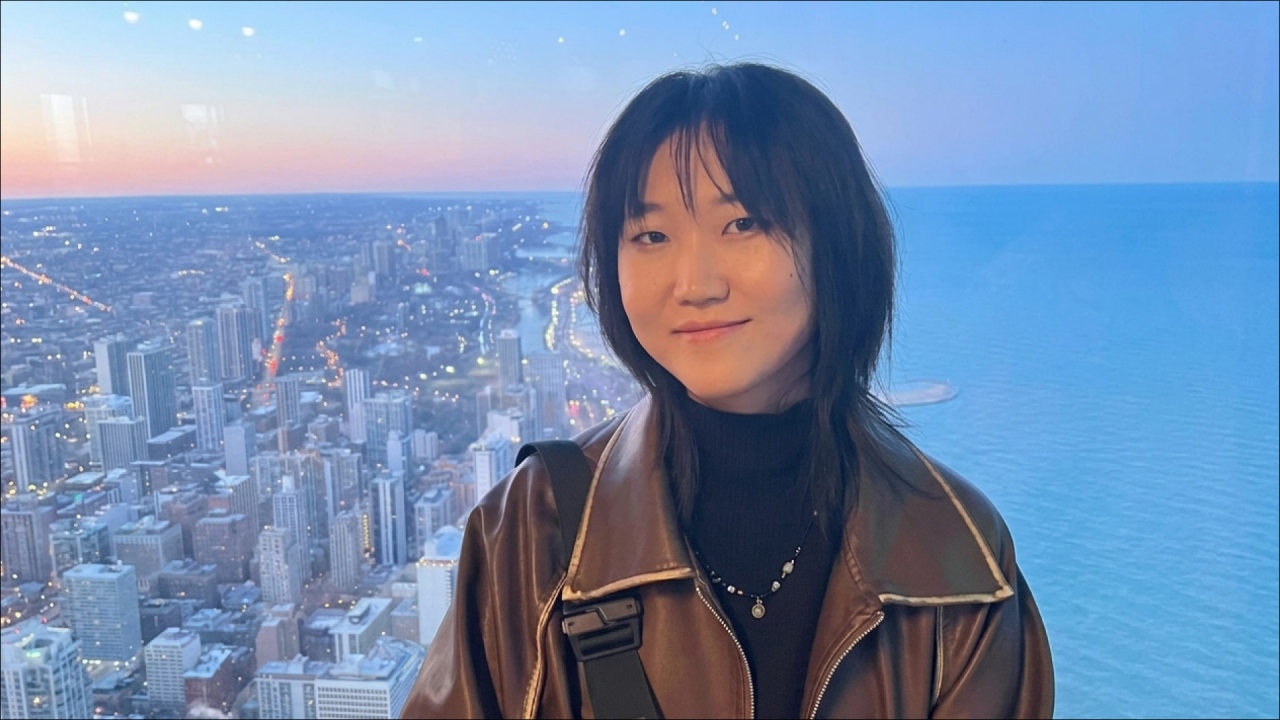
Xuejiao Liu is a Chicago-based UX designer whose work bridges technology, business strategy, and human-centred design across complex systems and consumer products. Guided by research and iterative experimentation, she develops thoughtful experiences that support both high-stakes operations and everyday decision-making.
Thank you, it’s a real honour to be recognised by the London Design Awards.
I’m a UX designer based in Chicago, specialising in human-centred design across complex systems and consumer products, with experience across both digital and hardware touchpoints. My work has focused on designing end-to-end experiences across complex environments, supporting both high-stakes operations and everyday user decision-making.
I hold a Bachelor’s degree in Economics and a Master’s degree in Integrated Innovation, which gives me a systems-level perspective connecting user experience, technology, and business value. This background allows me to navigate complex product and service ecosystems, evaluating design beyond aesthetics, with a focus on usability, scalability, and real-world impact.
My interest in design began with a personal curiosity about creating visually engaging things. That curiosity deepened when I took a course in toy product design, where our team created a product for a playground. Seeing an idea evolve into something that solves problems and shapes how people interact with the world was truly inspiring—it made me realise the tangible impact design can have and motivated me to dedicate myself to creating meaningful, human-centred solutions.
Being recognised in the London Design Awards is deeply meaningful because it validates the human-centred approach I strive for in my work. Thoughtful, empathetic design can resonate beyond a single project. This recognition highlights how design can influence everyday behaviours, decisions, and interactions—shaping experiences in subtle but meaningful ways.
On a personal level, it is both an honour and a reminder to continue creating solutions that are intuitive, purposeful, and impactful, while pushing the boundaries of how design can address real human needs.
This recognition has been both encouraging and validating, especially as it highlights the relevance of more exploratory, self-initiated work. It has helped bring greater visibility to my work and opened up more conversations around the role of design in shaping everyday behaviours and decision-making.
More importantly, it has reinforced my direction as a designer—continuing to explore how design can create meaningful impact beyond functionality, particularly in areas related to behaviour, awareness, and long-term change.
Experimentation is a key part of my creative process because it allows me to explore ideas in a way that’s grounded in real user behaviour.
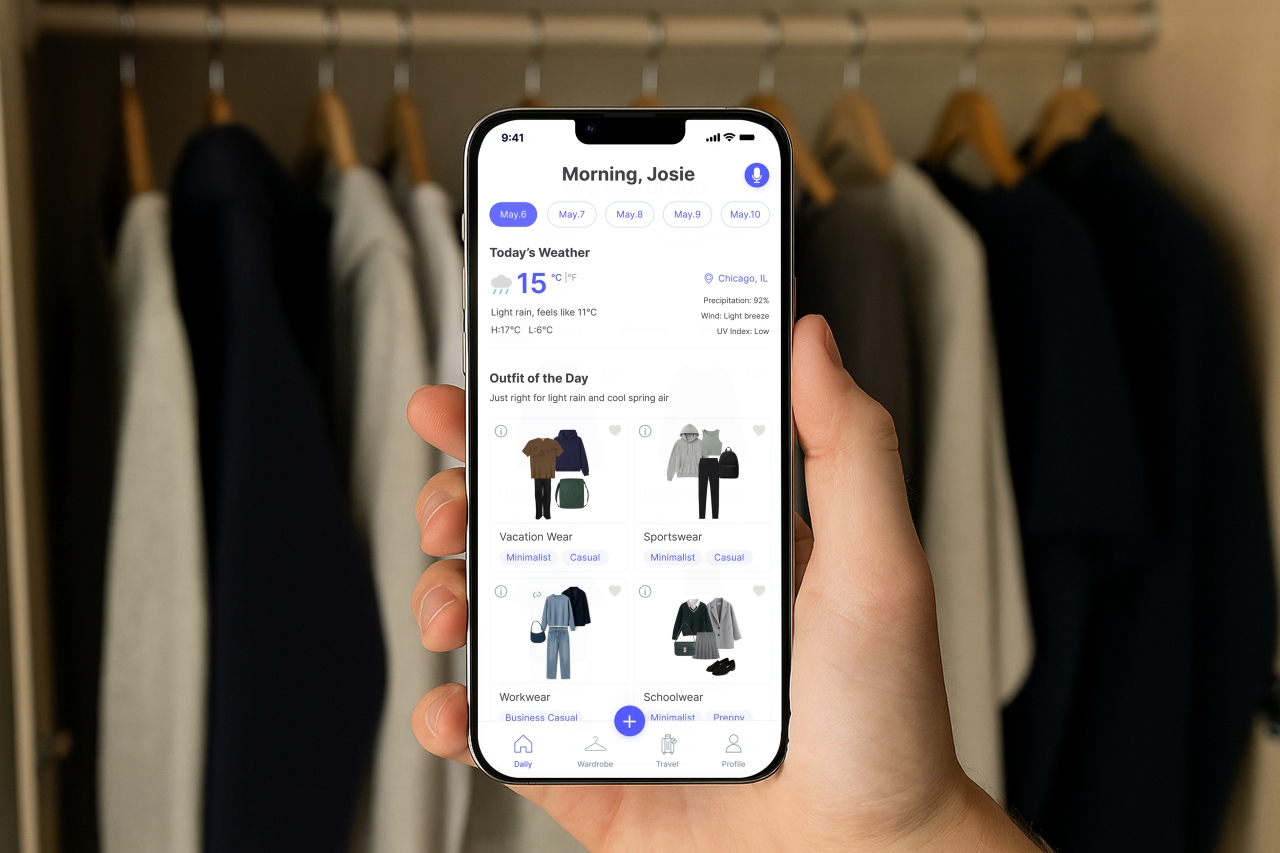
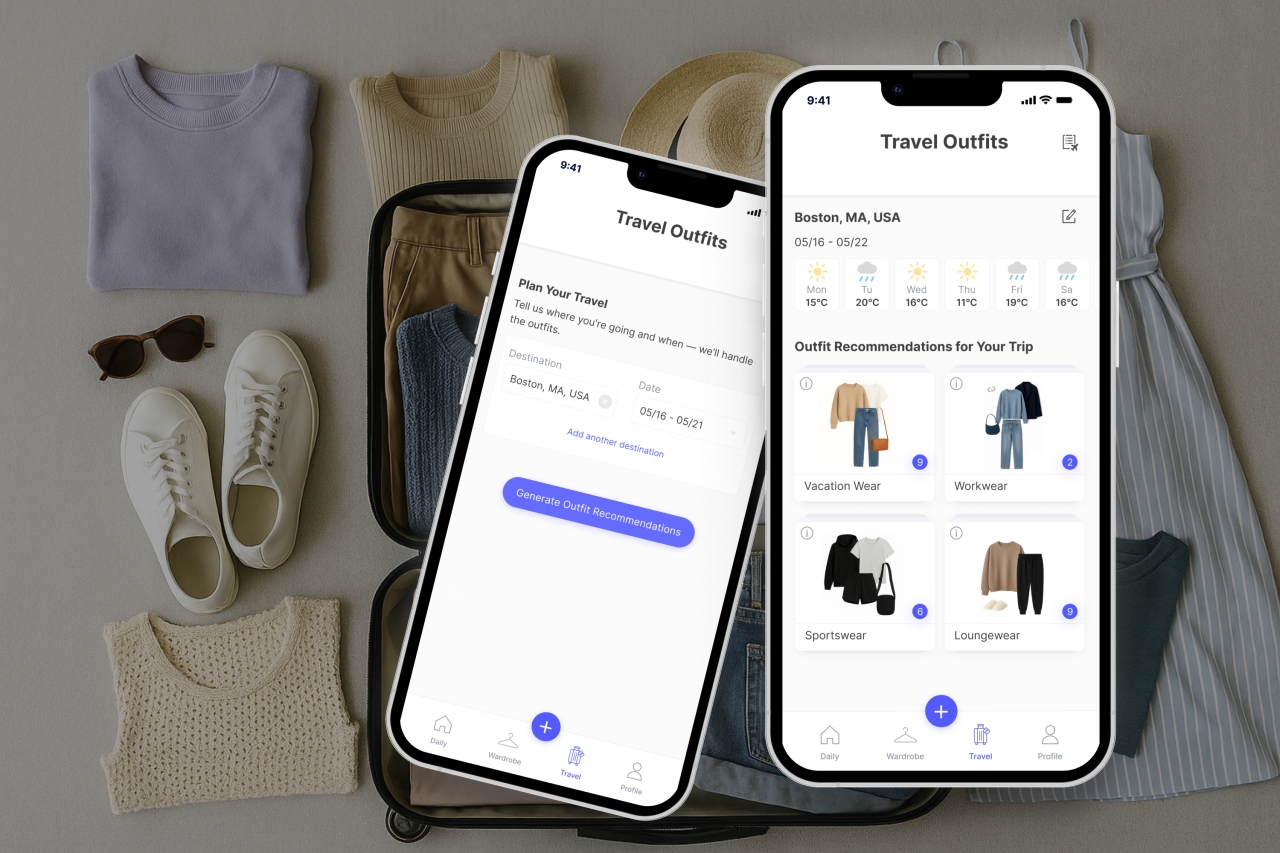
For example, in this project, I explored different ways for users to generate outfit recommendations. Through research and observation, I found that weather-based suggestions were the most intuitive and widely relevant entry point, followed by contextual factors like occasion. The system also leverages AI to learn user preferences over time.
By testing feasibility with different tools and iterating based on feedback, I was able to develop an experience that feels intuitive, adaptable, and relevant to a wide range of users.
One of the most unusual sources of inspiration for me came from something very ordinary.
For example, in this project, I observed how people use the weather forecast as part of their daily routine. It’s such a small and often overlooked behaviour, but it revealed a consistent pattern in how people make decisions about what to wear. This observation inspired me to use weather as a key driver in the design, transforming a routine action into a more meaningful and intuitive experience.
I wish more people understood that design is not a linear process—it’s about understanding people.
Good design comes from observing real behaviours, uncovering hidden needs, and iterating based on those insights. It’s about continuously questioning, learning, and refining. Some of the most valuable insights often come from iteration—and even from what doesn’t work.
I see it as a collaborative negotiation rather than a trade-off. My first priority is understanding both the client’s goals and the user’s needs. Once those are clear, I present design directions with a clear rationale, showing how they address business objectives while also solving real human problems.
By grounding discussions in evidence and empathy, it becomes easier to align expectations and move toward solutions that are not only effective but also meaningful and impactful in real-world use.
One challenge was defining a clear target audience, as outfits need vary widely across different people and contexts. This also introduced complexity around edge cases and inclusivity. Through user research, I identified a shared behaviour—most people consider the weather when deciding what to wear. This insight helped anchor the experience around weather-based outfit suggestions, creating a more universally relevant and intuitive entry point.
Another challenge was addressing cold-start scenarios in a way that felt natural and low-friction. I approached this by simplifying early interactions and allowing the system to gradually learn user preferences over time.
Overall, the process was about finding the right balance between personalisation and accessibility—designing an experience that feels both adaptable and immediately useful.
When I hit a creative block, I intentionally step away from the immediate problem and change my environment.
I find that creativity often comes from observing everyday life—how people behave, make decisions, and interact with the world around them. Many patterns are interconnected, and sometimes insights emerge when you look at a problem from a completely different context. By shifting perspective, even unrelated experiences can spark new ideas or help me reframe the challenge in a more intuitive way.
For me, creativity is less about forcing solutions and more about staying curious, observant, and open to unexpected connections.
One of the core values I bring into my design work is a strong commitment to human-centred thinking. While people’s experiences may look different on the surface, many of the underlying challenges and emotions are actually shared. That perspective helps me approach design with empathy—trying to understand not just the problem itself, but how people feel when they encounter it.
I often reflect on both my own experiences and those of others to uncover insights, especially by noticing subtle patterns in behaviour and decision-making. Ultimately, I aim to design solutions that resonate on a human level—solutions that not only address functional needs, but also acknowledge the emotional and experiential aspects of everyday life.
Stay curious. The more you observe and question the world around you, the better you’ll understand people—and that’s where good design begins.
I would love to collaborate with Don Norman. His book The Design of Everyday Things had a strong impact on me when I first transitioned into design, reshaping how I think about everyday interactions—not just what people do, but why they do it. I’m particularly inspired by his emphasis on human-centred design and making systems intuitive and understandable. That perspective continues to guide my work today, especially in creating experiences that support decision-making and align with real human behaviours.
One question I wish people would ask is: “How do you balance human intuition with AI in your designs?”
For me, AI should support human decision-making, not replace it. I see it as a way to reduce complexity and surface relevant suggestions, while still leaving space for human intuition, context, and personal judgment. In my work, I focus on designing systems where AI learns and adapts over time, but remains transparent and unobtrusive.
Ultimately, the goal is to create experiences where people feel guided by technology—not controlled—so that it enhances their decision-making while respecting their autonomy.
Click this link here to read about A Conversation with Jaehyeok Lee About His Everyday Design Experiences.