KINEO — Learning Through Play and Creation
Digital education increasingly relies on tools that prioritize consumption over understanding. In the context of...
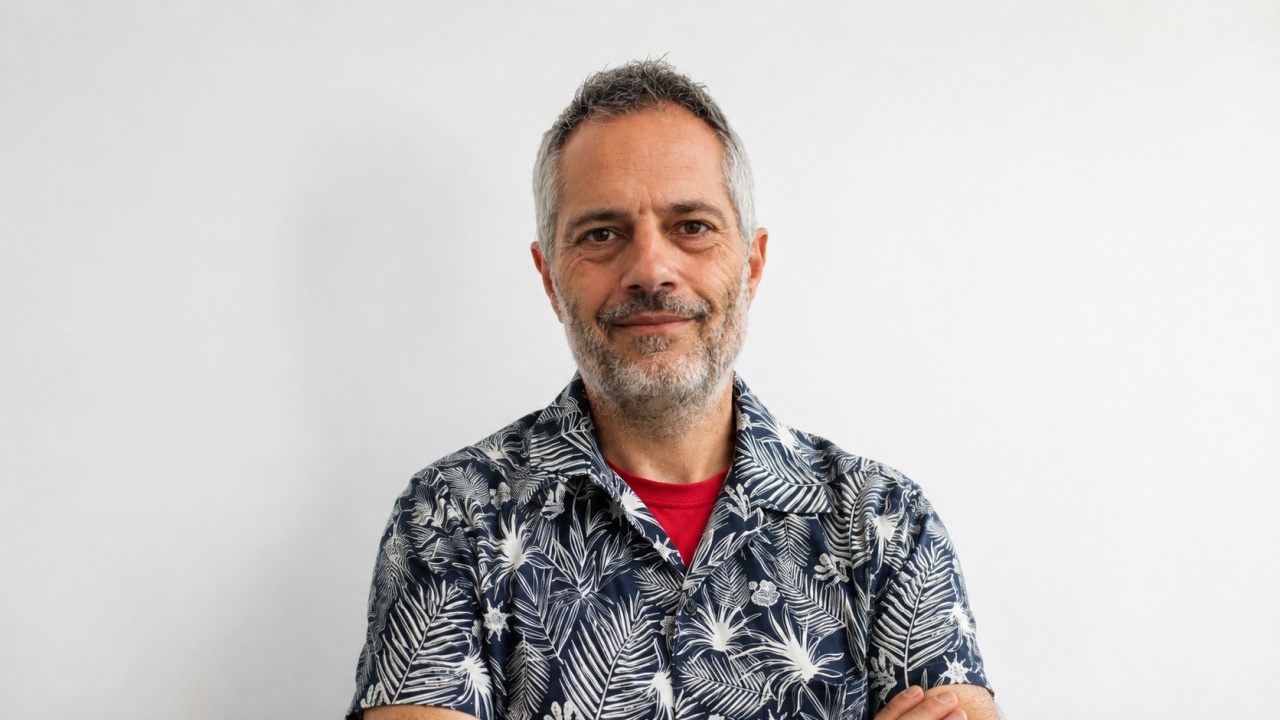
Joan Josep Miquel is a creative technologist and designer who views design as a process of exploration, reflection, and discovery. Drawing from his engineering background, he creates work that examines how technology and design shape the way people think, feel, and connect.
Thank you. It is truly an honor. My name is Joan J. Miquel, and I am a creative technologist based in Barcelona. My work exists at the intersection of design, technology, and thought, with education as one of its natural branches.
I did not arrive at design through a conventional path. My background in computer engineering led me to understand how systems work, but also to recognize a deeper question: why are they the way they are, and not otherwise?
At that point, design stopped being just a tool and became a language — a way to question, reinterpret, and, in a sense, reimagine the reality around us. What inspired me to pursue design was this realization: that designing is not only about creating objects or interfaces, but about shaping how we think, how we feel, and how we relate to the world.
For me, design is an act of questioning rather than answering. It is from this perspective that projects like KINEO emerge.
Being recognized at the Tokyo Design Awards means much more to me than receiving a prize; it is a validation of a way of thinking.
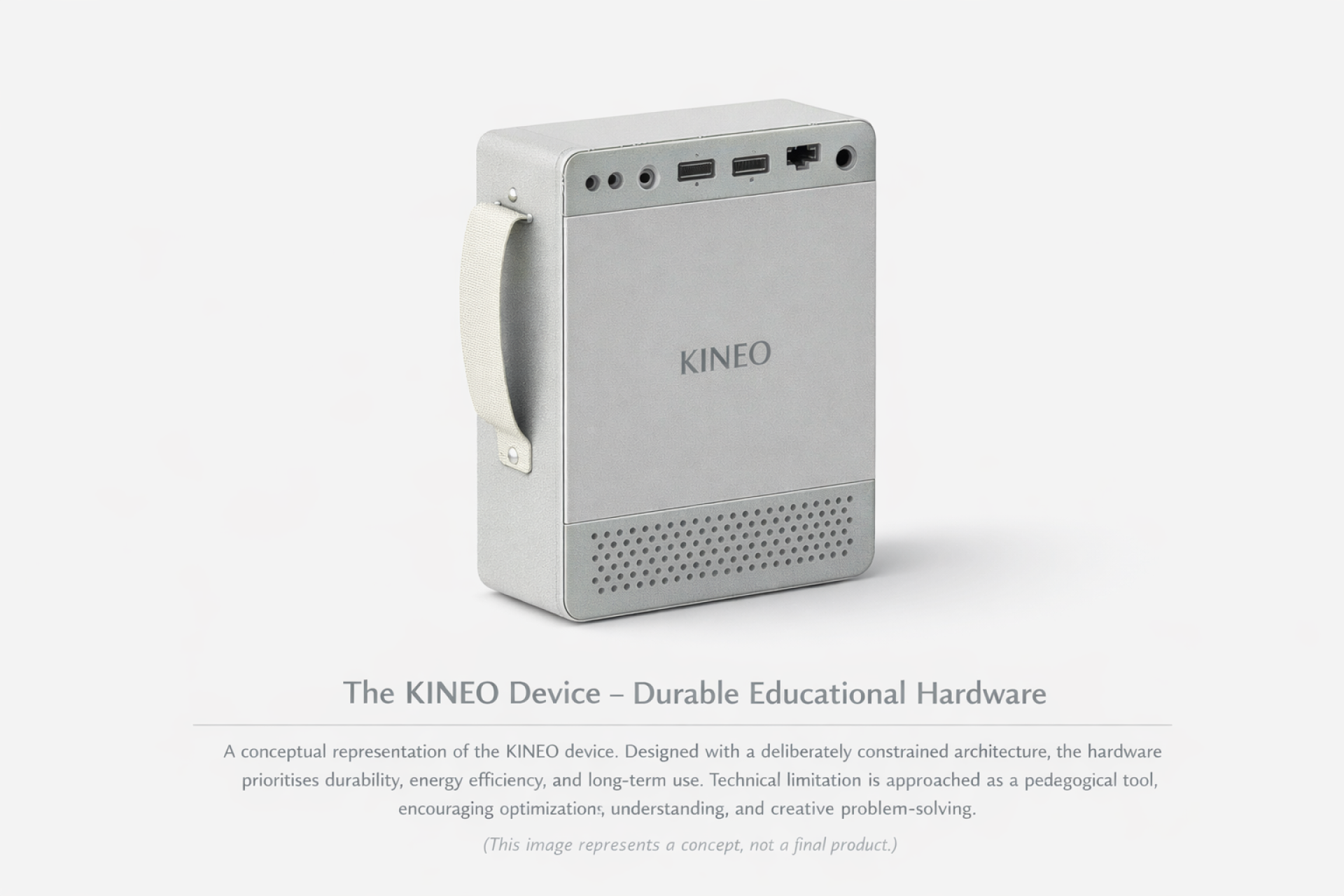
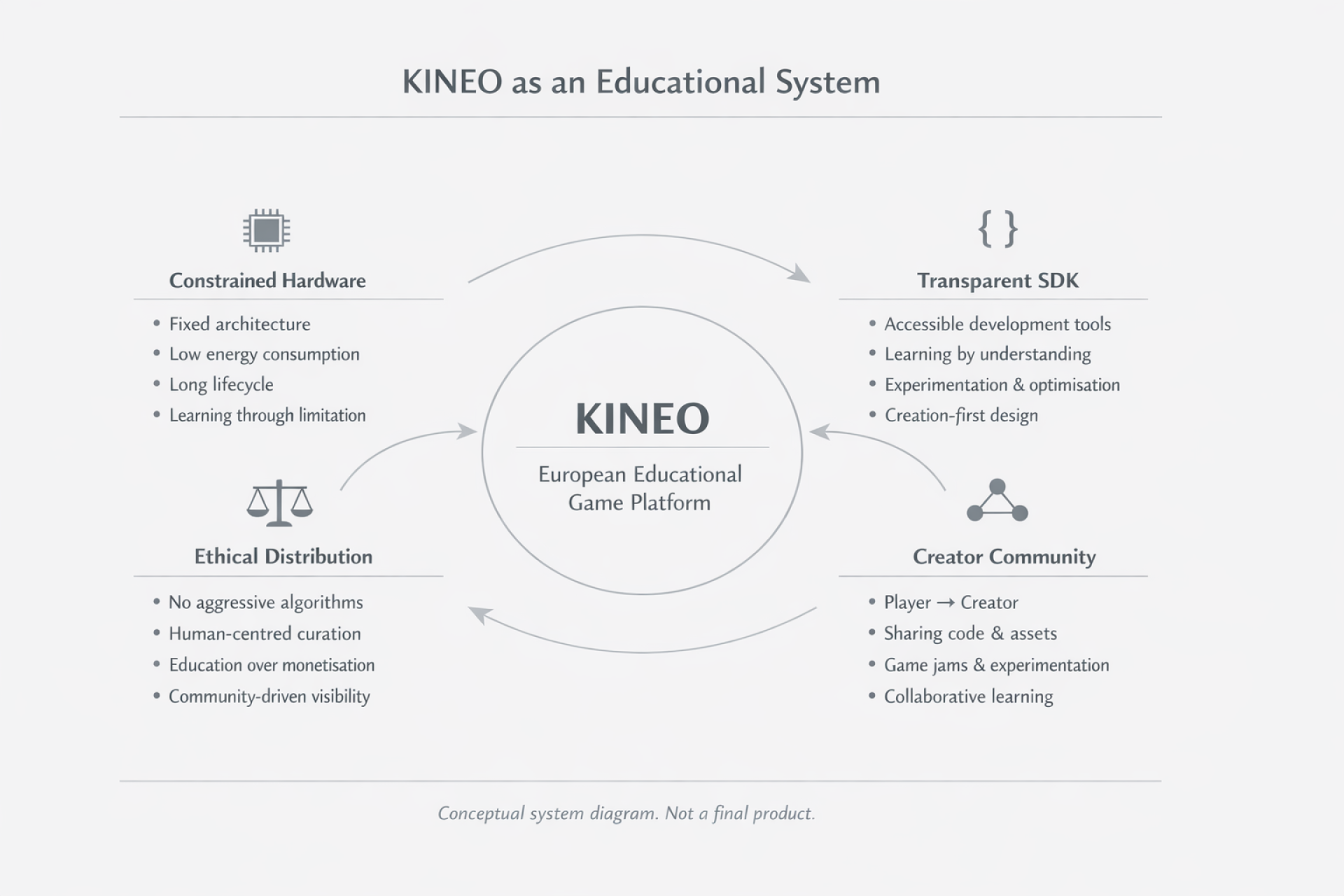
KINEO is not a conventional product, but a conceptual proposal that questions how we interact with technology and the role we play as users. This recognition shows that there is also space for ideas that do not aim only to optimize, but to challenge, provoke, and open new questions.
On a more personal level, this award represents something even more important: the recognition that my ideas have value — that they are valid — and that it is worth continuing to nurture them until they can become real.
In a global context where efficiency and immediacy are often prioritized, this recognition reinforces the importance of pausing, exploring alternative paths, and defending a more critical perspective on design.
It is also a strong motivation to continue developing KINEO and move it beyond a concept into a tangible experience. "Beyond recognition, it confirms that believing in an idea is the first step toward making it real."
This achievement has had a strong impact, especially at a personal and conceptual level.
As an independent creator, I do not work within a traditional agency structure, so the impact is not measured in team expansion, but in clarity and direction. This recognition has reinforced my creative path and given me greater confidence in pursuing ideas that challenge conventional approaches.
It has also opened new conversations and opportunities. Being recognized at an international level brings visibility, credibility, and the possibility to connect with people and platforms that share a similar vision.
More importantly, it has positioned KINEO not just as a concept, but as a project with real potential. It creates a bridge between idea and execution — making it easier to explore collaborations, development paths, and future applications.
At this stage, the most valuable outcome is not immediate growth, but momentum — the sense that the idea is moving forward and finding its place.
Experimentation is at the core of my creative process.
I do not see experimentation as a phase, but as a mindset. It is a continuous way of exploring possibilities, testing assumptions, and allowing unexpected directions to emerge. Many ideas do not start with a clear goal, but with a question or even a contradiction.
KINEO itself is a direct result of this approach. The initial idea was not to design a new platform, but to explore what would happen if we removed certain capabilities that we usually consider essential — speed, automation, or optimization. Instead of adding features, the experiment was about subtracting them.
This shift completely changed the direction of the project. What began as a technical exploration became a conceptual framework about creativity, learning, and interaction. For me, experimentation is not about finding quick answers, but about staying long enough in the uncertainty for something meaningful to emerge.
One of the most unusual sources of inspiration for me has been limitations themselves.
We usually see constraints as something to overcome, but I became interested in understanding what happens when you embrace them instead. This idea has been influenced not only by technology, but also by observing nature, where efficiency often comes from restriction, balance, and adaptation rather than abundance.
In the case of KINEO, the inspiration did not come from existing platforms, but from questioning their absence — imagining what a system would look like if certain capabilities simply did not exist.
This inversion — designing from subtraction rather than addition — became a key creative trigger. It shifted the focus from performance to experience, and from consumption to creation.
For me, inspiration does not always come from something visible or tangible. Sometimes it comes from what is missing, from what is reduced, or from what we take for granted.
One thing I wish more people understood is that design is not a linear process.
It is often perceived as a sequence of steps that lead efficiently to a final result, but in reality, it is much closer to exploration than execution. It involves uncertainty, doubt, and constant redefinition.
A significant part of the process is invisible. It happens in moments of reflection, in failed attempts, and in questions that do not have immediate answers. These moments are not inefficiencies — they are essential.
Design is not only about solving problems, but also about discovering which problems are worth solving in the first place. When we reduce design to outcomes alone, we lose the depth of the process that gives meaning to those outcomes.
I see this balance not as a conflict, but as a dialogue.
Client expectations are essential because they define the context, the needs, and the real-world constraints of a project. However, design also has the responsibility to go beyond what is initially expected — to reveal possibilities that may not be visible at the beginning.
In my case, many of my projects are self-initiated, so in a way, I am also the client. This allows me to explore ideas more freely and design from a place of genuine interest — creating what I truly believe in and what I would like to exist.
Even then, I approach my own ideas with the same level of questioning and discipline. Being both creator and “client” requires a constant internal dialogue, where intuition and critical thinking must stay in balance.
When working with external collaborators, the process remains similar: listening, understanding, and then expanding the vision rather than simply responding to it. When this balance works, the result is something neither side could have defined alone.
One of the main challenges was defining something that does not yet exist.
KINEO is not a conventional product, so there was no clear reference point or established category to follow. This meant working in a space of uncertainty, where many decisions had to be built from first principles rather than existing models.
Another challenge was resisting the natural tendency to make the concept more familiar or conventional. It would have been easy to adapt KINEO to fit existing expectations, but doing so would have diluted its core idea.
To overcome this, I focused on clarity of intent. Every decision had to align with a central question: does this reinforce the purpose of the project, or does it move it closer to something already known?
At the same time, I embraced iteration — not as a way to refine a fixed solution, but as a process of discovering what the project truly needed to be. In this sense, the challenge was not only to design KINEO, but to understand it.
I don’t see creative blocks as something to fight against, but as a signal.
When a block appears, it usually means that something is not fully understood yet, or that I am trying to force a direction that does not naturally belong to the idea. Instead of pushing harder, I step back.
One of the ways I recharge my creativity is by shifting to a different project or starting a new idea. This change of focus allows me to think more freely, without the pressure of solving the original problem. When I return to the initial project, I often do so with a fresh perspective and new connections.
I also rely on observation — looking at nature, listening to music, or simply allowing time for the idea to settle without pressure. For me, creativity is not something that disappears — it is something that needs space to reorganize.
My designs are shaped by a combination of curiosity, critical thinking, and a constant need to question what is taken for granted.
One of the core values I bring into my work is the idea that design should not only solve problems, but also reveal them. I am interested in exploring what lies beneath systems — their assumptions, their limitations, and their impact on how we think and behave.
My background in technology has given me a structured way of understanding systems, while my connection to education has reinforced the importance of clarity, learning, and accessibility. These elements naturally find their way into my designs.
I am also deeply influenced by observation — from nature, but also from everyday inputs such as a news article or a small detail that captures my attention. Creativity, for me, can emerge from almost anywhere.
Very often, I associate ideas that at first seem unrelated. By connecting them, something new begins to take shape — an idea that did not exist before that moment. Intuition plays an important role as well. Many insights do not come from a linear process, but from these unexpected connections.
Ultimately, I try to create designs that are not only functional, but reflective — designs that invite people to think, not just to use.
My advice would be to not chase success directly, but to focus on developing a way of thinking.
It is easy to follow trends or replicate what already works, but real value comes from building your own perspective — understanding how you see the world and what you want to question or contribute.
Do not be afraid of uncertainty. The creative process often involves doubt, iteration, and moments where nothing seems clear. These are not signs of failure, but part of the path. Also, give importance to your ideas, even the ones that seem small or unconventional. Sometimes, the difference comes from exploring what others overlook. And most importantly, be patient. Meaningful work takes time to mature.
If I could collaborate with a designer, it would be Dieter Rams — and, from a more experimental and visionary perspective, also Buckminster Fuller.
What I find most inspiring about Rams is not only the aesthetics, but the clarity of thought behind his work. His approach was rooted in purpose, restraint, and a deep understanding of how people relate to objects. His principle of “less, but better” strongly resonates with my own exploration in projects like KINEO, where subtraction and limitation become part of the creative process.
At the same time, Buckminster Fuller represents a radically different but complementary mindset — one driven by ultra-creative thinking, systemic vision, and the ability to imagine entirely new ways of inhabiting and understanding the world.
A collaboration between these two perspectives would not be about combining styles, but about exploring the tension between reduction and expansion, simplicity and experimentation. I believe that meaningful design today lies somewhere between these two forces — the discipline to remove, and the imagination to reinvent.
One question I wish people would ask me is:
“What is KINEO really trying to change?”
My answer would be: it is trying to change our relationship with technology.
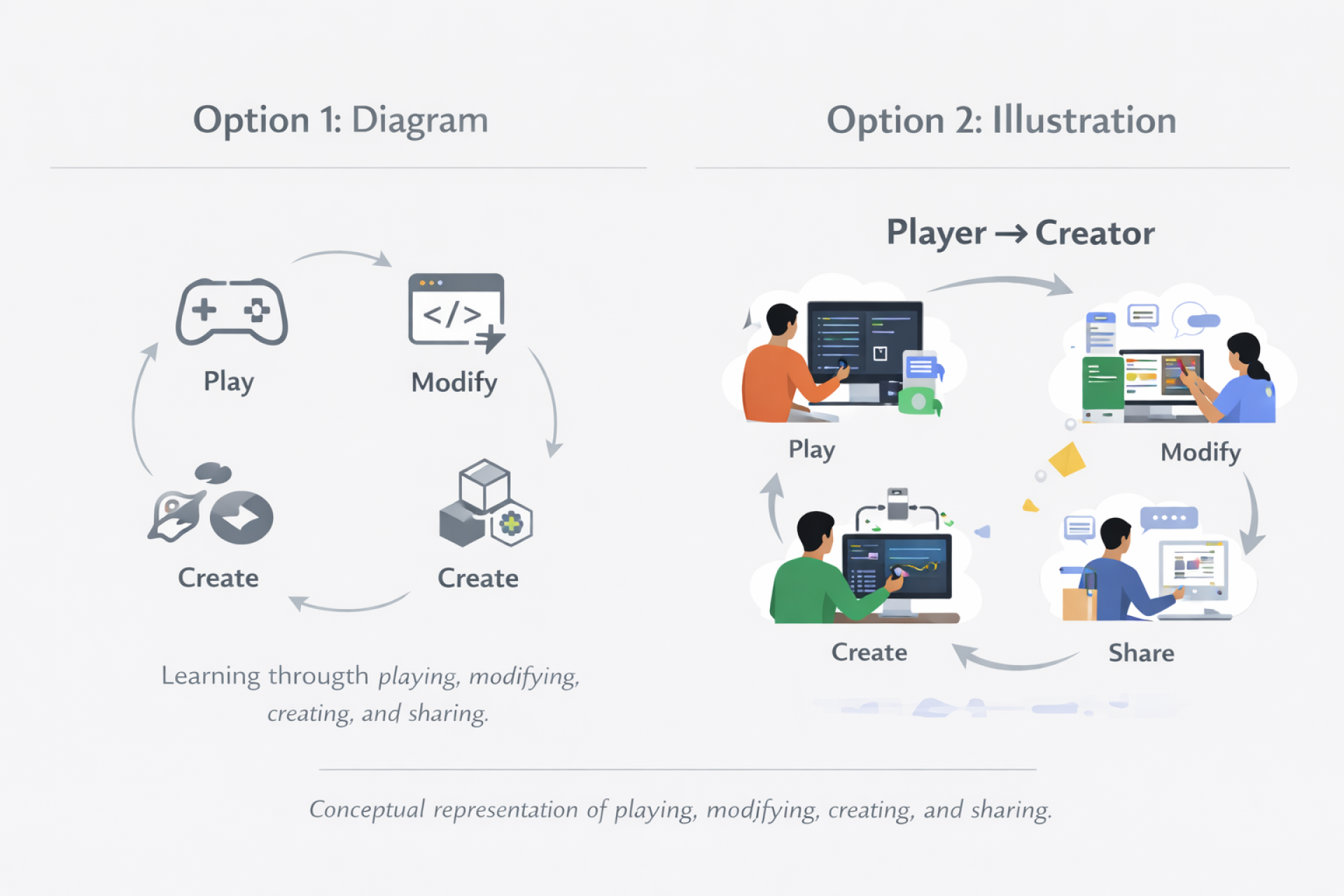
Most systems today are designed to make things easier, faster, and more efficient. While this brings clear benefits, it can also reduce our level of engagement, curiosity, and creativity. KINEO proposes a different approach — not by rejecting technology, but by redefining how we interact with it. It invites the user to become active again, to think, to explore, and to create rather than simply consume.
In that sense, KINEO is less about a product and more about a shift in perspective. It is about asking whether progress should always mean removing effort, or whether sometimes effort is precisely what gives meaning to the experience.
Read about An Interview with Danilo Di Lorenzo Di Michele Between Idea and Object in Design Experimentation here, a winner of the inaugural 2026 Tokyo Design Awards.