Pulse One — Sculptural Keyboard
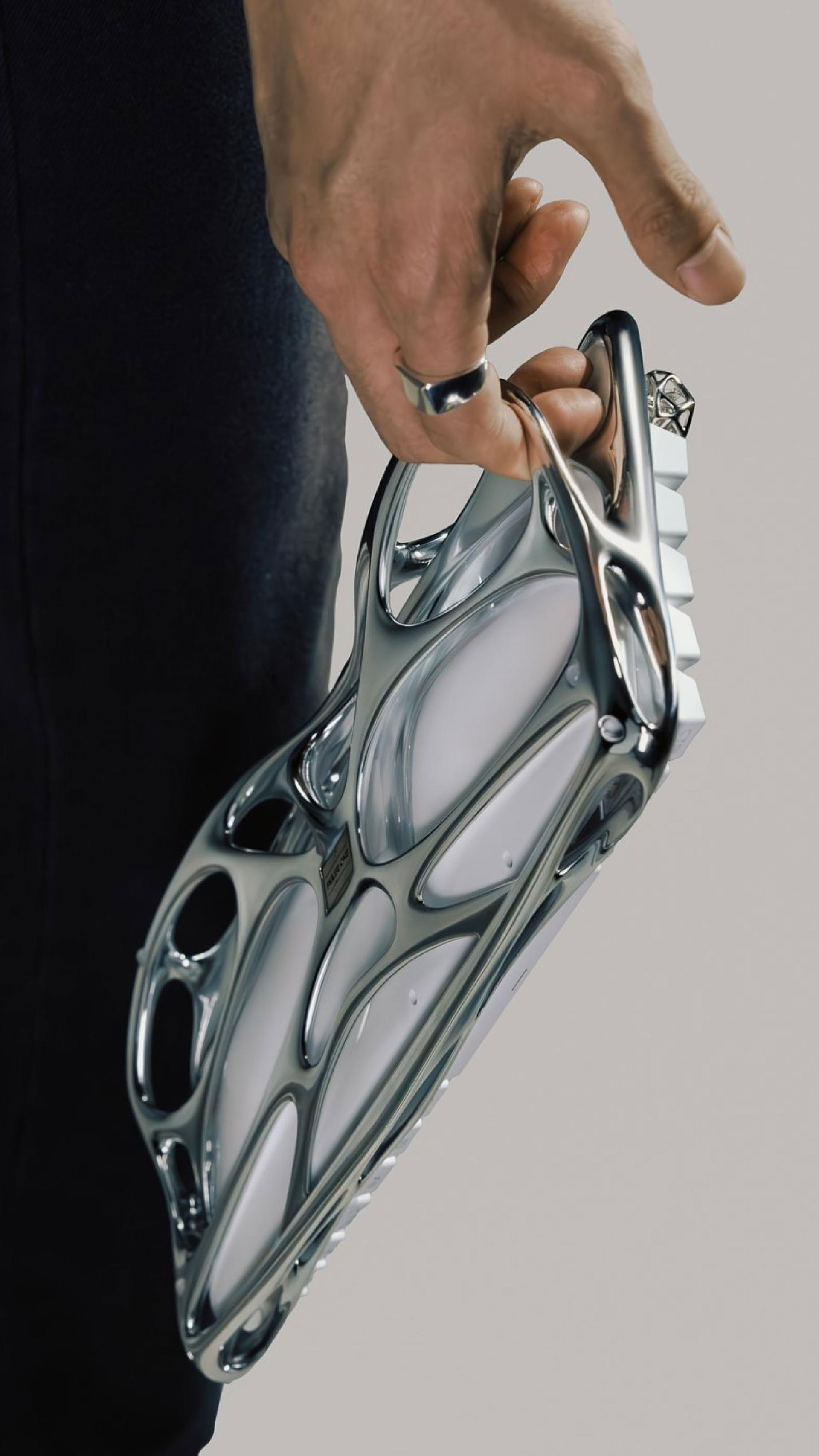
Pulse One reimagines the mechanical keyboard as a sculptural object for the modern workspace. Instead...
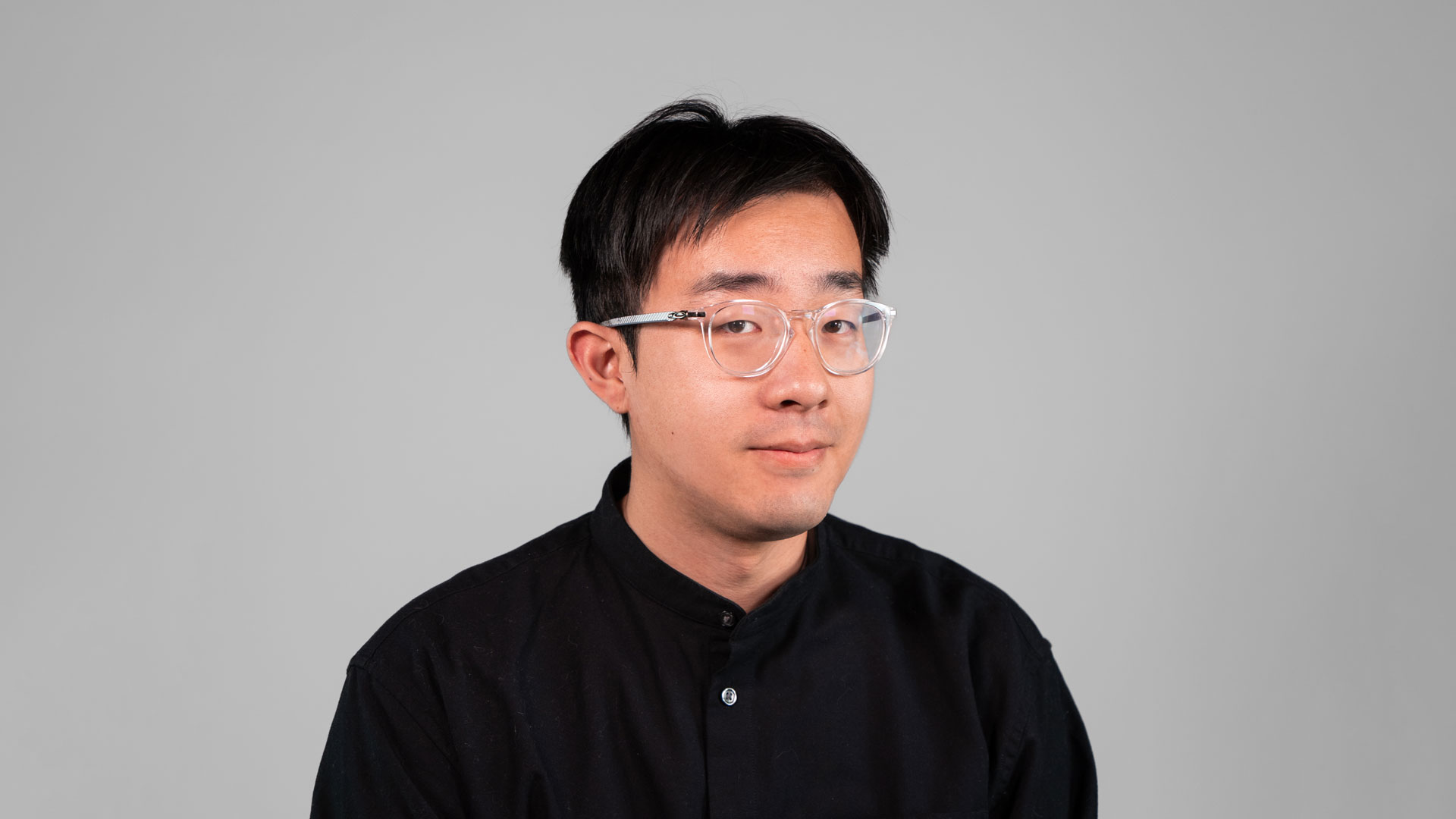
Haoyuan Lu is a furniture and product designer who transforms ideas into refined physical objects through a process that blends industrial design, digital modeling, and hands-on fabrication. His work explores the balance between aesthetics, engineering, and human interaction.
I’m a furniture and product designer based in New York. My work exists between industrial design and hands-on fabrication, often moving between digital modeling and physical prototyping to refine ideas and form.
I originally studied coding in college, but over time, I realized that while I appreciated the logic behind it, design gave me a much stronger sense of fulfillment. Being able to take an idea and transform it into something physical that people can use and interact with ultimately led me toward industrial design, where aesthetics and engineering come together.
It’s definitely meaningful, mainly as a form of validation for the way I approach design.
Much of my process is highly detail-driven and shaped through multiple iterations, especially with something like a keyboard, where subtle differences in proportion, material, or feel can significantly impact the overall experience. Having that work recognized tells me those decisions are being seen and understood.
At the same time, I see it less as a finish line and more as encouragement to continue pushing the work further. It reinforces my focus on refining details, exploring materials, and approaching industrial design with precision and intention.
It’s had a positive impact, particularly in terms of visibility and credibility.
On a personal level, it reinforces the direction I’ve been pursuing within industrial design, especially my focus on detail, materiality, and user experience. It also helps communicate the value of that approach more clearly to collaborators and clients through a level of external recognition.
Beyond that, it has opened up new conversations with both potential clients and people across related creative fields, leading to opportunities for new projects, collaborations, and broader industry dialogue.
Overall, I see it less as a single milestone and more as momentum — a stronger foundation to continue developing future work with the same level of precision and intention.
Experimentation is a major part of my process, mainly because I’m involved in multiple stages — shaping, engineering, and even parts of the supply chain. That means many decisions don’t just stay on screen; they have to function in the real world.
I tend to approach design as an iterative loop rather than a fixed plan. I’ll start with proportions and form, move into engineering constraints, and then adjust again once I understand how the product will actually be manufactured. Sometimes a small change in machining methods or material availability can push the design in a completely different direction, so staying flexible is essential.
For the keyboard, one challenge was balancing the visual form with internal structure and manufacturability. Elements like wall thickness, internal mounting, and edge profiles all needed to work together cohesively. I went through multiple prototypes to evaluate not only how it looked, but also how it felt in use and how consistently it could be produced.
Being closely connected to the supply chain also changes how I experiment. It’s not just about exploring form — it’s about testing finishes, tolerances, and production methods early, so the final design remains connected to how it’s actually made.
One of the more unusual sources of inspiration for me is actually failure during production.
When something doesn’t turn out as expected — whether it’s a machining mark, a tolerance issue, or even a distortion from metal 3D printing — I tend to see it less as a mistake and more as information. Sometimes those imperfect results reveal qualities that feel more interesting or honest than the original intent.
For example, slight surface inconsistencies or unexpected transitions can suggest a different way to resolve an edge or joint. Instead of correcting everything back to a perfect CAD model, I’ll sometimes lean into those outcomes and refine them into the final design.
It’s not a conventional source of inspiration, but being closely involved in shaping, engineering, and the supply chain allows me to experience those moments firsthand. Over time, that’s influenced how I approach design — less about forcing a fixed idea, and more about responding to what emerges through the making process.
One thing I wish more people understood is how much of the design process happens after the “design” appears finished.
A lot of the real work happens in refinement — adjusting proportions by small amounts, resolving how parts come together, and dealing with tolerances, materials, and manufacturing constraints. Especially in industrial design, what looks like a simple object usually goes through countless iterations before it truly functions well and can be produced consistently.
Because I’m involved in shaping, engineering, and parts of the supply chain, I see that process very closely. A decision that appears purely aesthetic often carries technical implications, and vice versa.
So the process is less linear and more of a constant back-and-forth — balancing design intent with real-world constraints until everything feels fully resolved.
I try not to see them as two opposing forces.
Usually, the process starts with understanding what the client actually cares about — which is sometimes different from what they initially say upfront. Once that becomes clear, I frame my ideas in a way that aligns with those goals rather than presenting something completely separate.
At the same time, I think it’s important to maintain a clear point of view. If something doesn’t feel right from a design or production perspective, I’ll explain why — whether it relates to usability, manufacturing, or long-term quality. Being involved in shaping, engineering, and supply chain helps because I can ground those decisions in something practical rather than purely subjective.
So it becomes less about compromise and more about conversation. The goal isn’t to push my ideas over theirs, but to arrive at a solution that works from both perspectives and ultimately holds up in the final product.
One of the main challenges was balancing precision in the design with what was actually feasible in production — including production cost.
For something like a keyboard, tolerances are extremely tight, and even small inconsistencies can affect both the feel and overall quality. At the same time, I was working across shaping, engineering, and parts of the supply chain, so every decision had to hold up visually, structurally, and financially.
Cost became a major factor, especially when combining processes like CNC machining and metal 3D printing. It’s easy to design something that works in theory but becomes too expensive or inefficient to manufacture. Part of the challenge was constantly evaluating where to simplify, where to maintain complexity, and how to get the most out of each process.
I addressed that primarily through iteration and staged testing — adjusting geometry, refining components, and sometimes redesigning parts to reduce unnecessary complexity without losing the core idea. Being closely connected to the supply chain helped significantly, since I could make more informed decisions early rather than reacting later in the process.
In the end, it was about finding a balance where the design still feels precise and intentional while remaining realistic to produce at a reasonable cost.
When I hit a creative block, I usually step away from the work completely and go ride my motorcycle alone.
It helps because it’s so different from design — there’s no screen and no constant decision-making in the same way. It becomes more about focus and being present, which helps clear my head quickly. After a while, I naturally start thinking about the problem again, but from a much more relaxed perspective.
I’ve found that forcing ideas when I’m stuck rarely works. Creating that distance, even briefly, usually helps me return with a clearer mindset.
A major influence for me is treating fashion and everyday objects as part of the same visual language.
I’m interested in how objects feel to interact with — not just functionally, but visually and materially. Fashion does this especially well, where small details, proportions, and material choices can completely shift how something is perceived. I try to bring that same sensitivity into product and furniture design.
At the same time, I value restraint. I don’t like adding details purely for decoration — everything should have a reason, whether it comes from function, manufacturing, or how the object evolves through use over time.
A lot of my work exists in that balance: keeping things practical and grounded while paying close attention to proportion, material, and subtle details that make everyday objects feel more intentional and considered.
I’d say spend more time understanding how things are actually made.
It’s easy to focus on visuals early on, but design truly starts to come together once you understand materials, tolerances, and production processes. That knowledge changes how you make decisions and makes your work far more grounded.
Also, don’t rush the process. A lot of good design comes from iteration — making small adjustments, testing ideas, and refining them over time. Being patient with that stage is important.
And finally, try to stay close to real objects. Whether it’s building prototypes, taking products apart, or working directly with manufacturers, that hands-on experience will teach you far more than simply working on a screen.
If I could collaborate with any designer, it would be Pinky Lai.
I really admire the clarity and restraint in his approach to design, especially in his work on the Porsche 911. It’s a great example of how to evolve a product without losing its core identity — making precise changes that improve proportion, performance, and usability over time.
One question I wish people asked more often is: why a keyboard, and why does it matter now?
In a screen-first, AI-driven era, keyboards are becoming less central. More interaction is shifting toward voice, touch, and automated systems — and that’s exactly why I’m interested in them.
For me, designing a keyboard is almost a form of counterpoint. I wanted to take something traditional and rethink it in a way that feels more relevant today — more expressive, more intentional, and almost futuristic in its presence. Not just functional, but something that feels distinctly physical in an increasingly digital world.
In that sense, it’s a slightly rebellious move. As everything becomes more invisible and automated, I’m interested in creating a physical object people can still connect with directly — something you can see, touch, and use deliberately.
So ultimately, it’s less about the keyboard itself and more about what it represents: preserving physical interaction at a time when so much of everyday experience is becoming abstract.