.jpg)
International vs Local Awards | Which Is Better for Marketing?
OCTOBER 14, 2026
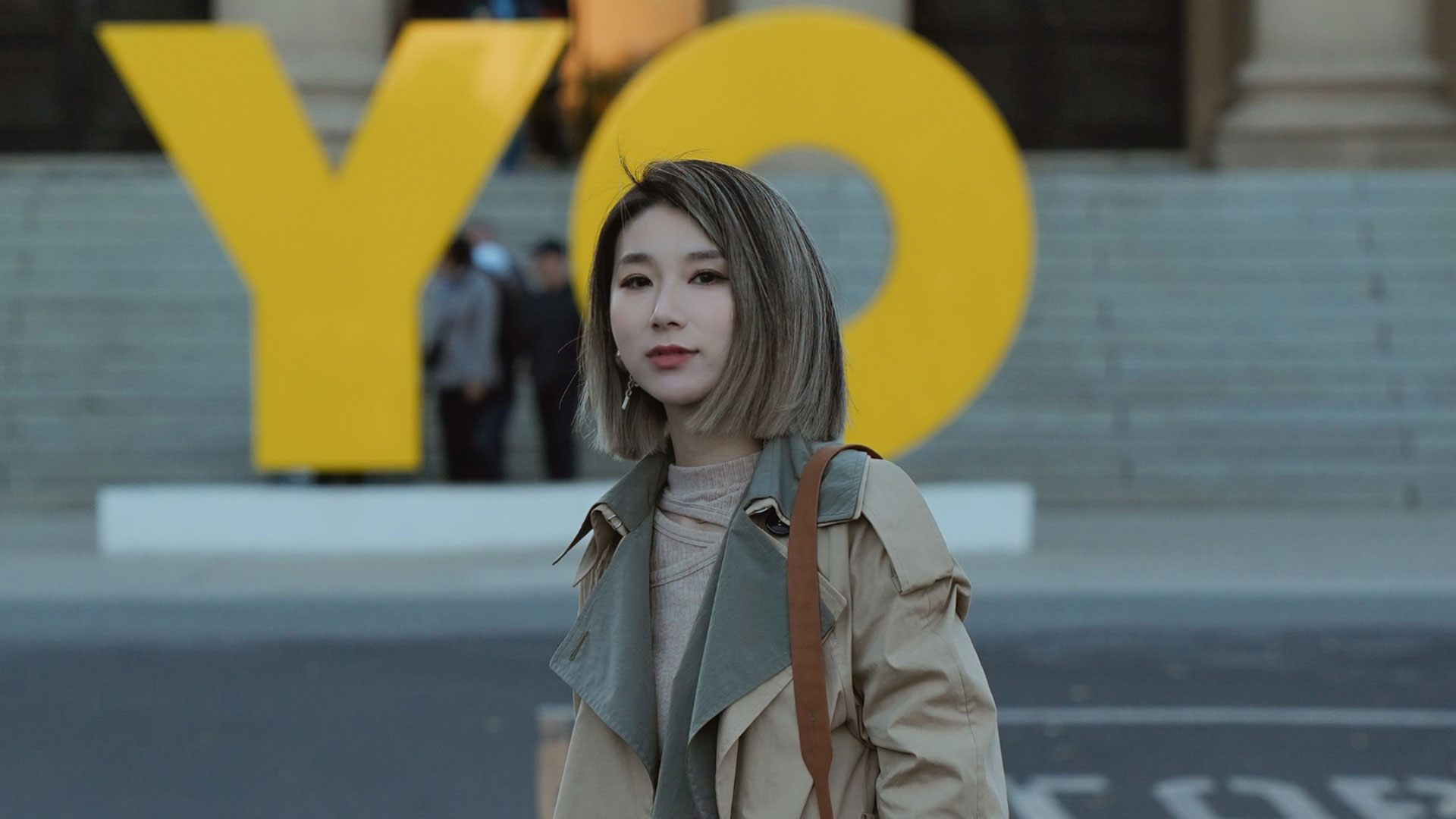
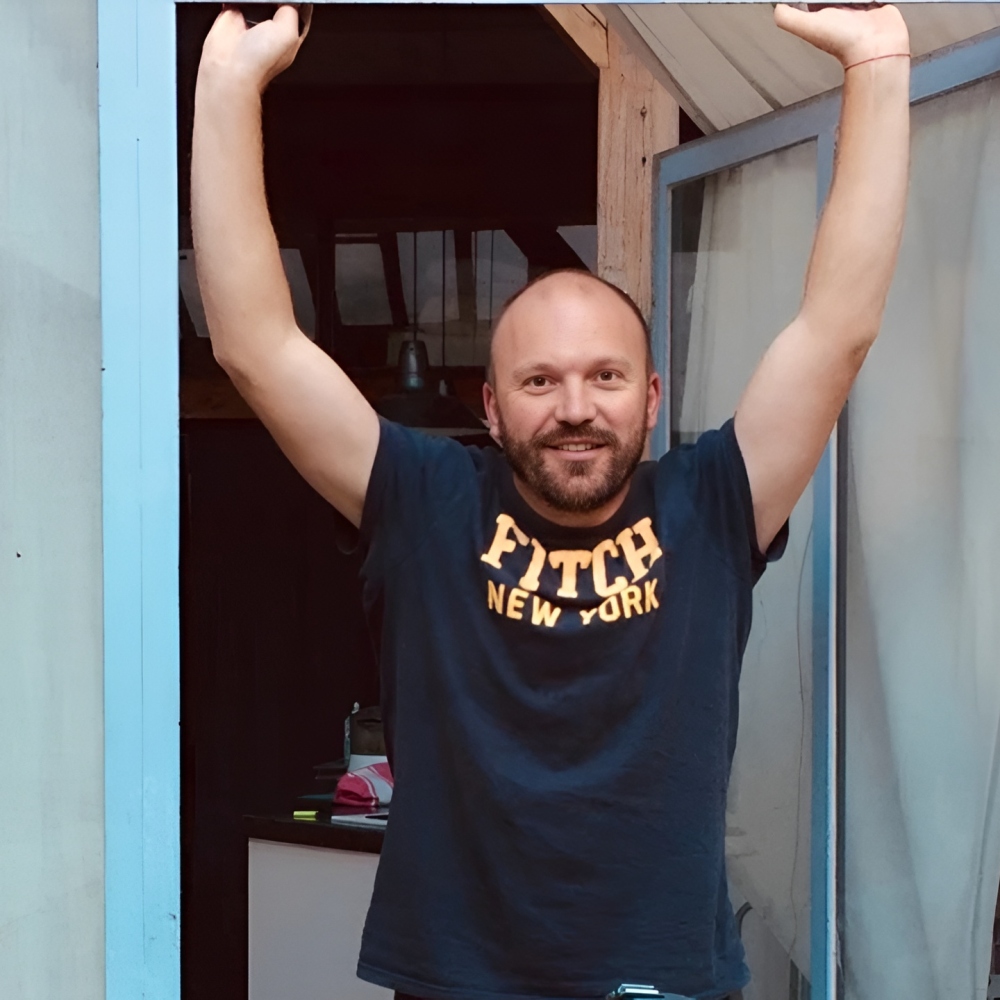
I am Mingyang He, a multidisciplinary designer focused on interaction and experiential design. My work explores how thoughtful design shapes the way people engage with products, interfaces, and spaces, always placing human experience at the center across every scale.
My journey into design began with architecture, where I developed a strong understanding of how physical space influences the way people feel, move, and connect. After nearly a decade in the field, however, I began to realize that architecture is ultimately limited to physical space, while interaction design offers far broader possibilities.
This realization led me to pursue a Master’s degree in Interaction Design, where I found a way to bridge spatial and digital experiences. By combining architectural thinking with interaction design, I discovered a practice that allows me to create more immersive and human-centered experiences across both physical and digital environments.
What continues to inspire me most is the challenge of making design “disappear” — creating intuitive, engaging experiences so seamless that users simply connect with them naturally, without noticing the design behind them.
What makes this recognition especially meaningful to me is that it validates one of my core design beliefs: great experiences don’t instruct people — they gently encourage growth in quiet, meaningful ways.
This recognition reinforces my belief that emotionally driven design can create that kind of subtle impact, while giving me greater confidence to continue pursuing work that genuinely resonates with people on a deeper level. It has also provided a meaningful platform for my perspective as a multidisciplinary designer to reach a wider audience.
This is the first design award I’ve received, and it marked a genuine milestone in my career. Beyond the recognition itself, the achievement gave Curio greater credibility and made it easier to introduce the project in conversations with potential investment partners who could help bring the concept to life.
Right now, I’m using that momentum to prepare Curio for a public launch, and this recognition feels like the right foundation to continue building from.
Experimentation is fundamental to the way I design. I never want to build something based purely on assumptions. For me, user interviews are not simply a validation step — they’re often where the most unexpected and meaningful directions emerge. With Curio, early interviews completely reshaped my assumptions about motivation and habit-building, pushing the concept in ways I never would have discovered on my own.
Experimentation continues throughout the prototyping phase as well. A/B testing different interaction flows helped me understand what genuinely resonated emotionally with users versus what I only assumed would work. That gap between designer intention and user reality is where the most honest design decisions happen, and I’ve learned to be just as curious about being wrong as I am about being right.
Honestly, my most unusual source of inspiration is simply people. I don’t just conduct interviews from a script — I love observing how people naturally interact with spaces, where they pause, what captures their attention, and what they overlook.
There’s an incredible amount of design insight hidden in those unscripted moments that formal research settings often miss. One of my favorite things is having spontaneous conversations with strangers, because a casual interaction with someone I may never meet again can sometimes reveal more genuine perspectives than any structured method.
People are remarkably honest when nothing feels at stake. For a designer deeply interested in human behavior, the world itself becomes one continuous, evolving research study.
One thing I wish more people understood is that the most important design work happens before anything is actually designed. People often see only the final product — the polished interface, the seamless interaction, the elegant layout — and assume that’s where all the effort lives.
But the real work happens much earlier: in the research, the observation, and the unexpected questions asked before a single pixel is ever placed on the canvas.
Honestly, as an early-career designer, this is something I’m still learning, and I think it’s a lifelong process no matter where you are in your career. What I’ve come to understand is that compromise doesn’t necessarily mean surrender.
From my experience, when client expectations and creative vision don’t immediately align, the real challenge is uncovering the shared goal beneath both perspectives. I’ve also learned that constraints are not the enemy of creativity. In many cases, limitations can push ideas further than complete creative freedom ever could.
Some of my most interesting design decisions have come from working within constraints I initially resisted, because those moments often force you to rethink assumptions and discover solutions you would never have arrived at otherwise.
The biggest challenge was designing for something deeply abstract, because curiosity is not a feature you can simply build, but a feeling you have to cultivate. Translating that into a concrete UX system initially felt almost contradictory, since the moment you overdesign an experience meant to feel spontaneous, you risk losing the very quality you’re trying to create.
The way I worked through that challenge was by returning to people. The early user interviews were incredibly humbling: 85% of participants described feeling trapped in repetitive routines, lacking the motivation not only to sustain habits, but even to begin. That research grounded the design in real emotional territory and helped shape a framework built around five emotional triggers capable of creating retention without ever feeling manipulative or forced.
The other major challenge was restraint — understanding when to step back, when to give users space, and when adding more would actually weaken the quiet impact I was aiming for. That tension between doing enough and doing too much is something I’m still learning to navigate, but Curio taught me that some of the most powerful design decisions are often the ones you intentionally choose not to make.
When I hit a creative block, I step away from screens entirely. For me, the best creative reset is something physical — whether it’s surfing, bouldering, or simply driving down the California coast with no particular destination in mind.
There’s something about entering a completely different mode of problem-solving that quietly untangles whatever my mind has been stuck on.
The value I bring into my design most consistently is empathy — specifically, the kind of empathy rooted in observation rather than assumption.
Growing up between cultures and building a cross-disciplinary career taught me that there is never just one way people experience the world. That awareness naturally shapes everything I design, constantly pushing me to consider who might be left out and what it would take to make people feel genuinely included.
My advice is to never design for design’s sake, but to always anchor your work in genuine human experience. That starts with becoming a great observer before becoming a great maker. From there, stay open across disciplines.
Some of the most valuable design insights come from unexpected places — whether from a different field, an unfamiliar medium, or even a constraint you initially resist. The broader your perspective becomes, the more expansive your creative possibilities will be.
And learn to embrace iteration, because design is never a linear process. The detours, uncertainty, and moments of doubt are not obstacles — they are often what lead you to the most meaningful outcomes.
If I could collaborate with any designer, it would be Refik Anadol. His work exists at the intersection of data, AI, and immersive spatial experience — an area that feels especially exciting to me as someone constantly exploring across disciplines.
A collaboration with Refik would challenge me to think more deeply about how interaction design and spatial storytelling can operate at an expansive scale, and how data-driven systems can become tools for genuine emotional connection rather than simply visualization. For a designer working between physical space and digital experience, that kind of exploration feels like a meaningful direction for the future of my practice.
I wish people would ask: “How do you know when a design is finished?”
My answer would always be: it’s finished when it stops feeling like design. Not when every pixel is perfect, but when the experience becomes so natural that users never stop to think about the hand behind it. That’s the standard I hold myself to — and honestly, it’s a standard you can never fully reach, which is exactly what keeps me going.
Most design feedback lives at the surface: Is it beautiful? Is it usable? But the deeper question I’m always asking is whether the work makes someone feel something unexpected. Does it quietly shift the way they see themselves or the world, even in a small way?
That invisible emotional layer is the part of design I care about most, and I wish more people asked about it because that’s where my work truly begins.