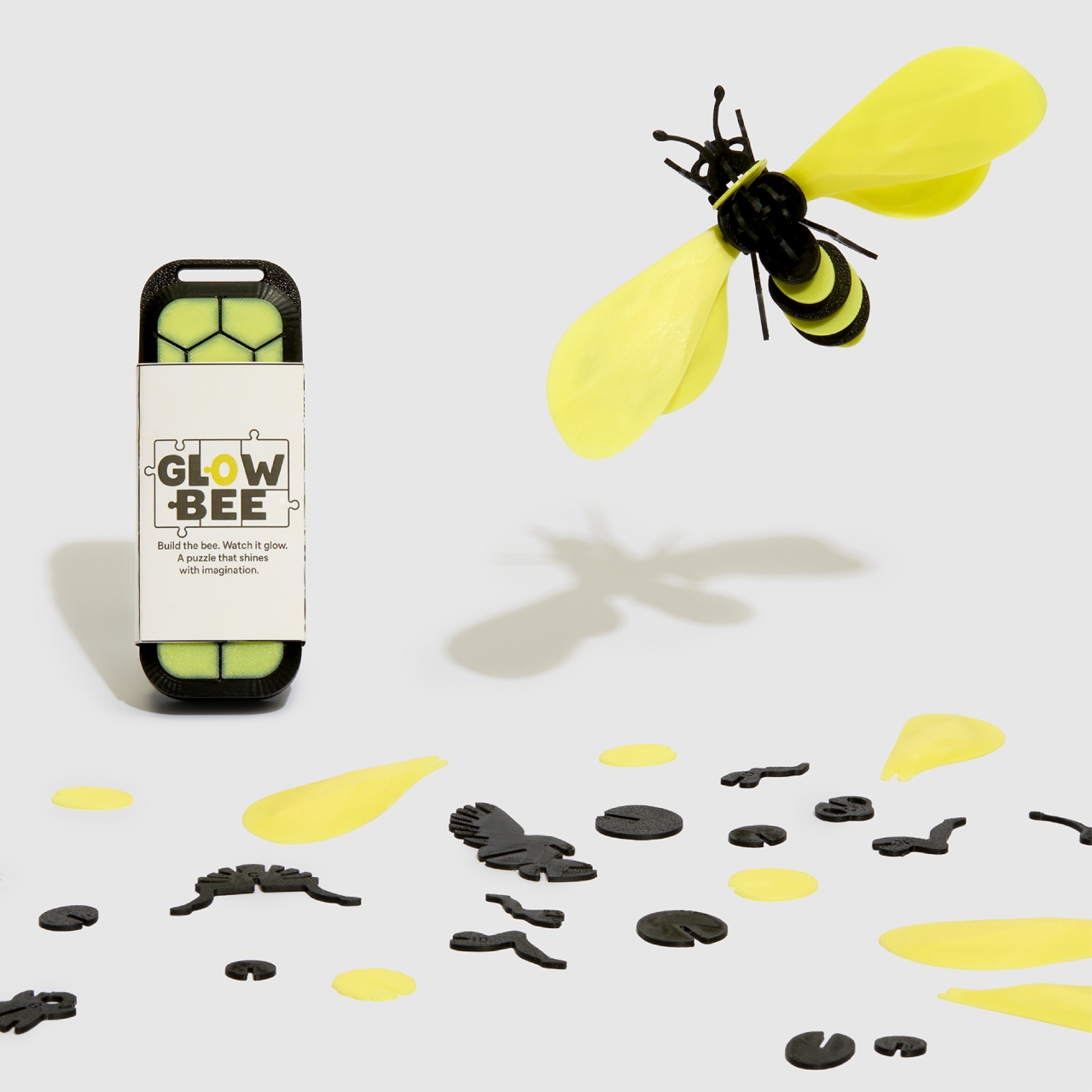
GlowBee - A Glow in the Dark
GlowBee is a construction toy designed to encourage hands on learning, creativity and imagination through...
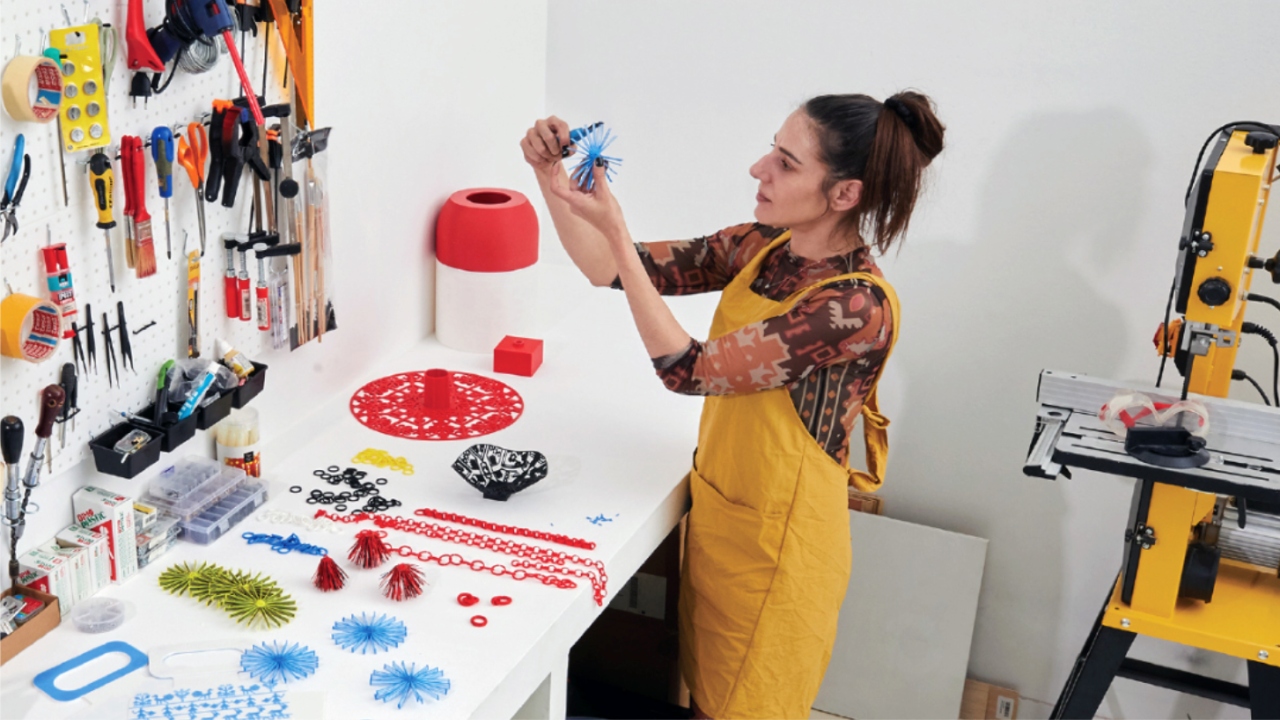
Sophia Lampropoulou is a product designer based in Greece and founder of 3D Season, where she explores digital fabrication and object design through material, construction, and process. Inspired by everyday human behavior, her work examines how people naturally interact with objects in subtle and often unexpected ways.
Design, for me, began as a question rather than a decision. I was interested in how something abstract can become physical and how simple elements can be combined to form more complex structures.
This curiosity gradually led me to design, not as a fixed path but as a way of thinking through making. I became interested in the relationship between concept, material and construction and how objects can be shaped through this process.
I am now a product designer based in Greece and founder of 3D Season, where I explore these ideas through digital fabrication and object design.
This recognition is particularly meaningful because it comes at a very early stage of our journey. The online store has only been active for a few months, so receiving this award during this period feels like a strong validation of the direction we are building.
It is also part of a series of recent recognitions connected to different projects from the collection. This makes it especially important, as it reflects not just a single outcome but a broader and evolving design approach.
For me, it confirms that even at an early stage, it is possible to develop a cohesive body of work that resonates across different contexts.
This recognition has helped strengthen the visibility of my work at a crucial moment. It has created a sense of momentum, allowing the projects to reach a wider audience beyond their initial context.
It has also opened up new conversations and opportunities for collaborations, particularly with people who are interested in design that combines experimentation with production. This kind of exposure is important, as it allows the work to move beyond the studio and into real use.
At the same time, it has reinforced a sense of direction, encouraging me to continue developing projects that balance concept, usability and production.
Experimentation is a fundamental part of my process. It allows me to test ideas through making rather than defining everything in advance. I often work through iterations, using prototypes to understand how form, structure and material behave in practice.
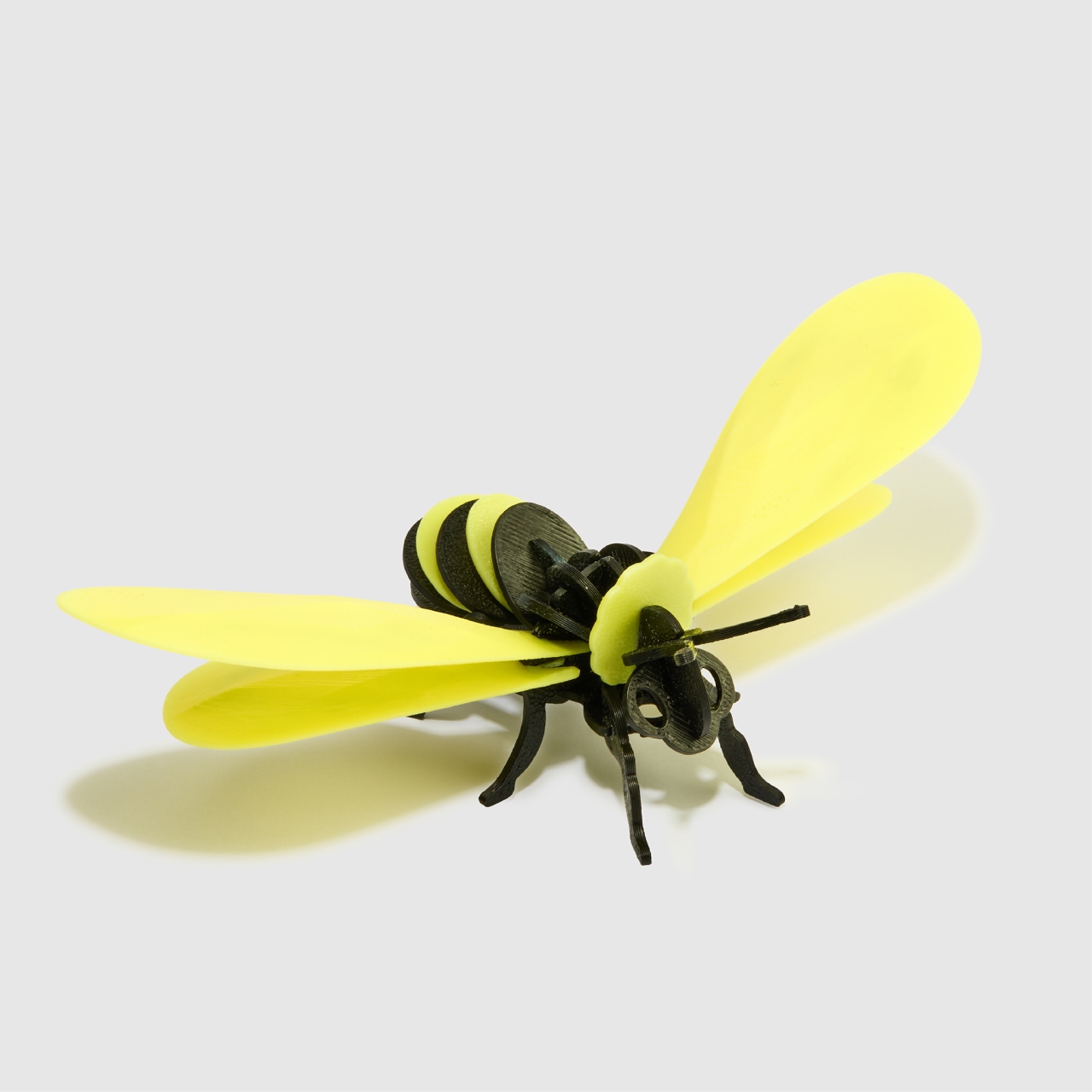
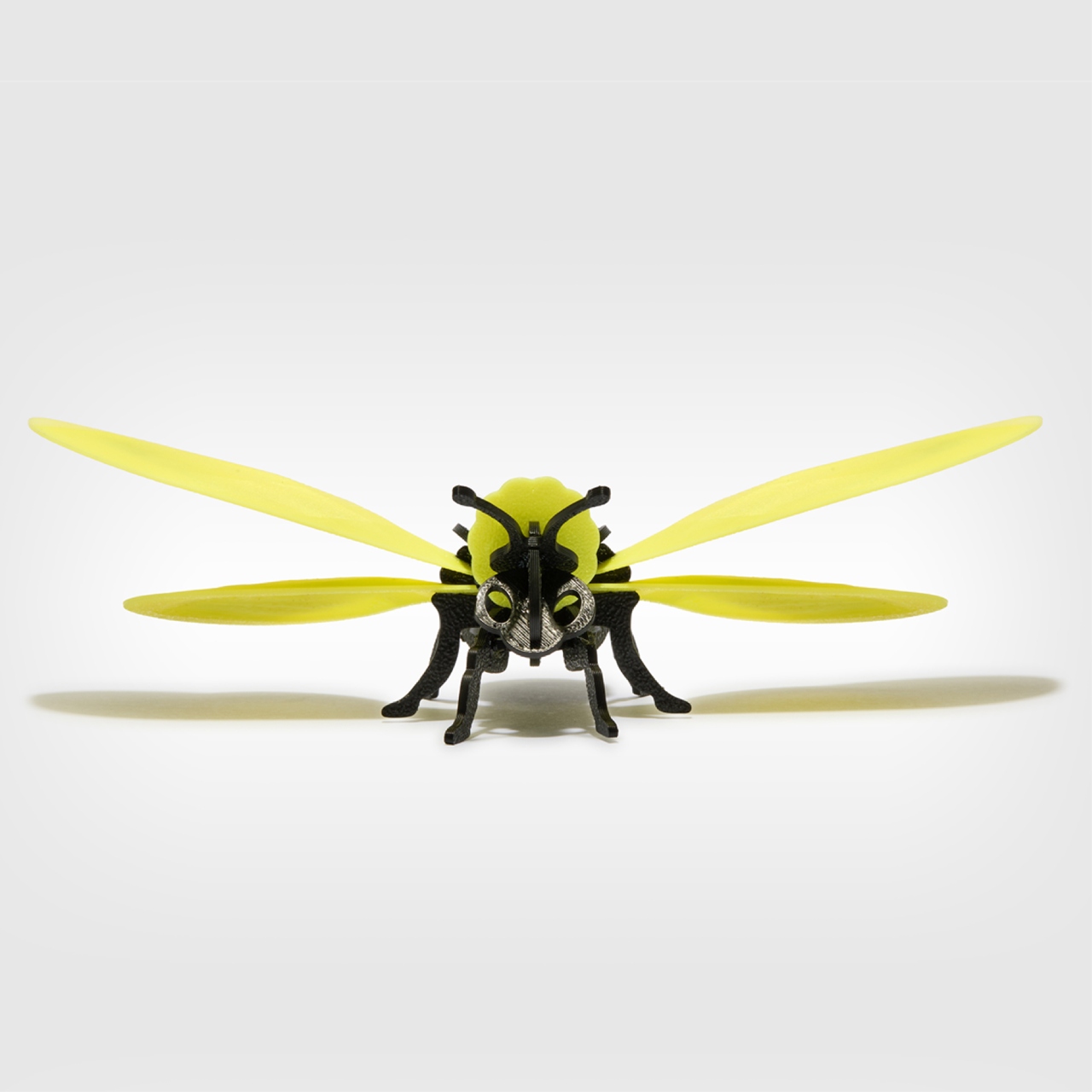
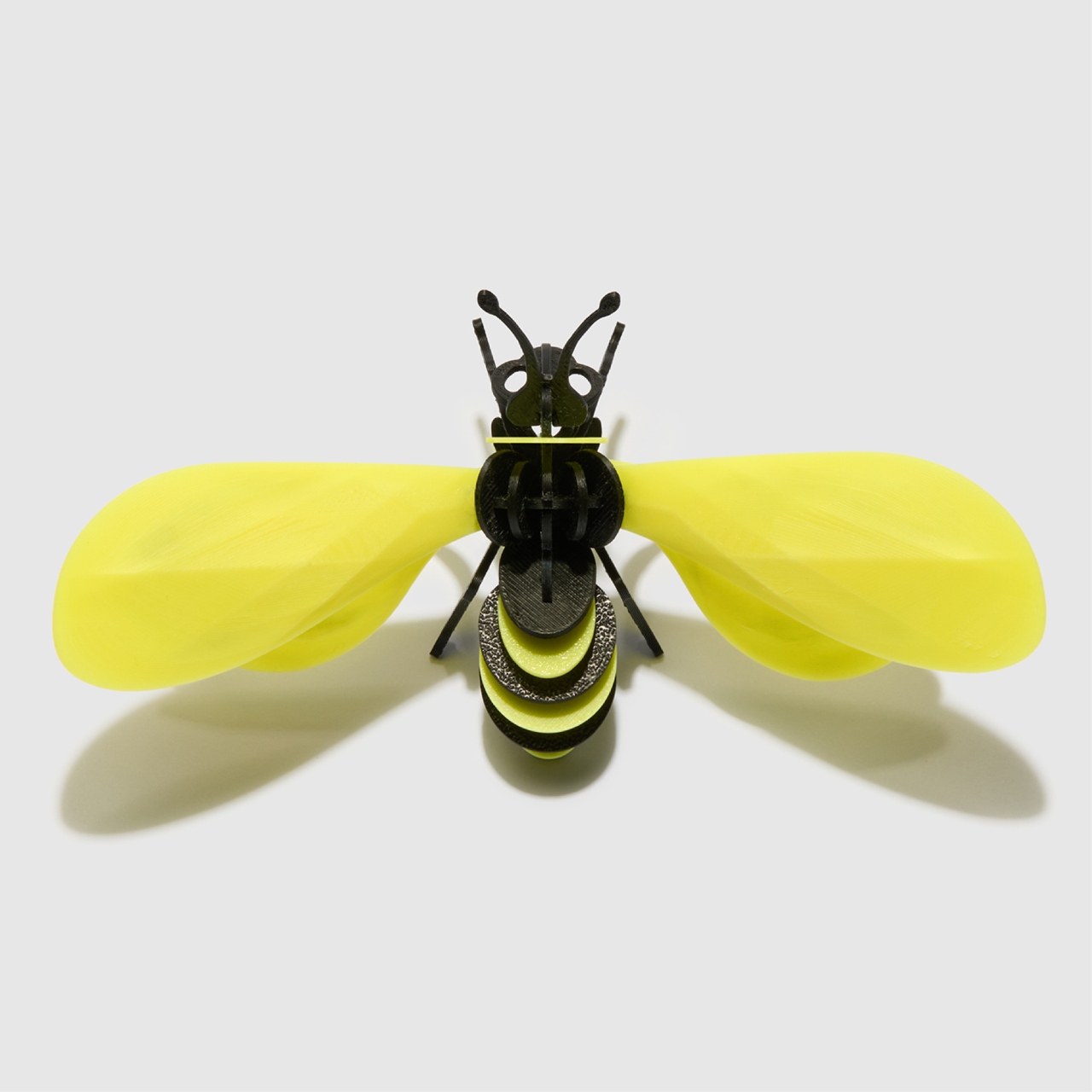
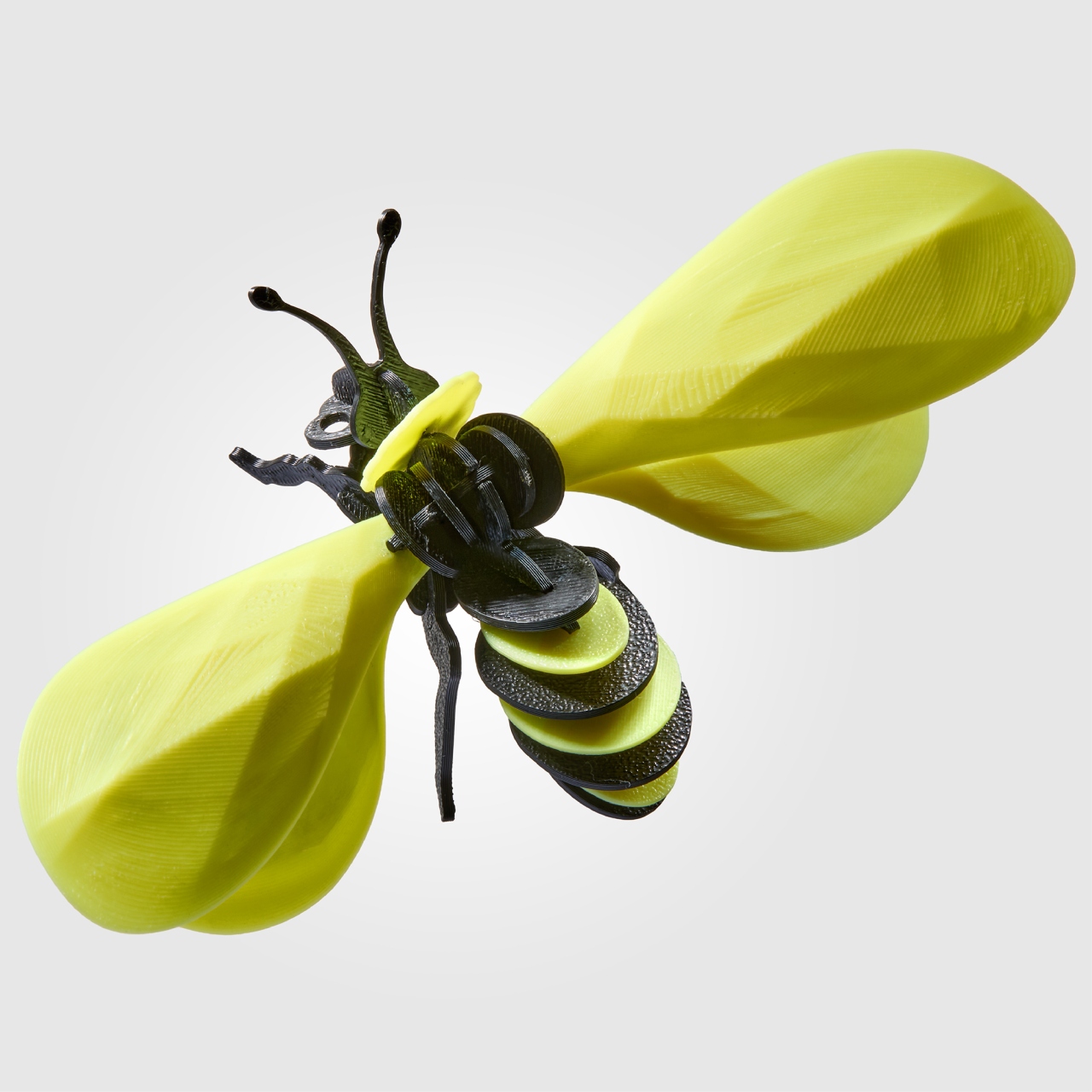
In the case of GlowBee, experimentation was essential in developing a form that could be both simple to assemble and structurally stable. I explored different connections, proportions and material thicknesses to achieve a balance between clarity and functionality.
The use of glow-in-the-dark material was also part of this process. It required testing how the material absorbs and emits light, and how this could enhance the interaction without complicating the object.
Through this approach, experimentation becomes a way to refine the design and reveal possibilities that are not immediately visible at the conceptual stage.
One of the most unusual sources of inspiration is actually the people around me. I often observe how friends or family interact with objects, sometimes without them even realising it, and this becomes a starting point for new ideas.
In a way, they unintentionally become part of the process, testing reactions, behaviors and small details that are difficult to predict otherwise.
These everyday observations are valuable because they reveal how people naturally engage with objects, which is something that cannot be fully designed in theory.
I think many people see design as a linear process, where an idea simply moves towards a final outcome. In reality, it is much more iterative and often shaped by constraints, testing and unexpected results.
A large part of the process happens through adjustments and small decisions that are not always visible in the final object. These moments are important because they define how the design actually works, not just how it looks.
Understanding this would shift the focus from the final result to the thinking and development behind it.
I see this balance as a dialogue rather than a conflict. The goal is not to choose between the two, but to find a point where both sides can align.
In many cases, it is about translating ideas in a way that makes sense to the client. When the concept is clearly communicated, it often becomes something they can relate to and feel part of.
Sometimes, this even leads to a point where the idea feels shared, which I think is the most successful outcome. It creates a sense of ownership while still preserving the core direction of the design.
One of the main challenges was creating a design that feels simple and playful, while still carrying a clear idea behind it. I wanted the object to be accessible to both children and adults, without relying on complexity.
The intention was to reinterpret a familiar concept, similar to a puzzle, but translate it into a three-dimensional experience. This meant carefully designing how the parts are separated and reassembled, so that the process itself helps users understand form, structure and spatial relationships.
Another challenge was maintaining a balance between clarity and engagement. The object needed to be easy to read visually, while still encouraging exploration. Elements such as colour and packaging played an important role, helping users identify parts and interact with the object more intuitively.
These challenges were addressed through continuous testing and refinement, adjusting proportions, connections and details until the design felt both intuitive and engaging.
I am lucky that my studio is located about a ten-minute walk from the National Glyptotheque in Athens, so it has become part of my routine when I need to reset.
The space is not only about the exhibitions. The outdoor area, with sculptures placed across the grass, allows you to walk among them without a defined path. It creates a different kind of experience, more open and less structured.
What makes it even more unique is the presence of parrots that have adapted to the area. They are often flying very close by, which adds an unexpected and almost surreal layer to the environment.
Being there helps me shift away from the project and reconnect with observation. It is usually enough to clear my mind and return with a different perspective.
A central value in my work is the connection between digital design and physical making. I am interested in how an idea can move from a digital environment into a tangible object, and how this transition defines its final form.
Many of my designs are based on construction, where objects are built from simple elements that come together in a precise way. This reflects my interest in clarity and structure, but also in creating space for interaction, where the user becomes part of how the object is completed.
Material also plays an important role in my approach. Working with processes such as 3D printing allows me to explore how form, precision and sustainability can coexist within the same object.
Overall, I try to create designs that are direct, engaging and open to interpretation, where the experience of assembling or using them becomes part of their meaning.
Focus on developing your way of thinking, not just your visual style.
It is important to understand how ideas are built, tested and translated into real objects. This means working through making, experimenting and accepting that not every outcome needs to be final or perfect.
At the same time, be patient with the process. A strong body of work is not built instantly, but through consistency, experimentation and a clear way of thinking.
I would choose Alma Siedhoff-Buscher, as her work in educational toys continues to feel relevant even today.
Her wooden construction toys are still present in kindergartens and widely available, which shows how timeless and effective her approach was. They are simple, but they allow endless combinations and interpretations, encouraging creativity through play.
This idea of creating open-ended systems that people can explore in their own way is something I strongly relate to. A collaboration with her would be interesting in terms of translating these principles into contemporary materials and production methods.
I wish people would ask when a design is actually complete.
For me, a design is not necessarily finished when the object is produced, but when it is used, assembled or interpreted by someone else. Especially in projects that involve construction or interaction, the user becomes part of the process.
In that sense, the object is only one part of the design. The rest is defined through how people engage with it. The design is completed through use, not just through making.
Click this link here to read about How Puyi Liu Approaches UX Through Human Behavior to Understand Product Systems.