Destijl Collection
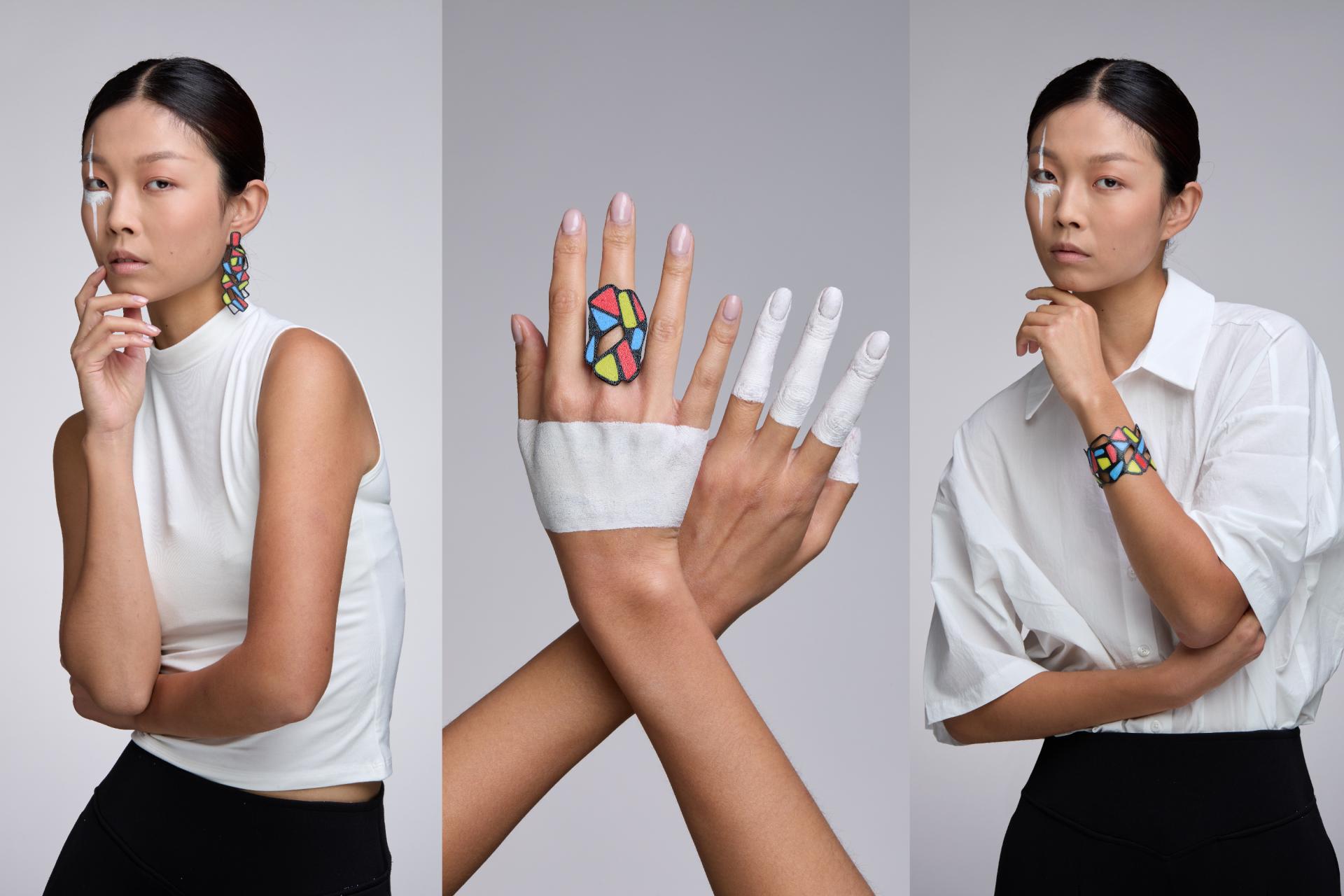
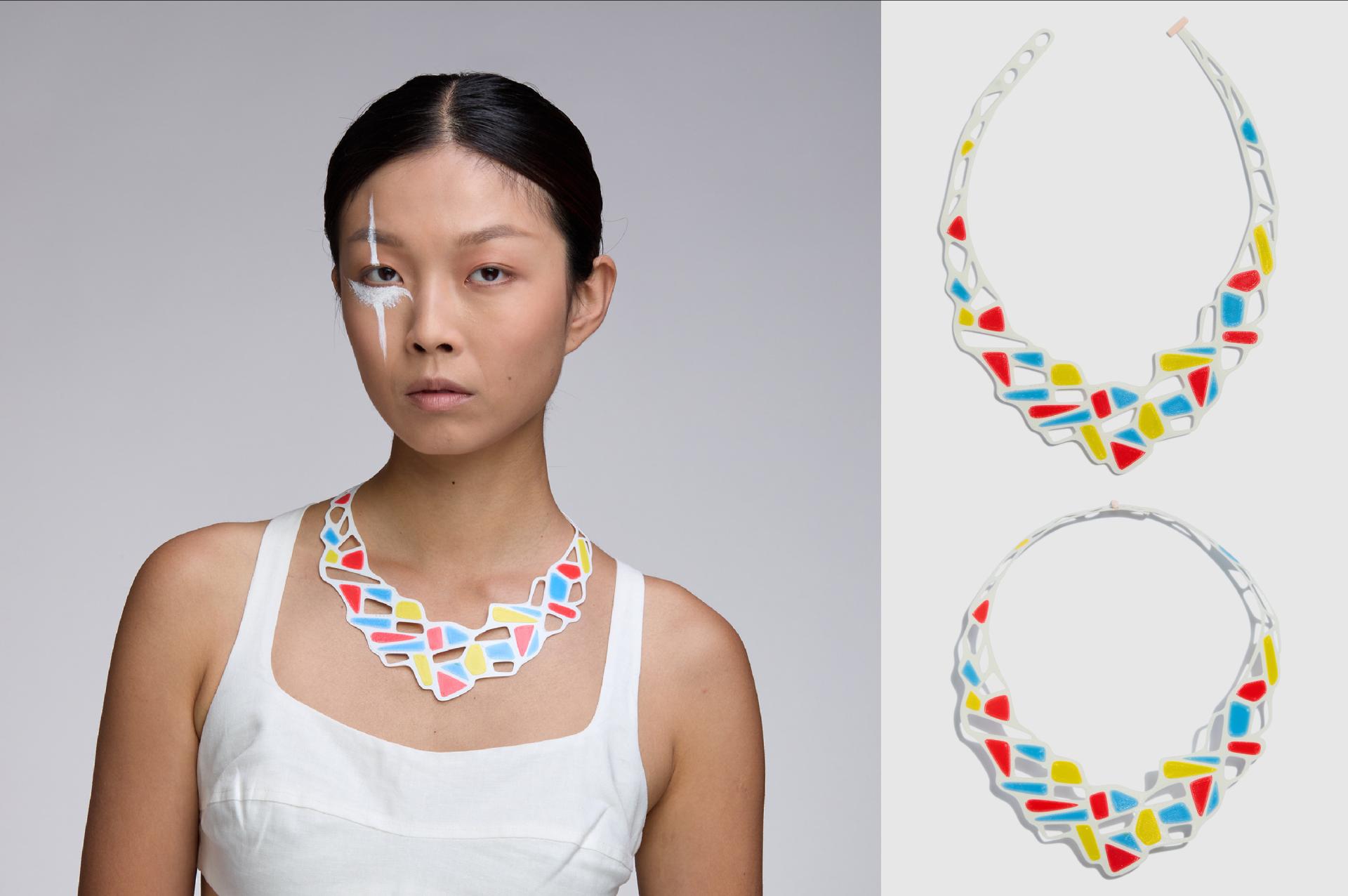
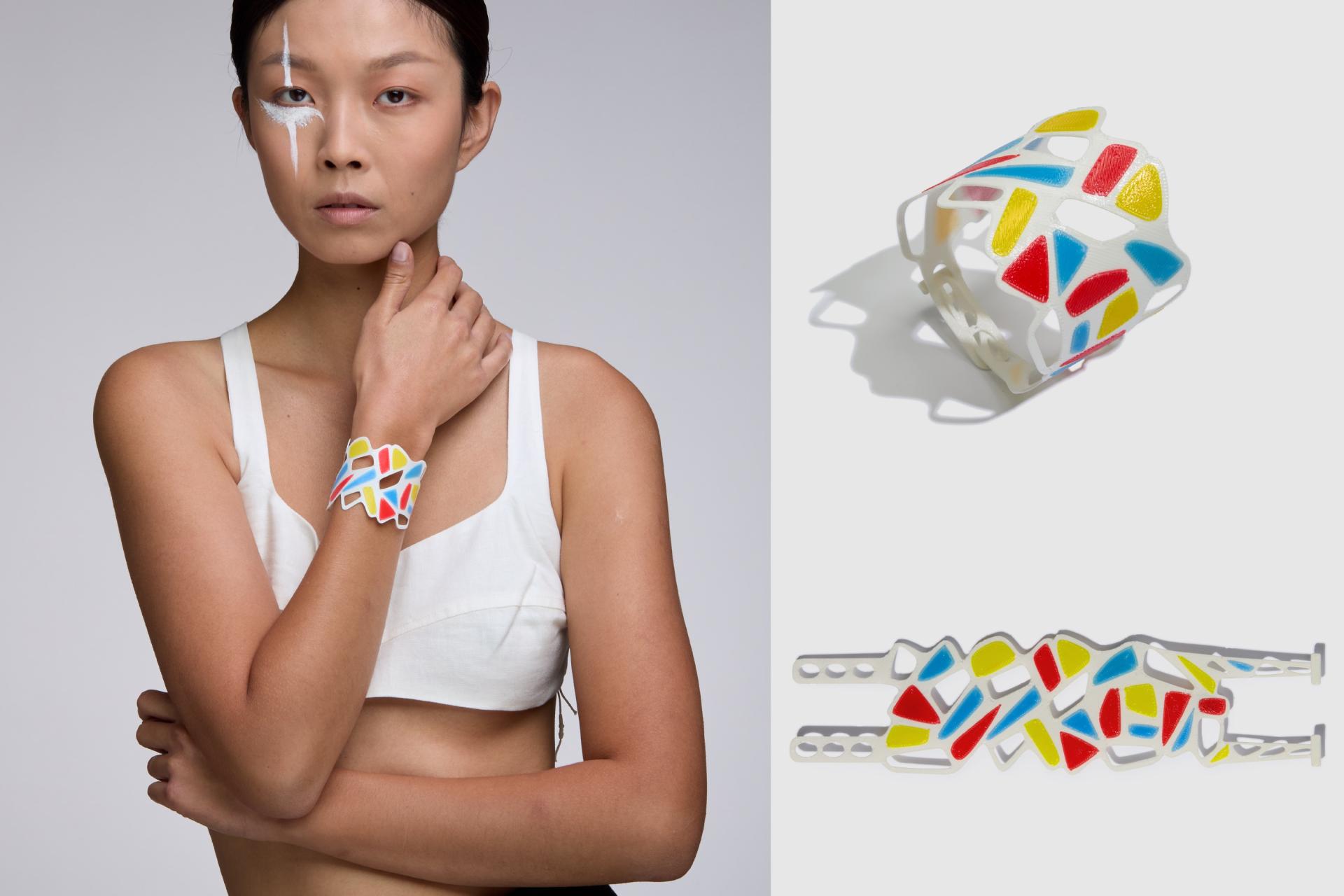
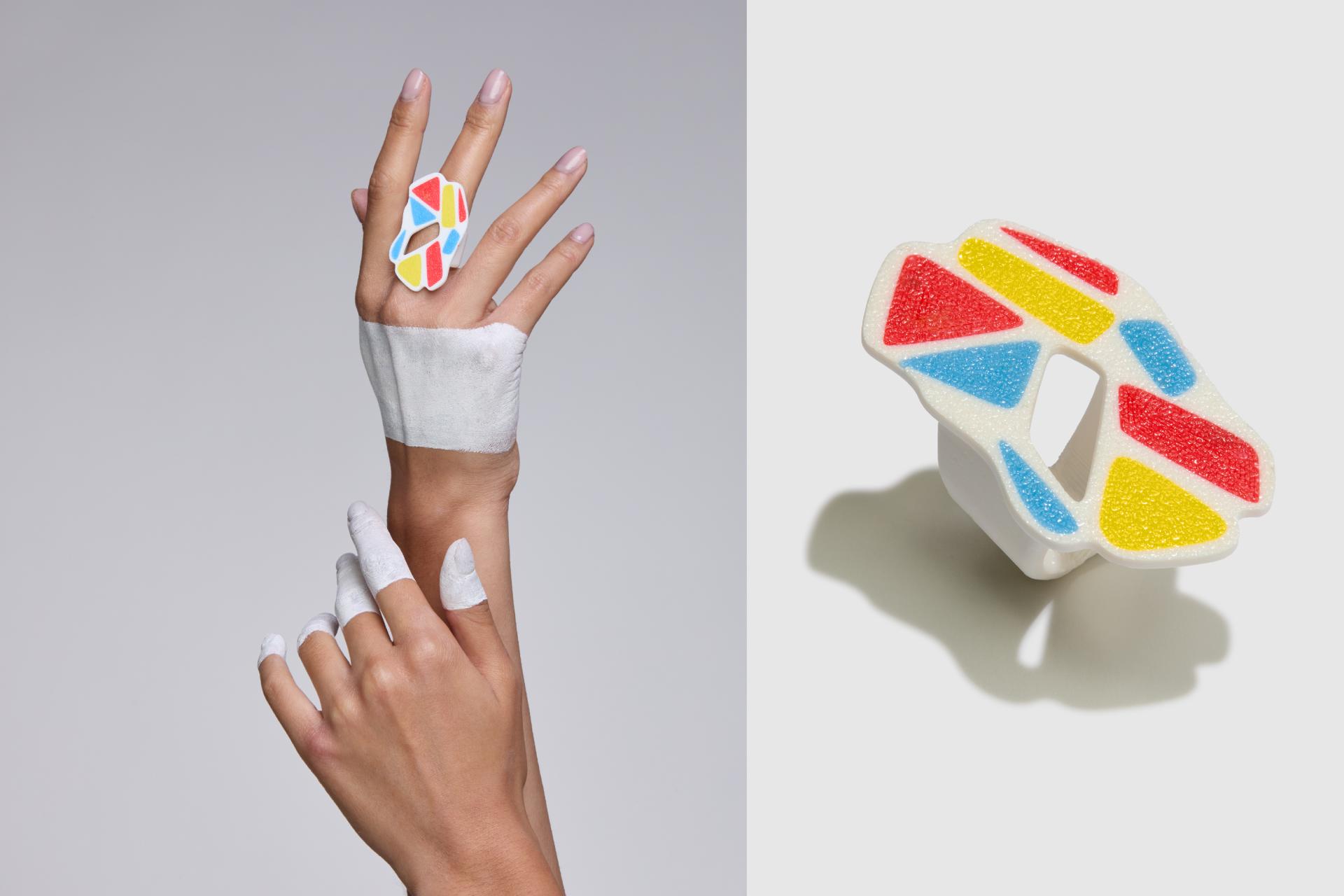
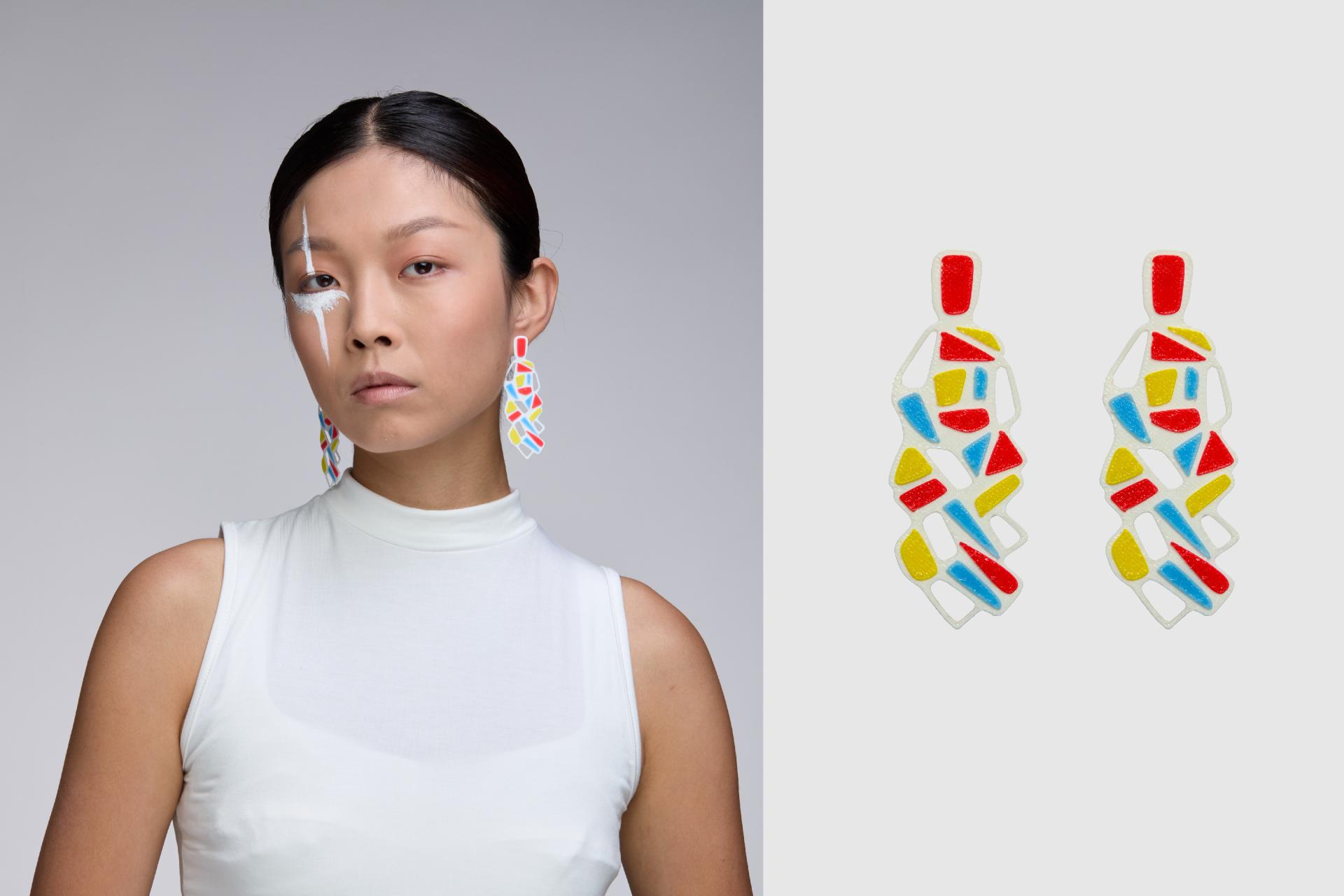
This project is a wearable jewelry collection that repositions jewelry as an unexpected spatial object...
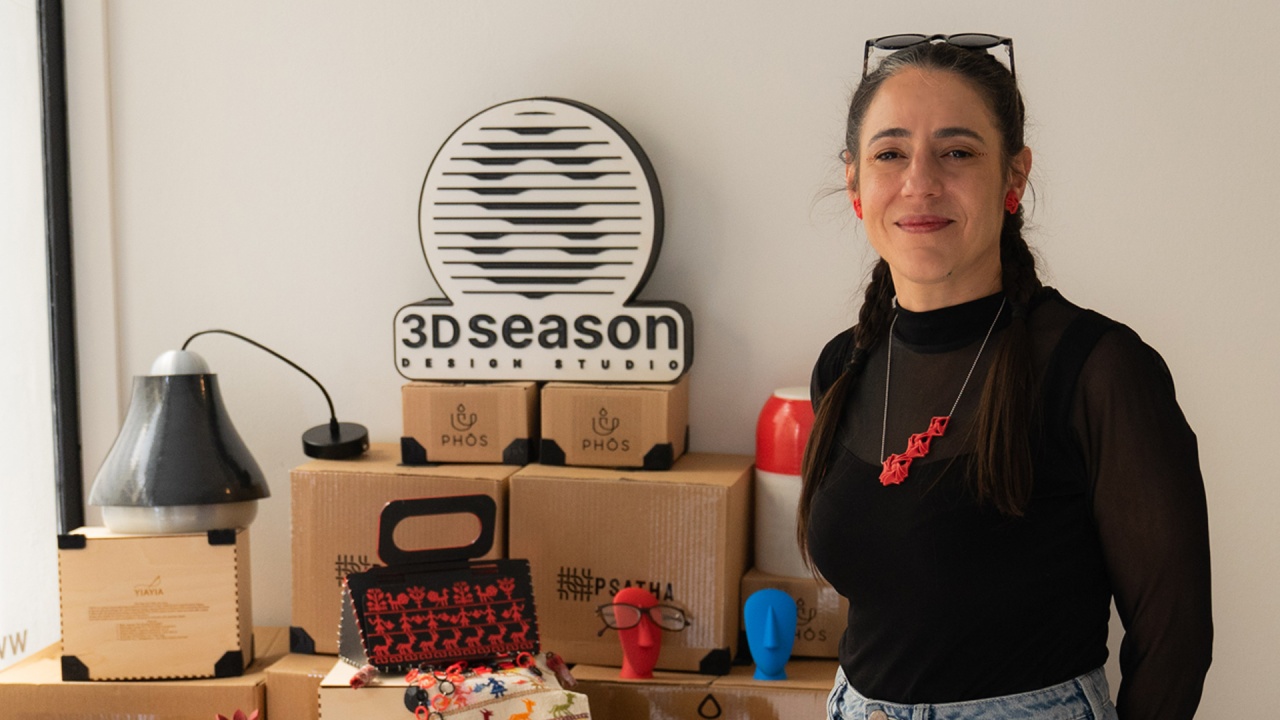
Founder of 3D Season, Sophia Lampropoulou rethinks product design through geometry, structure, and interaction. Her work emphasizes the relationship between objects and the body, using 3D printing to create pieces that respond to movement and spatial context. Each project reflects a deeper inquiry into how design shapes experience.
I am Sophia Lampropoulou, a product designer and founder of 3D Season, an independent studio focused on digital fabrication and experimental design. My work explores how geometric structure and memory can be translated into contemporary objects through 3D printing.
My path into design developed gradually through a strong interest in how objects are constructed and what they communicate. Growing up surrounded by handcrafted elements and everyday artifacts I became interested in the logic behind form. I was not only focused on appearance but also on structural use and experience.
This perspective led me to approach design as a system rather than a collection of isolated objects. In my recent award winning projects, such as the Destijl Collection, I explore how geometry can move beyond visual composition and become spatial and interactive. The objects are designed to engage with the body movement and physical presence.
For me, design is a process of translating ideas into structures that can be experienced. It is not only about function or aesthetics but about creating objects that redefine how we relate to space, materials and the body.
Being recognized in the Tokyo Design Awards is a meaningful validation of my approach to design and the direction of my work. It confirms that a practice based on experimentation, structure and spatial thinking can resonate within an international context.
What makes this recognition particularly important to me is that it acknowledges a way of working that moves beyond conventional expectations. The Destijl Collection was developed as a system where geometry interacts with the body and space rather than functioning as decoration. This reinforces the idea that design can exist between disciplines while remaining functional and relevant.
It also marks an important moment in the evolution of my studio. It creates an opportunity to further develop my work, expand its reach and continue exploring how objects can redefine the relationship between form, structure and experience.
This achievement has strengthened the visibility of my work and reinforced the direction of my practice. It comes at a very important moment as my studio and e-shop have recently launched and the first collections have started to reach the market.
Alongside other recognitions such as the London Design Awards and the French Design Awards, it confirms that the objects I develop can engage with different audiences and cultural contexts. This is particularly important for my work as it is based on a balance between structure experimentation and usability.
As an independent studio, this type of recognition plays a significant role. It opens opportunities for new collaborations across different disciplines, including design, fashion and spatial applications, while also supporting the growth of the studio in a more structured way.
At the same time, it creates a strong foundation for further development. It encourages me to expand my work beyond individual objects and continue building systems that can evolve across different scales and environments.
Experimentation plays a central role in my creative process as a way to develop structure rather than simply explore form. It allows me to test how geometry material and scale interact before defining the final object.
Instead of approaching design with a fixed outcome, I work through a series of controlled variations. Through this process, form, function and spatial behavior evolve together until a coherent system begins to emerge.
In the Destijl Collection, experimentation was essential in understanding how abstract geometry could be translated into wearable structures. I explored how the pieces could interact with the body through movement, posture and balance. The use of void was also developed through this process, allowing light air and motion to become part of the design rather than secondary elements.
Through experimentation, I am not only shaping objects but defining the logic behind them. It is a method that allows the work to remain open while still leading to precise and intentional results.
One of the most unusual sources of inspiration in my work comes from observing absence rather than presence. I am often interested in what is not immediately visible, such as the spaces between forms, the gaps within structures and the way void defines the perception of an object.
This way of thinking has influenced projects like the Destijl Collection, where the empty space is treated as an active design element. Instead of focusing only on solid geometry, I explored how openings could shape light movement and interaction with the body. The result is a form that is defined as much by what is missing as by what is present.
This approach allows me to move away from conventional references and focus on relationships rather than objects. It shifts the design process from creating forms to constructing spatial experiences.
One thing I wish more people understood about the design process is that it is not driven by immediate results but by the development of a clear internal logic. What often appears as a final object is the outcome of a long process of decisions, refinements and structural thinking.
Design is not about finding a solution as quickly as possible. It is about defining the right question and allowing the process to evolve until the answer becomes precise and consistent. This requires time, focus and a willingness to work through uncertainty.
In my work the process is not separated from the result. The object carries the logic of how it was developed, whether through geometry, material behavior or interaction with the body. Understanding this connection allows design to be seen not only as a visual outcome but as a structured and intentional system.
Balancing client expectations with my own approach is a process of alignment rather than compromise. I do not see them as opposing forces but as two parts of the same development.
I begin by understanding the core intention behind a project. This allows me to identify what is essential for the client while also defining the structural direction of the design. Once this foundation is clear, the process becomes more focused and consistent.
In my work, I aim to translate requirements into a system rather than applying solutions directly. This creates space for ideas to evolve while still responding to practical needs. It ensures that the outcome remains coherent both conceptually and functionally.
For me, the goal is not to choose between expectations and personal vision, but to integrate them into a unified result that is precise, intentional and meaningful.
One of the main challenges in the Destijl Collection was balancing sculptural form with wearability. The intention was to create pieces that function as spatial structures while remaining comfortable and adaptable on the body.
Working with abstract geometry required careful control over scale, thickness and weight. At the same time, the use of flexible 3D printing material introduced an additional layer of complexity. The material allowed the objects to respond to movement and adjust to the body, but required precise calibration to maintain structural clarity.
Another challenge was developing the relationship between solid form and void. The empty spaces were not decorative but structural elements that influenced light airflow and perception. This required a careful approach to ensure that openness did not reduce stability.
These challenges were addressed through a continuous process of testing and refinement using additive manufacturing. This allowed me to evaluate how each piece performs in real conditions and adjust the balance between structural flexibility and interaction.
When I experience a creative block, I do not try to force a solution. Instead, I step away from the work and create distance in order to reset my perception.
A place I often return to is the National Glyptotheque in Athens. Walking through the park and observing the sculptures allows me to reconnect with form, scale and material in a direct and physical way. It shifts my focus away from the screen and back to the presence of objects in space.
This process helps me approach my work with a clearer perspective. Rather than searching for immediate answers, I allow ideas to reorganize naturally. When I return to the studio, I am able to continue with more clarity and intention.
The values I bring into my work are closely related to clarity, structure and intention. I am interested in creating objects that are not only visually engaging but also logically constructed and meaningful in their use.
A key influence is my interest in how systems are formed and how different elements relate to each other. This can be seen in the way I develop collections, where each piece functions independently but also belongs to a larger structure. I aim to create coherence across scale, form and interaction.
At the same time, my work is shaped by an awareness of how objects are experienced in everyday life. I focus on balance between experimentation and usability, ensuring that even more expressive forms remain functional and accessible.
These values guide my process and allow me to develop work that is consistent, adaptable and relevant across different contexts.
One piece of advice I would give to aspiring designers is to focus on developing a clear way of thinking rather than trying to follow trends or expectations. A strong design practice is built over time through consistency, experimentation and the ability to question your own process.
It is also important to find ways to communicate your work. For me, participating in international design awards has been a valuable way to present my projects to a wider audience and to understand how they are perceived in different contexts. Through recent recognitions such as the Tokyo Design Awards, the London Design Awards and the French Design Awards, I have been able to confirm that my work can connect beyond a local framework.
At the same time, I believe that success is not defined by recognition alone but by the ability to continue developing your work with clarity and intention. Staying committed to your own direction while remaining open to growth is what allows a practice to evolve over time.
If I could collaborate with designers, I would choose Zaha Hadid and Gerrit Rietveld. Although they belong to different contexts, their work shares a strong focus on structural geometry and spatial clarity.
Zaha Hadid’s approach to fluid form and complex spatial systems has expanded the way design can interact with movement and the body. Gerrit Rietveld’s work through the principles of De Stijl represents a clear system where form, color and structure are reduced to their essential relationships.
In many ways, these two approaches have already come together in my work. In the Destijl Collection, I explore how geometric clarity and spatial composition can evolve into forms that are more fluid, interactive and connected to the body.
A collaboration between these perspectives would not be about combining styles but about extending a shared logic into new forms and applications.
One question I wish people would ask me is how the body influences the design.
In my work, the object is never complete on its own. It is designed to exist in relation to the body through movement, scale and interaction. This is particularly evident in the Destijl Collection, where each piece changes depending on how it is worn and experienced.
I am interested in creating objects that are not static but responsive. The body becomes part of the design process not only in terms of function but also in how form is perceived and activated.
Understanding this relationship shifts the focus from the object itself to the experience it creates. This is where the work becomes more than a product and starts to operate as a spatial system.
If you're looking to read more design insights, visit this link here to read another interview with the French Design Awards winner Hayley Martin.