Composites R&D Center
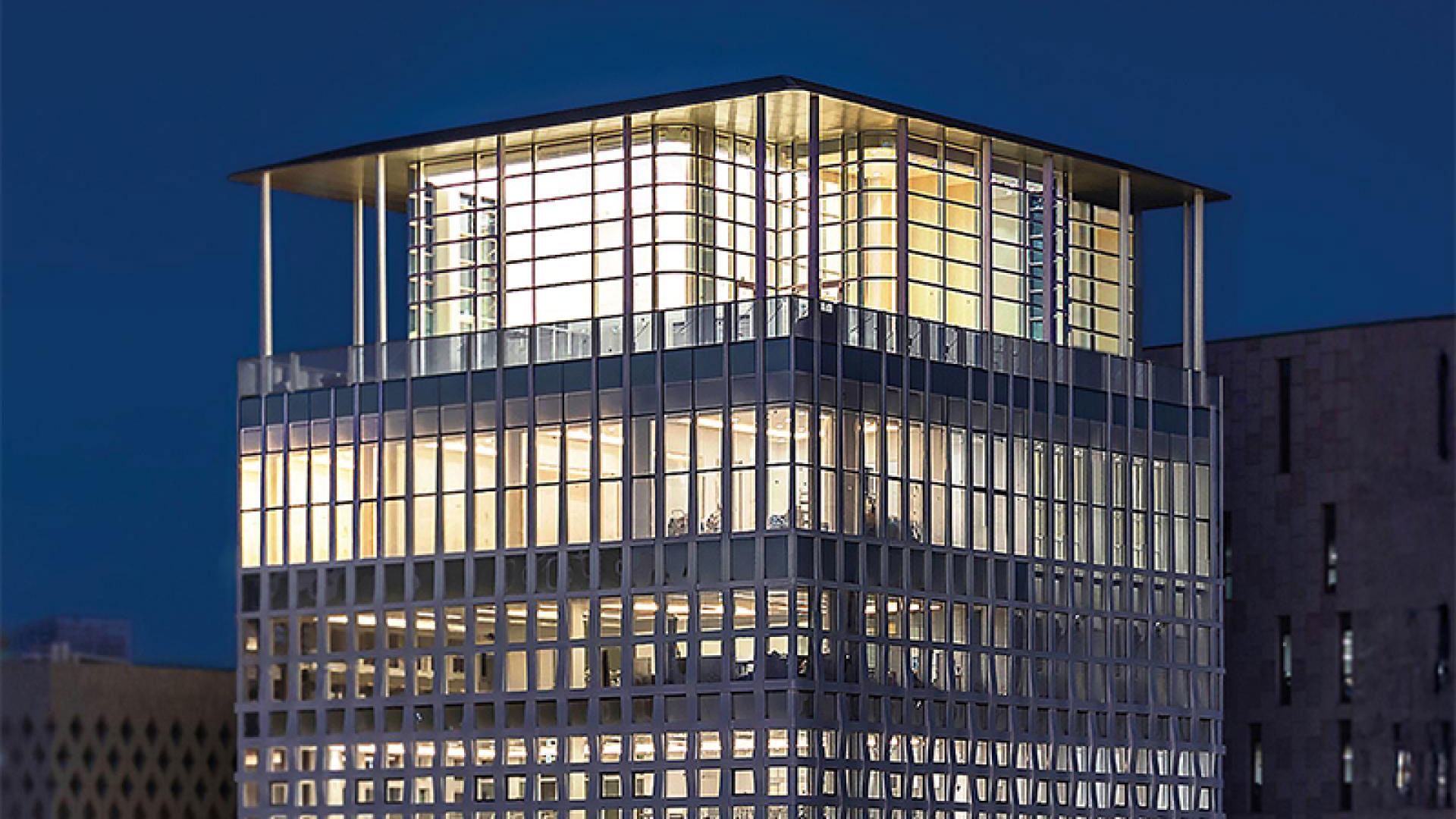
Composites R&D Center, in Seoul's R&D Industrial Complex, provides solutions for the commercialization of high-performance...
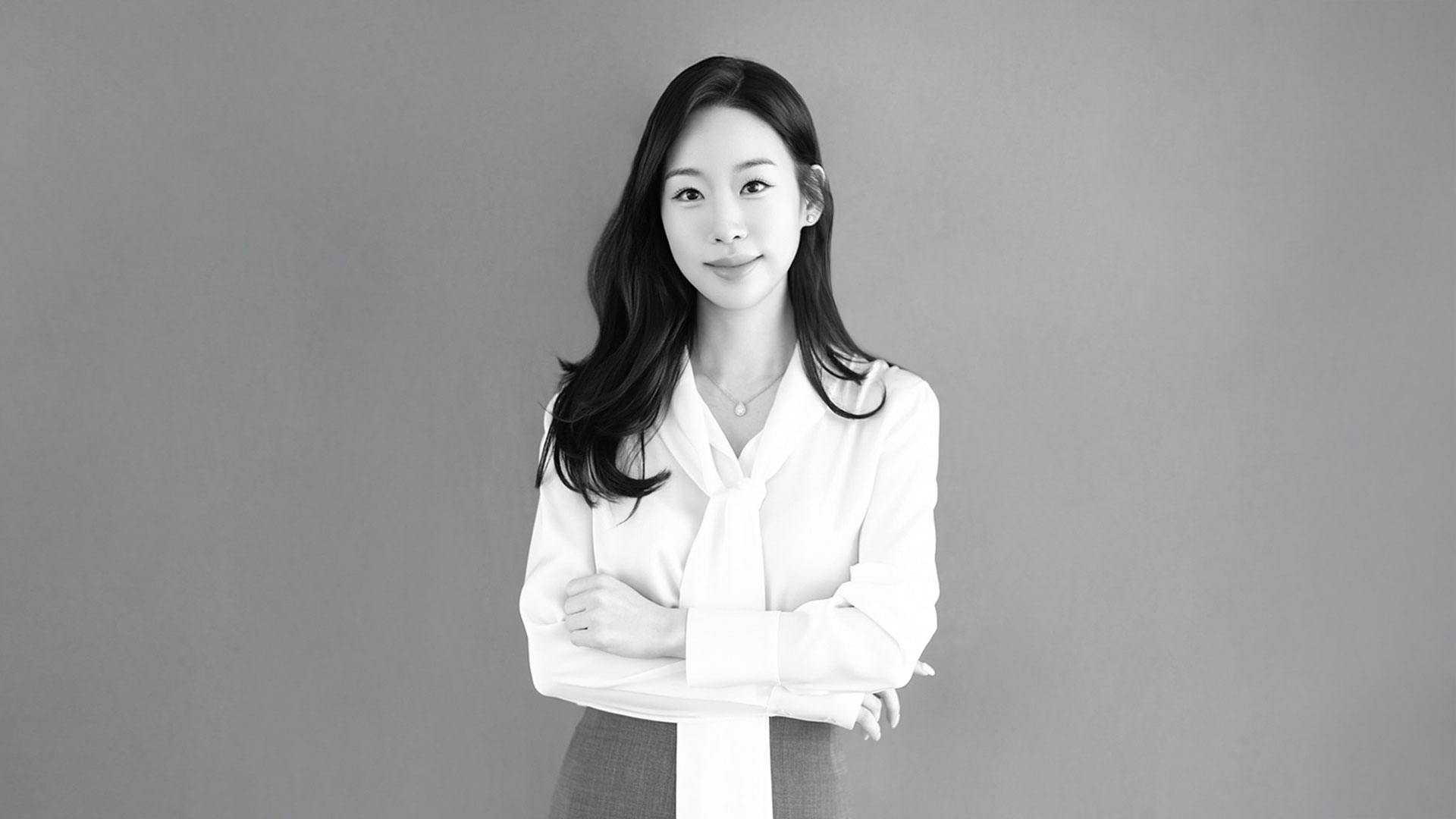
Victoria Cho, Head of Brand Marketing at a composite materials company, blends corporate branding with material-driven design. As creative director of the award-winning "Composites R&D Center," she shaped a space where architecture, branding, and composites unite into an inspiring experience.
As head of Brand Marketing at a composite materials manufacturing company, my work focuses on corporate branding and designing products that utilize composite materials. For the award-winning "Composites R&D Center," I led the project as creative director, shaping a design that integrates spatial branding with material-driven concepts.
I have always been drawn to the process of creating and improving ideas, inspired by a childhood dream of becoming an inventor. Over time, this led me toward design, a field where I could drive meaningful change. During my education in Product Design at Central Saint Martins in London, I discovered how design can connect industries and address social needs.
I began my design career with the desire to create work that offers real value and practical help to people, rather than focusing solely on visual appeal. Since then, I have pursued simple yet functional design grounded in user experience.
Design, planning, and marketing are interconnected. Design captures attention through visual appeal, but its true value emerges when usability and functionality come together, making branding essential to clearly communicate that value.
Architectural design is the highest form of brand expression, embodying corporate identity through every spatial element. This project allowed me to expand branding beyond product design, demonstrating my ability to lead spatial branding and design direction using composite façade materials across industries.
The project highlights the value composites bring to design. Beyond decoration, it leverages the structural characteristics and performance of the material to shape form and experience, expressing brand identity through space. This experience strengthened my expertise in composites-based product design and spatial branding.
The "Composites R&D Center" project exemplifies redefining a research facility as an iconic brand asset. Representing corporate identity, it communicates the company’s vision and expertise while highlighting the importance of B2B branding. By applying in-house manufactured GFRP materials to the building façade, their architectural usability was validated, contributing to broader awareness of composite materials.
Applying the user-centered perspective I developed in product design to architecture allowed me to build a more comprehensive approach. By considering the actual work environment of researchers and staff, I designed shared workspaces with optimal natural light and smooth circulation, creating an environment that fosters openness and creativity.
Designers transform ideas that may seem impossible into practical outcomes. Experimentation is essential for testing whether concepts function in real conditions and for uncovering effective solutions, ultimately leading to refined and grounded design strategies.
The "Composites R&D Center" expresses corporate identity through architecture by using the company’s own composite materials as a form of material experimentation.
Applying composites to architectural cladding presents both opportunities and challenges. The material is lightweight, capable of large-scale applications, and flexible enough to form complex curves, offering significant creative freedom. However, compared to traditional building materials, it requires careful consideration of structural performance, durability, manufacturing, and installation.
These characteristics enable new modes of experimentation. By leveraging the material’s unique structure and texture, the project creates engaging visual and spatial experiences while clearly communicating innovation and brand identity. As a result, the company’s material technology and brand story are integrated into the building, establishing it as a valuable brand asset.
Everything we encounter in life connects with our daily experiences to spark ideas. Through observing, listening, and imagining, inspiration can come from anywhere.
As the creative director for this project, I believed it was essential to create a design that authentically reflects the company’s identity, and that an on-site visit would be more valuable than relying solely on documents. During a visit to the production plant for the company’s core product, composite fabric, the movement and rhythm of the weaving machines became a key source of inspiration. In their repetitive motion, I observed the company’s relentless energy, operating continuously each day to produce its products.
Working closely with the architect, I translated this dynamic movement into a refined architectural expression. The three-dimensional curved façade captures both the company’s manufacturing process and its professional identity.
Good design begins with thorough planning and precise problem definition. Because design is grounded in clear objectives and function, analyzing user needs and context must come first.
When challenges arise during the process, I revisit earlier planning stages to identify opportunities for refinement. This reflection often reveals valuable insights, allowing me to rebuild a more coherent and effective design strategy.
Balancing client expectations with my own design intent relies on coordination and persuasion.
As a designer, I act as a bridge between clients and engineers, translating creative ideas into feasible solutions. This process involves shaping client intentions into practical strategies while pushing beyond technical limitations to achieve the project’s goals.
I maintain my design direction while meeting client expectations through clear logic and convincing reasoning, grounded in concepts I truly believe in. Rather than simply presenting ideas, I support my proposals with concrete evidence and data to demonstrate why each approach is both effective and achievable.
The biggest challenge was translating the initial burst of inspiration into a convincing façade that could visually capture the constant motion and energy of the weaving machines.
To achieve this, I analyzed the strengths and limitations of GFRP as the primary exterior material. Its ability to form curved surfaces allowed the rhythm of the weaving process to be expressed through three-dimensional panels, with the façade pattern becoming denser toward the ground to evoke the quality of finely woven fabric.
The project successfully embedded material-based technology and brand narrative into the architecture, establishing the building as a compelling brand asset. It demonstrates a careful balance between experimental design and technical constraints.
When designing for unfamiliar fields, I begin with broad exploration to build a deep understanding. The goal is to uncover details that may not appear in documents and use them as sources of inspiration.
Relying solely on fragmented information narrows perspective and limits the ability to fully grasp the problem. Through exploration, unexpected challenges emerge and connect in ways that lead to fresh insights and innovative solutions.
Creating meaningful design is always the goal.
In every project, I constantly ask myself why each element is necessary and what value it delivers to the user. It’s not only about visual appeal, but about understanding how each component functions in real use and the value it creates.
This ongoing examination strengthens the logic and message of the design, resulting in a persuasive outcome that balances functionality and aesthetics.
Design is ultimately shaped and strengthened through process.
Rather than focusing solely on the final outcome, it is important to recognize that process lies at the core of design. Structuring ideas, defining problems, and testing alternatives form its foundation. Releasing the pressure to create something entirely new allows focus to shift toward process, where strong thinking naturally leads to higher-quality results.
The "Composites R&D Center" marked my first step into architectural design, yet it connected seamlessly with my background in branding and product design. Entering an unfamiliar field became an opportunity rather than a risk, allowing me to stay grounded in process and integrate brand and design as a unified whole.
By embracing new challenges, trusting the process, and connecting diverse experiences, designers develop their own perspective and capabilities—ultimately leading to meaningful design.
Collaborating with Nothing would be an exciting opportunity. Its vision as a design-driven technology brand approaches technology not merely as a set of functions, but as a holistic user experience. The emphasis on practicality, experimentation, and balance between function and design closely aligns with my own design values.
My work focuses on designing spaces and products using composite materials, exploring new forms and experiences through their structural characteristics and performance. Maintaining a balance between technical functionality and creative intuition is central to my process.
Such a partnership could unite technology-driven products with material-based design to create new user experiences built on the strengths of both. When technology and materials are connected through design, they merge into meaningful products and spaces. Nothing’s transparent, minimal design language naturally reveals both technology and material, aligning seamlessly with an experimental mindset on both sides.
A question I would like to be asked is: “What led to the creation of such a distinctive façade design?” The primary goal of this research facility was to move beyond the conventional image of laboratories and instead communicate an innovative corporate identity.
To achieve this, I translated the composite fabric pattern and inspiration drawn from the production site into the façade design. The pattern becomes denser toward the ground, allowing window sizes and spatial atmospheres to vary by floor. From offices to stairwells, natural light is carefully maximized to create an environment that encourages creativity throughout the building.