"Journeys that begin with glances"
Under a soft light that caresses his face, this dog with a deep gaze immerses...
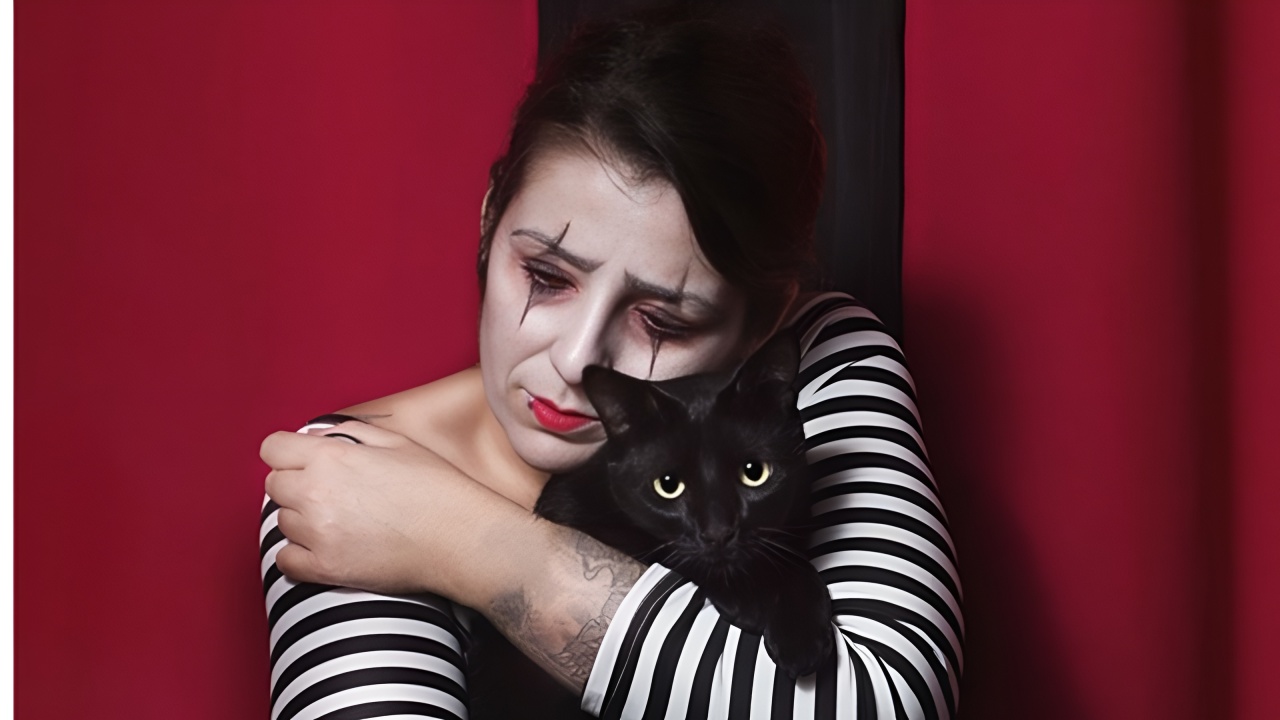
Inspired by her late dog Dante, Leticia Hernández Gavira built her career as a pet photographer in Cádiz, Spain, founding Soy Fotógrafa de Animales as a tribute to their bond. Through her lens, she captures both the love of families for their pets and the overlooked beauty of local history, as seen in her award-winning locomotive portrait.
I’m Leticia, a Dog and Cat Photographer in Cádiz, Spain.
My dog Dante, the dog of my life and who changed me forever, is the inspiration that pushed me to take this path. I always dreamed of a photo shoot for my dog like the one I now do for other families and their dogs, but when Dante lived, finding a photographer specialised in working with animals in southern Spain was mission impossible.
From that unfulfilled desire was born “Soy Fotografa de animales", which is Dante's legacy and my gratitude to him for everything he gave me and taught me.
What inspired me to take the photo that has given me this recognition was an old locomotive located in the city where I live, of which very few people know its great historical and cultural value.
It is an old locomotive that is part of the "Verraco" family, a type of steam locomotives of Belgian origin that were very popular in Spain in the late nineteenth and early twentieth centuries and that in addition, this particular locomotive has been used as a setting for some of the most recognised films of the spaghetti western genre such as "The Good, the Ugly and the Bad", "For a handful of dollars", "Death had a price" or "Until his time came" among many others, in addition to also being one of the scenarios of "Indiana Jones And the last Crusade.”
Winning this award makes me very happy, not only for the recognition of my work, but also for bringing the people who see my work closer to this piece of history that my neighbours should brag about and be proud of.
The photos that I normally send to the contest are designed and made expressly and conscientiously for it. What I usually do is look for a scenario and study the light and the environment, and from there, I begin to imagine and compose the scene that I want to portray. In my photograph, the protagonists are the animals, so I imagine an animal to star in the scene that fits me in size and colour.
During the photo shoot, I make different shots and in the end, the one I keep to send to compete is the one that transmits the most emotion and visual harmony.
I have always liked photography, and I have had cameras, but all my life, I have taken empty photographs, without thinking or knowing anything about composition or parameters. After Dante died, I was very depressed and needed to find something to do with all that sadness. Finally, he led me to decide to learn how to portray animals so that no one else would be left wanting some professional photos and a memory worthy of the pure love that animals give us.
My favourite photography is undoubtedly artistic animal photography. It fills me more than any other type of photography to capture the purity, the energy, the love, the way animals live in the present and the bond they have with their humans.
The parameters that I usually use in 95% of my photographs are very open diaphragms to isolate the model from the background and give it prominence, unless, as an exception, like the photo of the locomotive, I also want to show and do not want to subtract prominence from the scene. I also use shutter speeds from 1/250, although if the photograph I want to take is an action photograph, I raise the speed to 1/1000.
The most characteristic of my photographs is the unfocused backgrounds and a bucolic atmosphere.
I would like the people who look at my photographs to feel the energy and essence of the animals I portray.
By having to place the dog on a metal surface and at a height, which are not exactly comfortable surfaces for them, the most important thing was to get the dog used to the place with positive reinforcements and guide him little by little to the exact point where he needed him. That took us a long time and was what I invested the most time in, but another of the challenges I had to face was directing the dog's gaze to the point where he needed, and for a moment, he did not look at his human, who was next to him to watch over the safety of the dog.
The animals in the forest are what inspire me the most and trigger my creativity.
My greatest photographic influence is Rut Casanellas, a Spanish pet photographer from whom I have learned most of what I know about pet photography.
Never be afraid to compete, no matter how small you look compared to others. Fear is the worst enemy of creativity. Look inside what message you want to convey, work on the idea and enjoy creating.
First take a basic training to learn basic concepts of composition, learn to handle the manual modes of the camera and understand how and why to use each parameter, take many photos, all the ones you can, without caring too much how much you know or how good your photographs are, look at your photos and think about what kind of photographs you make or try to make and when you have identified them look for specific training that brings you closer to that style.
For me, the capture process is as important as the editing process. One part complements the other, and I could not create my images depending on applying only the techniques of one of the 2 parts of my creative process.
AI is a great tool used correctly but I don't think it replaces a photographer's work. I understand that photography is born from the feeling and soul of the photographer and I think that the images that an artificial intelligence can create lack that human and emotional part that is so important to me.
What I would most like to photograph in the whole world is a big cat, like a lion or a tiger, but at the moment, I don't have the knowledge or the necessary ability to photograph wildlife, although in the future I would love to get it.

If you're looking for more insightful stories of photographic excellence, check out "Wild Elegance in Bloom: Meet Mette Klint And Her Floral Inspirations" here.