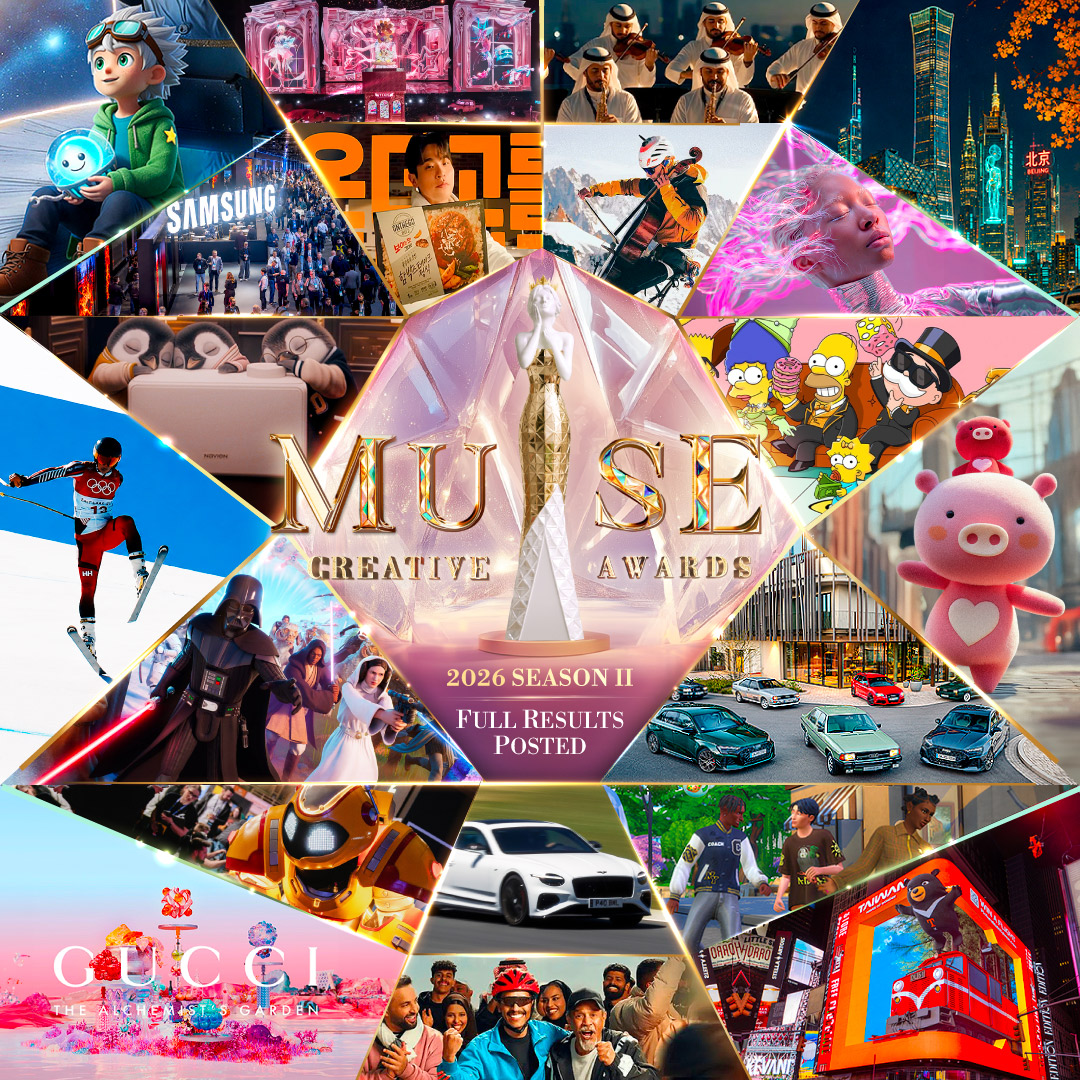

MUSE Creative Awards & MUSE Design Awards Reveal 2026 Season 2 Winn...
OCTOBER 16, 2026
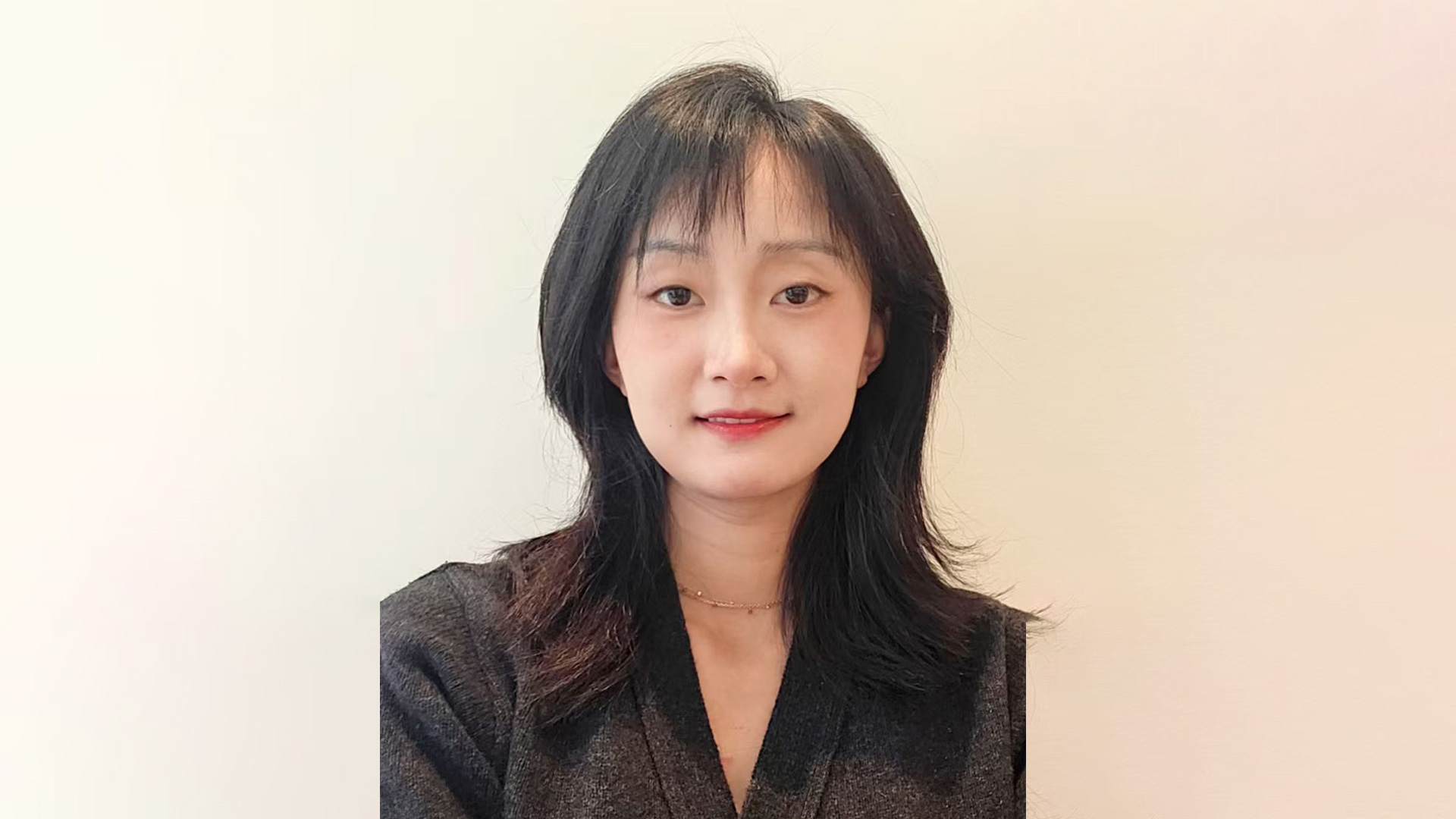
Jingyuan Huang is a designer working at the intersection of architecture, landscape, and everyday spatial experience. Drawn to design for its balance of thinking and action, her work translates ideas into built form through making, fabrication, and close attention to how people experience space in daily life.
Thank you. I’m a designer working at the intersection of architecture, landscape, and everyday spatial experience. I was drawn to design because it allows for both thinking and action. It’s a way of engaging with ideas at a high level while also making tangible changes in the real world.
What makes it meaningful to me is that those changes are always connected to people. Design is not only about concepts, but also about fabrication, making, and seeing ideas take physical form. That combination of thinking and doing, and its direct relationship to everyday life, is something I find deeply romantic.
It feels encouraging—not as a conclusion, but as a reminder that a quieter, more process-driven way of working can still be recognized.
This recognition has been encouraging—not as a conclusion, but as a reminder. It reinforces that a quieter, more process-driven way of working can still be seen and valued, and that an approach rooted in context, everyday use, and long-term thinking can resonate beyond a single project.
For the studio, it has strengthened our confidence in continuing along this path. It has helped clarify the kind of work we want to pursue and the values we want to stand behind, while also opening up more thoughtful conversations with collaborators who share a similar mindset.
Experimentation helps me think before committing to decisions. It’s not something separate from the design process, but a way of understanding how ideas behave when they are tested through making.
For example, I often start with a simple system, such as a grid or a repeated element, and explore how it responds when conditions change. By adjusting scale, movement, or use, I can see where flexibility is possible and where structure becomes necessary.
These experiments help me decide what should remain open and what needs to be defined, allowing the design to stay adaptable without losing clarity.
I usually don’t start with architecture when I look for inspiration. Many ideas come from things that have little to do with buildings, such as video games, natural patterns, or other systems that are not architectural at all.
For example, the way games construct spatial rules, or how simple patterns repeat and transform in nature, often influences how I think about structure and composition. I’m also inspired by abstract art or exhibition pieces, where space, movement, and framing are explored in a very direct way.
These references help me think about architecture more freely, focusing on relationships, order, and experience rather than form alone.
I wish more people understood that design is not a straight line. It’s rarely about having a clear answer from the beginning. Most of the time, understanding comes gradually, through testing, revising, and sometimes even stepping back.
Design often becomes clearer after things don’t work, not before. Those moments of uncertainty or adjustment are not signs of failure, but part of how the work gains depth and precision.
I don’t really see these two as opposing forces. For me, design without constraints rarely leads to good results. Limits—whether they come from the client, the site, or practical conditions—are often what give a project its direction.
I see constraints as something to work with, not against. Designing within limits forces clearer thinking and more precise decisions. In many cases, it’s exactly those constraints that push the work toward its strongest outcome.
One of the main challenges I faced in Healing Field was introducing a strong spatial order without making the environment feel rigid or institutional. As a medical campus, the project required clarity and efficiency, but it also needed to support healing, recovery, and everyday life beyond clinical functions.
I addressed this by developing the Pixel Field framework. Inspired by Mondrian’s abstract compositions, I organized the site into a modular, adaptable field. This approach allowed me to establish a clear spatial logic while keeping each “pixel” flexible enough to evolve over time. Within this system, hospitals, rehabilitation spaces, and public programs could coexist without being fixed to a single interpretation.
Another challenge was translating this rational structure into a more intuitive human experience. To do this, I introduced the Ravine as a contrasting landscape condition. The Ravine cuts through the field, bringing movement, nature, and moments of pause into the system. Through the relationship between the Pixel Field and the Ravine, I was able to balance operational clarity with emotional openness and healing.
When I hit a creative block, I usually step away from trying to solve the design directly. I find that spending time walking through the city, visiting exhibitions, or immersing myself in nature helps reset my thinking. These moments of observation—whether in urban spaces, exhibitions, or natural environments—help me reconnect with how space is experienced. Once enough input accumulates, ideas tend to return naturally.
I bring a strong sense of observation and intuition into my designs. I’m attentive to how people experience space in subtle ways—how they move, pause, and interact with their surroundings.
My experiences across different cities, landscapes, and cultural contexts have also shaped how I design. They have made me sensitive to transitions, atmosphere, and the relationship between space and everyday life. These influences guide me toward creating environments that feel open, adaptable, and closely connected to human experience.
I would encourage young designers to stay curious and spend time observing the world around them. Technical skills are important, but the ability to notice patterns, relationships, and everyday behavior is what gives design depth over time.
I also think it’s important not to rush into defining a personal style. Let your way of working develop naturally through projects, experiences, and mistakes. Consistency comes from understanding, not from forcing an identity too early.
I would choose to collaborate with Carlo Scarpa. What draws me to his work is the way he combined precision with intuition, and how deeply he engaged with materials, details, and the experience of moving through space.
Scarpa’s architecture feels carefully constructed, yet never rigid. He treated design as a process of observation and adjustment, allowing space, light, and movement to guide decisions. That balance between control and sensitivity is something I deeply resonate with.
I wish people would ask how the work is meant to be experienced over time—not just at the moment it is completed, but how it changes through use, repetition, and everyday life.
My answer would be that I don’t see design as something finished at a single moment. I’m more interested in how spaces settle in, how people slowly make them their own, and how meaning accumulates through time rather than being fixed from the start.