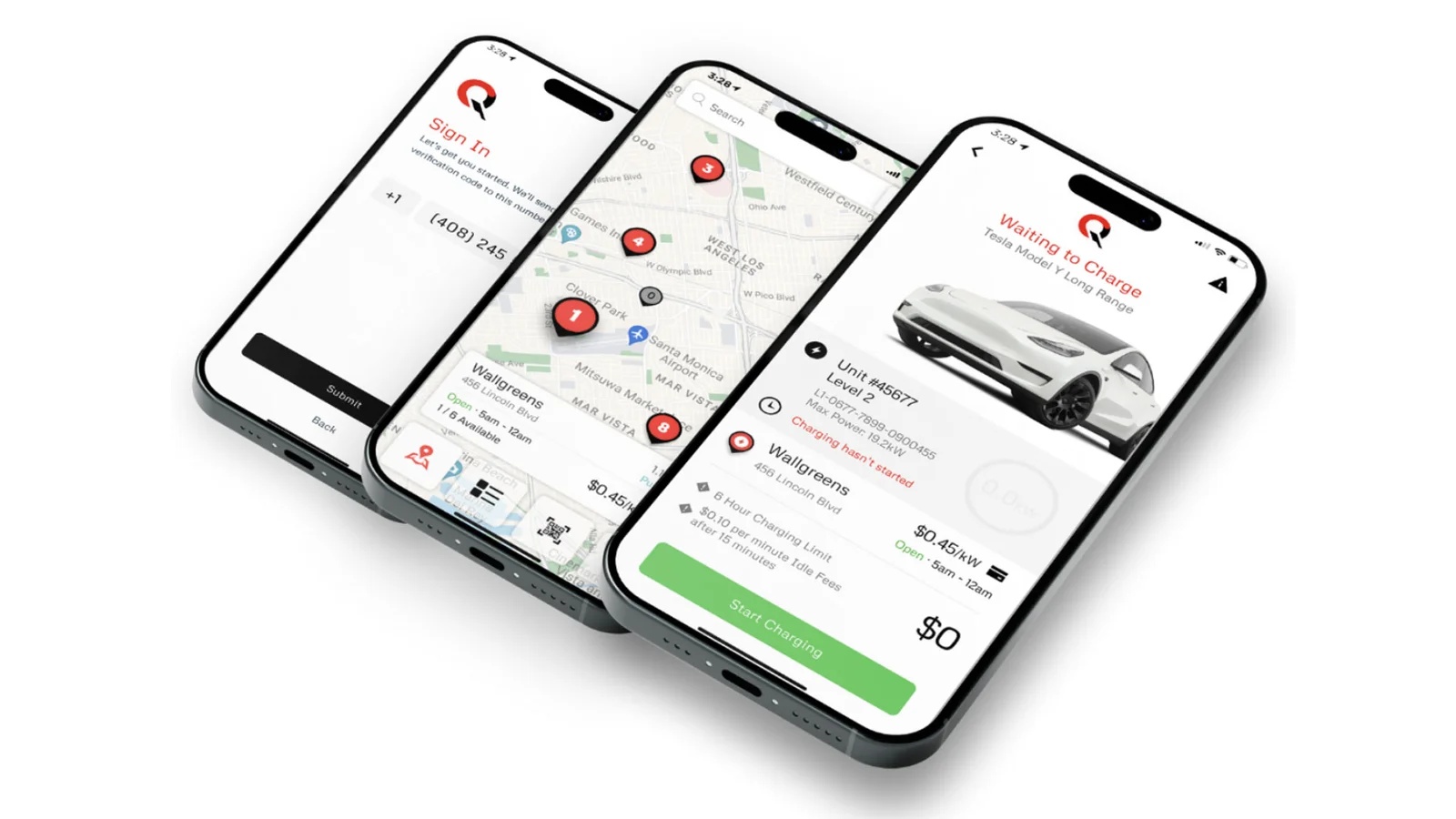
QCharge – Empowering EV Charging with Design & Innovation | 2025 NY Digital Awards
QCharge is a US-based innovator in electric vehicle (EV) charging technology, committed to reshaping how...

Yifei Wang is a UX/Product Designer with a background in architecture and digital systems thinking. Drawn to the speed and scale of digital experiences, she has designed end-to-end solutions for startups and global companies across AI, EV mobility, fintech, and SaaS.
Thank you! I’m Yifei Wang, a UX/Product Designer with a background in architecture and digital systems thinking. I began my journey in architecture—earning a Master’s from the University of Pennsylvania—where I was trained to think spatially, systemically, and humanistically.
Over time, I found myself drawn to the speed and scalability of digital experiences. Since then, I’ve worked with startups and global companies across the US and Asia, designing end-to-end experiences in AI, EV mobility, fintech, and SaaS.
This project represents the culmination of design, research, and real-world impact. Submitting it felt like the right opportunity to honor the process and the people behind it.
Winning the NY Digital Award is incredibly meaningful—it’s not just a personal recognition, but also a nod to the power of design in shaping how we interact with technology and solve human problems.
The awarded project was born out of the need to make EV charging more intuitive, secure, and future-ready. We explored facial and license plate recognition as alternatives to traditional login methods, merging digital design with physical interaction.
It represents a growing movement in the industry: building seamless, AI-integrated, human-centered ecosystems that respond to real user behavior—especially in sustainability and smart mobility sectors.
I believe it stood out because of its combination of futuristic vision and grounded execution. We didn’t just propose a smart feature—we tested it, iterated with user feedback, and made sure it integrated with business and regulatory realities. The attention to both user emotion and technical feasibility helped make it tangible, not just conceptual.
One challenge was designing for emerging biometric technology while maintaining usability and trust. We had to balance innovation with accessibility and legal compliance.
We overcame it by prototyping across different environments, involving stakeholders early, and being transparent with users about data usage and control. Collaboration across disciplines was key.
This win adds credibility to what we’re building. It has sparked new conversations with partners and collaborators who are equally invested in future mobility and AI-driven experiences. For me personally, it’s opened up opportunities to share more about our design approach at industry panels and conferences.
Many of our partners were excited and proud—especially those who had been with us through the early “rough edges” of prototyping. A few even shared the award announcement on their company’s social channels, which really showed how collaborative and invested the community was in the project.
Focus on impact and narrative. Awards judges see many beautiful designs, but they remember stories—how the project began, the problem it solved, and the people it served.
Keep documentation from day one, measure your outcomes, and build with users, not just for them. Don’t be afraid to show iterations and even failures; they humanize your process.
I’m inspired by how design is expanding beyond screens—into spatial computing, AI ecosystems, and sustainability infrastructure. I want to continue designing for emerging interfaces while keeping people at the center of those experiences. My goal is to contribute to systems that are not just smart, but meaningful.
Start small and start early. You don’t need a perfect portfolio or a “famous” project—what matters is how you solve problems. Practice writing about your process clearly and find a mentor or peer to review your entry. Awards aren’t just about winning—they help you reflect, build confidence, and find your voice.
Don’t isolate creativity. The best design solutions often come from cross-functional tension and collaboration. Learn from engineers, users, business leads—and teach them too. Share unfinished work. Lift each other up. We’re building the future together.
I’d love to dedicate this to all the engineers, product managers, and testers who believed in design’s role from day one—and especially to those who pushed back when needed. Great products come from healthy debate and mutual respect, and this award is the result of that shared process.
It is a human-centered, AI-integrated design that reimagines how we interact with infrastructure—built with empathy and powered by technology.
I’m currently exploring how AI and spatial computing can reshape everyday interactions—from education to digital wellness. One of my upcoming projects involves designing an immersive storytelling experience that blends virtual reality with generative AI, aimed at supporting emotional well-being in children.
I’m also working on refining my personal design methodology into a shareable framework for cross-disciplinary teams, with plans to contribute more to the design community through writing, mentoring, and public speaking.
My long-term goal is to create products that sit at the intersection of technology, empathy, and learning—designs that not only solve problems but also spark curiosity and growth.

Explore the journey of Yachan Yuan, the Gold Winner of the 2025 NY Digital Awards. She’s a visual designer and VFX artist whose work blends digital technology and poetic symbolism to connect personal memory with collective myth.