Brave Day
Brother holds the hand of little sister at Jenny Lake, WY as he convinces her...
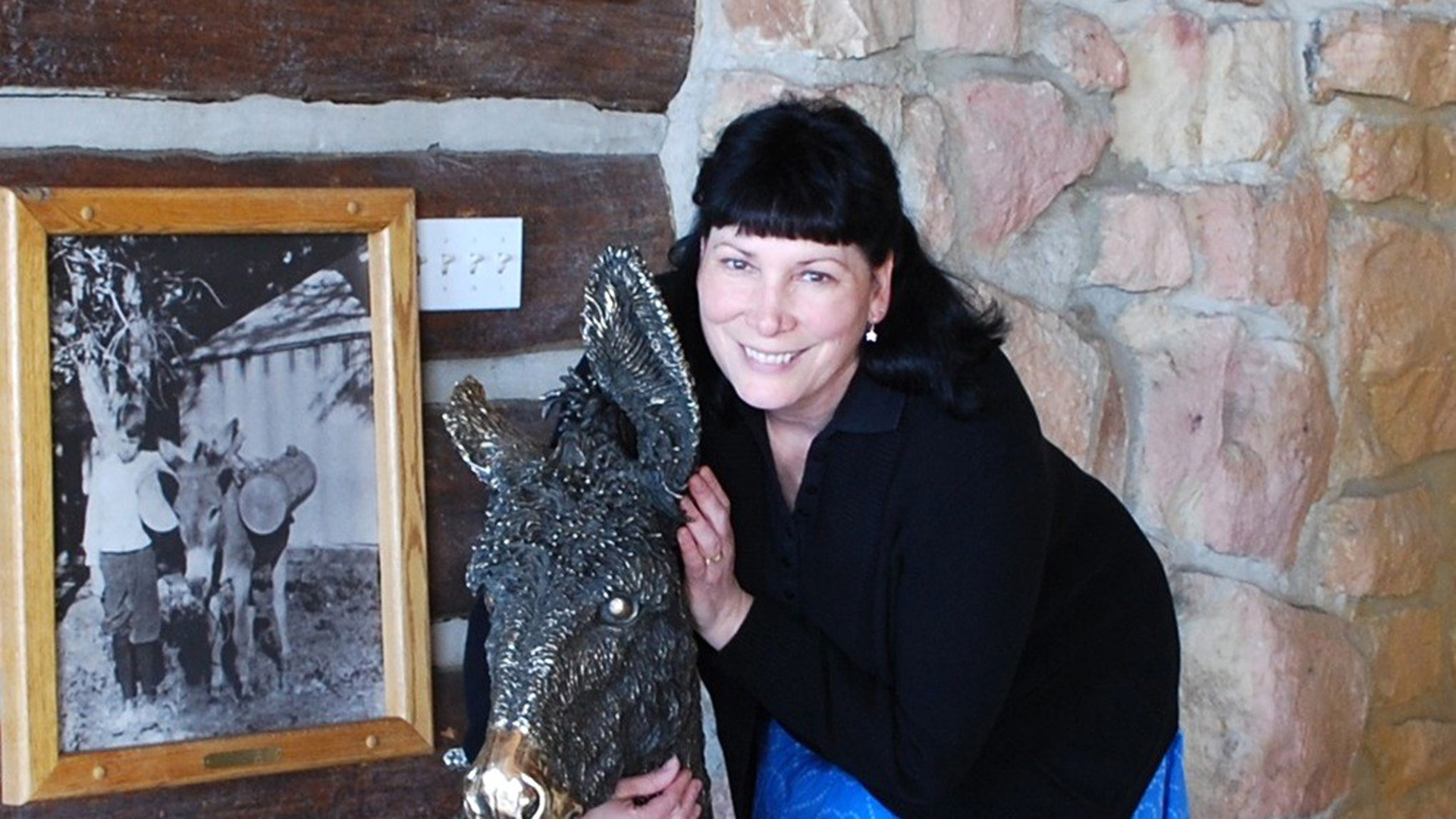
Catherine Riddle is a photographer who began as a teenager with a borrowed 35mm camera and a love for black and white film. After years of travel and a lifelong commitment to capturing images, she is now a full time photographer whose work has grown from local publications to international recognition.
Since my early days as a teenager using a borrowed 35mm camera and rolls of black-and-white film, I have loved seeing the world through the lens and sharing what I see with others. My photography journey has taken me to many incredible places—often connected to my work as a research scientist—and now, having retired from my day job, I have become a full-time photographer.
Having three of my photos recognized by the MUSE Photography Awards is an immense honor. As this is my first time entering any competition as a professional, these wins are both meaningful and significant in my evolution as a photographer. I could not be more proud or grateful.
I have never stopped taking photos since the first day I picked up a camera, nor have I stopped submitting my work since my very first image was published in my local newspaper at the age of 15. My photographs have appeared in state fair competitions, in friends’ homes, and more recently, in international competitions—previously within amateur categories, until now.
With this milestone, I now step fully into my identity as a professional photographer. As my journey as an amateur comes to a close, I look ahead with excitement and gratitude for this new chapter.
Three of my photographs were recognized this year, and I am honored to be counted among the winning photographers. While each image tells its own story, “What Lies Beyond” holds a particularly special place for me. The photograph captures a natural arch in the Alabama Hills near Lone Pine, California, framing the snowcapped Mt. Whitney at sunset.
My husband—who is my site director, life partner, and the one who drives us to all the incredible places we explore—and I had been hiking through the boulders of the Alabama Hills in search of the arch. After an hour of scrambling over rocks, we were beginning to lose the light.
Then, almost miraculously, we found the arch just as the sun was setting. It created a perfect frame for Mt. Whitney, with the light falling beautifully across the stone. Had we arrived even slightly earlier or later, the image would not have been the same. In photography, timing truly is everything.
I enjoy capturing images that tell a story. When submitting photographs to competitions, I simply choose the ones that reflect my favorite stories.
I was 13 years old when I first started taking photographs during a summer school class. My family could not afford a 35mm camera, so my art teacher—who also taught photography—kindly loaned me one.
I began shooting black-and-white film, as I could develop the rolls in the school darkroom and print contact sheets to review my work at no cost. I quickly fell in love with photography, and black-and-white has remained my favorite ever since those early days.
Black-and-white photography has been my favorite since I first picked up a camera. For me, it carries a depth that allows stories to unfold through subtle tonal variations.
Without the presence of color, viewers are drawn in more closely, encouraged to look deeper and interpret the image in a more personal and meaningful way.
I have always been a Nikon photographer, from my early days with 35mm film to my current Z 7II mirrorless camera.
My primary focus is landscape photography and everyday moments of people, so my camera is rarely on a tripod. Instead, it is usually slung over my shoulder as I hike and explore the stunning locations of the western United States and the Rocky Mountains.
I want viewers to feel the moment, to connect with the story within it, and to imagine what it was like to stand where I stood.
Light is everything—especially in black-and-white photography. It shapes the mood and narrative of an image through the way it defines shadows and highlights.
Light can obscure important details, whether in areas washed out by brightness or lost in shadow. Because of this, I often adjust my position and perspective until the light aligns perfectly with the story I want to capture.
Vast, quiet places inspire me, as they bring a sense of peace both to me as the photographer and to those who view my work. Some of my favorite locations include the mountains, lakes, and expansive high-desert landscapes of Idaho, Montana, and Wyoming, as well as Yellowstone and Grand Teton National Parks.
The landscapes in these places possess a quiet majesty that is difficult to describe, yet deeply felt by all who experience them.
I have been inspired by the work of Ansel Adams since I was a young child, and his photography has had a lasting impact on the kind of artist I aspire to be. However, my greatest influence—in art, photography, and life—has always been my father.
He was a high school art and science teacher, and I credit him with teaching me how to compose a photograph as one would a painting, as well as nurturing my love for the physical sciences. I later spent 26 years working as a research scientist in radiochemistry.
My father constantly encouraged me to think beyond convention and explore unconventional perspectives—whether in photography or science. Thank you, Dad. I miss you.
You have nothing to lose and everything to gain by entering competitions. I have also learned a great deal from failure—it pushes you to work harder and think more critically. That said, winning is always a wonderful feeling.
Interestingly, my early years as a painter have been invaluable to my photography. They taught me how to compose and frame an image so that the viewer’s eye moves across it in the same way it would through a fine work of art.
Never give up—never surrender. Keep learning, keep shooting, and never be afraid to try something new.
When I look back at my work from my twenties and thirties, I am amazed by how much it has evolved and matured. To see that journey now recognized through prestigious awards in the professional division is both humbling and incredibly rewarding.
Very little. I aim to set up my camera settings, location, lighting, and composition in advance so that minimal post-processing is needed.
I see AI as a tool, but not as an artist. When a photographer, artist, or musician creates something, a part of them is embedded in the work—something that can be felt by others.
Artificial intelligence will never possess that human element. This is one reason I do little to no post-processing, as I want to preserve the feeling I experienced when capturing the image. While these tools are invaluable in fields such as science, engineering, and medicine, I believe that in the arts, the work should remain fundamentally human.
The Earth from space.