Guangbo Headquarters Tower
The GB Group Headquarters in Ningbo is conceived as a contemporary landmark that unites corporate...

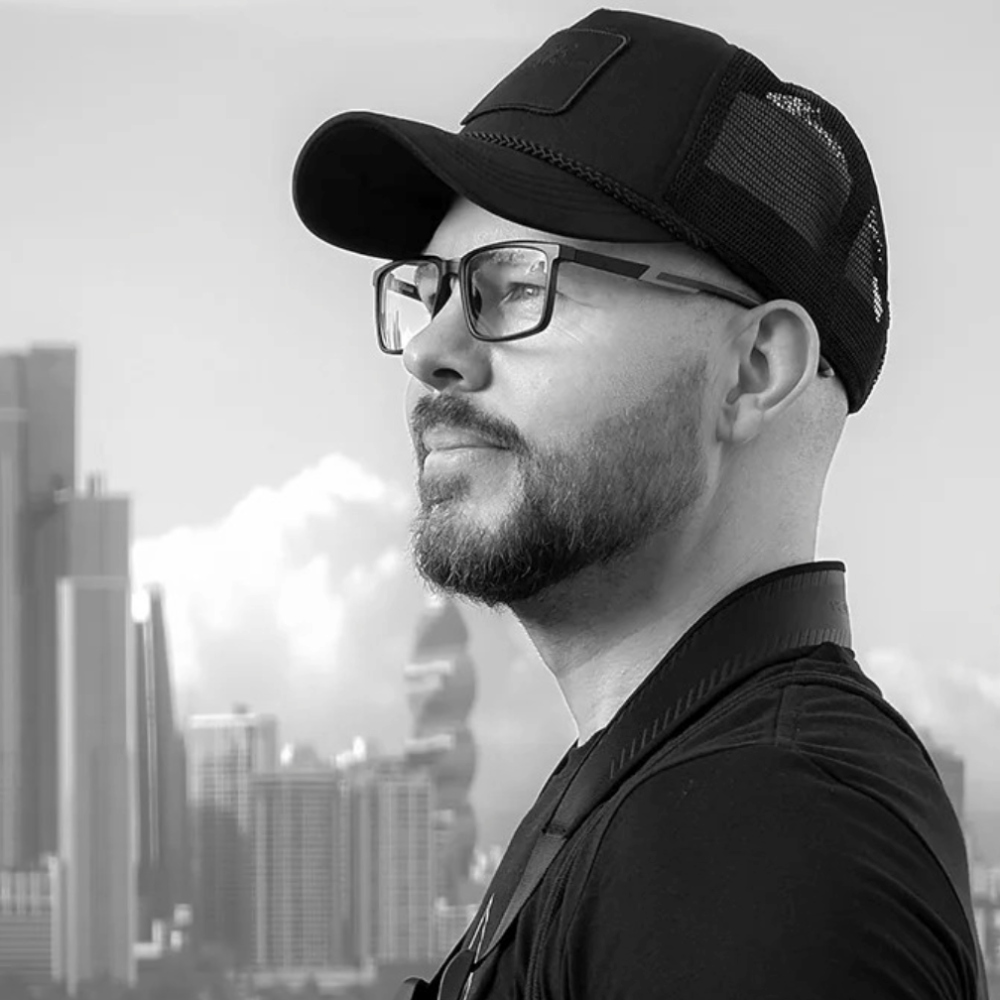
Hanqin Tang is an architectural designer and founder of CED Studio, where he investigates how architecture can express stories of change. His work explores the meeting point of technology, craft, and urban transformation through research and design experimentation.
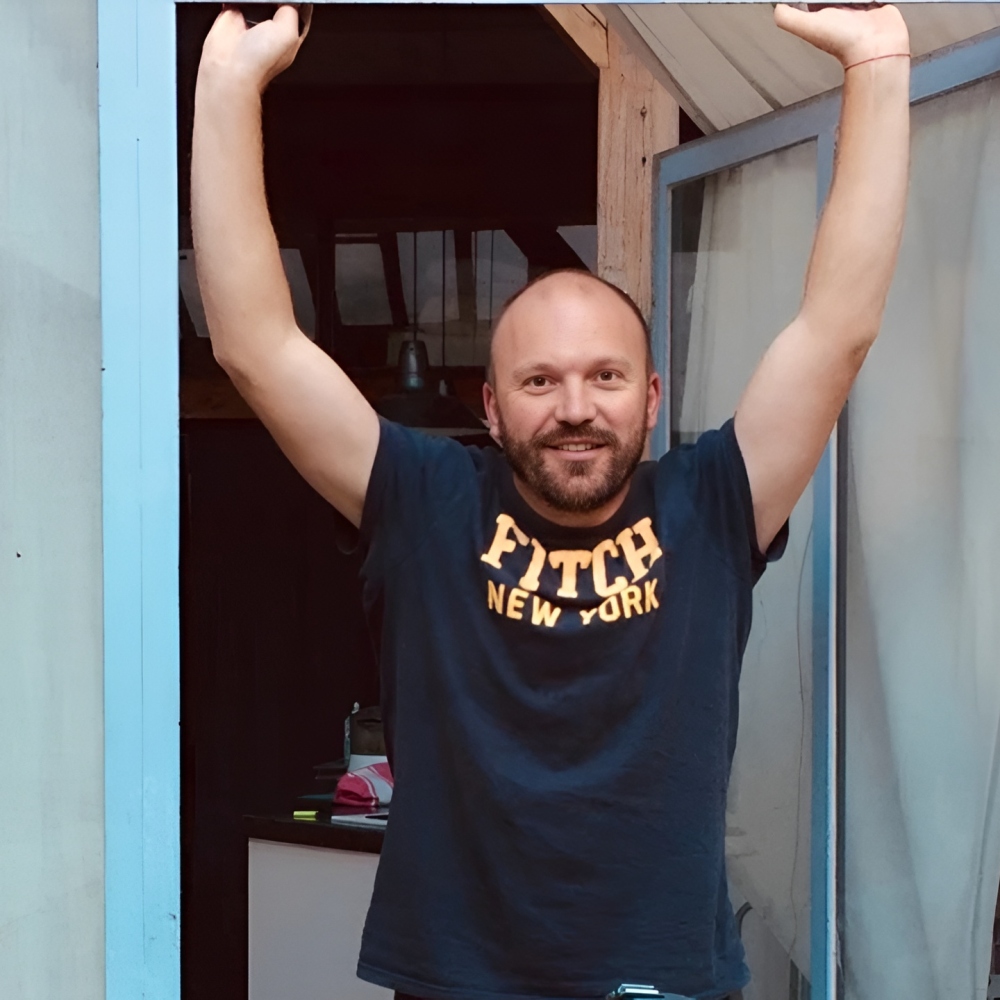
I am Jian Liang, a New York-based architectural designer with a specialised focus on transportation and aviation architecture. My professional portfolio spans a diverse range of scales, from major infrastructure projects like the Croton Water Filtration Plant, New York train terminal station designs, airport expansion design in London, to award-winning residential work such as The Longview House.
My approach to aviation design has been further recognised through my London Airport proposal, which garnered international acclaim, including Platinum at the London Design Awards and Gold at the MUSE Design Awards. These experiences, alongside accolades in competitions for minimal dwelling, retreat centers and architectural photography, have refined my approach to spatial and visual storytelling. Driven by a deep curiosity about the relationship between built environments and human behaviour, I view design as a vital medium for shaping movement, perception, and experience.
Being recognised by the London Design Awards is a meaningful affirmation of my design approach and research focus. Winning Gold for Airpark validates my exploration of the airport not only as a transportation hub, but as a destination in itself—one that redefines the aviation experience.
This recognition encourages me to continue pushing transportation and aviation design beyond efficiency, toward environments that are humane and culturally engaging. It also reinforces my belief that speculative and conceptual work can contribute valuable ideas to the future of airport design.
It has encouraged me to be more open in sharing my work, engaging in dialogue with other designers, and continuing to develop Airpark as both a design proposal and a research project. Most importantly, it has reinforced my belief in the value of curiosity-driven and speculative work and has given me momentum to explore more ambitious ideas in my future practice.
Experimentation is a fundamental part of my creative process, allowing me to challenge conventions and reimagine familiar building types.
In my airport project, Airpark, experimentation began with redefining the airport not merely as transportation infrastructure, but as a destination in itself. This conceptual shift reshaped the overall spatial strategy, making the airport more engaging, inclusive, and accessible to users beyond travellers alone.
The project also responds to its ocean-based location by proposing an algae-based energy system, using marine resources to generate renewable energy and support sustainable operations. In parallel, a hexagonal modular system enables design for assembly and manufacturing, improving construction efficiency while enhancing cost performance. Together, these experiments demonstrate how conceptual ambition can translate into practical, buildable, and environmentally responsible aviation architecture.
For the Airpark project, my most unusual inspiration came from a collision of two very different worlds: marine biology and amusement parks.
First, given the project’s location over the ocean in Tokyo, I looked to algae not just as marine life, but as an architectural solution. I was inspired by how algae convert sunlight into energy. I wanted to embed that biological logic into the airport’s infrastructure, using algae farming to generate green energy. It transforms the airport from a carbon-heavy machine into a living, breathing ecosystem.
Second, I drew inspiration from the structure of a Theme Park. Traditionally, airports are strictly utilitarian transit hubs. I wanted to challenge that by layering sea, land, and air activities together—much like a theme park offers multiple zones of entertainment. By treating the airport as a 'Sea-Land-Air' destination, we shift the user experience from stressful transit to joyful exploration.
I wish people understood that design is fundamentally a process of dynamic iteration.
It is not just about executing a plan; it is about exploring the unknown. We try things, we fail, and we learn from those 'errors' to make the next version better. In designing Airpark, many of the best features came from testing ideas that initially seemed impossible. To me, design is not a destination, but a journey of constant improvement.
I can answer this with a specific example: 'The Long View House' (a project I worked on at Slade Architecture), which won the 8th Annual AIANY Residential Interiors Review.
My approach is to respect the client's expectations while step-by-step guiding them toward a more elevated vision.
For that project, the client simply asked for a home suitable for a large, multi-generational family. I respected that functional need, but I also added my own design vision: integrating the architecture with the surrounding landscape and the Berkshire Mountains.
By introducing a 'house within a house' concept, I was able to balance their need for family togetherness with my desire to connect the home to nature. This approach satisfied the client’s practical requirements while ensuring the project achieved a high level of design quality.
The biggest challenge was actually the freedom of the concept.
Once I redefined the airport as a 'destination' rather than just a transit hub, the possibilities became endless—it could have been anything. The difficulty was not generating ideas, but filtering through those infinite answers to find the single optimal solution that best utilised the site's unique advantages.
I overcame this through extensive research and analysis of the urban context of Tokyo. I realised that Tokyo is incredibly dense; there is almost no space left in the city centre for new large-scale cultural or entertainment complexes.
This research led to the final prototype: combining urban entertainment functions with the airport infrastructure. This approach solves two problems at once: it provides the city with a much-needed new venue for leisure (which the city centre cannot accommodate), and it simultaneously transforms a boring transit hub into an engaging, vibrant Airpark.
I recharge by stepping away from architecture and immersing myself in other creative fields, like films and art exhibitions.
I see these not just as entertainment, but as a way to view the world through another artist's lens. Seeing how a film director frames a scene or how a curator organises a space forces me out of my own headspace. That shift in perspective is usually exactly what I need to spark a new idea or solve a design problem.
Thank you! I’m an architectural designer and founder of CED Studio — a small design practice where I explore how architecture can capture stories of change. CED stands for Concept, Environment, and Detail — three words that shape everything I design. I started it as a space for experimentation, where ideas are allowed to stay playful before turning serious. I’m fascinated by how cities evolve, and how technology and craft can meet halfway to create spaces that feel both futuristic and deeply human.
The Guangbo Headquarters Tower started from a simple question: how can a corporate tower feel alive? Instead of a sealed glass block, we designed two offset volumes connected by open sky gardens. These outdoor terraces create space for air, light, and social encounters high above the city. The towers lean gently toward each other, almost like two people in conversation — a subtle gesture that changes the light and wind patterns while giving the skyline its recognizable rhythm.

Read more insights into award-winning designs in the published interview "Min Jun Liao Interviewed and Shares Her Winning Design - The Vein of Light (光影石語)" here.