Gemma
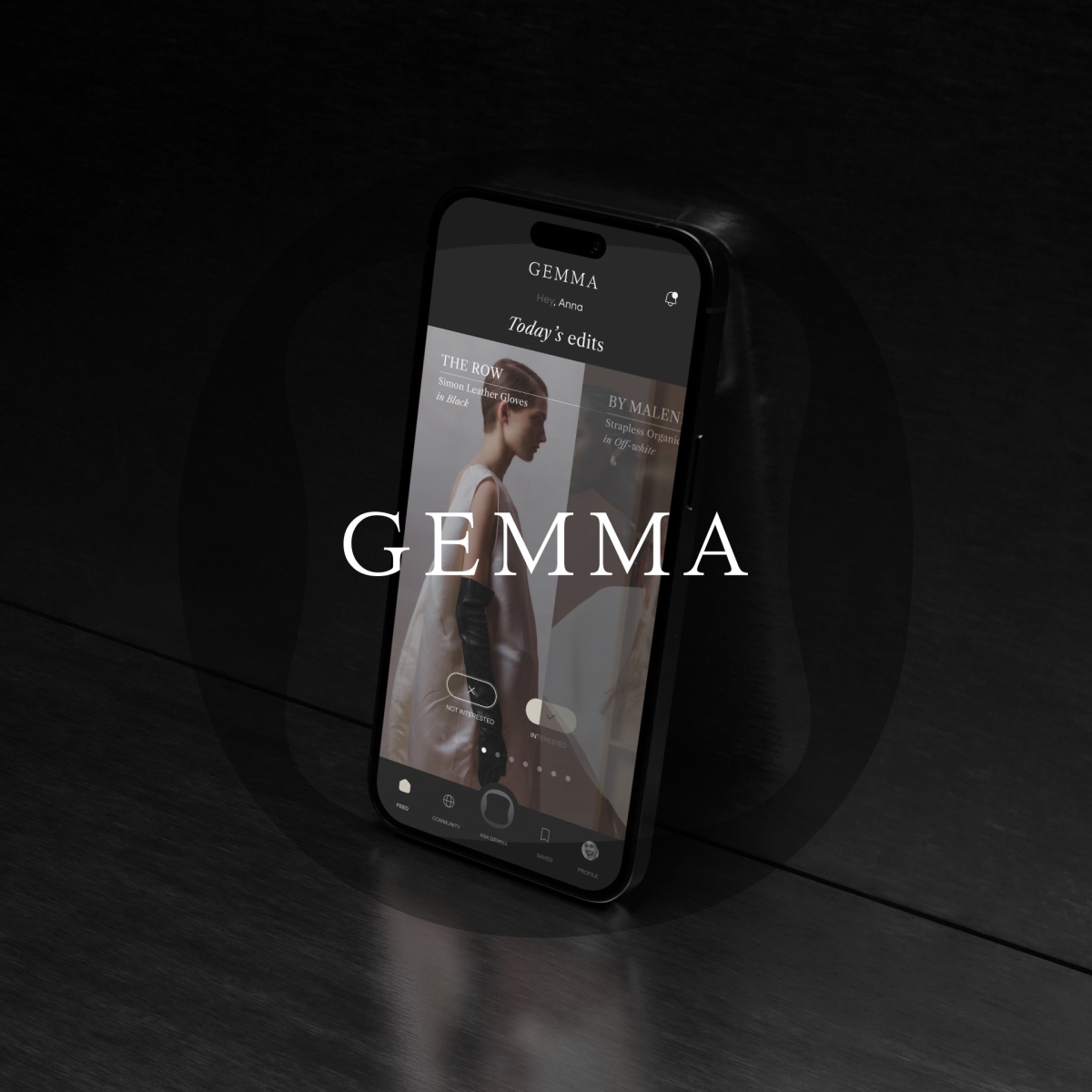
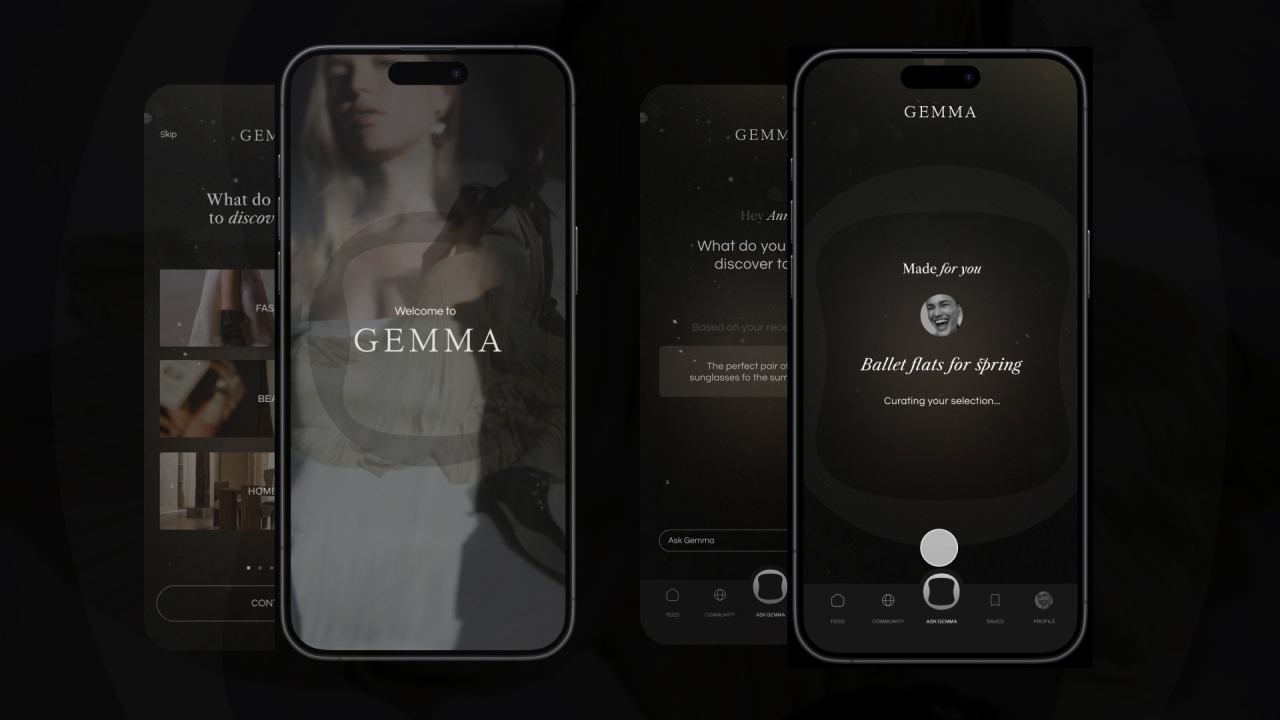
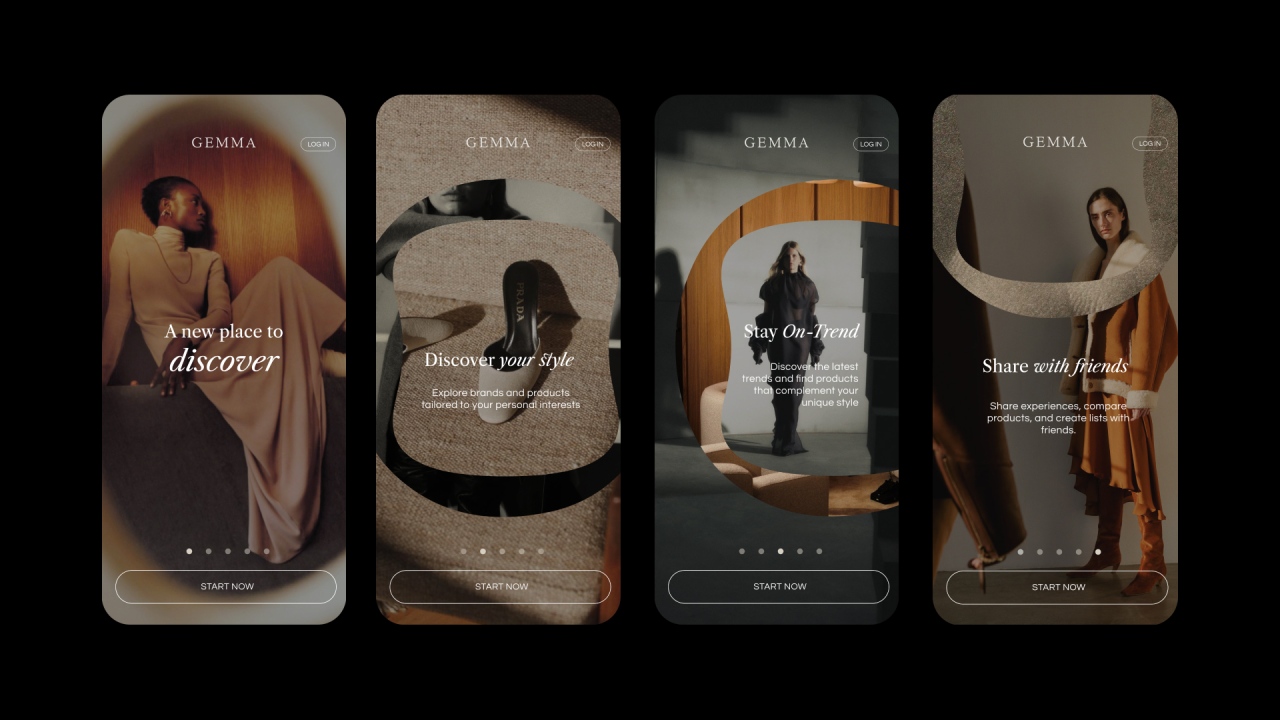
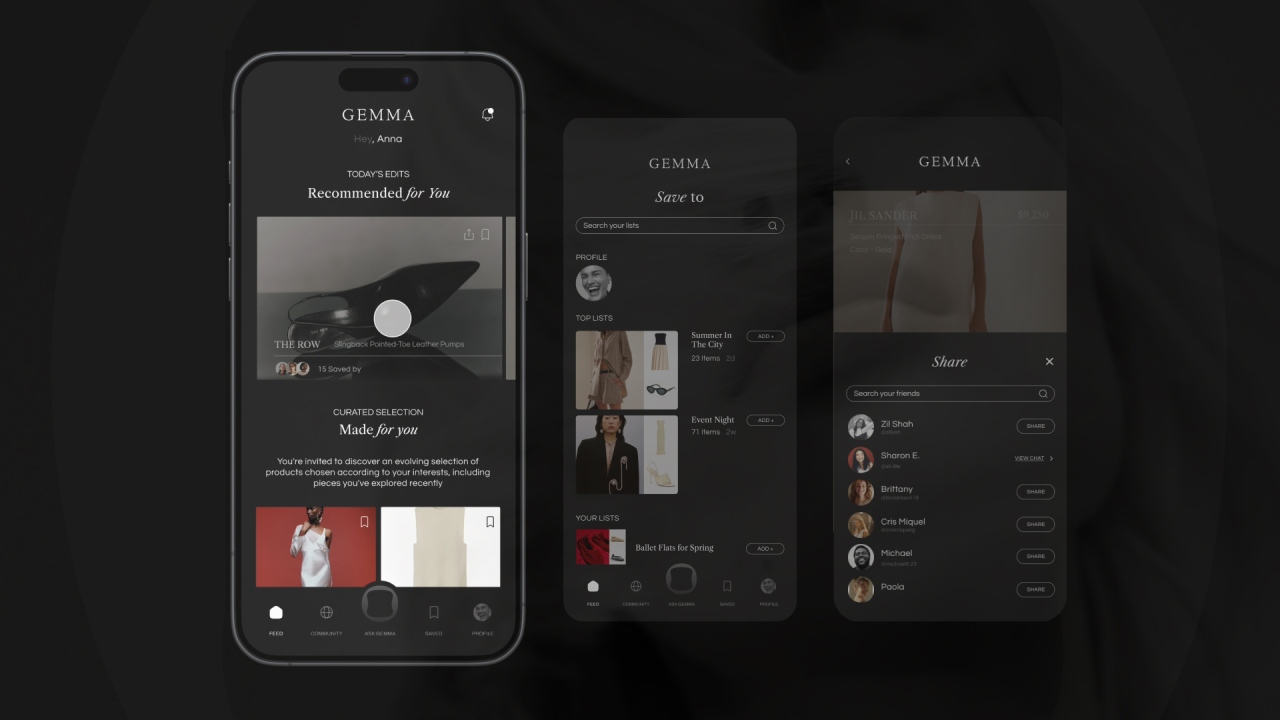
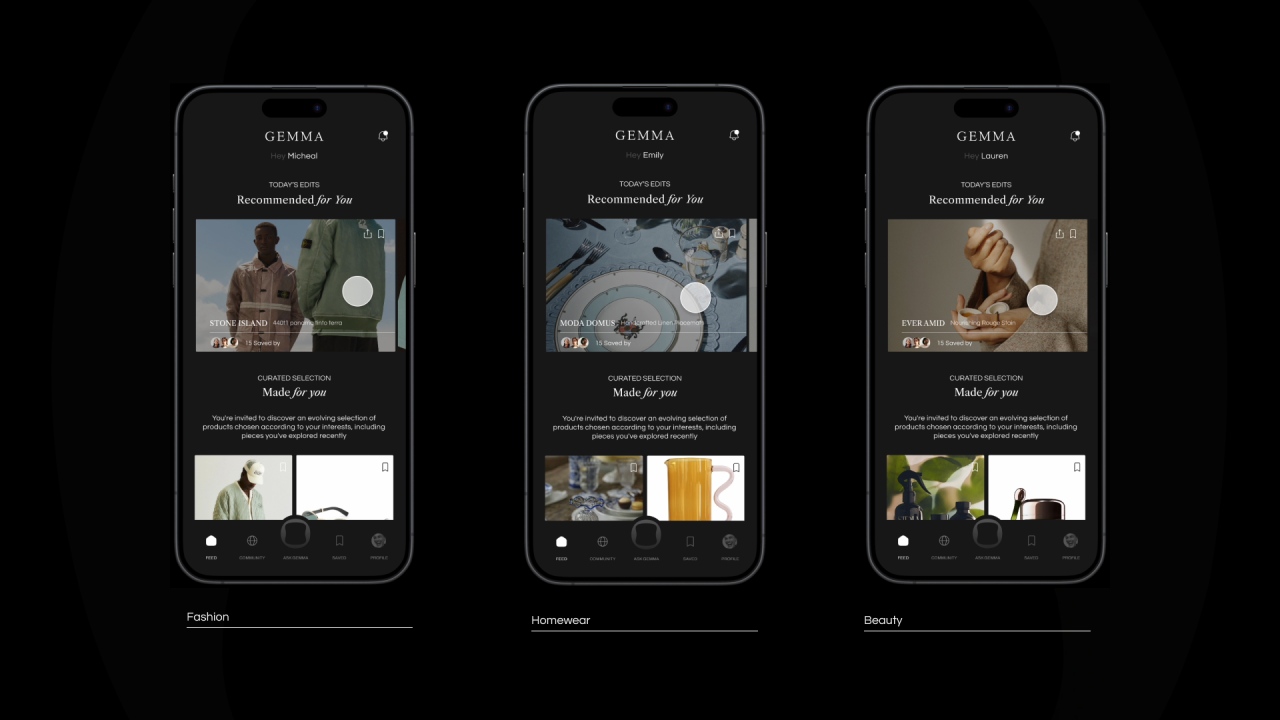
Gemma is a cutting-edge mobile-first platform designed to transform product discovery through a combination of...

Angelica Kramarski is a Creative Director and Brand Strategist whose work spans brand systems, product innovation, and experience design. Drawing from backgrounds in architecture, graphic design, and creative strategy, she approaches design as a structured way of defining problems before shaping solutions.
I'm Angelica Kramarski, a Creative Director and Brand Strategist based in New York. My work sits at the intersection of brand systems, product innovation, and experience design.
My path into design was never linear. I moved across architecture, graphic design, product development, and creative strategy, and what each discipline gave me was a different way of seeing. Architecture taught me to think in systems.
Graphic design taught me that clarity is its own form of intelligence. Product development taught me that ideas only matter when they can be built. And creative strategy taught me that the most powerful thing a designer can do is ask the question nobody else thought to ask.
That is the instinct I bring to every project. And it is what keeps pulling me toward problems that sit at the edge of where design is going next.
This award is a milestone. Not because of the recognition itself, but because of what it confirms: that I asked the right question.
When I started developing Gemma, the bet was that AI was not just a new tool, it was signaling a new mode of consumption entirely. And that design had a responsibility to meet that shift, not decorate it. Winning in the User Interface category at the NY Product Design Awards tells me the field is moving in exactly that direction, and that the work I am doing is at the front of it.
That is what this means to me. Confirmation that the question was worth asking, and that the answer is landing.
Winning this award opened conversations I had not had before. Not just about Gemma specifically, but about where the industry is moving and how closely that direction aligns with the thinking behind the project. Seeing that alignment confirmed that the work is not ahead of its time, it is exactly on time.
But what has impacted me most is what the recognition revealed about the work itself. Winning does not close a project; it opens it. I came away from this with a much clearer sense of where Gemma can go, what needs to be refined, and what the next version of that idea looks like. The conversations it generated with leaders in the field gave me both validation and direction at the same time.
That combination is rare. And it is the kind of momentum that only comes when the work genuinely resonates.
Experimentation for me starts with resisting the first answer. The most dangerous assumption in design is that your initial instinct is the right one, especially when that instinct comes from your own experience as a consumer. What feels like the most logical solution to you is often just the most familiar one.
Gemma taught me that directly. My first impulse was to solve for the visual experience, to make discovery feel cleaner, more intuitive on the surface. But when I started testing the idea and mapping the actual context around it, what emerged was a completely different problem. People were not struggling with the interface. They were struggling with relevance. The ocean of options was not the issue. The absence of genuine alignment between what was being offered and who was actually consuming it was.
That shift only happened because I kept testing past the point where the first solution felt good enough. Experimentation is not just a phase in my process. It is the mechanism that separates what looks right from what actually works. And the only way to get there is through mapping, testing, and being willing to find out that your first answer was wrong.
The most unusual source of inspiration I return to consistently is art, and not in the way most designers mean it.
It is not about aesthetics or visual reference. It is about what exists underneath. A brushstroke in an abstract painting looks spontaneous, but it is the result of a precise decision. The artist knew exactly what they were doing, even when the outcome appears to defy logic or order. There is intention in every mark, even the ones that look like accidents.
That idea has shaped how I think about design systems. The most powerful work often looks effortless or inevitable from the outside, but underneath, there is a level of rigor and deliberation that most people never see. That is what I am always building toward. Not the appearance of simplicity, but the discipline behind it.
That design is not arbitrary. There is a logic underneath every decision, a structure that precedes the visual, a reasoning that most people never see because good design makes it invisible. When something feels right, it is usually because someone did a lot of work to make it feel inevitable.
The other misconception that costs the most is treating design as the final layer, the polish applied once the real decisions have already been made. Design is most powerful at the beginning, when it is the tool used to define the problem, not just to present the solution. That shift, from design as output to design as input, is what changes the quality of everything that follows.
The tension between client expectations and creative conviction is usually a signal that something has not been understood yet, on one side or the other.
My first move is never to push harder on my idea or to concede to theirs. It is to go back to the why. When there is misalignment, it almost always means something fundamental has not been communicated clearly enough: the problem we are actually solving, the person we are designing for, or the logic behind the creative direction. Once that gap is identified, the conversation changes completely.
Design is not something I impose. It is something I build collectively with the people who have to live with it. The best outcomes I have been part of came from that process, where the client's knowledge of their world and my understanding of design logic met somewhere neither of us had anticipated at the start.
The hardest part of developing Gemma was not the design itself. It was the clarity problem that came before any design decision could be made: understanding where a genuine differential could exist inside a market that was already saturated with solutions.
There were many directions the project could have gone. The options were not scarce; they were overwhelming. And that is its own kind of challenge, knowing which path to commit to when several of them look viable on the surface. The work of narrowing that down required going deeper into the context than the brief demanded. Understanding not just what existed in the market, but why none of it was fully working for the people it was supposed to serve.
That is where the insight that became Gemma emerged. Not from generating more options, but from understanding the problem at a level where only one direction made sense. The challenge was getting there. The answer, once found, was clear.
I have learned to treat creative blocks the same way I treat professional ones, because they operate by the same logic. When you hit a wall doing the same thing repeatedly, the wall is not the problem. The repetition is.
My instinct when I am blocked is not to push through in the same direction. It is to do the opposite. Completely. Change the medium, change the context, change the question entirely. What looks like a dead end from inside a familiar process almost always opens up the moment you stop trying to solve it the way you have always solved things.
Some of my strongest outcomes have come from exactly that moment, from being forced to abandon the comfortable path and find a completely different one. The block, in retrospect, was never an obstacle. It was the signal that something more interesting was available if I was willing to look for it in a completely different place.
Every project gets all of me. I immerse myself completely in the context, the problem, and the people it is being built for. That level of commitment is not a personality trait; it is how I work. Anything less produces work that is technically correct but lacks the conviction that makes something actually resonate.
Intention is the value I protect most deliberately. Every decision should be traceable back to a reason, not a preference. When that intention runs through the entire process, the work carries a coherence that people feel even when they cannot name it.
Stop waiting to feel ready and start building the instinct to ask better questions. The tools, the software, and the trends are all learnable. What separates extraordinary designers from competent ones is judgment, knowing which problem is actually worth solving and why.
Study things that have nothing to do with design. The more disciplines you move through, the more connections you can make that nobody else sees. That cross-disciplinary thinking is not a detour from a design career. It is the foundation of one that lasts.
And do not be afraid of reinvention. The designers who endure are not the ones who stayed in their lane. They are the ones who kept expanding what their lane could mean.
Dieter Rams said it decades ago: it is unlikely we will ever exhaust the possibilities of innovation in design, because technological development continuously opens new ones. What strikes me about that idea is not that he was right about technology. It is that he understood design as something that runs deeper than any tool or medium. Technology accelerates. Design thinks.
That distinction matters more now than ever. The conversation I would want to have with him is about what design owes this moment, when AI is generating form faster than most people can evaluate it. His answer, I suspect, would be the same as always: intention. The question is never what technology makes possible. It is what is actually worth making.
I wish someone would ask me: not whether AI will replace designers, but what design owes to AI.
Because that is the more interesting and more urgent question. The field is consumed by the wrong debate. The question is not whether we survive the technology. It is what responsibility design has to shape how that technology enters people's lives. AI can generate forms faster than any designer. What it cannot do is decide what is worth making, for whom, and why. That is a design question. And if designers do not answer it with intention and rigor, someone else will answer it by default.
That is what Gemma was built on. Not a fear of what AI was doing to design, but a conviction about what design could do with AI. Those are completely different starting points. And they produce completely different work.
Read into Designing Intuitive AI Experiences with Anurag Goyal, a winner of the NY Product Design Awards, by visiting the link here.



.jpg)