
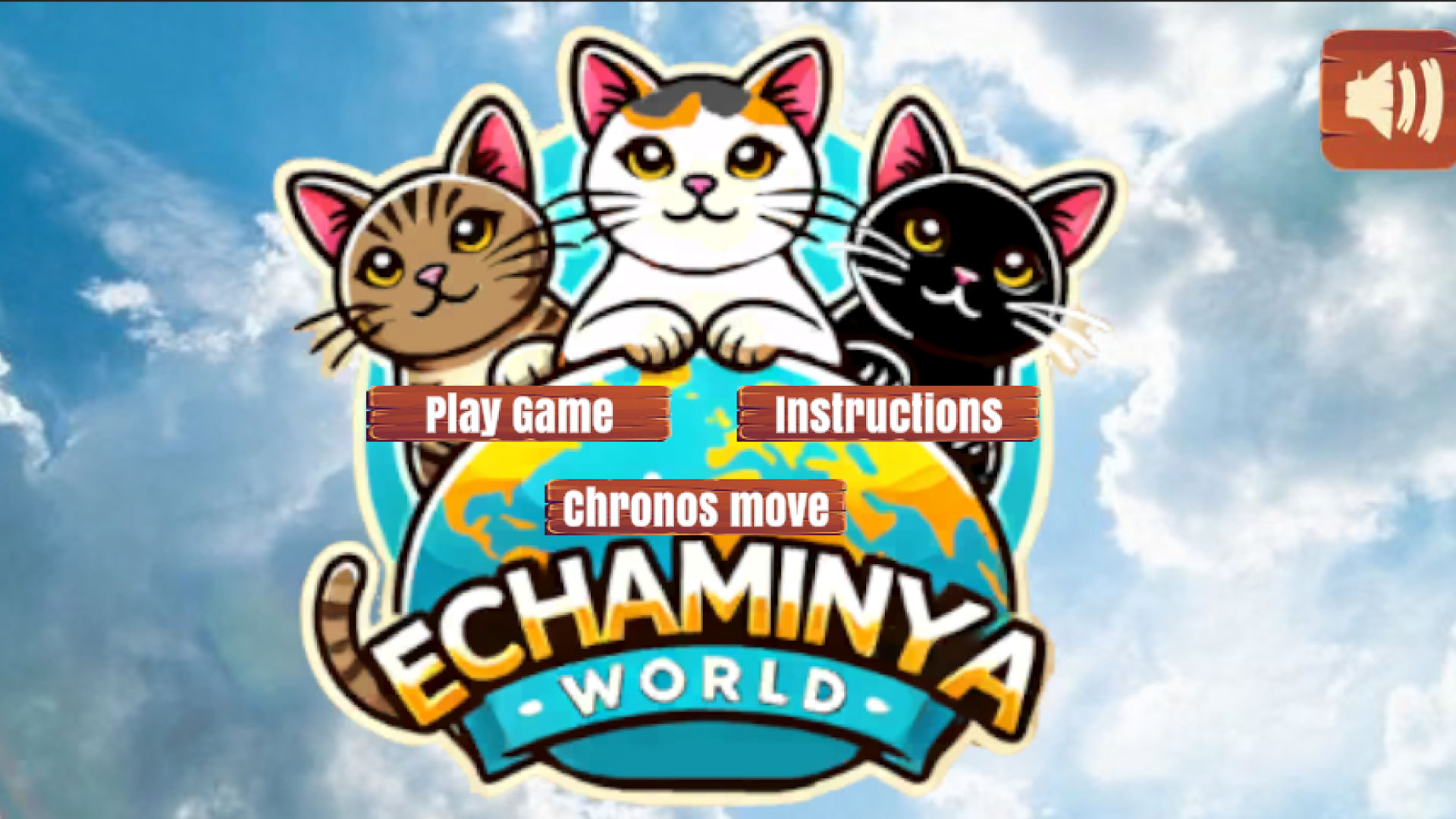
Echaminya World
Make your cat happy by catching as much mice as you can. The more you...
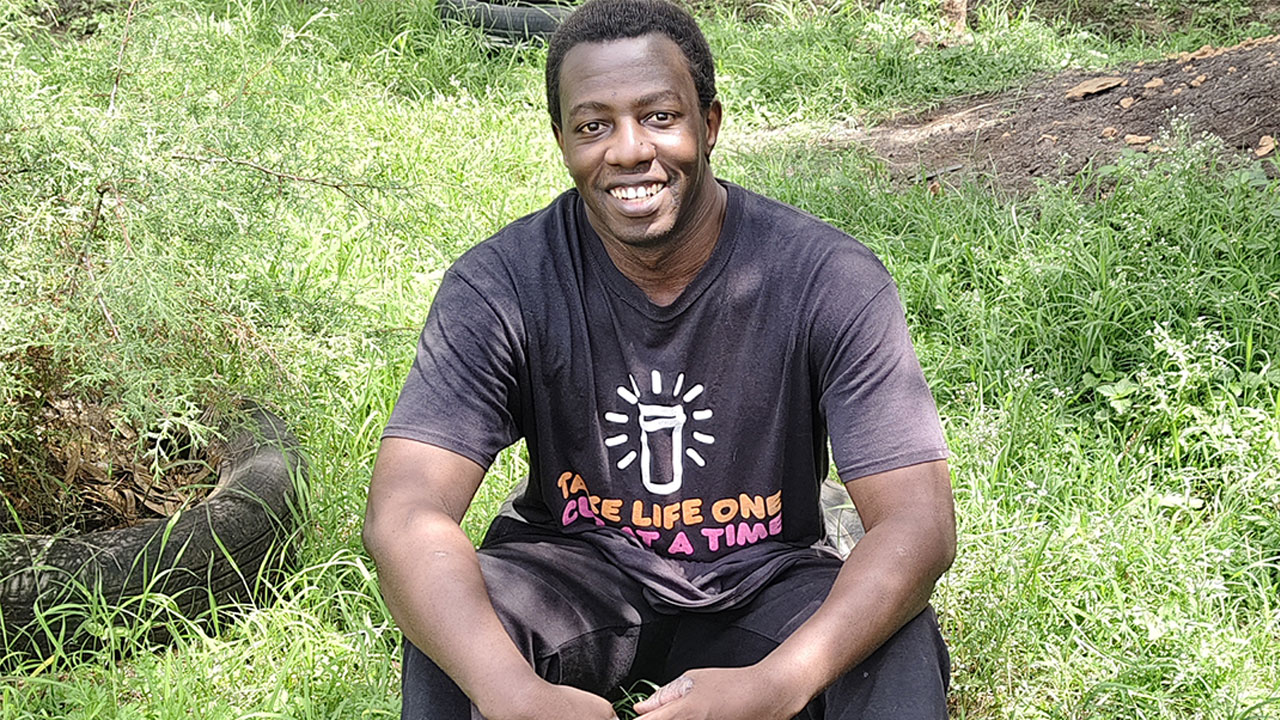
Echaminya Mbarani is a game developer, mentor, and creator of Echaminya World, an imaginative universe built around cats, storytelling, and interactive experiences. Through his work, he combines entertainment, creativity, and meaningful themes to create games that invite players into an ever-expanding world.
Thank you. My name is Echaminya Mbarani. I'm a game developer and mentor in the gaming industry. I created a brand called Echaminya World, which represents a multidimensional universe centered around cats. Echaminya World consists of seven dimensions:
- Dimension 1: The home of real-life cats and the very first dimension to be created.
- Dimension 2: The game world, where player actions influence the events that unfold in the Echaminya World cat comics.
- Dimension 3: The cat Discord community, where players and viewers exist within the three-dimensional world.
- Dimension 4: The dimension of time, where time can be traversed in more than one direction.
- Dimension 5: The cat dream dimension, where multiple possibilities exist.
- Dimension 6: A mysterious, unknown dimension that no one dares to enter.
- Dimension 7: The highest of all dimensions, serving as the home and domain of the Cat Creator. It is said to be filled with mystery and wonder.
The game I submitted to the NYX Game Awards is called Echaminya World. It is the first version of my other game, Cat Run Frenzy, which represents Echaminya World 2 (the second dimension).
Echaminya World is a game adaptation of the first dimension, which is why players will notice elements inspired by that world, such as the gray rats. Cat Run Frenzy, on the other hand, represents the second dimension and exists as its own world within the larger Echaminya World universe.
This is the story and lore behind the series.
One defining moment came during my final year at university. While most of my classmates chose to develop websites or management systems for their final-year projects, I realized I wanted to create something that genuinely reflected my interests and creativity. The idea that excited me most was developing a game, even though I wasn't certain it would be accepted.
A senior student encouraged me to pursue it, reminding me that originality often leaves the strongest impression. His confidence gave me the reassurance to move forward, and I decided to take the opportunity to create something I was truly passionate about.
During the final project presentations, each student presented their work to a panel of supervisors. As I demonstrated my game, something unexpected happened. Supervisors from other presentations began gathering around to watch, drawn by the experience I was showcasing. Seeing that level of curiosity and engagement was incredibly rewarding and remains one of the most memorable moments of my journey.
That experience became one of many milestones that confirmed game development was the path I wanted to pursue. Having been introduced to games at a very young age, my passion for the medium has continued to grow over the years. Looking back, that project wasn't just a university assignment—it was the moment I realized I wanted to create experiences that could inspire the same sense of curiosity and excitement in others.
I'm actually a solo indie game developer. Rather than building a traditional studio, I've created a brand called Echaminya World, with the mission of enriching lives through edutainment and relaxation. I've always been fascinated by scientific concepts, but I also have a love for cats, storytelling, and humor, all of which have become defining elements of the brand.
Everything within my game is designed to entertain while encouraging curiosity and learning. Whether it's discovering scientific ideas, following an evolving story, or interacting and competing with others, I want people to feel like they're part of something larger. The game itself is just one piece of a much broader universe, contributing to a brand built around creating meaningful, enjoyable experiences.
My game is a fast-paced arcade game where players take on the role of a cat racing against the clock to collect as many mice as possible. While the gameplay is designed to be exciting and entertaining, it also incorporates meaningful symbolism inspired by my Christian faith.
Throughout the game, different items provide gameplay advantages while carrying deeper meaning. For example, collecting cat food temporarily increases the player's speed, while picking up a Bible extends that boost, inspired by the verse, "Man shall not live by bread alone, but by every word that comes from the mouth of God" (Matthew 4:4). Likewise, when a cross appears, accompanied by a chorus of "Hallelujah," it grants additional time. Its unpredictable appearance reflects the message in Matthew 25:13: "Watch therefore, for you know neither the day nor the hour."
Beyond the gameplay itself, Bible verses appear on in-game billboards as another way to encourage curiosity and invite players to learn more about the Gospel.
The sequel, Echaminya World 2: Cat Run Frenzy, expands on these ideas with faster-paced gameplay, introducing obstacles, predators, and a global leaderboard to create a more challenging experience. While the gameplay mechanics have evolved, the core inspiration remains the same, continuing to blend entertainment, storytelling, and faith as part of the larger universe.
The game is designed to feel dynamic and responsive. At the end of each session, it provides players with feedback based on their performance, along with practical tips to help them improve and refine their gameplay.
There were certainly many challenges throughout the development process, as game development is rarely straightforward. One of the more memorable challenges involved refining the game's physics. While developing the character's running mechanics, I encountered issues that caused the character to rotate unexpectedly or fall during movement.
Resolving the issue required a great deal of experimentation and persistence. Through trial and error, I carefully adjusted the collision settings, gravity, and other physics parameters until the movement behaved as intended. It was one of many technical challenges I faced, but overcoming obstacles like these became an important part of the development journey.
One of the biggest lessons I've learned is the importance of defining a clear project scope and working within it. It's easy to keep adding ideas, but having a well-defined scope helps keep development focused and achievable.
Whenever I envision a feature that isn't feasible due to the limitations of the engine or available tools, I adapt the story or gameplay to fit those constraints without compromising the core vision. Rather than seeing limitations as obstacles, I view them as opportunities to think creatively and find alternative solutions that preserve the heart of the experience.
Augmented reality continues to fascinate me, and I'm looking forward to exploring an AR version of Echaminya World 2 in the future. It's something I'd love to explore once I've developed Echaminya World and its many dimensions further.
I've tried a few VR games and have seen more people playing AR games online, which has only fueled my interest in the technology. The same can be said for AI, as it's becoming an increasingly important part of our everyday lives.
God willing, I'd love to develop an AR version of my game in the future. I'm also excited by the possibility of exploring VR for the fifth dimension, where players could experience the dream world in an entirely new way.
Emotionally, the game is designed to evoke excitement, fun, and an adrenaline rush as players race to catch as many mice as they can. Above all, I want players to enjoy the experience.
On a deeper level, I hope the game inspires players to learn more about Jesus and the message of the Gospel.
Ultimately, I hope players come away with the understanding that there is someone who makes all things possible through faith. For me, that person is Jesus, and that belief continues to inspire both my life and my work.
It's interesting that you describe it as a dream project because it quite literally is one. My next project explores the dream world, which is the fifth dimension of my game, and that's what I'm currently working on.
The fifth dimension of my game is what I'll be focusing on next, along with continuing to expand its many dimensions. There's still so much more to build, and I'm certainly not short of ideas.
Having grown up playing classic titles like Commander Keen and Hocus Pocus, I've witnessed the gaming industry evolve from retro 2D experiences and handheld games to 3D worlds, high-resolution graphics, AR, and VR. It's been incredible to watch how far the industry has come.
As a developer, I began creating 3D games with Unreal Engine 3 and have learned to adapt by continually embracing new technologies and expanding my skills. The biggest shift, in my view, has been the rise of AI. I use it as a tool to streamline my workflow and improve efficiency, but I see it as an assistant rather than a replacement for creativity. AI has also made game development more accessible, allowing more people to bring their ideas to life and creating a more level playing field for developers.
One feature I'm especially proud of is the feedback system. It responds to the way players approach the game, creating the feeling that it's paying attention to every move they make. I believe that's one of the key elements that brings the game to life.
As an individual developer, I would choose Dong Nguyen, the creator of Flappy Bird. I'm fascinated by how he was able to captivate millions of players with such a simple game, and I'd love to better understand the thinking and design decisions behind its success.
As for a studio, I would choose Riot Games. I've explored some of their development techniques, but I'd love the opportunity to gain a deeper understanding of their creative and production processes. There's something invaluable about experiencing that environment firsthand.
Start by learning the fundamentals, then keep building. Don't rely solely on AI or "vibe coding." Take the time to understand the fundamentals and the frameworks you're using, but don't get trapped in tutorial hell. The best way to grow is by creating your own games, learning from your mistakes, and continually improving through experience.
The journey won't always be easy, but perseverance makes all the difference. If you keep moving forward, you'll eventually look back and realize how much you've accomplished. It's an incredibly rewarding experience, and receiving recognition through awards makes that journey even more meaningful. To me, it's one of the highest forms of recognition a game developer can achieve, made possible through dedication, resilience, and a genuine passion for the craft.