Living Architecture
Architecture was my first language and fashion the second, and now I speak both at...
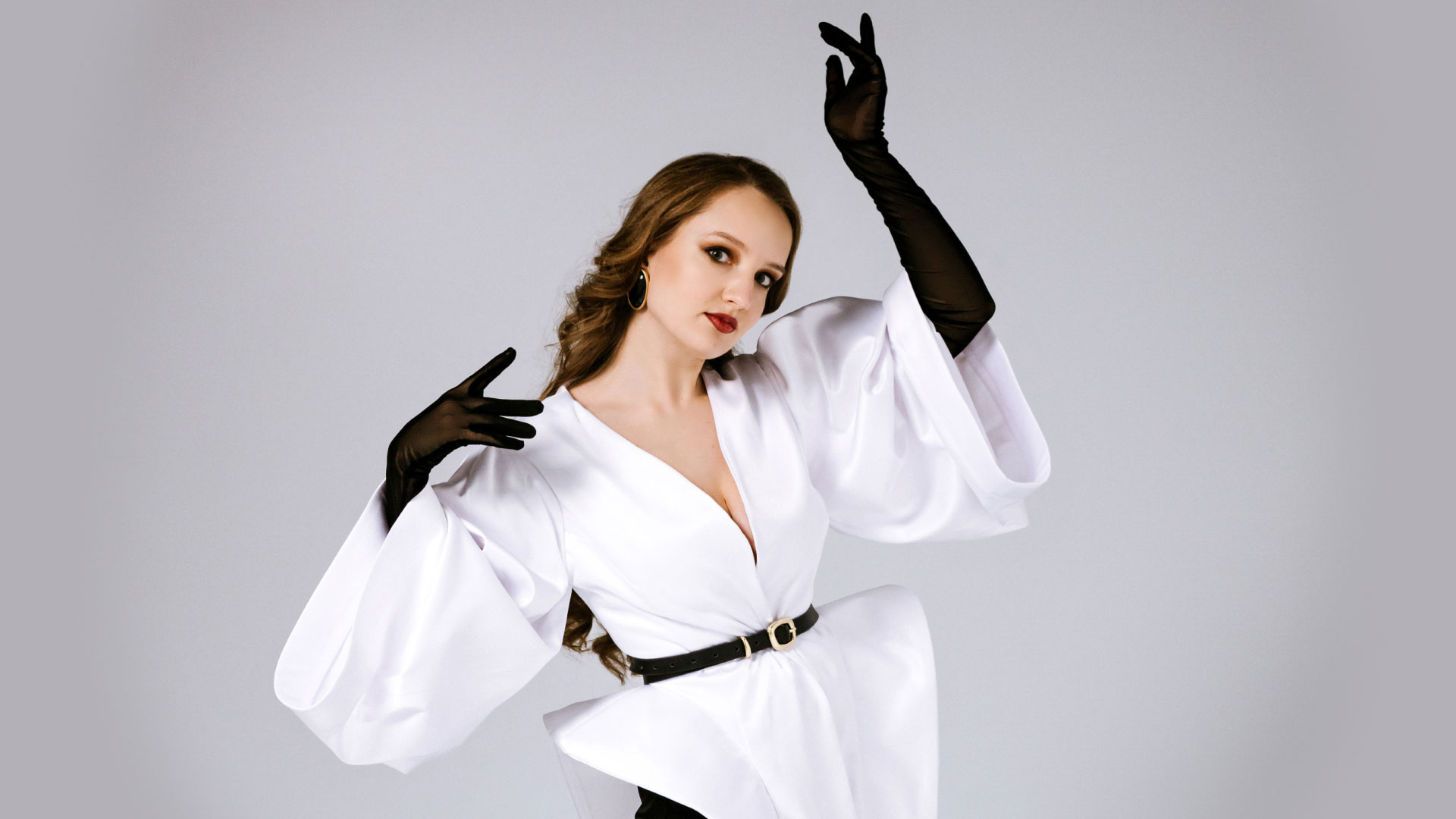
Elena Zharkova is a product designer who views design not as a discipline, but as a way of seeing the world. Drawing on her architectural training, she explores the intersection of form, structure, and visual storytelling across digital products and fashion.
My name is Elena Zharkova. I am interested in design in all its forms because, for me, it is not just a specific discipline, but a way of thinking and seeing the world. My first degree is in architecture, and it was architecture that taught me to understand form, space, proportion, and structure.
Today, I work as a product designer, with my professional practice focused on digital products and interfaces. At the same time, my passion for fashion has remained a constant part of my life. For several years, fashion design has been an important creative outlet and one of my favorite personal pursuits.
I design and sew clothing for myself, drawing on what feels most natural to me as a designer: architectural thinking, attention to silhouette, volume, rhythm, and the fluidity of form. I am especially interested in translating architectural principles into clothing and observing how a static structure comes to life through the movement of the human body.
Taking part in the MUSE Design Awards was especially meaningful to me because it marked my first experience entering an international competition with a fashion project. I wanted to understand whether my visual language—shaped at the intersection of architecture, product design, and fashion—would resonate with a professional audience.
At the same time, I do not have a formal education in fashion design. I came to fashion through architecture, personal practice, observation, and an independent search for my own creative voice.
That is why this award means so much to me. It affirms that a path shaped not by a traditional trajectory, but by the convergence of different disciplines and a genuine passion for fashion, can carry both artistic strength and professional relevance.
This award had a profound impact on me personally. It strengthened my confidence in both myself and the creative direction I am pursuing. More importantly, it helped me view my practice not merely as a personal passion, but as a serious creative discipline with the potential to continue evolving.
It reinforced the idea that my fashion projects can exist not only within a personal sphere, but also within a professional international context. Perhaps most importantly, it gave me the confidence to keep moving forward—to enter new competitions, share my work with a wider audience, and embrace my identity as a designer with a distinctive voice.
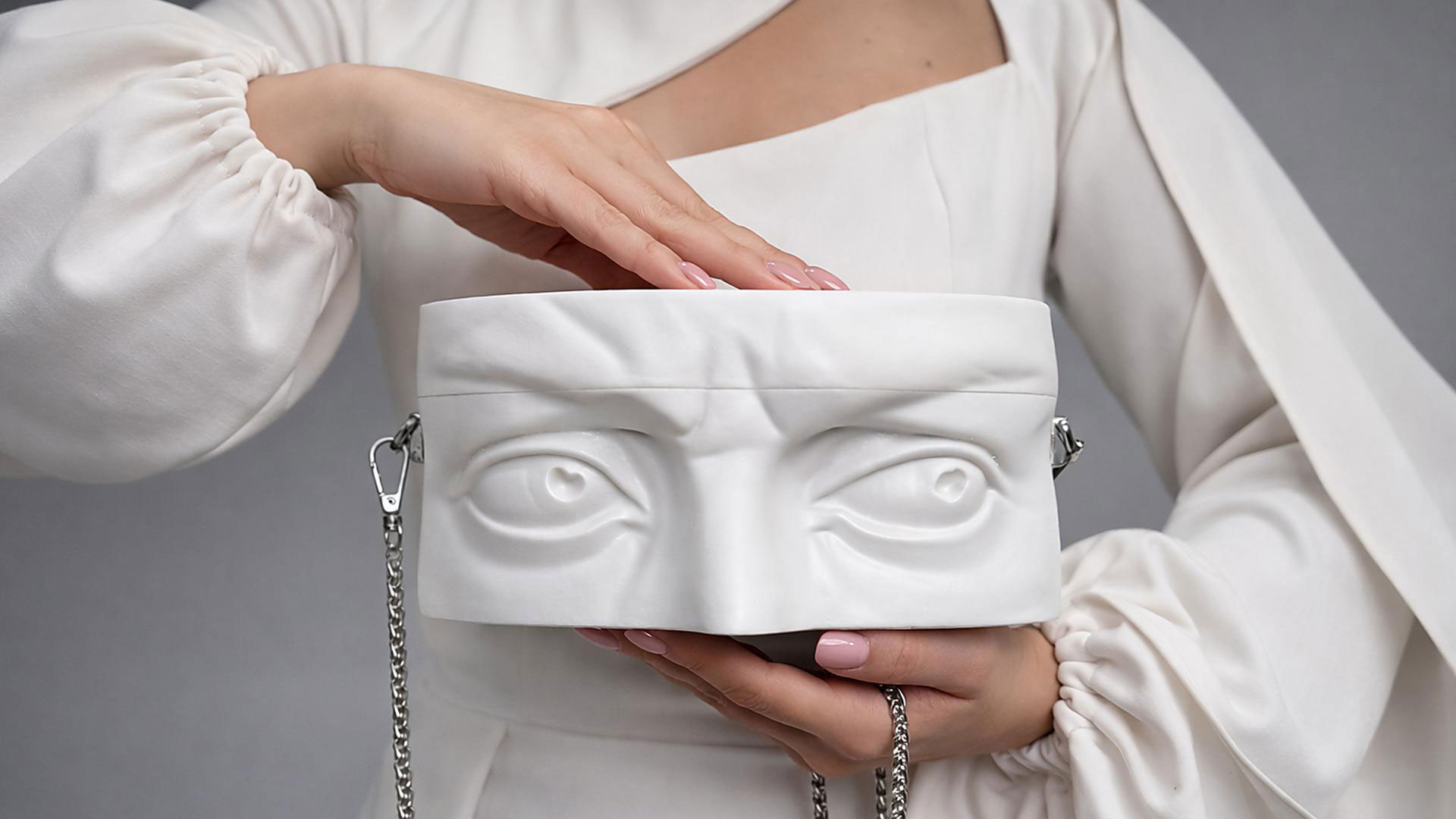
For me, experimentation is an essential part of the creative process. A good example is the Eyes of David bag, which emerged from an exploration at the intersection of disciplines. I took a fragment of a classical sculpture—one I had drawn many times during academic drawing classes—and transformed it into a contemporary wearable object through 3D printing.
I believe new visual languages are often born in moments like these, when experimentation brings together personal experience, cultural references, and modern technology.
One of the most unusual sources of inspiration for me was the Russian folktale The Frog Princess and the idea of her transformation from a frog into a queen. What inspired me was not only the story itself, but also the concept of a hidden essence revealed through transformation.
I was interested in translating this fairytale narrative into a contemporary visual language and expressing that metamorphosis not literally, but through form, color, texture, and movement in clothing.
For the Living Architecture collection, the inspiration came from architecture itself. The white dress was inspired by Zaha Hadid's Heydar Aliyev Center and its fluid forms, continuous white surfaces, and ability to feel both monumental and alive.
The long white blouse draws inspiration from Richard Meier's Dives in Misericordia (Jubilee Church), reflecting the purity of white volumes, vertical rhythm, and the way light is embedded within the architecture. The long gray dress was inspired by the Dancing House in Prague, capturing its asymmetry, fluidity, and sense of movement—as though architecture itself had come to life.
I would like more people to understand that design is not only about the final result, but also about the long process behind it—searching, questioning, testing, and making decisions. From the outside, ideas can appear fully formed, but in reality, strong projects emerge through countless small steps: observation, research, mistakes, revisions, and the constant evaluation of different possibilities.
I also believe it is important to recognize that the design process is rarely linear. Sometimes a mistake, an unexpected fold in fabric, an imperfect mock-up, or a spontaneous association leads to a stronger solution than the original plan.
Design is not simply the creation of an object; it is a journey of learning to see more clearly, think more critically, and express ideas with greater precision.
In my case, this question takes on a slightly different meaning, as I typically work on my fashion projects without an external client. In a sense, I become both the designer and the client.
For me, the balance is not between client expectations and creative vision, but between creative freedom and maintaining high standards for the final result.
While working on the Eyes of David bag, the greatest challenge was transforming the concept into a functional object. It is one thing to imagine an expressive artistic piece and quite another to bring it to life as a usable bag. I had to build the 3D model from scratch, ensuring it preserved the sculptural quality of the original concept while remaining structurally sound, practical, and functional.
The most difficult part was finding the right balance between aesthetics and usability—refining the overall form, wall thickness, depth of the relief, fit of the lid, and magnetic closure system. To achieve the desired result, we produced 12 prototype versions, and after each iteration I revised the model, adjusting its proportions and construction.
The process required considerable patience, as every new version felt closer to the intended vision yet still incomplete. Ultimately, it was through repeated testing, refinement, and continuous adjustments that the project evolved into more than an accessory—it became a true art object.
Sometimes a pause is necessary not because ideas have disappeared, but because they need time to mature. In those moments, I do not force myself to create something new. Instead, I give myself the space to observe, reflect, and rediscover inspiration.
A simple walk through the city or watching a beautiful sunset often helps. My hometown, Nizhny Novgorod, is unofficially known as the “Capital of Sunsets,” and the views here are truly breathtaking. More often than not, that is where my creative energy begins to return.
It is important to me that design is more than aesthetics alone. It should be rooted in meaning, personal experience, and a genuine connection to its subject. That is why architectural thinking, craftsmanship, fairytale narratives, and references to classical art often appear in my work—they are all integral parts of my visual language.
Another value that guides my practice is the reinterpretation of familiar cultural references. I am fascinated by the idea of taking widely recognized images—whether from folklore, classical sculpture, or architecture—and translating them into a contemporary visual language.
For me, this is not only an artistic pursuit, but also a deeply personal one. Through design, I reconnect my experiences, education, and memories with the ideas I seek to express as a creator.
I would advise aspiring designers not to wait until they feel completely ready. More often than not, confidence comes after action, not before it—through practice, mistakes, challenges, and the gradual discovery of your own creative voice.
That is why I believe it is important not only to learn, but also to begin creating your own projects as early as possible, even if they feel imperfect at first. Growth comes through the process of making.
If I could collaborate with any designer, past or present, I would choose John Galliano. I consider him one of the most visionary figures in fashion. What inspires me most is his ability to transform fashion into a complete emotional and visual universe, where clothing becomes storytelling, theater, memory, and fantasy all at once.
His work is never solely about silhouette or beauty; it is infused with drama, character, and a profound sense of transformation. Collaborating with someone like him would be an extraordinary experience because he approaches fashion not simply as design, but as a living narrative.
I wish more people would ask me, "What idea connects all the objects in your collection into a unified whole?"
My answer would be that every piece is connected by the idea of a living form—the moment when architecture, sculpture, or a cultural image ceases to be static and begins to come alive through movement, the body, light, and material.
Visually, this concept is expressed through recurring elements of my design language: geometric cutouts, asymmetry, elongated lines, sculptural volumes, contrasting black-and-white tones, long panels, and statement sleeves. Through these elements, form becomes more than structure; it evolves into a living composition.
It is important to me that each piece embodies both precision and fluidity, architectural logic and emotional movement. Together, these qualities create a collection that feels cohesive and unified.