Creativity in Exile
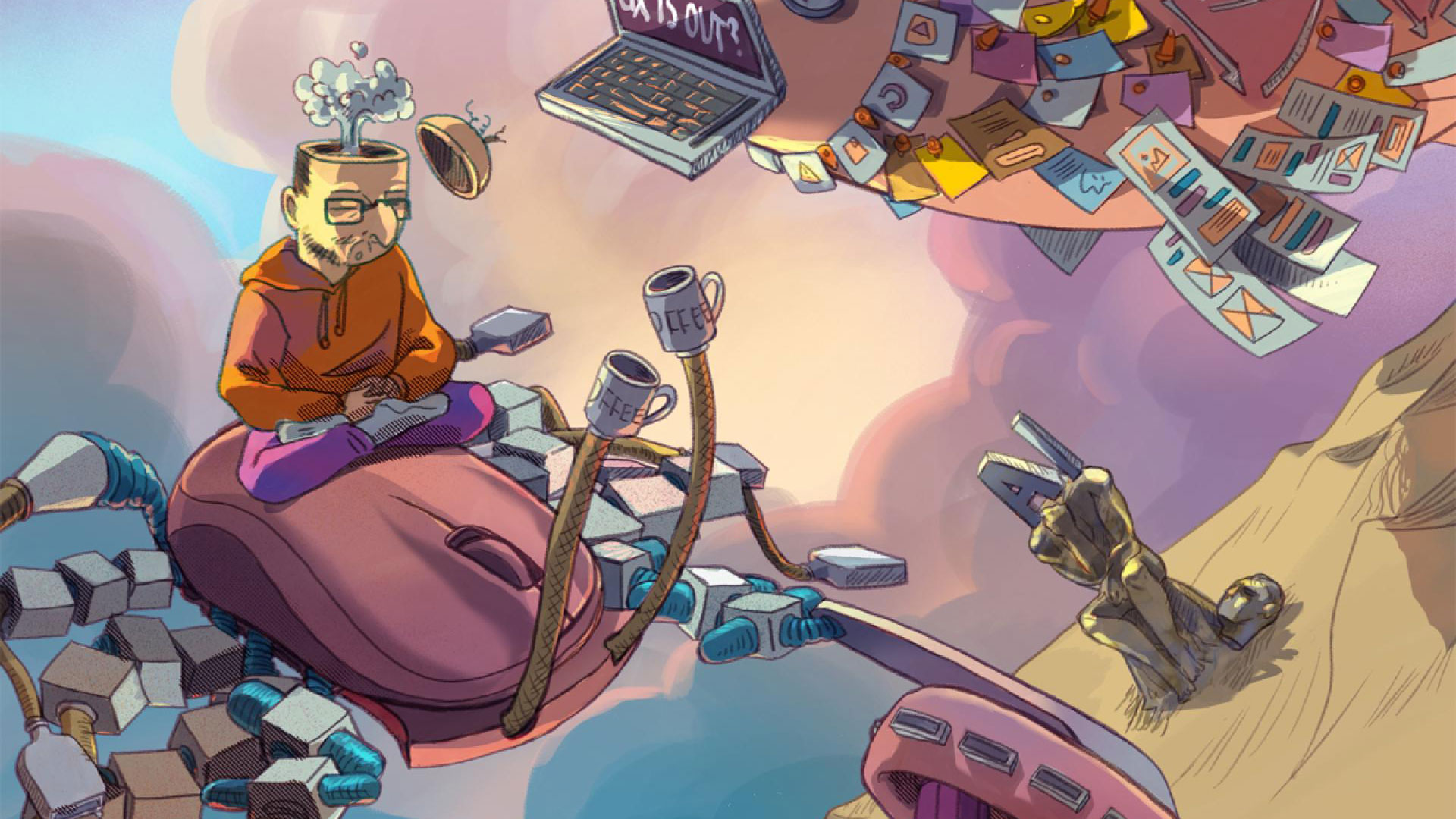
This work reflects the quiet turbulence experienced by engineers, designers, and artists navigating layoffs and...
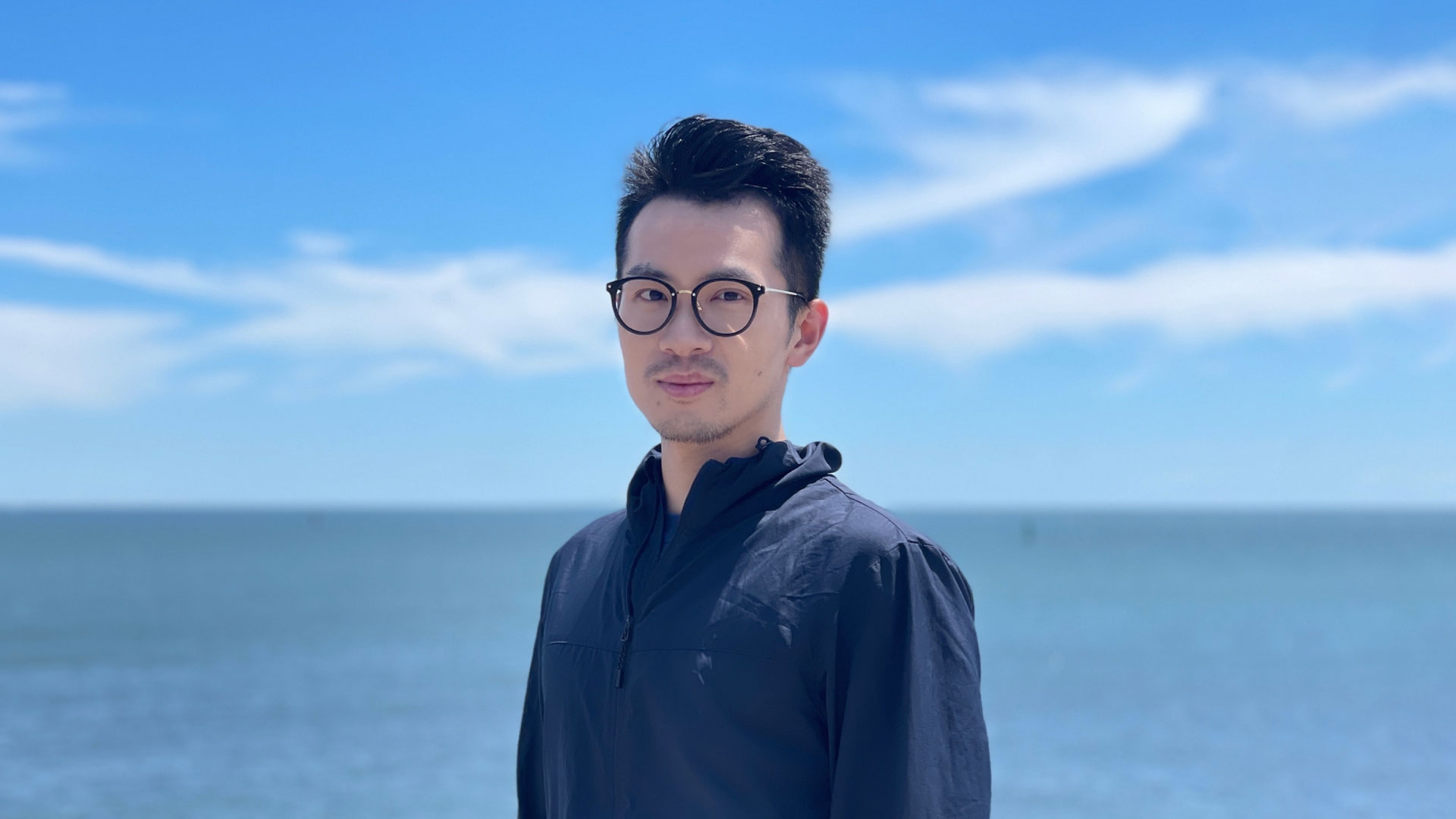
Chen Huang is a Boston-based illustrator, visual artist, and UX designer whose work spans children’s books, comics, posters, and digital products. Drawing on his MIT Design Engineering background, he creates visual stories that explore creativity, human connection, and everyday life.
I’m Chen Huang, a Boston-based illustrator and visual artist creating children’s books, comics, posters, and brand visuals. I also work as a UX and product designer on enterprise products.
I hold a Master’s degree in Design Engineering from MIT, where my training across design, business, and technology shaped my interest in how design influences human experience. I am a two-time Gold Winner, recognized for the poster illustration Creativity in Exile and the illustrated book The Silent Gifts.
For the children’s book, a recent conversation with my family inspired me to submit. It had been five years since I’d had a proper reunion with them, and I realized I hadn’t fully used my “magic power” as an illustrator to honor them. This year, I returned to the quiet, ordinary, yet deeply meaningful moments from my childhood—small scenes of joy my family created for me. The work became a way to thank them and preserve those memories.
For the poster, the inspiration came from my experience as a UX designer living through the AI wave since 2024. I’ve watched engineers, artists, and designers struggle with AI’s impact on our industry. This year felt pivotal: conversations around AI and human creativity became much more intense and complex. I decided to be brave and create an ironic, humorous, yet thought-provoking poster for a client—one that doesn’t just talk about AI in abstract terms, but invites people to feel the subtle, very real emotions of individuals in our field and reflect on how we want to live with AI in the long term.
Personally, winning for two pieces is a huge milestone. I didn’t expect such subtle, intimate themes—family memories and nuanced feelings about AI—to resonate at an awards level. The Gold recognition makes me feel that authentic, honest work can be seen and valued.
Professionally, it opens a new path. It gives me confidence to keep building illustration-driven visual narratives—for children, younger generations, and broader audiences—around topics that matter deeply to us as humans living in a tech-driven world.
Behind this success is a very real struggle: as a designer deeply involved with AI technology, I’ve worried that human-made work might be replaced or devalued. That anxiety pulled me away from noticing the subtle but meaningful moments in life—interactions with people and nature, conversations with family and friends, and small whimsical ideas that could become meaningful projects.
I made a deliberate decision to return to those subtleties and honor them through my work. I revisited simple, joyful childhood moments with my grandmother on our rural farm, experiences that many younger generations rarely see or appreciate today.
Through these visuals, I focus on the ordinary, quiet joys of life, especially for kids growing up in a tech-driven world. I want to remind them that joy is always close by, regardless of how technology, the economy, or society changes.
Another message I hope to send to the industry is about human resilience. That’s something AI—or any future technology—cannot replace. Our struggles can be transformed into powerful stories. Our sensitivity, vulnerability, and shared values, such as love and peace, are what make us uniquely human.
I’m still humbled to have received 2 Gold Wins under my belt but a few elements may have helped the work stand out:
1. An honest approach to discussing the topic of AI vs. humans
Many artists avoid AI as a theme because of concerns around ethics and credibility, or fear that even mentioning it could hurt their careers. My work is entirely human-made, and I fully support authentic human creation. But I also chose to address AI directly as a topic in the work. This gave the project a more contemporary, slightly ironic perspective, adding extra layers of meaning.
2. Craftsmanship and experimentation
For every project, I push myself to try new techniques in color, style, composition, and subject matter.
In the poster, the craft lies in combining realistic perspective rendering with a surreal concept.
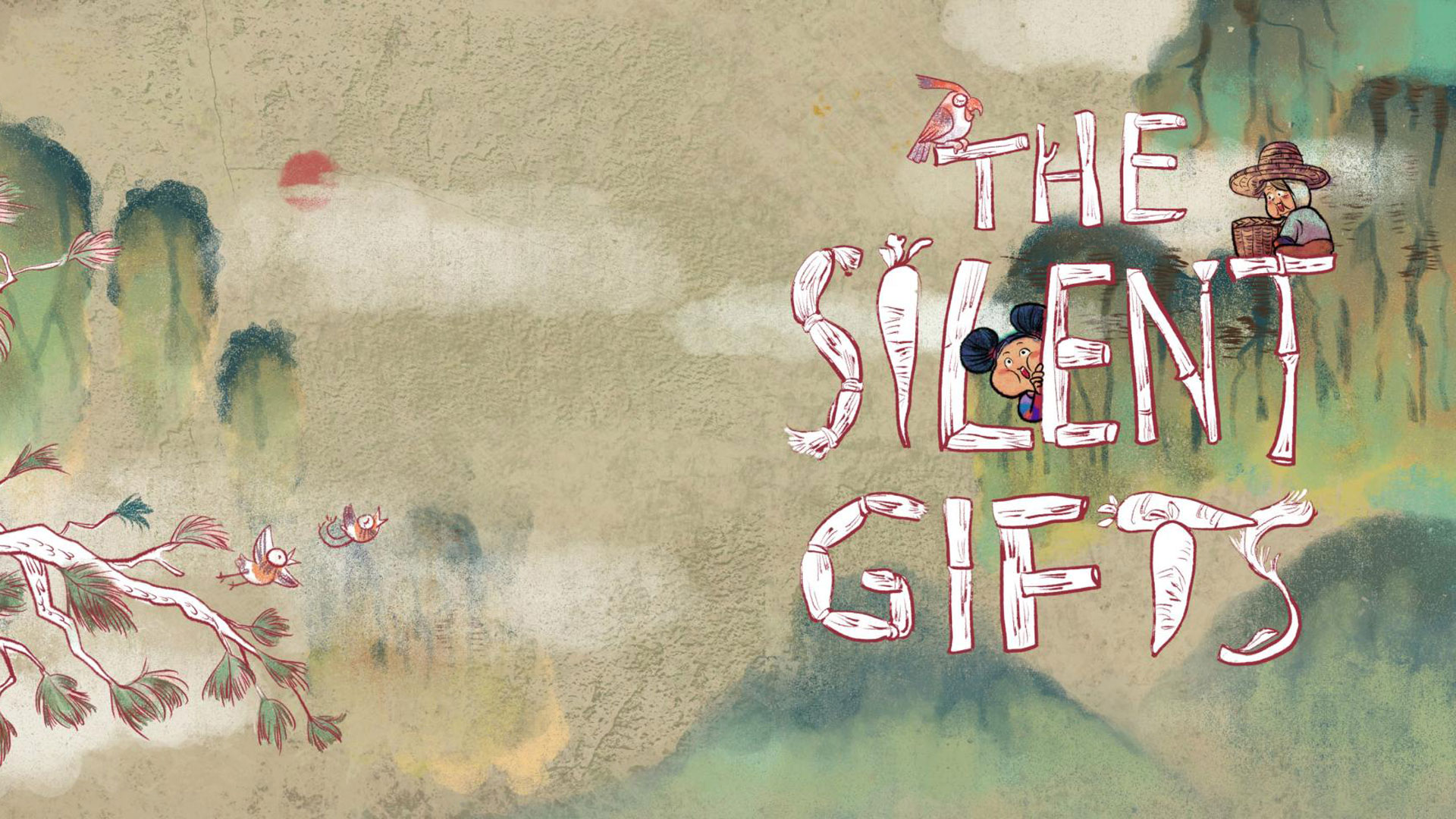
In the children’s book, I experimented with mineral pigment-inspired visual textures to give kids a sense of natural warmth and tactility.
3. Storytelling across formats
I love using different formats—single posters, short comics, and spreads—to tell layered stories.
In the poster "Creativity in Exile," the storytelling comes through subtle humor and irony: something that makes you smile at first, then reflect more deeply.
In the children’s book "The Silent Gifts," the storytelling is poetic and rhythmic. I choreographed each two-page spread as a small scene, almost like a poem, so children and parents can enjoy a mini-story on each spread, with a clear rhythm that guides them through the book.
For the poster Creativity in Exile:
A key challenge was setting the tone. The client wanted a single poster to deliver ironic humor and a sense of positivity in the end.
My approach was to separate what’s explicit from what’s implicit. I made the human roles—engineers, artists, designers—and their struggles with AI very clear in the visuals.
The positivity is more hidden and gradual; it appears through the transformation of their anxieties into surreal yet powerful creatures, reflecting the beauty within human vulnerability.
This taught me that a strong piece doesn’t need to say everything outright. You can highlight some themes directly while leaving space for viewers to discover others over time.
For the children’s book The Silent Gifts:
The biggest challenge was rhythm. The project required the story to fit into 20 spreads (40 pages). My first draft was over 80 pages, which made the pacing heavy and diluted. It’s a common tendency: we try to pack in every idea, and the story loses momentum.
My solution was to start from scratch. Instead of trimming an overloaded draft, I rebuilt it by:
- First creating only the essential pages that carry the core message.
- Then adding pages only if they truly added value.
This led me to a poetic narrative structure, where every two pages (or small clusters of pages) form a self-contained mini-story. Each small story runs in parallel, with a rhythm that is easy for children to follow. This also freed up time to focus on visual craft that better captures their attention.
In short, my takeaway from these challenges is: “Less is more.” Instead of overloading readers, it is often more powerful to give them focus, space, and freedom within the storytelling.
I’ve been wearing many hats across illustration and comics, graphic and visual design, and UX/product design. After years of focusing on problem-solving through product design and strategy, I realized there’s another side of me that’s just as important: expressing myself through visual narratives.
Friends and colleagues who have followed my creative journey encouraged me to take illustration more seriously, which became a turning point. I decided to build a body of work as a visual storyteller through comics, graphic novels, and illustrated books as a way to share my visual voice.
Winning two Gold Awards at the Vega Digital Awards is a milestone in that transition. It marks a moment when I can embrace that storyteller identity more fully, create with greater freedom, and use visuals to meaningfully impact people’s lives.
Reactions have been a fun mix.
From stakeholders who know me primarily as a product and UX designer, many were genuinely surprised that I also work in illustration at this level. For people who have known me for a long time, this felt more expected—they knew illustration has always been a core part of my practice. What stood out to them was how clearly my personal “DNA” is emerging:
- Bold, joyful color palettes
- A playful tone
- Subtle East Asian influences woven into the visual language
That combination feels increasingly recognizable and memorable to them.
Two big lessons I learned the hard way are:
1. “Just do” — embrace quantity and imperfection
Many of us (myself included) are attached to the idea of “quality over quantity” and pour everything into a small number of “perfect” pieces. But when we over-polish, we risk getting stuck on details that do not truly matter and delay our growth.
My advice is to lean into doing more:
- Produce enough work to discover your own visual language and style.
- Accept that not every piece has to be perfect; imperfections can make your work more human and distinctive.
“Just do” also means making peace with imperfection. Instead of chasing an unattainable perfect piece, allow your personal quirks and rough edges to show. Those are often what help you stand out in a crowded field.
2. Learn fast through focused research
We all know the trap of endless reference-gathering: the more we research, the more overwhelmed we feel by the possibilities.
My suggestion is to set clear boundaries for research:
- Limit either the number of references or the amount of time you spend (for example, 50 references or one hour of research).
- Summarize what is common among those references—patterns, moods, and structures—instead of copying any one style.
- After that, stop researching and return to your own DNA and instincts to create. This way, research informs your work but does not erase your voice.
As technology evolves—especially with AI—I see a need to distinguish two roles more clearly: designer and artist. That clarity helps us understand how the digital industry is changing and how we engage with it. As a designer, I work at the forefront of AI-powered tools for:
- Problem-solving
- Design-to-code workflows
- Product and systems design
As an artist, I create more freely to express ideas, emotions, and narratives. AI is reshaping the creative industry in two main ways:
Production: It can boost efficiency, open new pathways into real-world projects, and support more innovative workflows.
Expression: It has triggered waves of concern, backlash, experimentation, and now a renewed appreciation for authentic human creation.
Going forward, I see myself embracing AI for production—to improve efficiency and open up new forms of collaboration—while staying very intentional about where I preserve purely human expression.
For now, in terms of expression, I still choose to rely on human-made, imperfect, honest work that highlights the best of humanity. If, in the future, AI can genuinely support and expand that expressive side without replacing it, I’d be happy to explore it. But my current foundation will remain human-centered creation.
I wasn’t immune to that hesitation—I used to feel the same way. Reading Show Your Work helped me realize how many artists want to show only their “best side”: the most polished piece, the most advanced technique, or the most refined aesthetics. If anything falls short of that ideal, they hold back.
But imperfection can make us shine. I’ve had highly crafted pieces rejected in the first round of illustration awards. At the same time, I’ve seen works with less technical perfection but strong storytelling and content capture attention and win. As the saying goes, “Perfect is boring.” Sometimes, slightly raw storytelling or “junior” character design actually carries a unique charm. Those personal traces can make a work more memorable and more distinctly yours.
My second piece of advice is a classic but crucial one: be yourself. Many creators study a competition’s past winners and try to match their taste or style. That can be helpful as research, but it can also be risky: if you’re not emotionally invested, your work can feel like a pastiche—technically fine but spiritually empty.
Instead, treat competitions as long-term practice in building your personal style. You don’t need to win every time. Each entry is a small step in self-discovery. With that mindset, you can feel less pressure and more joy in the process, which often leads to better, more genuine work anyway.
For me, innovation happens across three areas: content and topics, technology, and visual presentation.
Content and topics:
I hope our industry continues to open more platforms for emerging professionals and underrepresented communities so their voices and overlooked stories can be seen and heard.
Technology (especially AI):
The next big conversation, in my view, will be about the relationship between human creation and AI. Right now, we’re in an ambiguous phase:
- We have ethical and moral concerns about AI.
- But we also see AI empowering creators, especially when it comes to efficiency.
I strongly advocate for authentic human creation, and I’d like to see more deep, structured conversations that lead to clear guidelines for using AI in creative work. That would give the industry shared standards to follow and benefit from.
Visual styles and awards:
I hope to see more innovative visual styles recognized beyond traditional ideas of what award-worthy work looks like. For example:
- Modernizing ancient languages through interactive visual design.
- Using multimodal narratives to bring cultural studies to life.
Awards can be double-edged: they celebrate excellence, but they can also solidify narrow expectations over time. As industry professionals, we share the responsibility to challenge those systems with unconventional concepts and visuals so that both judges and entrants evolve together. It’s a mutual growth process, and everyone plays a part.
First, I want to thank my client, SundAI Foundation, for believing in my design expertise and giving me such a meaningful opportunity.
I’m also deeply grateful to my friends, who consistently encouraged me to pursue illustration professionally. That encouragement became a pivotal turning point in my career.
Finally, I owe so much to my family, whose love, humor, and constant support continue to inspire my work in ways words cannot fully capture.
Poster:
"Creativity in Exile" is an anniversary key visual for an AI hackathon club, celebrating the community’s creativity, resilience, and optimistic commitment to an AI-powered human culture.
Children’s Book:
"The Silent Gifts" is a poetic picture book that honors a quiet cycle of kindness between humans and nature.
Yes—I’m excited to keep juggling and exploring new forms of visual storytelling. Upcoming and ongoing projects include:
- Wordless comics I’ve been developing.
- Exploring book cover and chapter art as part of my creative practice.
- Completing a picture book for official publication with a publisher.