
International vs Local Awards | Which Is Better for Marketing?
OCTOBER 14, 2026
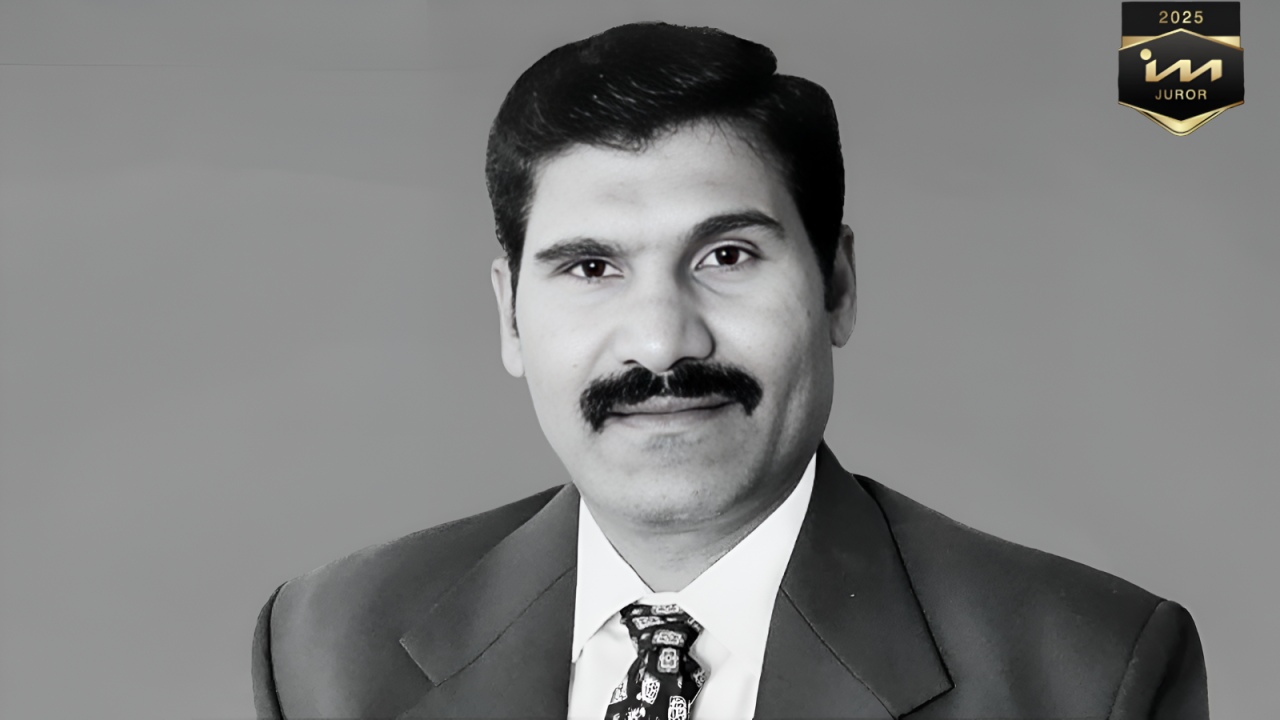
With over 22 years of experience in Electronic Toll Collection (ETC) systems and transportation technology, Venkateswarlu Mullangi is a seasoned product engineering leader specializing in system architecture, cloud-native microservices, and AI-driven modernization of large-scale mobility platforms. Overseeing complex system migrations and high-performing cross-functional teams, he brings strong technical depth and delivery discipline to the jury panel.
With over 22 years in transportation technology and enterprise systems, I've had the privilege of building and leading innovations that touch millions of people daily, from processing 4 million toll transactions a day to migrating 20 million customer accounts without service disruption. Through that journey, I developed a deep appreciation for what genuine innovation looks like, the kind that solves real problems at scale, not just impressive on paper.
When the opportunity came to judge the TITAN Innovation Awards, it felt like a natural extension of the work I already do, evaluating technical merit, execution quality, and real-world impact. I also bring perspective from multiple angles: as a Senior IEEE Member, peer reviewer for international conferences, and editorial board member for AI and engineering journals, I'm accustomed to holding work to rigorous standards. What drew me specifically to TITAN was the global breadth of submissions and the emphasis on genuine breakthrough innovation.
Having spent my career in a domain, Electronic Toll Collection and transportation technology, where innovation directly affects infrastructure and public experience, I wanted to bring that practitioner's lens to recognizing work that truly moves the needle. It's one thing to build; it's another to help the ecosystem recognize and celebrate what's worth building.
Having 22 years of experience building mission-critical systems in transportation technology, I find that each one resonates deeply with how I naturally evaluate work. First, I look at real-world impact over theoretical elegance. Does the innovation solve an actual problem, and can you measure the outcome? In my own work, we didn't celebrate shipping a feature — we celebrated a 70% reduction in transaction processing times or a 75% decrease in security incidents. I bring that same expectation to submissions I evaluate.
Second, technical rigor and architectural soundness. Having worked extensively in cloud-native microservices, AI/ML integration, and large-scale data systems, I can quickly distinguish between surface-level technology adoption and genuinely sophisticated design. I ask: does the architecture scale? Is it defensible under pressure? Third, execution discipline. A brilliant idea poorly executed is just a concept. I look for evidence of structured delivery — phased rollouts, testing protocols, change management, and post-go-live stability.
My PMP and Scrum Master background means I value the how as much as the what. Fourth, leadership and team impact. Innovation rarely happens alone. I look for evidence of cross-functional collaboration, mentorship, and whether the work elevated the people around it — not just the product itself. Finally, sustainability and longevity. Does this innovation create a foundation for what comes next, or is it a one-time win? The best work I've seen — and done — leaves the ecosystem better than it found it."
Several submissions stood out during my judging experience, but two in particular stayed with me for very different reasons. The first was Manvitha Potluri's Cloud-Native DR Innovation: Zero-Downtime Financial Systems. As someone who has built systems processing over 4 million daily transactions where downtime is simply not an option, this one hit close to home.
Achieving true zero-downtime failover across AWS regions — reducing recovery time from over 2 hours to under 15 minutes across 100+ critical applications and 400+ microservices — is the kind of engineering that protects real businesses and real people. What elevated it further was the open-source contribution, turning a proprietary solution into an industry resource. That's the mark of an innovator thinking beyond their organization.
The second was Avinash Dulam's Data Processing Engine for Healthcare Analytics. The combination of Azure Databricks, Unity Catalog, and granular governance tailored specifically to healthcare compliance requirements was technically sophisticated. But what made it truly memorable was the outcome — 50+ external clients onboarded and $100M in annual revenue added. In my experience, that's the clearest signal that an innovation solved a real market problem, not just an internal one.
Staying current isn't something I treat as a separate activity — it's woven into how I work every day, and my professional memberships and roles create natural forcing functions for that. As a Senior IEEE Member, I have access to a global network of researchers and practitioners pushing the boundaries of technology. Peer reviewing papers for conferences like IC²E³, ICDSA, ICOEIT, and ICETM keeps me directly engaged with emerging research before it becomes mainstream thinking.
When you're evaluating a paper on AI-driven anomaly detection or cloud-native resilience architecture, you're seeing where the field is heading — not where it's been. My editorial board memberships — across journals covering AI, machine learning, and computer science — serve a similar purpose. Reviewing submissions forces rigorous engagement with new ideas rather than passive consumption. In my day-to-day role as Product Head at ViaPlus by Vinci Highways, I'm actively working at the intersection of AI/ML, cloud computing, and transportation infrastructure.
The field moves fast — satellite-based tolling, fraud detection using machine learning, EV infrastructure integration — and staying ahead isn't optional when you're responsible for systems serving millions of users daily. I've published on several of these topics precisely because writing forces clarity of thought about where technology is heading.
Beyond that, my memberships in Sigma Xi, Raptor, BCS and several other organizations connect me to multidisciplinary communities where technology intersects with science, policy, and society — which gives me a broader lens than any single industry would.
Finally, judging itself is one of the best learning mechanisms I've found. Reviewing hundreds of global submissions across categories forces you to pattern-match across industries, geographies, and problem domains simultaneously. You leave every judging cycle sharper than when you started.
Judging at this level comes with genuine challenges, and I think it's important to be honest about them rather than pretend the process is straightforward. The first challenge is evaluating across domains outside my core expertise. My background is deeply rooted in transportation technology, enterprise systems, and cloud architecture.
When a submission arrives covering, say, fashion and garment design or cultural event campaigns, I can't lean on domain familiarity the way I can with a DevOps or healthcare AI entry. My approach is to anchor evaluation firmly on the universal criteria — uniqueness, execution quality, industry impact, and memorability — rather than domain-specific intuition.
Those four lenses apply equally whether I'm reviewing a self-healing production line or a sand sculpture exhibition. The second challenge is inconsistent submission quality and depth. In practice, some entries are meticulously documented with verifiable metrics and named outcomes, while others make broad claims without evidence. The temptation is to reward confident writing over actual substance.
I address this by consistently asking: what is verifiable here, and what is asserted? Metrics without context and superlatives without proof get scrutinized equally, regardless of how polished the writing is. The third is avoiding cumulative bias across multiple submissions from the same entrant. When a candidate submits the same core content across four or five categories with minor rewording, there's a risk that familiarity inflates later scores. I flag these explicitly and evaluate each submission on its own merits and category fit.
Finally, maintaining objectivity under volume pressure is real. Judging dozens of submissions requires sustained concentration. My engineering background — where a missed detail in a system specification can cascade into a production failure — trained me to stay precise even under fatigue. I take that same discipline into the judging process.
My career has been defined by building systems that most people interact with without ever knowing they exist — and I find that deeply satisfying. The work I'm most proud of is leading the development of the Transactional Revenue Integrated Processing System (TRIPS) for the North Texas Tollway Authority. This wasn't an incremental upgrade — it was a ground-up reimagining of how a major toll authority manages its entire operational backbone. The system processes over 3.5 million daily transactions, serves 14.3 million unique customers, manages 7 million active transponders, and generates approximately $1.08 billion in revenue annually.
On day one of launch, it processed 10 million transactions with all backlogs cleared within 72 hours. That kind of performance doesn't happen by accident — it comes from obsessive architectural discipline and a team that was genuinely invested in getting it right. What made it innovative wasn't just the scale — it was the approach. We achieved 90% efficiency in customer operations through single-screen resolution capabilities, a 70% reduction in transaction processing times, and a 75% decrease in security incidents post-deployment.
We also successfully migrated 18TB of data including 18 million accounts and 2.5 billion transactions without service interruption. NTTA went on to win the 2022 Toll Excellence Award — external validation that the work moved the industry needle, not just the organization's metrics. Beyond TRIPS, I've been actively contributing to the research community through published work on topics I believe will shape transportation's future — satellite-based toll collection, AI and machine learning for fraud detection in tolling systems, EV infrastructure for sustainable transportation, and cloud-AI integration for urban traffic optimization.
These aren't academic exercises — they're areas where I see real deployment challenges in my day-to-day work and want to contribute thinking that practitioners can actually use. Most recently, I've been focused on embedding AI/ML capabilities into transportation platforms in ways that improve both operational efficiency and user experience — work that directly informs how I evaluate AI innovation submissions as a judge. When I see a submission claiming AI-driven impact, I'm assessing it against what I know real-world AI deployment actually requires.
This is one of the most important questions any judge should reflect on honestly, because overconfidence outside my domain is one of the fastest ways to produce unfair evaluations. My first instinct is to separate the universal from the domain-specific. The four TITAN criteria — Uniqueness and Innovation, Implementation and Execution, Impact Towards the Industry, and Overall Experience and Memorability — are fundamentally transferable. A well-executed phased rollout looks recognizable whether it's a hospital AI platform or a cultural festival. A submission that claims impact without evidence is weak whether it's in DevOps or garment design. I anchor hard on these criteria when domain familiarity runs thin.
Second, I let the submission's own evidence do the talking. When I evaluated the 2025 Taoyuan Mesona Flower Carnival or the Lukang Light and Shadow Art Festival, I have no deep expertise in event production or public art. But I can assess whether the creative concept is clearly differentiated, whether the execution narrative is specific and credible, and whether the claimed impact is supported by data. A submission that provides visitor numbers, media reach, and industry recognition makes my job straightforward regardless of domain. One that doesn't raises flags regardless of how compelling the concept sounds.
Third, I draw on analogous principles from my own field. System architecture teaches you to recognize whether a solution is genuinely novel or a repackaging of existing components. Project management teaches you to spot the difference between a disciplined execution story and a polished retrospective. These pattern-recognition instincts transfer across domains more than people expect.
Finally, I stay intellectually humble and curious. When I encounter something genuinely outside my experience — a horticultural technique requiring 16 months of cultivation, or a straw-weaving installation engineered for wind resistance — I treat it as an opportunity to learn rather than a gap to hide. The best judges I've encountered are those who ask better questions, not those who pretend to know everything.
If I had to distill it to one quality, it would be this: a groundbreaking innovation changes what people believe is possible — and then proves it in the real world. That second part is where most innovations fall short. The technology landscape is full of ideas that are conceptually exciting but never survive contact with reality — with real users, real constraints, real failure modes, and real organizational resistance.
Truly groundbreaking work does both: it shifts the mental model of what's achievable, and then it delivers evidence that the shift is real and repeatable. The bar I apply is harder than originality alone: does it work at scale, does it last, and does it leave the ecosystem measurably better than it found it? If the answer to all three is yes — that's groundbreaking.
This tension is something I navigate every single day in my product role — and I think that's actually what makes me a useful judge on this question. In product development, creativity without practicality is a liability. I've seen brilliant ideas collapse under the weight of poor architecture, underestimated complexity, or lack of adoption planning.
Equally, I've seen hyper-practical teams deliver technically sound but entirely unremarkable work that moves nothing forward. The best innovations live in the space where both forces are in productive tension — where the creative ambition is ambitious enough to matter and the execution discipline is rigorous enough to deliver. My mental model is what I'd call the 'so what' test applied twice.
The first 'so what' is creative: is this idea distinctive enough that it couldn't have come from anywhere else? Does it reframe the problem in a way that makes you reconsider your assumptions? When I reviewed the Baidu AI Gaokao Sprint Initiative — AI mentors built around historical personas with authentic language styles and traditional musical accompaniment — the creative framing was genuinely original. It passed the first test.
The second 'so what' is practical: can this actually work at scale, in the real world, under pressure? This is where I apply the same scrutiny I bring to system architecture reviews. Is the implementation approach credible? Are the metrics real or aspirational? Is there evidence of adoption, not just deployment?
The Baidu submission, for all its creative strength, lacked learning outcome data — which meant it passed the creativity test but left the practicality test partially unanswered. The submissions that score highest in my evaluations are those where creativity and practicality reinforce each other rather than compete. The creativity served the practicality. That alignment is what I look for, and what I believe separates truly viable innovations from impressive concepts.
Having spent 22 years at the intersection of infrastructure, technology, and large-scale human systems — and having evaluated innovations across healthcare, cybersecurity, AI, IoT, enterprise software, cultural events, and consumer applications — I've developed a fairly clear view of where things are heading, and what it means for the industries I care about. The most significant shift I see is the move from automation to autonomy.
For most of the last decade, innovation was about automating what humans already did — faster, cheaper, more consistently. What I'm seeing now, both in my own work and across the submissions I've evaluated, is a generation of systems that don't just automate tasks but make decisions, adapt to new conditions, and self-correct without human intervention.
The self-healing production lines, the agentic AI finance platforms, the autonomous disaster recovery frameworks — these aren't automating human workflows, they're replacing entire categories of human decision-making with systems that learn. That's a fundamentally different proposition, and every industry will feel it. In transportation and infrastructure — my home domain — I see satellite-based tolling, AI-driven fraud detection, and EV infrastructure integration converging into something much larger: truly intelligent mobility networks where pricing, routing, maintenance, and compliance are continuously optimized in real time.
The research I've published on these topics isn't speculative — the building blocks are already in production environments today. In healthcare, The next wave won't be isolated tools — it will be fully integrated care intelligence platforms that reduce cognitive load on clinicians while improving outcomes for patients. The constraint won't be technology; it will be trust, governance, and adoption — the human factors that technology alone can't solve.
In enterprise operations, the pattern I see across submissions — from Oracle SCM transformations to agentic finance platforms — is the death of the static system. The future enterprise platform is one that continuously learns from its own operational data, recalibrates its logic, and surfaces insights without being asked.
The organizations that build this capability now will have compounding advantages that are very difficult to reverse. What gives me genuine optimism is that the innovations I've evaluated aren't coming exclusively from large technology companies with unlimited R&D budgets. They're coming from domain practitioners — clinicians, engineers, supply chain leaders, educators — who understand a problem deeply enough to reimagine it. That democratization of innovation, enabled by accessible cloud platforms, open-source tooling, and collaborative research communities, is perhaps the most important trend of all. The future of innovation isn't a technology story. It's a story about what happens when the right people, with the right tools, decide that the current state of their industry is no longer acceptable.
Juror Profile
2025 IAA Juror
TITAN Innovation Awards and Noble Technology Awards
────────────────────────────Read Inside the IAA Jury Room: Robert Lie - Assessing Images Shaped by Real Journeys, a jury member of the International Awards Associate (IAA), by clicking this link.