Spacia
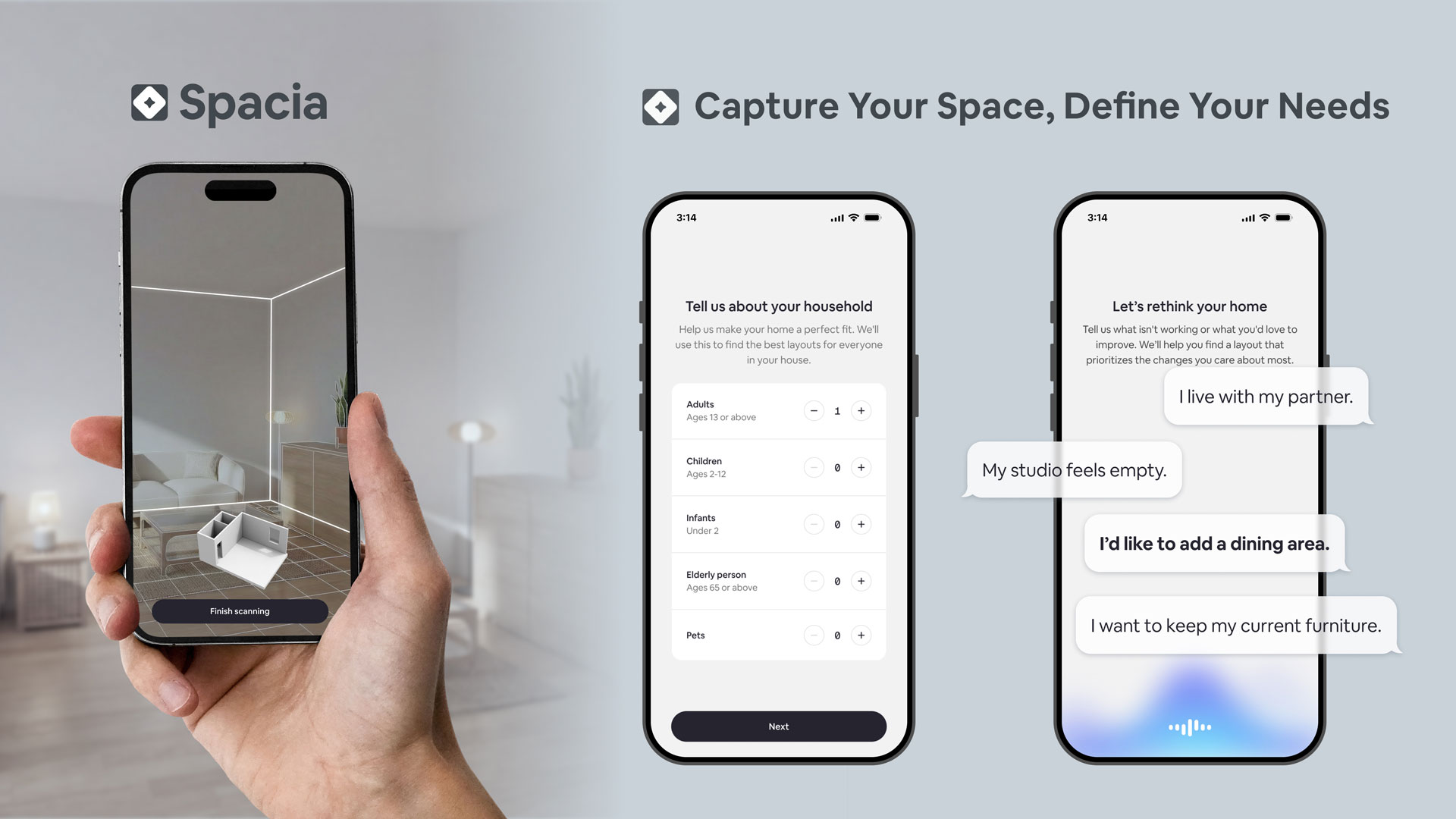
Spacia is an AI-powered spatial analysis and layout design platform that introduces spatial intelligence into...
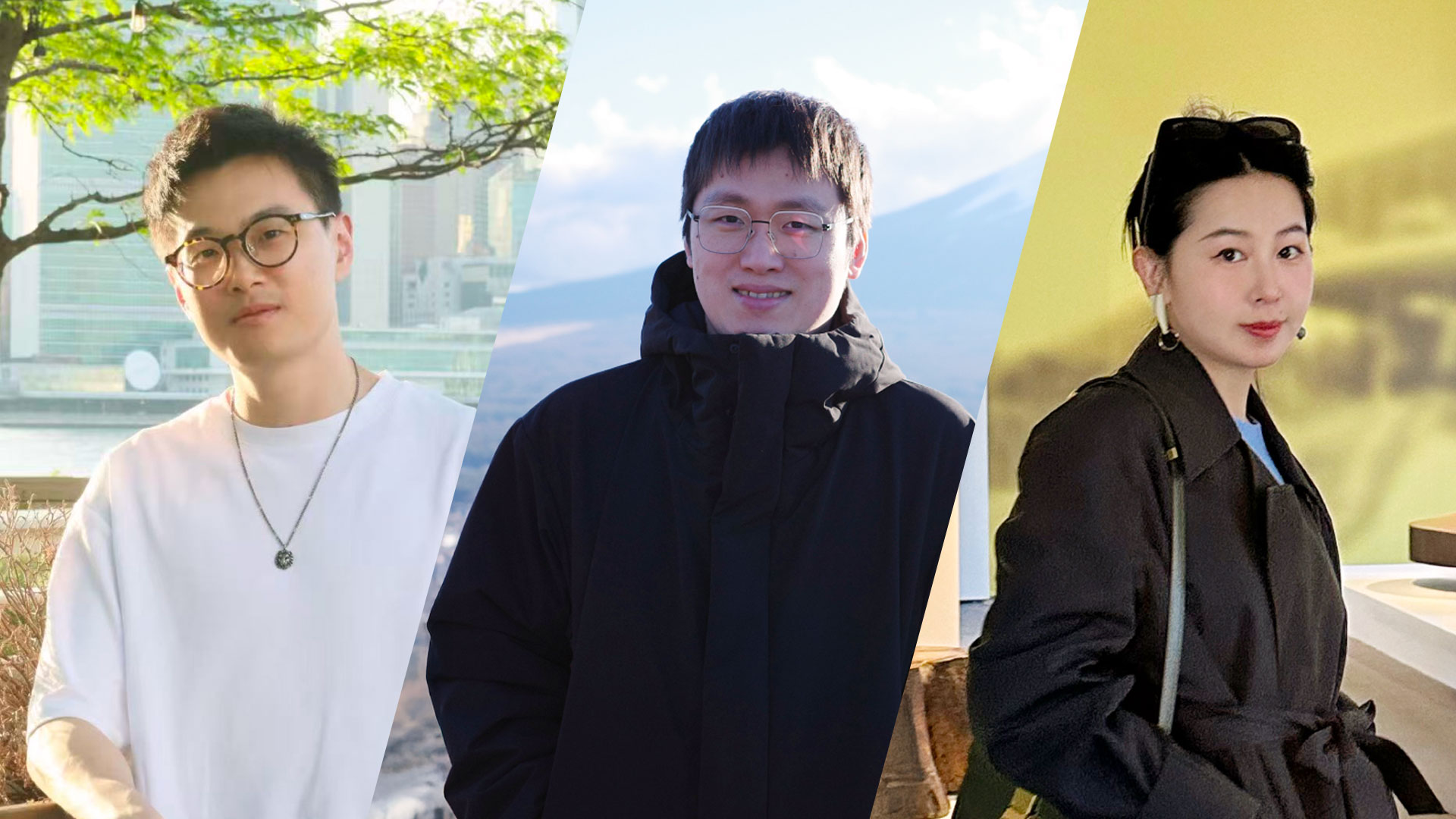
Spacia Team brings together Senior Product Designer Ziwei Deng, Product Designer Junyue Hua, and Product Designer Shixiao Wang, combining expertise in enterprise UX, digital product design, and human-centered interaction to create AI-powered spatial experiences that improve everyday living.
Ziwei Deng: I am a Senior Product Designer working across consumer-facing experiences and enterprise platforms. My work centers on shaping complex systems into intuitive, scalable experiences that bridge business goals, technical constraints, and user needs.
With a background in architecture, I bring a systems-oriented perspective to UX, thinking beyond interfaces to how structure, behavior, and context interact. I'm particularly interested in designing intelligent systems that not only respond to users but also help them make better decisions.
Junyue Hua: I am a Product Designer with over 10 years of experience navigating the evolving landscape of digital interfaces. My journey began with a fascination for how people interact with physical spaces, which naturally transitioned into the digital realm.
Over the last decade, I've evolved from crafting individual screens to building complex design systems and exploring the intersection of AI and spatial intelligence. It has been a continuous process of unlearning and relearning as the tools have changed, but the core goal—solving human problems through intuitive design—has remained the same.
Shixiao Wang: I'm a Product Designer specializing in UX/UI and human-centered interaction design. My work focuses on bridging technology and everyday life, particularly by exploring how emerging technologies like AI can enhance real-world experiences.
My journey into this field began with a strong interest in how design can solve practical problems, not just create visual appeal. Over time, I became increasingly interested in designing systems that improve people's daily lives, which naturally led me to explore spatial design, human-computer interaction, and AI-driven solutions.
We submitted Spacia because it explores a direction that is still underrepresented in the industry: shifting AI design tools from visual styling to functional spatial intelligence.
Ziwei Deng: Winning this award is meaningful both personally and professionally. It validates the idea that design can go beyond aesthetics and play a deeper role in improving everyday living environments. It also reinforces my belief that interdisciplinary thinking—bridging architecture, UX, and AI—can create new opportunities for innovation.
Junyue Hua: I've always believed that design thrives in the tension between internal conviction and external validation. I submitted this work because I felt it represented a genuine step toward the next frontier of interaction, moving beyond the constraints of traditional two-dimensional design. Professionally, this award is a meaningful recognition from my peers that the risks I took during the conceptual and technical phases were worthwhile. Personally, it's a reminder that even after 10 years in the industry, there is still plenty of room to surprise myself.
Shixiao Wang: Winning this award is incredibly meaningful to us. Personally, it validates our belief that design can go beyond aesthetics and create real impact. Professionally, it gives us confidence that our approach—combining AI, sustainability, and human-centered thinking—resonates with the industry.
Spacia was inspired by a simple observation: many people live with inefficient or even unsafe spatial layouts without realizing it.
The project represents a shift in today's industry. With the advancement of AI, many domains are entering a phase where new possibilities are emerging—opportunities that were previously overlooked or considered too complex to address.
Spacia explores one of these opportunities by making spatial intelligence accessible, measurable, and actionable for everyday users, not just professionals.
What sets Spacia apart is its focus on optimizing the functional performance of living spaces rather than visual styling. Instead of recommending furniture or décor, it evaluates spaces through a structured analytical framework and translates those insights into actionable layout strategies that improve how each space functions.
Another key differentiator is its human-AI collaborative workflow. Users don't simply receive static outputs—they can iteratively refine layouts through natural interactions, much like working with a designer, allowing them to explore and compare optimized solutions.
This combination of structured analysis and interactive iteration enables users not only to understand what works and why, but also to actively optimize and improve their living environments in a clear, guided way.
The biggest challenge was translating subjective spatial intuition into a system that could be evaluated objectively.
Spatial design is traditionally qualitative, relying on experience and professional judgment. To make it accessible through AI, we had to develop a framework that combines quantitative metrics with qualitative design principles.
Ziwei Deng: Winning this award has had a meaningful impact on my career by strengthening my credibility and visibility within the design community. On a personal level, the recognition reinforces my confidence in the direction I'm pursuing, especially as I explore the intersection of AI, systems thinking, and user experience. It validates not only the outcome, but also the way I approach design challenges.
More importantly, it motivates me to continue pushing my practice forward, taking on more complex challenges and contributing to work that has a deeper, real-world impact.
Junyue Hua: In the long term, I hope this recognition serves as a catalyst for more ambitious, experimental projects within my team. It validates our design-first approach to solving complex technical challenges such as spatial reconstruction and AI.
Since the announcement, I've already noticed a shift in internal conversations. There's a greater appetite for exploring high-risk, high-reward ideas that prioritize the user experience over safe, incremental updates.
Shixiao Wang: We hope this recognition will help bring more attention to this new direction in design, where technology supports better living rather than greater consumption.
It has already opened up conversations with other designers and potential collaborators, reinforcing our long-term goal of building impactful, human-centered products.
The most interesting feedback we've received is that many people immediately recognize the problem once it's articulated.
Users often say they never realized their space had issues until they saw them visualized or analyzed. That moment of awareness is powerful—it shifts people from passive acceptance to active improvement.
Ziwei Deng: Focus on identifying a problem that is real but often overlooked. Many strong projects don't come from solving obvious problems, but from reframing everyday experiences in a new way. It's also important to go beyond surface-level solutions and build a clear rationale behind your design—why it works and how it creates value.
Junyue Hua: Master the "boring" stuff so you can excel at the "exciting" stuff. You can have the most innovative AI concept in the world, but if your padding is inconsistent, your font hierarchy is messy, or your design tokens lack consistency, the integrity of the work falls apart.
My advice is to focus on the narrative. Don't just show the final "pretty" screens; show the logic, the constraints you navigated, and how you turned a technical obstacle into a usability win.
Shixiao Wang: Focus on solving a real problem. Award-winning projects are not just visually polished—they have a clear point of view and address a genuine need. Also, don't be afraid to challenge existing assumptions. Some of the strongest ideas come from questioning what people take for granted.
Ziwei Deng: The creative industry is undergoing a significant shift with the integration of AI and emerging technologies. We are moving from creating static outputs to designing dynamic, adaptive systems that respond to context, behavior, and intent. This shift is expanding the role of designers—from shaping interfaces to shaping decision-making frameworks and human-AI interactions.
Looking ahead, I aim to position myself at this intersection, where design, technology, and systems thinking converge to create solutions that are not only functional and scalable, but also meaningfully improve everyday experiences.
Junyue Hua: We are moving from an era of curating content to one of generating context. With the rise of 3D reconstruction and spatial computing, our role as designers is shifting from being layout artists to becoming architects of digital environments.
I hope to position myself at the forefront of this shift, helping to define the design systems that will shape how we live and work in augmented and virtual spaces.
Shixiao Wang: The creative industry is moving toward more intelligent, adaptive systems powered by AI. I see my role in shaping how these technologies are applied in a human-centered way, ensuring they remain meaningful, ethical, and grounded in real-world needs.
Ziwei Deng: It's natural to feel hesitant, but awards are not only about winning—they're also about learning how to articulate your work. Participating helps you reflect on your design process, clarify your thinking, and understand how your work fits into a broader context. Even early-stage projects can be valuable if they present a clear idea and perspective.
Junyue Hua: View every competition entry as a self-audit. Even if you don't win, the process of documenting your work, refining your problem statement, and defending your design decisions will make you a significantly better designer. It forces you to look at your work through a critical, objective lens. Don't wait until you feel like an expert to participate; confidence comes through participation, not before it.
Shixiao Wang: You don't need a perfect project to start—you need a meaningful idea. Participating in competitions is not just about winning, but about refining your thinking and learning how to communicate your work. Confidence comes from doing, not waiting.
Ziwei Deng: As the tools we use become more powerful, it's important to stay grounded in human needs and real-world impact. The most meaningful innovations often come from deeply understanding everyday experiences and improving them in subtle but significant ways.
Junyue Hua: Never stop being a hobbyist in something unrelated to your day job. Whether it's architecture, historical preservation, or even something as niche as aquascaping, looking at how systems work outside of software is what keeps your perspective fresh.
Our best ideas rarely come from looking at other Dribbble shots; they come from observing the world around us and translating those patterns into our digital craft.
Shixiao Wang: Stay curious, and stay honest with your ideas. Trends change quickly, but meaningful design comes from understanding people, not just following what's popular.
Ziwei Deng: I would like to dedicate this achievement to my two teammates for their support and collaboration throughout the project. They played a valuable role in advancing the concept from its early exploration through execution while I shaped the overall direction of the work.
Their diverse perspectives strengthened the outcome, and together we were able to push the idea further than any one of us could have individually.
Junyue Hua: I'd like to dedicate this achievement to the engineers and product partners who don't just ask, "Can we build this?" but also, "Should we build this?" Design is never a solo effort; it's a series of negotiations. I'm incredibly grateful for the collaborators who challenged my assumptions and pushed me to ensure that every pixel served a purpose.
Shixiao Wang: I'd like to dedicate this achievement to my teammates and collaborators who contributed to this project. This work reflects a shared vision, and it wouldn't have been possible without their collective effort and belief in the idea.
Spacia transforms living space design from a largely trial-and-error process into a data-informed, human-AI collaborative experience that improves how people live and interact with their spaces every day.
Ziwei Deng: Moving forward, I'm working on several new projects that explore the potential of AI across different domains. As mentioned earlier, we are entering an era in which the rise of AI is unlocking new possibilities—opportunities that were previously difficult to realize or even imagine.
Junyue Hua: I'm currently expanding my work in AI-driven spatial intelligence, focusing on home optimization tools for upcoming international design awards. I'll also be spending the next few months working remotely across Europe, studying architectural heritage firsthand to better integrate physical design principles into digital products.
My goal is to ensure that the next frontier of AI remains grounded, intuitive, and human-centered.
Shixiao Wang: We're continuing to develop this concept further, exploring how it can evolve into a real product that people can use in their daily lives.
At the same time, we're interested in expanding this direction into broader applications, combining AI, spatial design, and human-centered systems to create more meaningful living experiences.