The Pentagon Niseko
The project is located within Odin Hills, a premium 92-plot residential enclave in Niseko, Hokkaido,...
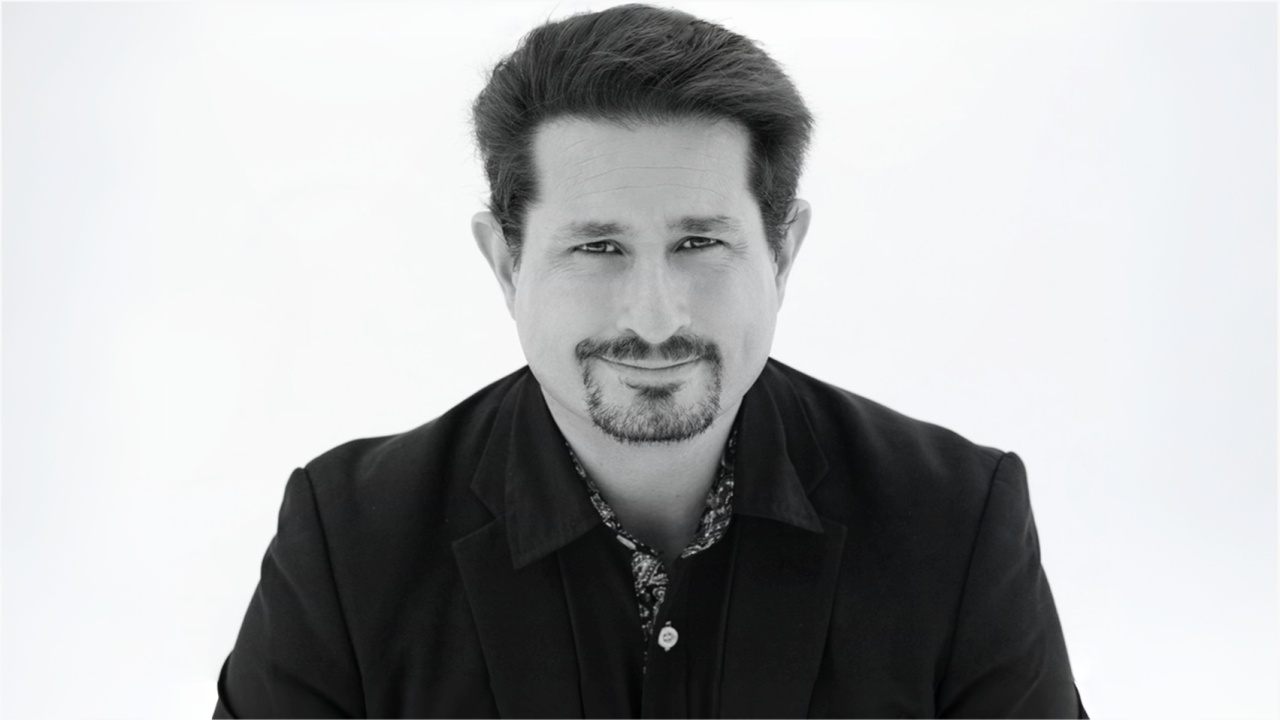
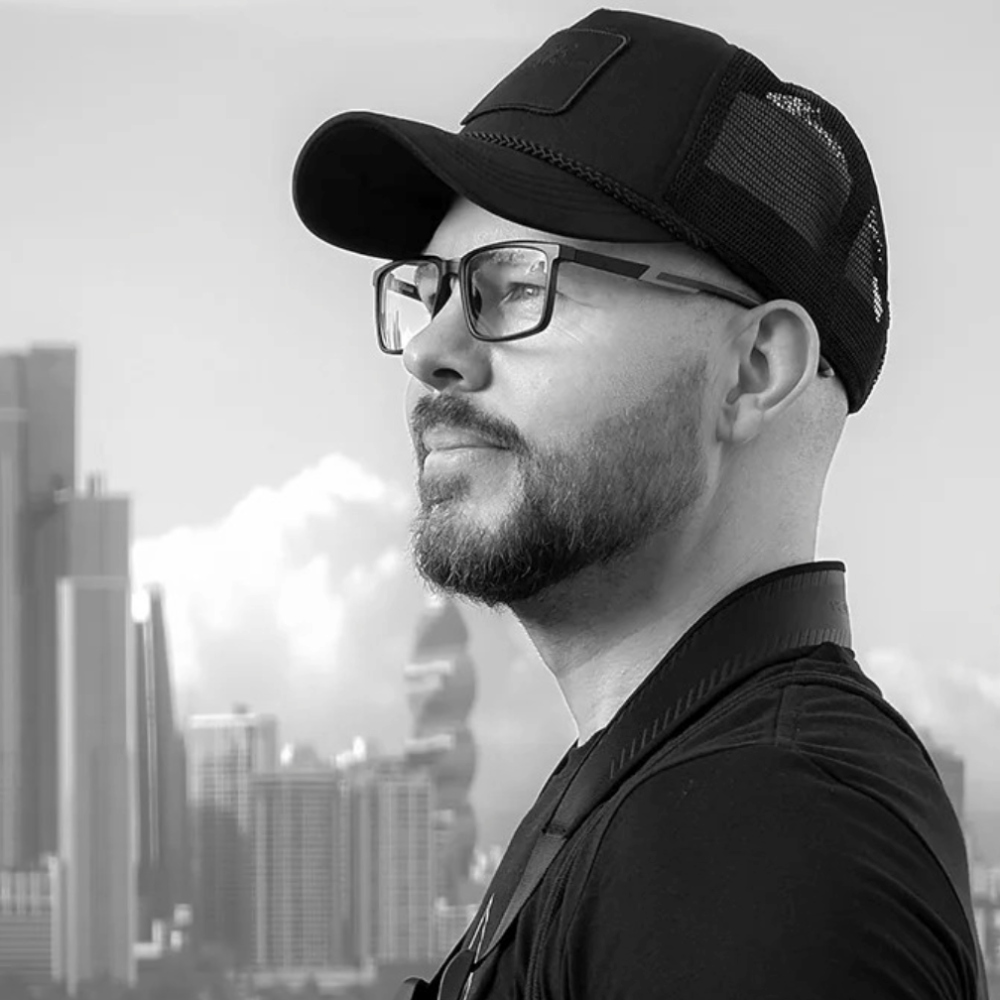
Franck Giral, founder of ABD Architecture LLC, brings together engineering precision and architectural design to deliver high-end residential and resort projects across Hokkaido. His multidisciplinary background allows him to balance creative vision with technical, financial, and project management expertise.
I am Franck Giral, founder of ABD Architecture LLC, based in Sapporo, Hokkaido, Japan. I am a licensed First-Class Architect in Japan, a qualified structural engineer in France, a PMP-certified project manager, and a licensed real estate agent. Our practice focuses on high-end residential and resort developments, particularly in Hokkaido and the Niseko area.
We work with an international clientele and operate at the intersection of architecture, development, and project management, allowing us to approach projects with both design sensitivity and strong technical and financial control.
My initial training was in engineering, which gave me a strong foundation in structure and problem-solving. Over time, I became more interested in how buildings are experienced, not just how they perform.
Architecture allowed me to combine technical rigour with creativity and human experience. What continues to drive me is the ability to shape spaces that are both logical in their conception and emotionally impactful for the people who use them.
It is a meaningful recognition, especially as a French professional working internationally. It validates the quality of our work within a global design context and reinforces our credibility with clients and partners. It also highlights that strong design can emerge from relatively remote contexts like Hokkaido, and still resonate on an international stage.
This achievement has strengthened our credibility, particularly with international clients who are not yet familiar with the Japanese market. It helps position ABD Architecture as a design-led practice, not only a technical or local partner, which is important for the type of projects we pursue.
Internally, it is also a positive recognition for the team. Our work often involves complex coordination and long project timelines, so having this kind of external validation reinforces motivation and confirms that our approach is meaningful.
Experimentation plays an important role, but always within a controlled and purposeful framework. For us, it is not about being expressive for its own sake, but about testing ideas to improve spatial quality, functionality, or how a building responds to its context.
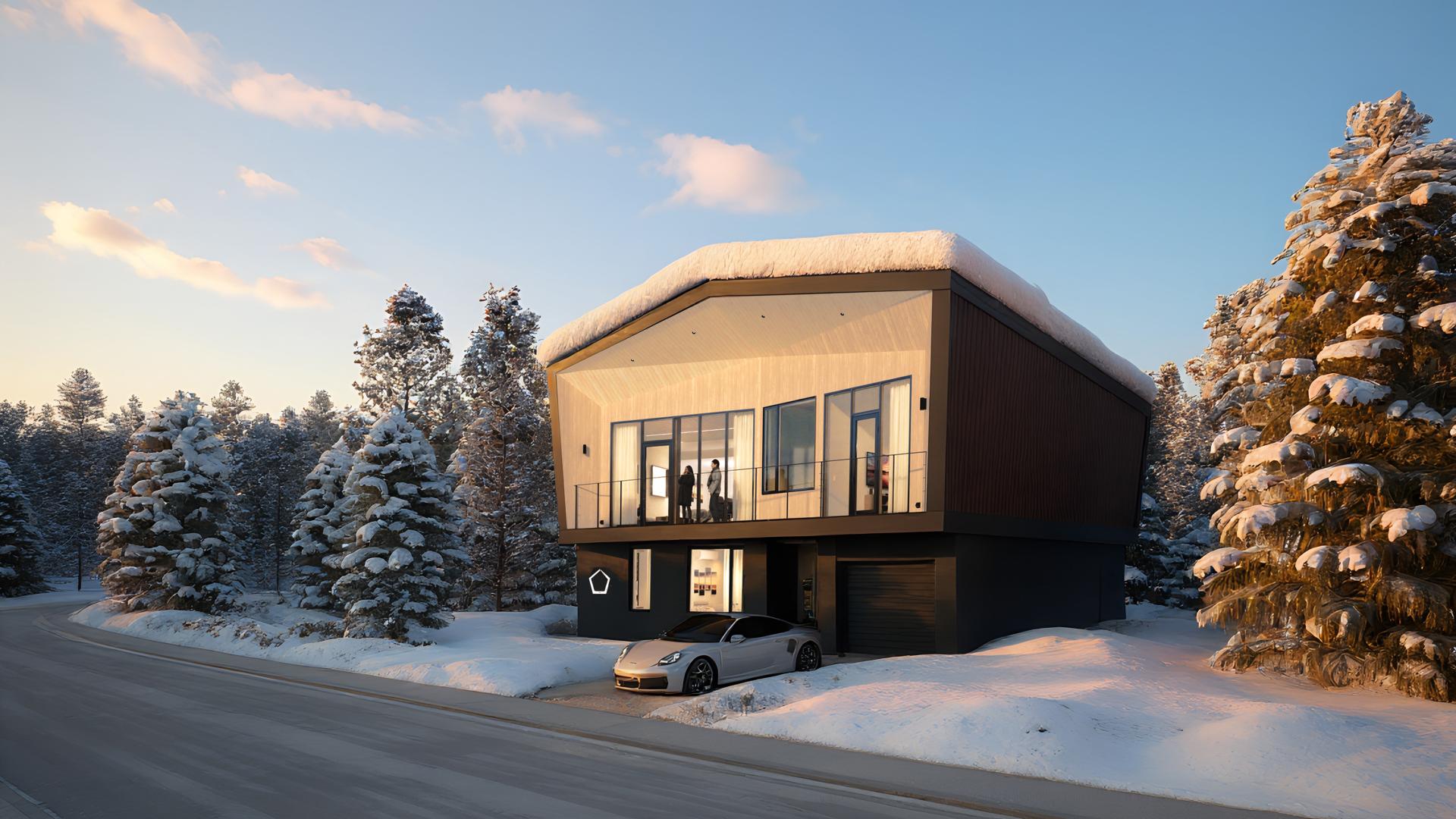
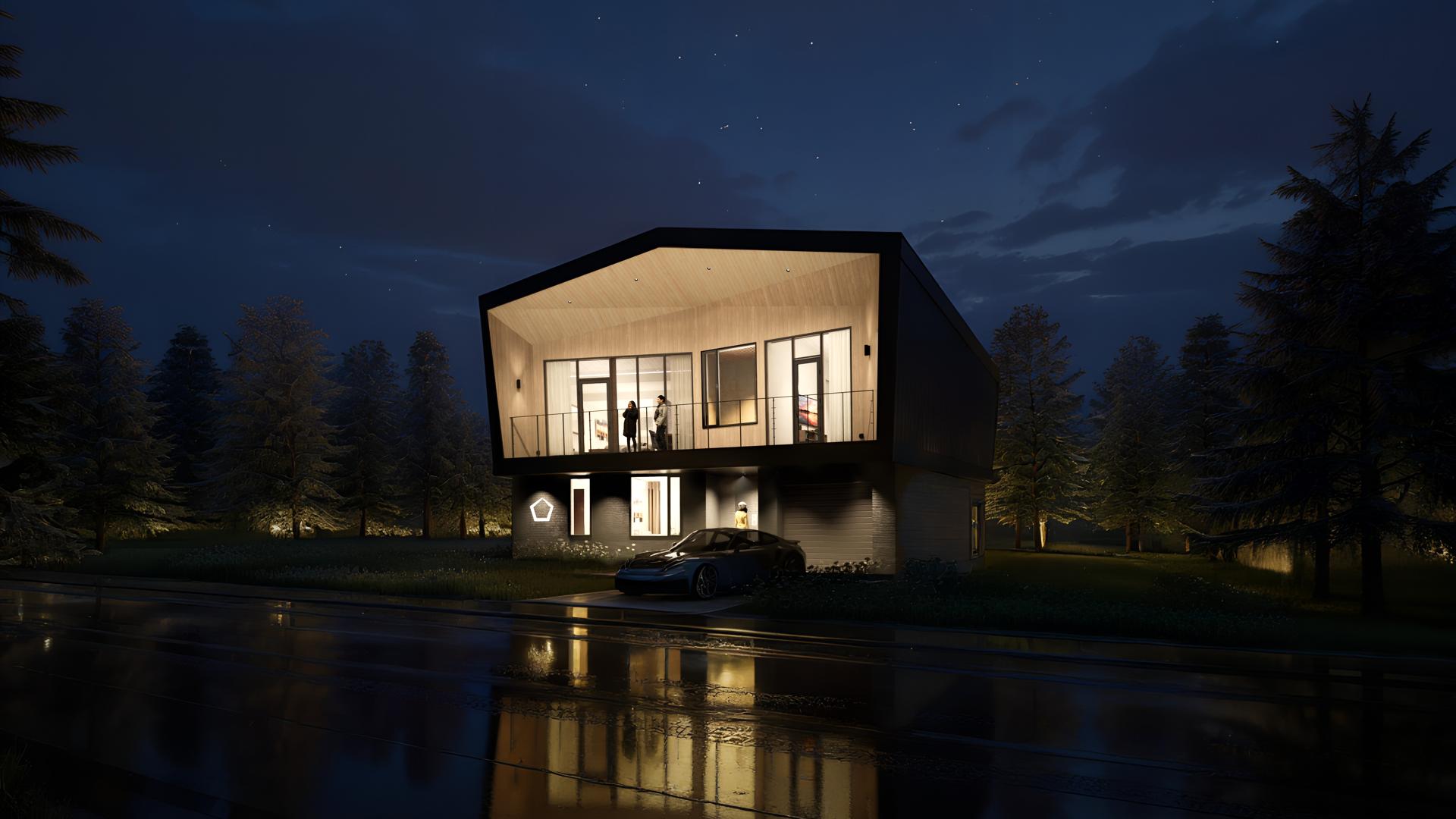
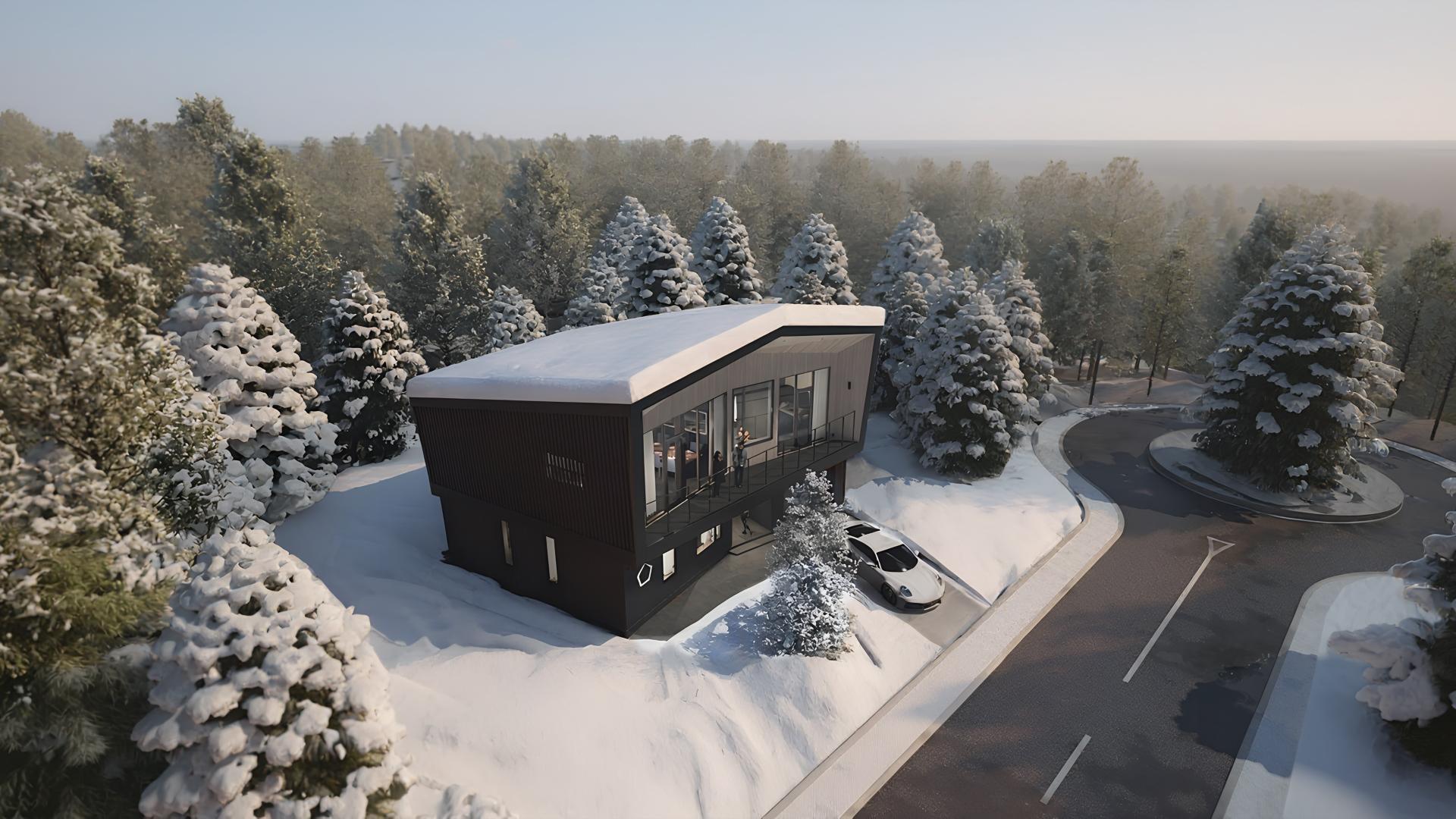
In the Pentagon Niseko project, experimentation was primarily in geometry. The pentagonal form was not a conventional approach, so we explored multiple iterations to understand how it would impact structure, circulation, and views. This allowed us to refine the concept into something that was both distinctive and highly functional, rather than purely formal.
Anecdotally, the site is located next to a project designed by Shigeru Ban & Architects, which added an interesting layer of context and pushed us to ensure that our design had a clear identity while maintaining a respectful dialogue with its surroundings.
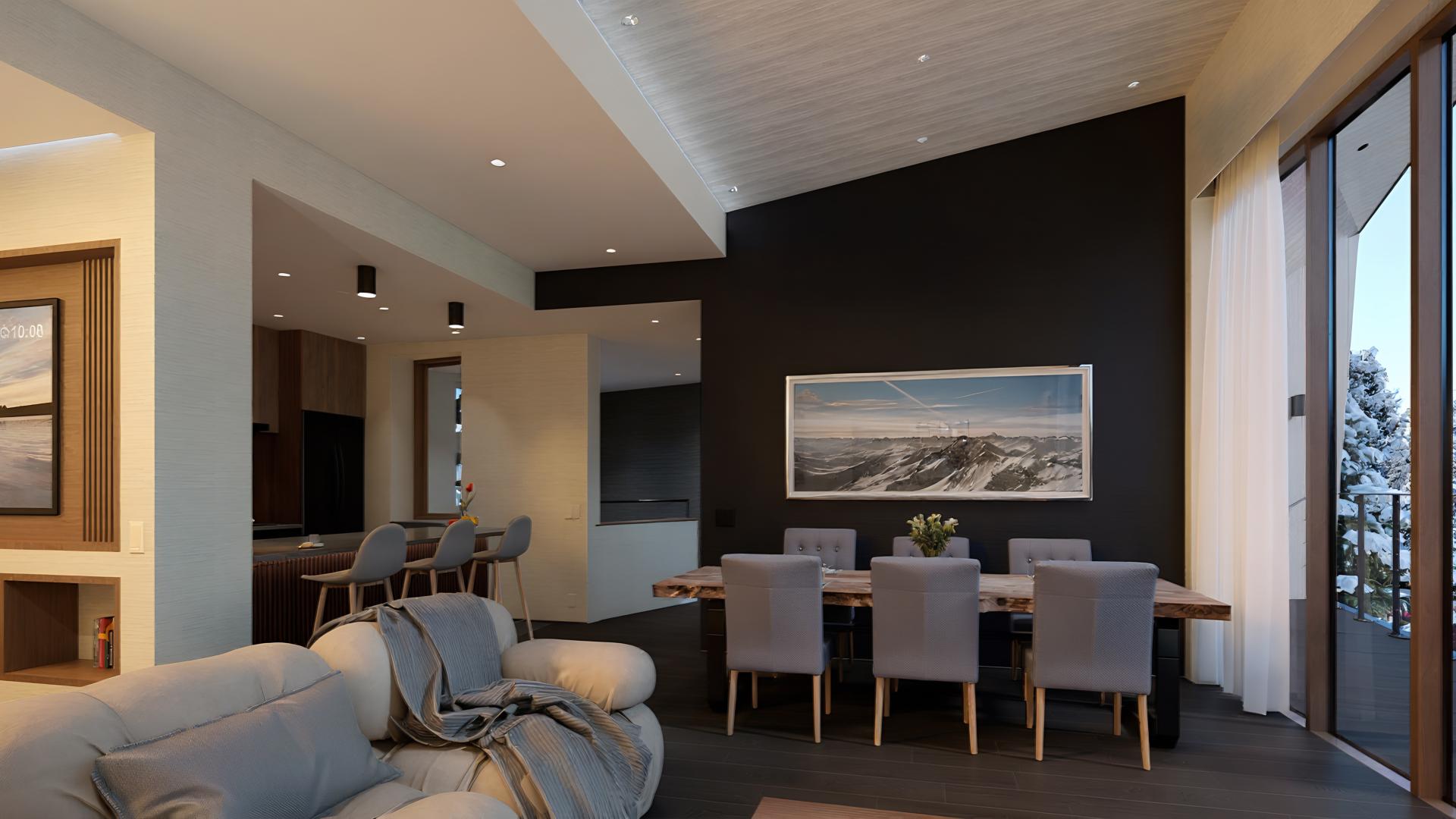
One of the more unusual sources of inspiration has been geometry itself, treated almost as a constraint rather than a stylistic choice. In the case of the Pentagon Niseko, the idea of working with a strict five-sided figure became a starting point to rethink how spaces relate to each other, how views are framed, and how circulation can flow in a non-orthogonal way.
Rather than referencing a specific architectural precedent, the project was influenced by this abstract rule, which forced us to move away from conventional planning logic. It created unexpected spatial conditions and moments that would not have emerged from a more standard approach.
More generally, I find that constraints—whether geometric, regulatory, or environmental—often become the most interesting sources of inspiration, as they push the design toward solutions that are both creative and meaningful.
One thing I wish more people understood is that good design is not the result of a single idea, but of a long process of refinement and decision-making. What may appear simple or “obvious” at the end often comes from many iterations, discussions, and technical adjustments behind the scenes.
Design is also not only about aesthetics. It involves balancing multiple constraints—budget, regulations, structure, construction methods, and client needs—while maintaining a clear concept. The real challenge is to keep coherence throughout this complexity.
It is a balance we approach through dialogue rather than opposition. Our role is not to impose ideas, but to guide the client toward a coherent vision that responds to their needs while maintaining architectural integrity.
We start by understanding the client’s priorities—lifestyle, investment goals, cultural expectations—and then translate these into a clear concept. From there, our responsibility is to protect that concept and ensure consistency, even as we adapt to feedback, budget, or technical constraints.
In practice, it is about being both flexible and firm: flexible in how we respond and refine the design, but firm on the core principles that give the project its identity and long-term value.
The main challenge was translating a strong geometric concept into a functional, efficient, and buildable project. The pentagonal form introduced complexity in structure, planning, and construction detailing, particularly in a context like Niseko, where snow loads and buildability are critical.
We addressed this through close coordination between architecture and structure from an early stage. A lot of work went into rationalising the geometry so that it could be constructed efficiently without losing the clarity of the concept. This included careful structural logic, alignment of key elements, and iterative adjustments to layouts.
Another challenge was maintaining a balance between a distinctive architectural identity and its immediate context. The project is located within a large residential development with very limited existing vegetation, so we could not rely on natural surroundings to frame the architecture.
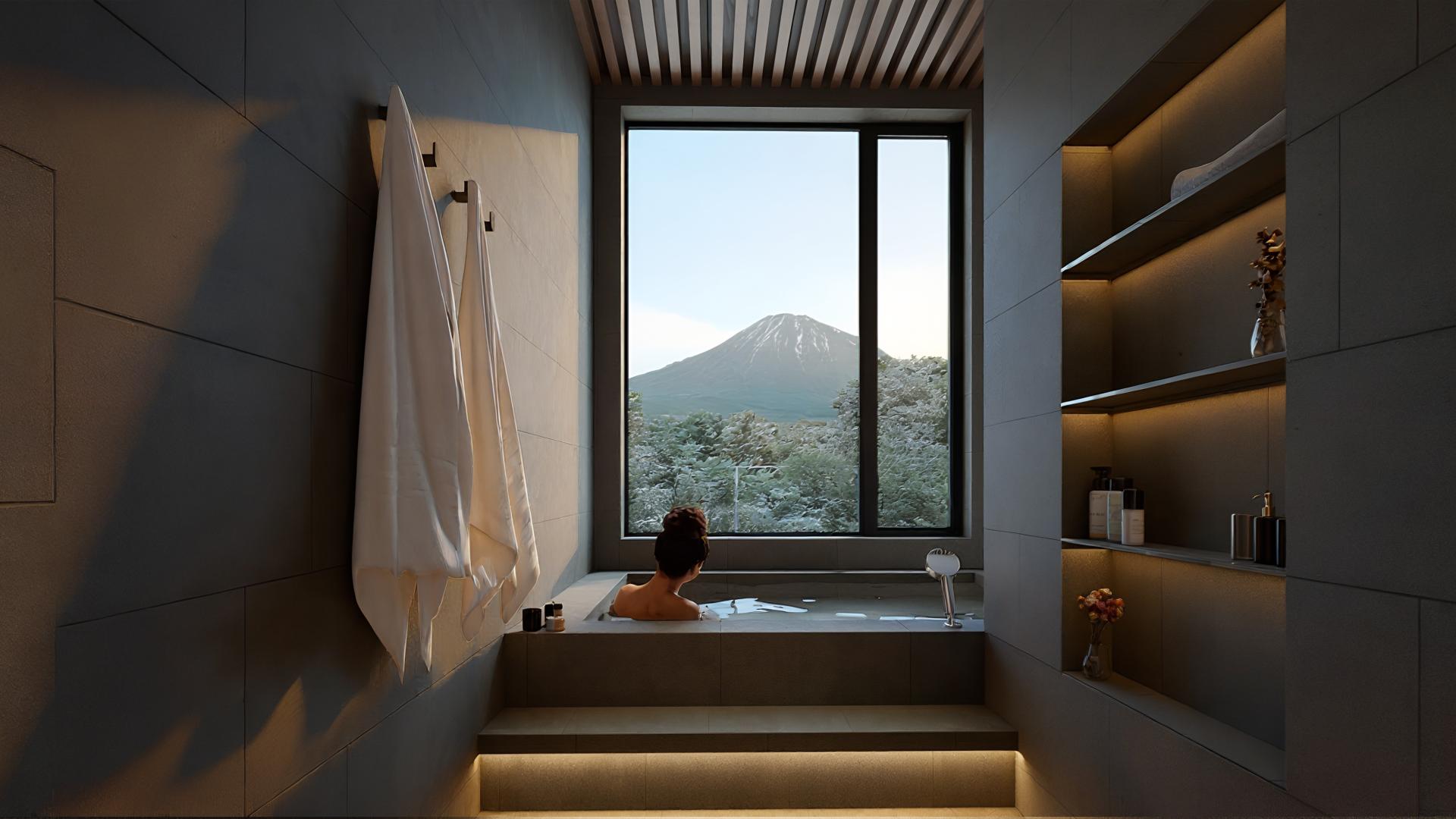
Instead, we carefully framed key views while controlling exposure to neighbouring plots. We introduced louvred façades to create privacy, and used their slanted geometry to reinforce the architectural expression—so they are not only functional elements, but also contribute to the overall identity of the project.
When facing a creative block, we do not step away from the project—we move forward through exploration. Our approach is very iterative: we develop multiple design options and test them quickly, often through 3D models and renderings. This allows us to visualise ideas clearly, compare solutions, and make informed decisions based on spatial quality and feasibility.
We rely heavily on this process because it keeps the discussion grounded in something tangible. Rather than debating abstract ideas, we can evaluate real proposals and refine them progressively.
We also tend to avoid relying on AI-generated design, as it often produces results that are not practical or buildable. For us, creativity comes from controlled exploration within real constraints, not from unpredictable outputs.
I value pushing the limits of what is structurally achievable. With my background in structural engineering and construction, I naturally approach design through the lens of what a system can do at its maximum potential. On projects like the Pentagon Niseko, we deliberately explored the full capacity of timber construction, challenging the structural engineer to support the architectural intent.
I can confidently say that on this project, we were working very close to the allowable limits, and this mindset of testing boundaries—while remaining within safe and rational parameters—is something we carry across most of our work.
Also, working internationally has shaped my approach. We aim to blend Japanese sensibility with a more alpine chalet style, with a contemporary twist, to achieve a truly unique outcome.
Be relentless, and develop real fortitude. This profession requires persistence, and progress often comes from sustained effort rather than sudden breakthroughs.
Learn broadly—whatever genuinely interests you—and then find ways to apply that knowledge. The more diverse your skill set, the more opportunities you create for yourself to approach problems differently.
With a broad enough foundation, you will eventually find your niche and position yourself above the fray, with a perspective and expertise that set you apart.
I would choose Ferdinand Alexander Porsche, and also acknowledge Erwin Komenda for his key role in shaping the early Porsche design language. Together, their work on the Porsche 911 is a remarkable example of timeless design—where form, function, and identity are perfectly aligned.
What I find particularly inspiring is the discipline behind it. The 911 has evolved over decades without losing its essence, which is something very few designs achieve. It is not about following trends, but about refining a strong, clear idea over time.
That is something I strive for in architecture as well—creating buildings that are not only distinctive, but that can remain relevant and meaningful for decades.
Click here to read about A Sharing with Siao-Ji Chen | Growing Up Among Blueprints and Building Sites, a winner of the 2026 French Design Awards.